
Industrial Vibration Damper selection is becoming more demanding as factories pursue higher speed, lower noise, and longer equipment life. Rotating machinery now operates closer to its design limits. Small resonance errors can become expensive failures.
MarketsandMarkets estimates that the global vibration control system market will expand steadily through 2028. Grand View Research also reports continued growth, driven by automotive, aerospace, energy, and industrial automation applications. Their figures differ because market boundaries are not identical. That uncertainty deserves attention.
Professor David J. Ewins, a leading structural dynamics specialist, wrote, “Modal testing is the process of determining the modal parameters of a structure from vibration test data.” His point remains practical. A damper should not be selected from a catalogue alone. Engineers need operating frequency, amplitude, temperature, load, mounting stiffness, and maintenance conditions. A steel press may require a different solution from a high-speed pump, even inside the same plant.
This 2026 supplier overview examines manufacturers through technical capability, material quality, testing evidence, customization, delivery reliability, and after-sales support. It also considers elastomeric, hydraulic, friction, tuned-mass, and viscoelastic technologies. Real performance depends on installation details. A poorly aligned damper can create new vibration paths.
No ranking is flawless. Public data can be incomplete, and supplier claims require independent verification. Buyers should compare test reports, ISO-based quality systems, fatigue results, and field references before approving a purchase. The strongest Industrial Vibration Damper supplier is not always the largest. It is the one that understands the machine, measures the problem, and accepts responsibility for the result.
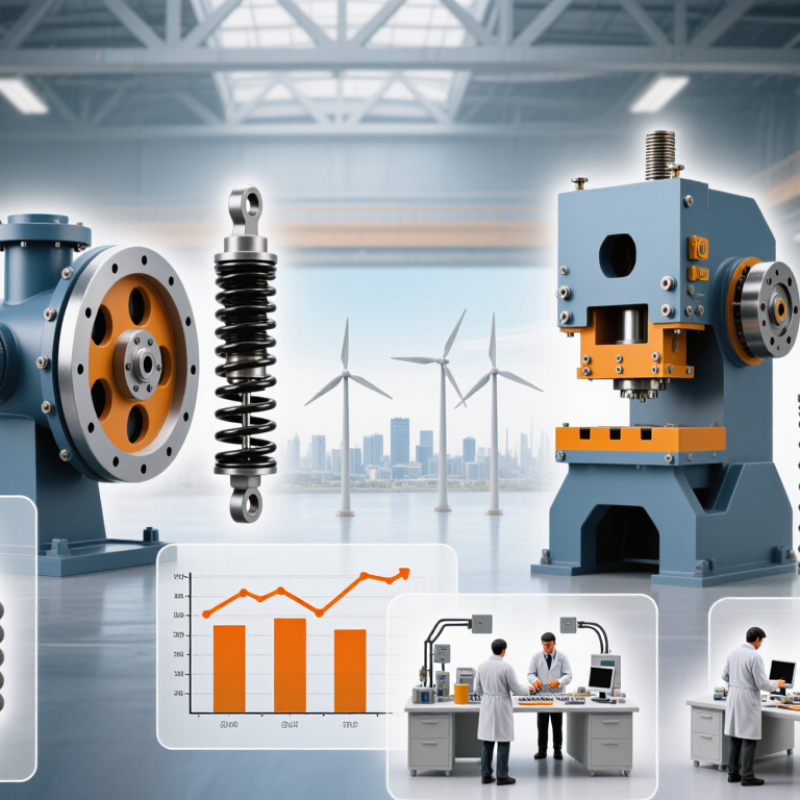
An industrial vibration damper is a mechanical device that reduces unwanted oscillation in machines, structures, and piping. It absorbs vibrational energy rather than allowing that energy to spread through connected equipment. Common designs include elastomeric mounts, spring-damper units, tuned mass dampers, and hydraulic devices.
In practice, a damper may sit beneath a compressor, beside a pump, or between a pipe and its support frame. Its purpose is practical: lower noise, reduce fatigue, protect bearings, and improve operating stability. The U.S. Department of Energy’s Industrial Motor Systems Market Opportunities Assessment reports that motor-driven systems use about 70% of industrial electricity in the United States. Stable machinery can therefore support both maintenance control and energy performance, although damping alone cannot correct poor alignment or imbalance.
Selection should begin with measured frequency, vibration amplitude, load, temperature, and installation direction. ISO 20816 provides guidance for evaluating machine vibration through measurements on non-rotating parts. A 2024 Grand View Research assessment valued the global industrial vibration monitoring market at approximately USD 1.6 billion in 2023, with continued growth expected through 2030. Monitoring is not damping, but the data can reveal whether a damper is working.
Field experience shows a common mistake: choosing by load capacity alone. The wrong stiffness can amplify vibration near resonance. It may look acceptable during a short test. Longer operation can prove otherwise. Engineers should compare baseline readings, operating temperature, and vibration spectra after installation. Periodic inspection remains necessary because rubber hardens, springs settle, and mounting bolts loosen.
Industrial vibration dampers reduce unwanted movement by controlling mechanical energy. They are installed between vibrating equipment and its supporting structure. Common systems use elastomers, springs, viscous fluids, or a combined design. When a motor creates repeated force, the damper absorbs part of that energy and converts it into heat.
The working principle is practical. A flexible element allows limited movement, while resistance slows that movement. This reduces vibration transfer into floors, pipes, frames, and nearby machinery. Some dampers are tuned for a specific operating frequency. Others provide wider protection across changing speeds and loads. Correct sizing depends on equipment weight, vibration frequency, mounting direction, and temperature.
Field inspection matters. I have seen small alignment errors create noise after installation. Loose bolts can also make a reliable damper appear ineffective. Engineers should measure vibration before and after fitting, using consistent locations and operating conditions. Supplier documentation should include load ratings, material data, fatigue performance, and installation limits. These details support safer decisions than attractive claims alone.
A damper is not a cure-all. Poor foundations, worn bearings, or unbalanced rotating parts may remain the real cause. Regular checks reveal changes early. The best design balances isolation, durability, maintenance access, and actual operating conditions.
A technology-based comparison of industrial vibration damper types, operating principles, applications, and selection factors.
| Damper Type | How It Works | Typical Industrial Uses | Main Advantages | Key Limitations | Important Selection Data |
|---|---|---|---|---|---|
| Hydraulic Viscous Damper | A piston forces fluid through calibrated orifices, converting vibration energy into heat through fluid resistance. | Heavy machinery, structural equipment, pipelines, rotating equipment, seismic protection, and industrial frames. | High energy dissipation, adjustable damping, and suitability for large displacement or shock loads. | Requires seals and fluid maintenance; performance can vary with temperature and fluid condition. | Damping force, stroke, velocity range, operating temperature, mounting orientation, and service life. |
| Viscoelastic Damper | A polymer layer deforms in shear or tension and dissipates energy through internal material hysteresis. | Machine bases, building and equipment isolation, process skids, piping supports, and enclosures. | Compact design, quiet operation, no hydraulic leakage, and relatively low maintenance. | Material properties are affected by temperature, frequency, aging, and chemical exposure. | Dynamic stiffness, loss factor, frequency range, temperature range, compression or shear load, and chemical compatibility. |
| Friction Damper | Relative movement between loaded contact surfaces produces friction that converts mechanical energy into heat. | Steel structures, machinery supports, rail systems, industrial frames, and equipment subject to intermittent vibration. | Simple construction, passive operation, high load capacity, and no fluid or elastomer degradation. | Possible wear, stick-slip behavior, noise, and less predictable performance at very small amplitudes. | Normal force, friction coefficient, allowable slip, wear rate, preload, and environmental contamination. |
| Tuned Mass Damper | A secondary mass, spring, and damping system is tuned near a disturbing frequency to absorb vibration energy. | Tall structures, precision machinery, rotating systems, machine tools, and equipment with a dominant vibration frequency. | Very effective near the tuned frequency and capable of reducing resonant response without modifying the primary structure. | Narrower operating bandwidth; detuning can occur when mass, speed, temperature, or system stiffness changes. | Target frequency, mass ratio, tuning tolerance, damping ratio, travel limit, and transient response. |
| Elastomeric Damper or Mount | Rubber or another elastomer provides elastic restoring force while internal hysteresis dissipates vibration energy. | Engines, pumps, compressors, fans, generators, control cabinets, and HVAC equipment. | Combines isolation and damping, reduces structure-borne noise, and is available in compact forms. | Sensitive to overload, ozone, oils, chemicals, temperature, and long-term material aging. | Static and dynamic load, natural frequency, displacement, compression or shear direction, and environmental exposure. |
| Wire-Rope Isolator | Helically stranded metal cable flexes between retaining bars, providing nonlinear stiffness and dry friction damping. | Marine equipment, outdoor cabinets, military and aerospace equipment, generators, and systems exposed to shock. | Wide temperature tolerance, corrosion-resistant options, strong shock capability, and no elastomeric fluid leakage. | Can transmit higher vibration at very small amplitudes and may require careful preload and load-direction control. | Load in each axis, shock pulse, displacement, cable material, corrosion environment, and mounting geometry. |
| Magnetorheological Damper | An applied magnetic field changes the apparent yield stress of magnetorheological fluid, allowing electronically controlled damping. | Adaptive machinery, test systems, robotics, precision platforms, and structures requiring variable vibration control. | Rapidly adjustable damping and the ability to respond to changing operating conditions. | Needs power, control electronics, sensors, and protection against fluid or seal-related failures. | Force range, response time, power demand, control bandwidth, fail-safe behavior, and fluid temperature limits. |
| Pneumatic or Air Damper | Compressed air or gas resists piston movement and dissipates energy through throttling, pressure change, or controlled flow. | Clean manufacturing, automation equipment, handling systems, machine guarding, and controlled-motion applications. | Clean operation, adjustable resistance, and compatibility with automated motion control. | Performance depends on pressure, leakage control, temperature, and available compressed-air infrastructure. | Air pressure, force-velocity curve, stroke, cycle rate, leakage rate, response time, and cleanliness requirements. |
Industrial vibration dampers are not interchangeable parts. Elastomeric mounts suit pumps, fans, and light machinery with moderate vibration. They are compact, affordable, and easy to replace. Spring isolators handle heavier equipment, especially compressors and rotating assemblies. Their natural frequency can be tuned below operating speed. The selection is rarely perfect.
Wire-rope isolators perform well in corrosive, shock-prone environments. Their metal construction tolerates oil, heat, and repeated movement. Hydraulic dampers control transient motion in presses and test systems. Tuned mass dampers target narrow vibration frequencies, often on large structures or precision equipment. Pneumatic isolators provide strong low-frequency isolation, but they need clean, stable air. Small details matter, including load distribution and mounting stiffness.
A 2024 MarketsandMarkets industry report projects continued growth in the global vibration-control market through 2029, driven by automation and predictive maintenance. Grand View Research also identifies manufacturing, energy, and transportation as major demand sectors. These reports indicate expanding adoption, but market estimates differ considerably. That uncertainty deserves attention. ISO 10846 testing methods help compare dynamic transfer properties, while ISO 20816 supports machine vibration assessment. In field inspections, incorrect preload and uneven foundations remain common failure points. A damper may look correctly sized and still perform poorly. Check temperature, frequency range, static load, resonance, and maintenance access before approving any supplier.
Evaluating vibration damper suppliers in 2026 requires more than comparing catalog prices. In field assessments, I start with the application: rotating speed, load, stroke, temperature, and mounting space. A capable supplier asks for these details before recommending a product. That conversation reveals engineering depth. Generic answers signal risk. Ask for test reports showing damping performance across the actual operating frequency range. Short samples are useful. Real data matters more.
Review materials, bonding methods, and corrosion resistance under realistic conditions. Request dimensional drawings, tolerance data, maintenance guidance, and documented quality controls. Reliable suppliers can trace batches and explain how failed units are investigated. Independent laboratory results add credibility, but they should identify test methods and equipment. Certificates alone are not proof. I have seen polished documents hide weak testing.
Supplier evaluation should also include service after delivery. Check prototype support, response times, replacement procedures, and technical communication. A site trial can reveal noise, heat buildup, or unexpected movement that laboratory testing misses. Ask whether the supplier will adjust stiffness or geometry when measurements disagree with the model. That flexibility is valuable, although it can complicate purchasing schedules. Do not ignore small details. Packaging, labeling, and shipment records often expose process discipline. I would score each supplier against the same technical and service criteria, then record unresolved assumptions instead of forcing a confident decision.
How to Evaluate Vibration Damper Suppliers in 2026
This buyer-side evaluation model ranks the factors that matter most when comparing industrial vibration damper suppliers. The 100-point weighting emphasizes verified damping performance, application engineering, quality control, durability testing, delivery capability, and lifecycle support. Technical validation should be aligned with relevant practices such as ISO 20816 for machine vibration evaluation and ISO 21940 for balancing quality.
Industrial vibration damper suppliers serve very different operating conditions. A pump skid needs flexible isolation and resistance to fluid exposure. A stamping press requires high load capacity and controlled movement. Generator systems often need mounts that handle heat, fuel vibration, and uneven loading.
Experienced suppliers should provide load charts, frequency data, material specifications, and installation guidance. Site engineers should compare operating speed with the damper’s natural frequency. They should also check temperature, corrosion, noise limits, and maintenance access. Field inspections often reveal loose fasteners, incorrect preload, or supports installed on uneven foundations. These details can reduce performance quickly.
For HVAC equipment, prioritize low-noise elastomeric mounts and simple replacement procedures. For rotating machinery, consider spring or hydraulic designs with verified damping values. Heavy conveyors may require reinforced units that tolerate shock loads and dust. A reliable supplier should support prototype testing, batch traceability, and technical responses after delivery. Certification helps, but it does not replace application testing. No supplier is perfect. A clean datasheet can still miss real site conditions. Buyers should request sample evaluations and review failure records honestly before approving a long-term supply agreement.
It is a mechanical device that reduces unwanted movement in machines, structures, and piping. It absorbs vibrational energy instead of passing it through connected equipment. Common forms include elastomeric mounts, springs, hydraulic units, and tuned mass dampers.
A damper may sit beneath a compressor, beside a pump, or between a pipe and its support frame. It can also protect floors, bearings, frames, and nearby machinery. Placement depends on the vibration path.
Flexible materials allow limited movement. Resistance then slows that movement and converts part of the energy into heat. The result is less vibration transfer. The effect is useful, but never magical.
They can reduce noise, bearing stress, structural fatigue, and operating instability. Stable machinery may also support better maintenance control and energy performance. A damper cannot repair poor alignment or an unbalanced rotating part.
Measure vibration frequency, amplitude, equipment weight, temperature, and mounting direction. Check load distribution and installation stiffness. Do not choose by load capacity alone. The wrong stiffness may amplify vibration near resonance.
Elastomeric mounts suit pumps, fans, and lighter machinery. Spring isolators support heavier equipment, including compressors and rotating assemblies. Wire-rope isolators tolerate corrosion, oil, heat, and repeated movement. Hydraulic dampers suit sudden motion.
Tuned mass dampers target narrow vibration frequencies. They can suit large structures or precision equipment. Pneumatic isolators provide strong low-frequency isolation. They require clean, stable air. That requirement is easy to underestimate.
Record baseline vibration at consistent measurement points. Compare readings after installation under similar operating conditions. Check temperature, vibration spectra, bolts, and foundation condition. A short test may look successful, while longer operation reveals problems. Regular inspection remains necessary.
This guide explains what an Industrial Vibration Damper is and why it is essential for reducing unwanted movement, noise, fatigue, and structural stress in machinery and industrial systems. It describes how dampers absorb or dissipate vibrational energy and compares key types, including elastomeric, hydraulic, friction, tuned mass, and spring-based designs. Each type offers different benefits depending on operating frequency, load, temperature, maintenance needs, and installation conditions.
The article also presents practical criteria for evaluating suppliers in 2026, such as engineering expertise, material quality, customization capability, testing standards, product reliability, technical support, delivery performance, and long-term service. Instead of focusing on brand names, it categorizes suitable supplier capabilities for applications in manufacturing equipment, energy facilities, transportation systems, construction machinery, and other demanding environments. Readers will gain a clear framework for selecting an Industrial Vibration Damper that matches their equipment requirements, operating conditions, budget, and performance objectives.
