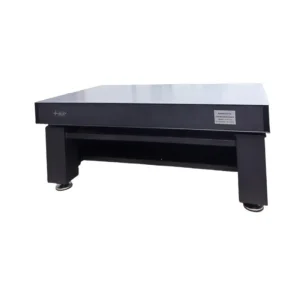
Featured Vibration Control & Polymer Damping Series
Direct factory production engineered for high load capacity, low static-to-dynamic stiffness ratios, and long-term anti-creep stability under severe cyclic conditions.
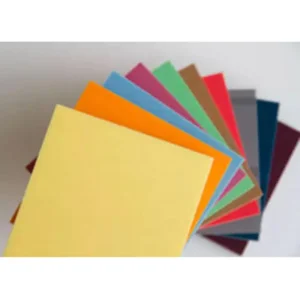
BK-PM Type Polymer Damping Pad
View Product Specifications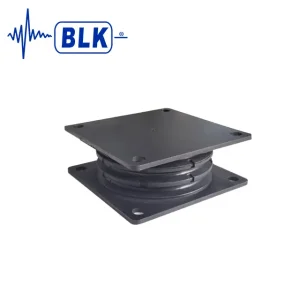
BKSWA Multi-Layer Dampers
View Product Specifications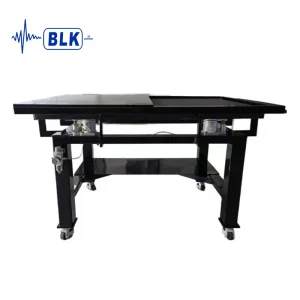
BK-VT Vibration Isolation Platform
View Product Specifications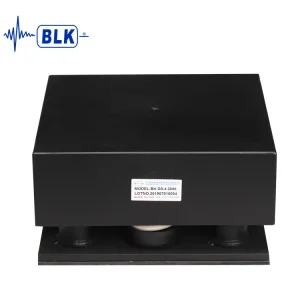
BK-DS Damped Spring Mounts
View Product Specifications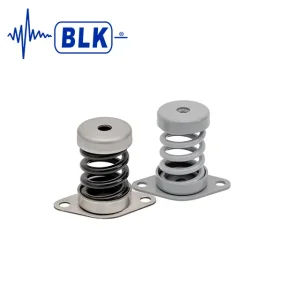
ME Type Anti-Vibration Mounts
View Product Specifications
BK-PM High Load Pad
View Product Specifications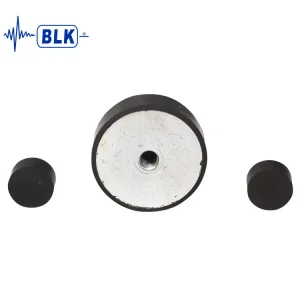
BKDE Industrial Rubber Mounts
View Product Specifications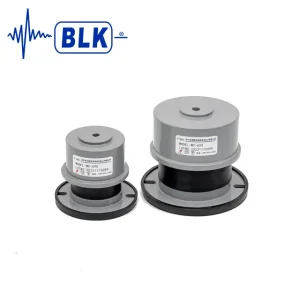
MC Type Heavy-Duty Mounts
View Product SpecificationsEngineering Principles of Viscoelastic Polymer Damping
An authoritative technical analysis of loss factors, glass transition dynamics, and molecular energy conversion in modern elastomeric matrices.
Hysteretic Damping Dynamics
Unlike conventional metallic helical springs that merely store and release kinetic energy with minimal mechanical energy dissipation, a genuine polymer vibration damping pad relies on viscoelastic hysteretic loss. When subjected to dynamic strain cycles, long-chain polymer networks slide past one another. The internal friction converts kinetic oscillation energy directly into low-grade thermal dissipation.
This mechanical behavior is quantitatively defined by the complex shear modulus G* = G' + iG'', where G' represents the dynamic storage modulus (elastic capacity) and G'' denotes the dynamic loss modulus (damping efficiency). The structural damping loss factor, η = tan δ = G'' / G', serves as the primary metric for isolating structure-borne sound and stopping resonance spikes at critical machinery frequencies.
Cellular Microstructure Engineering
Modern polymer damping pads developed by Bellking utilize microcellular polyurethane elastomers (MCU) and precision-blended synthetic nitrile (NBR) compounding. Through strict water-blown polyurethane synthesis or controlled closed-cell nitrogen foaming, our factory controls cell pore diameter between 30 and 120 micrometers.
This microcellular topography allows for 3D lateral volume expansion internally under compressive loading. In contrast to solid, incompressible vulcanized rubber pads—which experience substantial lateral bulge and high shape factor dependency—our engineered cellular polymer pads deliver predictable spring deflection even under constrained surface mounting interfaces, maintaining linear performance up to 40% strain.
Dynamic-to-Static Ratio Control
In vibration engineering, the dynamic stiffness (Kdyn) of elastomeric compounds is consistently higher than static stiffness (Kstat). Inferior polymers exhibit dynamic hardening ratios exceeding 2.5 to 3.5, which sharply compromises higher-frequency acoustic isolation and shifts calculated natural frequencies into dangerous harmonic zones.
Bellking's polymer compound formulation stabilizes the dynamic-to-static ratio (Kdyn / Kstat) between 1.15 and 1.45 across the standard operational frequency spectrum (10 Hz – 200 Hz). This tight physical control ensures that calculated natural frequencies remain stable in practice, delivering acoustic and structure-borne vibration isolation efficiencies exceeding 95% to 99%.
While steel spring isolators are ideal for addressing low disturbing frequencies (3 Hz – 8 Hz) generated by slow-turning machines like fans and chillers, they suffer from high-frequency acoustic bypass (standing waves in the steel wire). Viscoelastic polymer damping pads provide broadband structural acoustic impedance, eliminating audible hum, structure-borne noise, and high-frequency excitation from 60 Hz to 20,000 Hz where steel springs become acoustically transparent. Combining both creates an optimal two-stage isolation system.
Global Industry Trends Transforming Elastomeric Damping
Emerging industrial challenges—from semiconductor cleanroom vibration criteria to mega-scale data center acoustic retrofits—are driving polymer isolation advancements.
Semiconductor Sub-Micron Fab Standards
With lithography nodes dropping below 3nm, structural floor micro-vibrations must meet strict Vibration Criterion (VC-D through VC-G) and Generic Criterion (NIST-A) specifications. Modern fabs demand polymer damping pads with ultra-low outgassing (VOC-free), zero ionic contamination, and non-linear damping to suppress ground micro-tremors without destabilizing active pneumatic stages.
Hyperscale Data Center Acoustic Noise
High-density AI compute clusters require immense cooling infrastructure. High-flow centrifugal chillers and precision pumps mounted on elevated concrete slabs create structural hum that degrades server hard drives and violates urban acoustic codes. High-loss polymer damping pads decouple piping and inertia bases, attenuating vibration at the structural source.
EV Gigafactories & Stamping Plants
Gigafactory battery manufacturing and high-tonnage stamping presses produce intense transient shock loads of 3G to 5G. Traditional elastomers suffer rapid mechanical breakdown and permanent compression set under these conditions. Specially formulated thermoset polyurethanes provide long fatigue life and high resilience under rapid cyclic strain.
Urban Green Building & LEED Compliance
Under international green building standards (LEED v4.1, WELL Building Standard, ASHRAE 62.1), indoor environmental quality (IEQ) requirements for acoustic comfort are increasingly strict. Mixed-use commercial developments require plant room equipment to be acoustically isolated, making fire-rated, low-smoke, halogen-free elastomeric damping pads an engineering necessity.
Engineering Sizing Calculations & Technical Matrix
Essential formulation metrics, static load capacities, and mathematical selection formulas for industrial vibration isolation sizing.
The Mathematical Foundation of Polymer Damping Sizing
Properly specifying an anti-vibration pad requires matching the target operating load to the pad's dynamic stiffness curve, avoiding both under-loading (which leads to insufficient deflection and minimal isolation) and excessive strain (which causes dynamic bottoming and premature creep failure).
The natural frequency (fn) of a single-degree-of-freedom supported system is governed by:
Where m represents the equipment static mass, Kdyn is the dynamic stiffness under operational load, and δstat represents the static deflection in centimeters. Effective vibration isolation requires that the forcing frequency (fd) generated by the motor, pump, or transformer satisfy the frequency ratio condition:
When the frequency ratio r exceeds 2.5, transmissibility decreases significantly, and the vibration isolation efficiency (Ieff = 1 - T) consistently exceeds 90% across the design spectrum.
| Polymer Series | Material Base | Static Load Range (N/mm²) | Natural Frequency (fn) | Loss Factor (η) | Max Deflection | Target Industrial Use |
|---|---|---|---|---|---|---|
| BK-PM 100 | Cellular Polyurethane | 0.015 – 0.055 N/mm² | 12 – 16 Hz | 0.28 – 0.35 | 25% | Precision Metrology, Cleanroom Pods, Audio Studios |
| BK-PM 300 | High-Density Viscoelastic MCU | 0.055 – 0.150 N/mm² | 14 – 19 Hz | 0.32 – 0.42 | 20% | Commercial Chillers, AHUs, Rooftop Cooling Towers |
| BK-PM 700 | Cross-linked NBR/EPDM Composite | 0.150 – 0.450 N/mm² | 18 – 25 Hz | 0.25 – 0.38 | 18% | Power Transformers, Substations, Heavy Gensets |
| BKSWA Sandwiched | Multi-Layer Polymer + Steel Shim | 0.450 – 1.500 N/mm² | 20 – 28 Hz | 0.40 – 0.55 | 15% | Stamping Presses, Forging Hammers, CNC Punching |
| BK-DSR Composite | High-Damping Fluoro-Polymer | 0.100 – 0.350 N/mm² | 15 – 22 Hz | 0.35 – 0.48 | 22% | Petrochemical Pumps, Offshore Rigs, Acidic Environments |
Macro-Industry Solutions & Engineered Implementations
Custom polymer vibration damping pads developed for demanding environments across global power generation, semiconductor, HVAC, and industrial stamping plants.
Dry-Type & Oil Power Transformers
Problem: Magnetostrictive core excitation in dry-type and oil-immersed transformers induces structural vibration at 100 Hz, 120 Hz, and associated harmonics. In dense urban substations, data centers, and hospital plant rooms, this vibration travels through building slabs as persistent low-frequency hum.
Solution: Custom Bellking BK-PM series multi-layer polymer isolation pads installed beneath the transformer mounting rails. By tailoring compound durometer and thickness, the system natural frequency drops below 16 Hz, decoupling the 100 Hz / 120 Hz hum and delivering a measured 18 dB to 26 dB reduction in structure-borne noise.
HVAC, Chillers & Rooftop Plant Rooms
Problem: Rooftop-mounted centrifugal chillers, industrial cooling towers, and circulating water pumps can generate high-amplitude dynamic forces. Without proper isolation, vibration propagates through roof slabs, causing tenant noise complaints and fatigue damage to connected pipework.
Solution: Two-stage decoupling systems utilizing Bellking spring isolators seated on BK-PM polymer damping pads, or standalone polymer inertia base mountings. The polymer interface prevents acoustic bypass through the mounting bolts, isolates frequencies above 50 Hz, and withstands outdoor UV exposure and water spray.
Heavy Mechanical Forging & Stamping Presses
Problem: High-tonnage stamping presses, die-cutters, and forging machinery impart severe impact energy into factory floors. Unchecked shock waves cause structural damage, foundation cracking, and disrupt neighboring precision equipment like CNC grinders and CMMs.
Solution: Heavy-duty BKSWA multi-layer sandwiched damping dampers. By interleaving high-damping viscoelastic polymer pads with Dacromet-coated structural steel shims, compressive strength reaches 1.5 N/mm² while providing critical impact dissipation of 3G to 5G dynamic shock loads.
Localized Support, Rigorous Testing & Global Compliance
As an ISO 9001:2015 certified manufacturer with 37 proprietary patents, Bellking backs every production batch with verified physical testing and global compliance documentation.
DIN 45673-1 & ISO 9001
Manufactured and tested to the DIN 45673 standard for mechanical and structural elastomer damping. Every batch undergoes strict quality control from raw polyol/isocyanate inspection to finished pad durometer mapping.
RoHS & REACH Compliant
Our formulations comply with EU Directive 2011/65/EU (RoHS) and Regulation (EC) No 1907/2006 (REACH). They are free from heavy metals, SVHCs, halogenated flame retardants, and hazardous plasticizers, meeting cleanroom and green building requirements.
In-House DMA & Salt Spray
Our facility houses high-tonnage servo-hydraulic cycle testers, dynamic mechanical analyzers (DMA), and salt-spray chambers. Steel-bonded and polymer components achieve over 900 hours of continuous ASTM B117 salt spray protection.
Global Engineering Sizing Support
We provide rapid-response engineering sizing for EPCs, MEP contractors, and OEMs worldwide. Send us your equipment weights, center-of-gravity schematics, and RPM data to receive complete finite analysis and isolation sizing plans within 24 hours.
Technological Roadmap: The Future of Elastomeric Isolation
How Bellking is advancing polymer damping through metamaterial architectures, nano-reinforcement, and integrated health monitoring.
Phononic Bandgap & Acoustic Metamaterials
Traditional polymer pads rely primarily on bulk material viscoelasticity. Our next-generation R&D roadmap incorporates periodic phononic metamaterial lattices into cellular elastomers. By engineering sub-wavelength resonant voids directly into the pad core, these metamaterial damping pads reflect and attenuate targeted low-frequency elastic waves (10 Hz – 50 Hz), achieving isolation levels previously unattainable with thin elastomers.
Graphene & Nano-Reinforced Matrices
To decouple static load capacity from high-frequency damping loss, our engineers are integrating functionalized multi-walled carbon nanotubes (MWCNTs) and exfoliated graphene nanoplatelets into polyurethane elastomer chains. This nano-scale interface increases sliding frictional surfaces under cyclic shear, boosting loss factor η above 0.50 without inducing plastic creep or sacrificing tensile endurance.
Smart IoT Structural Health Monitoring
Industrial vibration control is moving toward digital intelligence. Bellking's smart pad development embeds thin-film piezoresistive sensor arrays and passive RFID telemetry directly into composite polymer damping layers. This enables continuous tracking of localized pressure distribution, static deflection, dynamic cyclic frequency, and thermal rise—empowering plant maintenance teams with predictive failure alerts via Modbus or OPC-UA.
Frequently Asked Engineering & Procurement Questions
Detailed answers to the technical inquiries our engineering and specification teams encounter most frequently.
What is the difference between a polymer vibration damping pad and standard industrial rubber?
A true engineered polymer vibration damping pad (such as Bellking’s microcellular polyurethane or modified cross-linked NBR/composite matrix) is specifically formulated to maximize the mechanical loss factor (η > 0.30 to 0.45) while maintaining an optimal dynamic-to-static ratio (1.15 to 1.40). This allows the pad to both deflect elastically under load and dissipate mechanical energy internally through viscoelastic hysteretic shear, isolating broad audible frequencies and preventing resonance amplification.
How do I prevent "acoustic bridging" during fastener installation?
To prevent acoustic and structural bridging, always specify Bellking resilient polymer sleeve bushings and elastomeric isolation washers beneath the bolt head and steel washer. Alternatively, use bonded friction-grip pads that eliminate the need for pass-through anchor bolts in moderate lateral load environments.
What static deflection should be targeted for HVAC and mechanical room equipment?
This setup achieves a frequency ratio (r = fd / fn) greater than 1.8 to 3.0, delivering over 85% to 95% structural vibration attenuation. For slower-turning machines (under 900 RPM), spring-polymer composite isolators (like our BK-DS series) should be considered to achieve the larger static deflections required.
How do Bellking polymer damping pads resist long-term compression creep?
When sized within our recommended static load envelope (N/mm²), the total long-term creep after 10 years of continuous service is typically less than 3% to 5% of original pad thickness, ensuring the isolator does not bottom out or alter connected pipe alignments over its service life.
Can polymer damping pads withstand oil, cutting fluids, and outdoor UV exposure?
For outdoor rooftop installations (cooling towers, AHUs, transformer yards), our pads feature anti-ozonant and UV-stabilizing packages that prevent dry rot, surface cracking, and embrittlement across temperatures ranging from -35°C to +90°C. For high-temperature or aggressive acid-base environments, custom fluoropolymer compounds are available on request.
Can Bellking manufacture custom dimensions, thicknesses, and waterjet profiles?
Explore Complete Structural Isolation Mounts
Engineered damping mounts, pneumatic leveling platforms, and spring components ready for global OEM distribution and plant retrofit integration.
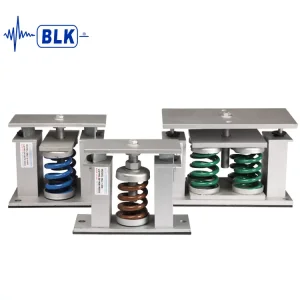
MA Type Anti-Vibration Spring Mounts
View Product Specifications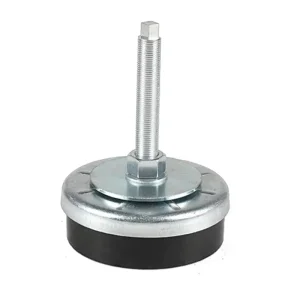
BKAL Precision Adjustment Feet
View Product Specifications
BK-DSR Damped Rubber Mounts
View Product Specifications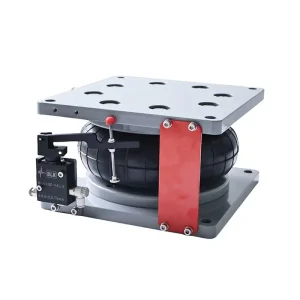
BK-PF Precision Air Mounts
View Product Specifications
BKH High Deflection Mounts
View Product Specifications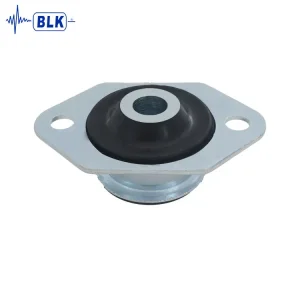
BKCN Industrial Cone Mounts
View Product Specifications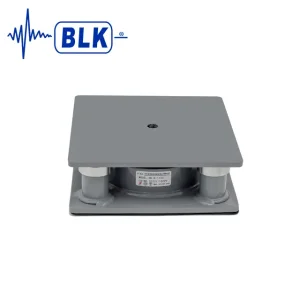
BK-R Low Frequency Air Mounts
View Product Specifications