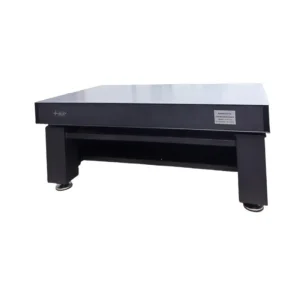
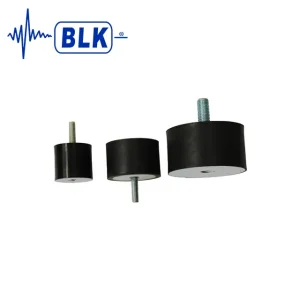
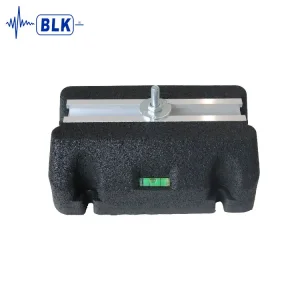
High-Efficiency Vibration Isolators & Mount Assemblies
Engineered for mission-critical mechanical systems, semiconductor lithography, HVAC plant rooms, and industrial power generation with up to 99% structural attenuation.

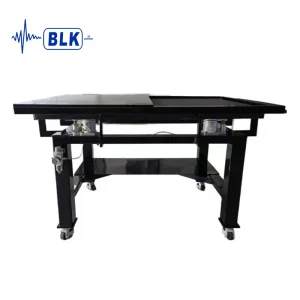




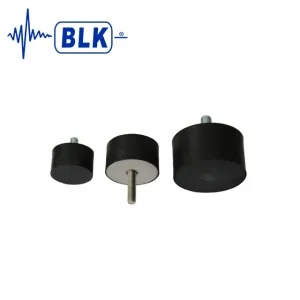

Physics of the Vibration Damping Coefficient (c) & Loss Factor (η)
A rigorous understanding of kinetic dissipation is vital when sourcing industrial isolators that balance low resonant amplification with high sub-harmonic isolation.
Viscous Damping Coefficient (c)
Viscous damping represents force proportional to relative velocity (F = -c·v). Expressed in N·s/m, our engineered fluid dampers and specialized elastomers provide stable damping properties over wide ambient temperature operational windows (-25°C to +70°C).
Critical Damping Ratio (ζ)
Defined as ζ = c / (2√(k·m)). Steel springs without damping exhibit ζ < 0.01, creating catastrophic resonant amplification during machine run-up. Bellking mounts incorporate internal viscous compounds to calibrate ζ between 0.08 and 0.18, cutting peak excursion by over 70%.
Material Loss Factor (η)
For solid elastomeric mounts and polymer pads (BK-PM series), kinetic energy converts directly into thermal dissipation. Our proprietary nitrile-polyurethane compounds provide a loss factor (η = tan δ) approaching 0.35, preventing high-frequency acoustic wave bridging.
Transmissibility & The Excitation Frequency Ratio
Active isolation begins strictly when the excitation frequency (fd) surpasses √2 times the system natural frequency (fn). Sourcing a system with a calibrated damping coefficient prevents massive peak displacement at resonance (fd/fn = 1) without compromising high-frequency isolation performance.
T = √[(1 + (2ζr)²) / ((1 - r²)² + (2ζr)²)]
Where r = fd / fn (Frequency Ratio), ζ = Damping Ratio
Why Sourcing from China's Advanced Vibration Factories Delivers Unmatched Cost & Precision
Combining heavy-industrial metallurgical capabilities with automated micro-machining to fulfill extreme acoustic and mechanical engineering tolerances at competitive price tiers.
Full-Scale Vertical Cluster
Situated in the Yangtze River Delta industrial belt, Kunshan manufacturing integrates precision spring winding (60Si2MnA / 55CrSi), CNC machining centers, automated robotic welding, and elastomeric compounding within a 30km radius, slashing baseline raw material handling costs.
ISO 9001 & R&D Patents
Our facility holds 37 national patents (including 16 invention patents). Every production batch undergoes comprehensive stiffness matrix evaluation, dynamic mechanical analysis (DMA), and servo-hydraulic cyclic testing to ensure damping coefficient fidelity.
Rapid 1:1 Custom Prototyping
Standardized catalog mounts ship in 24 hours. Custom non-standard damping fixtures, seismic snubbers, and multi-directional isolation bases are engineered, simulated via FEA, manufactured, and dispatched in as fast as 3 working days.
Macro Industry Solutions & Precision Field Applications
From micro-g vibration attenuation in class-1 cleanrooms to megawatt harmonic mitigation across power grids.
Semiconductor & Metrology (VC-D / VC-E Criteria)
Extreme precision platforms (BK-AT, BK-DT, BK-VT) utilize pneumatic air mounts operating down to 1.7 Hz natural frequency. Dual-chamber orifice restrictors ensure critical damping coefficients to eliminate stepper acceleration recoil without table oscillation.
Building MEP & Central HVAC Infrastructures
Large chillers, water pumps, cooling towers, and centrifugal fans generate structure-borne low frequencies. Our restrained spring isolators paired with heavy concrete inertia bases (CPB series) shift center-of-gravity and stop structural pipe fatigue.
Power Substations & High-Voltage Transformers
Magnetostrictive core hum creates pervasive 100 Hz and 120 Hz vibration. Specialized transformer mounts integrate high-damping elastomeric layers resistant to dielectric transformer oil and outdoor weathering, slashing ambient acoustic footprints.
Isolator Dynamics & Damping Coefficient Selection Chart
Direct comparison of kinematic parameters, deflection characteristics, and suitable operating envelopes.
| Product Category | Natural Freq. (fn) | Damping Ratio (ζ) | Loss Factor (η) | Primary Industrial Use-Case | Expected Life |
|---|---|---|---|---|---|
| Pneumatic Air Mounts (BK-A Series) | 1.7 – 2.5 Hz | 0.06 – 0.12 | N/A (Pneumatic) | CMMs, Lithography, Laser Interf. | 6+ Years |
| Damped Spring Isolators (MB Type) | 3.0 – 5.0 Hz | 0.08 – 0.15 | N/A (Fluid/Friction) | Chillers, Gensets, Heavy Pumps | 15+ Years |
| Multi-Layer Elastomer (BKSWA / BKVD) | 6.0 – 12.0 Hz | 0.12 – 0.22 | 0.25 – 0.35 | Transformers, Motors, Cabinets | 10+ Years |
| Polymer Damping Pads (BK-PM) | 8.0 – 15.0 Hz | 0.15 – 0.28 | 0.30 – 0.42 | Punch Presses, Shears, Foundation Isolation | 12+ Years |
| Spring & Rubber Hangers (HR Series) | 3.5 – 6.0 Hz | 0.05 – 0.10 | 0.15 (Rubber Cup) | Suspended Piping, Ducting, AHUs | 15+ Years |
Global Sourcing Trends in Dynamic Kinetic Isolation
How international EPC contractors, acoustic consultants, and precision OEM builders are optimizing supply chain resilience.
Stringent Seismic Restraint Compliance
Global specifications increasingly require isolators to integrate multidirectional seismic limiters conforming to ASHRAE 171 and IBC building codes. Modern isolators must absorb continuous operational vibrations while arresting dynamic 3-5G ground acceleration shocks.
Eco-Friendly Elastomers & Zero Off-Gassing
In cleanrooms, hyperscale data centers, and advanced laboratories, synthetic damping rubbers must comply with RoHS and REACH while demonstrating zero volatile outgassing to preserve semiconductor wafer yields and fiber-optic switchgear integrity.
Total Lifecycle Cost (TCO) Prioritization
Tier-1 contractors are shifting away from cheap raw rubber pads that degrade within 24 months. Dacromet 900-hour salt-spray treated housing steel and shot-peened springs ensure 15+ years of operational durability without replacement shutdowns.
Frequently Asked Questions on Vibration Damping Coefficients
In-depth responses from our application and mechanical acoustic engineering team.
What is the operational difference between damping and vibration isolation?
Why does excessive damping reduce high-frequency isolation performance?
What parameters are needed to select and calculate the proper damping mount?
How does Dacromet coating enhance anti-vibration mount service life?
Can customized mounts be designed for non-standard equipment footprints?
What quality verification documentation accompanies bulk shipments?
Heavy-Duty Isolation, Inertia Bases & Precision Mounts
Complete mechanical isolation portfolio engineered for industrial plants, infrastructure piping, and high-precision laboratories.