High-Performance Dynamic Mounts for Chilean Infrastructure
Engineered foundation dampening assemblies designed to neutralize rotational resonance, high initial starting torques, and seismic displacements.

CPB Concrete-Filled Inertia Bases for Slurry & Brine Pumps (Chile Spec)
View Product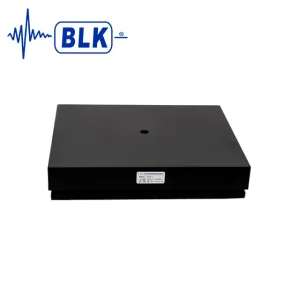
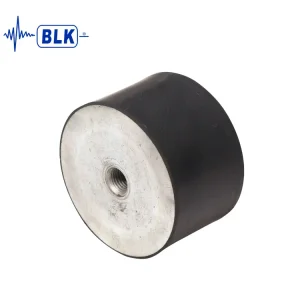
BK-DSR High-Damping Elastomeric Isolators for Heavy Industrial Blowers
View Product
BK-PM Resilient Micro-Cellular Polymer Damping Foundation Underlay
View Product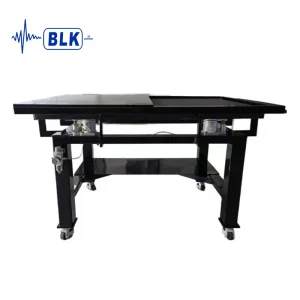
BK-VT Tuned Inertial Platform for Critical Industrial Metrology & Pumps
View ProductChilean Industrial Realities: High Seismicity, Mining Slurries, and Coastal Water Transport
Dynamic pump installations in Chile face a convergence of geological and metallurgical extremes unmatched across global process industries.
Operating rotating equipment in the Republic of Chile presents mechanical and civil engineering challenges that transcend standard North American or European installation practices. Positioned directly atop the Nazca and South American plate subduction boundary (the Pacific "Ring of Fire"), Chile is exposed to recurring megathrust earthquakes, high Peak Ground Acceleration (PGA exceeding 0.40g to 0.60g in Zone 3 per NCh 433 and NCh 2369), and severe structural resonance.
Simultaneously, Chile's economy is anchored by heavy mining (copper extraction in Antofagasta, Calama, and Atacama; lithium brine extraction in the Salar de Atacama; and underground block caving in El Teniente). These operations mandate continuous liquid-solid transport of highly abrasive slurries, copper concentrates, and acidic tailings. Unbalanced centrifugal forces, slurry slugging, cavitation pulses, and high-pressure impulsion create destructive harmonic excitation that, if transmitted directly into concrete floor slabs or structural steel skids, causes fatigue fracturing, catastrophic bearing failure, and mechanical seal rupture.
The Engineering Imperative for Inertia Bases: Standard un-damped mounting brackets fail rapidly under high-mass cyclic agitation. Concrete-filled steel inertia bases provide crucial dynamic mass ratios (typically 1.5× to 3.0× the operating machinery weight), lowering the center of gravity, decoupling excitation frequencies from structural natural frequencies, and absorbing erratic hydraulic surge forces.
Mass Ratio Multiplication
Increasing the foundation inertia ballast by 150–200% reduces the physical amplitude of vibration ($X = F_0 / k$), keeping rotating pump shafts aligned within strict tolerance margins.
Seismic Restraint (NCh 2369)
Designed to withstand catastrophic lateral and vertical seismic forces without dynamic shear detachment, protecting critical copper and desalination pump loops.
Nozzle Stress Attenuation
By preventing differential motion between the pump casing and the base, the inertia assembly shields rigid intake/discharge flanged piping from fatigue fractures.
Mechanical Dynamics: Center-of-Gravity Lowering & Resonance Decoupling
A rigorous examination of vibration isolation mechanics, stiffness matrices, and transmissibility attenuation for heavy rotating machinery.
In rotating fluid systems, pumps and drivers generate multi-axis disturbing frequencies ($f_d$) driven by rotational speeds (RPM), impeller blade passing frequencies (BPF = RPM × number of vanes / 60), motor slip frequencies, and dynamic hydraulic imbalances. When unattenuated, these oscillatory energy waves propagate into supporting civil structures as airborne acoustic noise and structure-borne vibration.
The Transmissibility Equation & The Frequency Ratio Law
The efficiency of a dynamic vibration isolation system is governed by the classical dimensionless transmissibility equation ($T$):
T = √ [ (1 + (2 ζ r)²) / ( (1 - r²)² + (2 ζ r)² ) ]
Where: r = fd / fn (Frequency Ratio), ζ = Damping Ratio, fn = Natural Frequency of the Isolator Support.
For genuine isolation to occur, the frequency ratio ($r$) must strictly exceed √2 (≈ 1.414). When $r < 1.414$, the system operates in the amplification zone, triggering catastrophic resonance. To achieve industrial isolation efficiencies exceeding 95% to 99% in Chilean mining and civil plant rooms, our engineers calculate base configurations to achieve an $r \ge 3.0$ to $4.5$. For a standard 4-pole motor running at 1,480 RPM ($f_d = 24.67\text{ Hz}$), an engineered spring isolator with a low natural frequency of $f_n = 3.5\text{ Hz}$ produces a frequency ratio of $r = 7.05$, driving isolation transmissibility down to near-zero levels.
Mass Redistribution and Rocking Couple Control
Horizontal split-case, end-suction, and multi-stage impulsion pumps exhibit high discharge centerlines, creating eccentric horizontal dynamic forces during startup, fluid surge, and throttling. This creates a severe "rocking couple" (tilting moment). Standard light-duty steel frames tilt, introducing extreme angular misalignment across flexible couplings.
Our CPB-series structural steel inertia frames, filled with high-density vibrated concrete ($\rho \ge 2,400\text{ kg/m}^3$), drop the combined center of gravity (CG) of the assembled pump, driver, and base below the plane of the spring isolator support brackets. This transforms rocking modes into pure vertical translation, distributing loads uniformly across all perimeter seismic spring isolators.
| Equipment Profile | Standard Mass Ratio (Base : Equipment) | Isolator Integration | Target Natural Frequency (fn) | Seismic Restraint Rating (Chile NCh 2369) |
|---|---|---|---|---|
| High-Lift Seawater Reverse Osmosis (SWRO) Booster Pumps | 2.0 : 1.0 to 2.5 : 1.0 | Open / Enclosed Helical Springs + Viscous Damping | 2.8 – 3.8 Hz | Zone 3 Certified (≥ 0.60g Lateral Acceleration) |
| Heavy Tailings Centrifugal Slurry Pumps | 2.5 : 1.0 to 3.0 : 1.0 | Pre-compressed Damped Springs with Ductile Housings | 3.2 – 4.5 Hz | Extreme Dynamic Impact (3–5g Shock Tolerant) |
| Building HVAC Chilled & Condenser Water Pumps | 1.5 : 1.0 to 2.0 : 1.0 | Damped Steel Springs + Neoprene Acoustic Breaks | 3.5 – 5.0 Hz | NCh 433 Category IV Essential Facilities |
| Mining Froth Flotation Blowers & Compressors | 2.0 : 1.0 | Heavy-Duty High-Damping Elastomeric Mounts | 6.0 – 8.5 Hz | Triaxial Elastomeric-Snubbed Containment |
Engineered Use Cases Across Chile's Core Industrial Corridors
Demonstrated performance in hyper-arid mine sites, extreme-salinity coastal terminals, and critical urban facilities.
High-Pressure Seawater Desalination Impulsion Lines
Multi-stage impulsion pumps driving desalinated seawater from sea-level pumping stations to mine sites situated at 3,200 to 4,500 meters above sea level. Systems experience hydraulic pulsations and high starting inertia.
Tailings Concentrator & Slurry Transport Loops
Heavy duty slurry pumps handling high-specific-gravity copper concentrates. Inertia bases eliminate harmonic vibration transfer to concrete suspended floor slabs, preventing structural cracking.
Critical Data Centers & Hospital HVAC Loops
Rooftop- and basement-mounted central cooling systems in Santiago requiring compliance with Chilean acoustic and seismic safety codes. Inertia frames prevent mechanical noise transmission into critical spaces.
Pulp, Paper & Marine Chemical Fluid Pumping
Corrosive industrial environments requiring chemical-resistant damping foundations. Fabricated using heavy structural channels, hot-dip galvanized or Dacromet-coated elements for aggressive ambient exposures.
Need Sizing Calculations for a Chilean Project?
Our senior dynamic engineering team calculates precise inertia base masses, center of gravity balances, and spring deflection layouts tailored to Chilean seismic codes within 24 hours.
Send Inquiry NowChilean Seismic Code NCh 2369, Extreme Marine Coatings & Structural Fabrication
Manufacturing excellence engineered to survive subduction-zone earthquake shocks and hyper-saline Atacama coastal atmospheres.
Equipment mounted in Chilean industrial infrastructure cannot rely on standard gravity-seated isolation pads. In an earthquake, unconstrained spring mounts become resonance magnifiers, throwing heavy pumps off their pedestals and severing high-pressure piping headers.
Triaxial Restraint Engineering (NCh 2369 & NCh 433)
All Bellking pump support assemblies serving Chilean mining and commercial facilities can be integrated with triaxial elastomeric seismic snubbers. These high-capacity ductile iron or structural steel brackets incorporate 5mm to 8mm heavy-duty neoprene or polyurethane buffer gaps. Under normal continuous operation, there is zero metal-to-metal contact, preserving 98%+ acoustic and vibration isolation. When seismic shear or vertical uplift hits, the snubber engages instantaneously, limiting base travel to within safe mechanical limits.
Corrosion Protection for the Extreme Chilean Coast (ISO 12944 C5-M)
Seawater desalination plants located along the Chilean shoreline (e.g., Mejillones, Tocopilla, Caldera) combine hyper-saline ocean air, high UV exposure, and heavy particulate fallout from copper smelting operations. Bellking manufactures inertia base steel channels using:
- Structural Steel Channels: ASTM A36 / EN 10025 S275JR heavy perimeter structural beams with integrated structural corner brackets and pre-welded concrete reinforcement rebar grids (Grade 60, 12mm rebar on 150mm centers).
- Surface Protection: Dacromet-coated springs and hardware passing 900-hour continuous salt spray testing per ASTM B117, backed by multi-coat epoxy or Hot-Dip Galvanizing (HDG per ASTM A123) providing 25+ year operational life under ISO 12944 C5-M extreme marine classifications.
- Built-In T-Bolts & Motor Slide Rails: Precision-milled anchor slots facilitating rapid motor realignment without requiring concrete breakout or frame welding on site.
The Future of Industrial Vibration Isolation in Heavy Extraction Sectors
Advancing from passive physical damping to smart telemetric platforms and low-carbon composite bases.
IoT Dynamic Telemetry
Integrating triaxial MEMS vibration sensors directly into spring isolator housings to track natural frequency drift, bearing degradation, and cavitation spikes in real-time mining operations.
Magnetorheological Viscous Damping
Next-generation active snubbers that adjust fluid damping resistance in milliseconds during sudden seismic shockwaves, providing soft isolation during runtime and rigid lock-out during quakes.
Eco-Concrete Dense Slag Matrices
Replacing traditional Portland concrete fillings with recycled copper-slag polymer concrete, achieving 15% higher bulk density ($\approx 2,750\text{ kg/m}^3$) and superior internal acoustic damping loss factors.
Frequently Asked Questions: Industrial Pump Isolation in Chile
In-depth technical answers addressing project engineering, seismic anchoring, and dynamic balancing questions.
Why is a concrete inertia base mandatory rather than mounting directly to spring isolators in Chilean pump rooms?
How do Bellking inertia bases comply with Chilean Seismic Standard NCh 2369 Of.2003?
What concrete specifications should be poured on-site in Chile?
How do you protect springs and structural steel from coastal desalination plant corrosion?
What turnaround time can EPC contractors and mining operations in Chile expect?
Full Spectrum Anti-Vibration Systems Available for Chilean Operations
Explore our certified range of vibration mounts, damping pads, and inertia accessories for comprehensive structural noise and shock attenuation.

BK-RT Damped Isolation Platform for Metrology & Cleanrooms
View Product
BKAL Leveling High-Tack Adjustment Feet for Compact Equipment Skids
View Product
BKSWA Multi-Layer Dynamic Attenuation Elastomeric Damping Units
View Product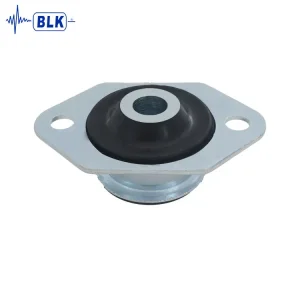
BKCN Heavy Cone Mounts for High Radial Torque & Dynamic Overload
View Product
BK-AT High-Precision Benchtop Platform for Industrial Assay Testing
View Product
CPB Structural Perimeter Inertia Base Steel Sub-Frame (Custom Dimensions)
View Product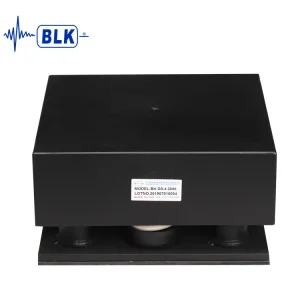
BK-DS Enclosed Damped Helical Spring Isolators with Leveling Screws
View Product