
Featured High Damping Rubber & Isolation Mounts (Part I)
Explore our precision-engineered vibration control mounts. Manufactured under ISO 9001 standards with dynamic loss factor verification.
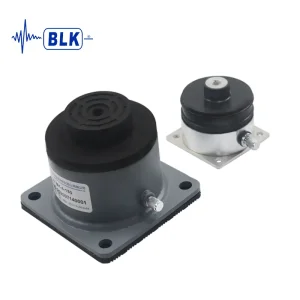
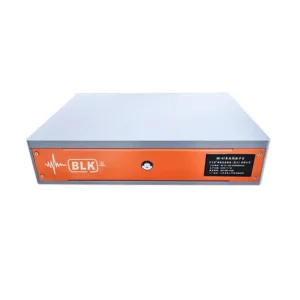
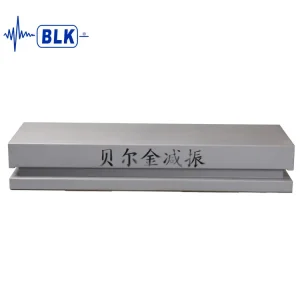
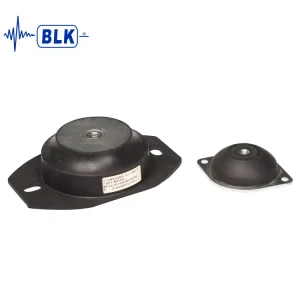
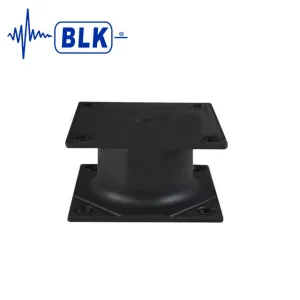
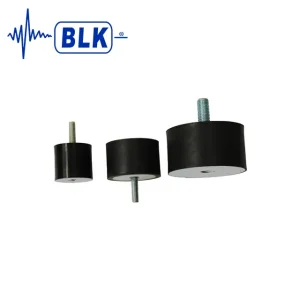
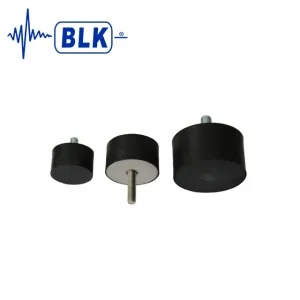
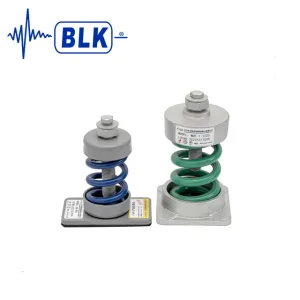
The Physics of Viscoelasticity: Why High Damping Rubber Mounts (HDRM) Rule Structural Dynamics
In modern industrial, civil, and high-precision manufacturing environments, unmitigated vibration leads to structural degradation, recalibration downtime, micro-fracturing in sub-assemblies, and severe noise pollution compliant violations. Standard commercial elastomers (such as basic Natural Rubber or Nitrile) exhibit low loss factors ($\eta \approx 0.02 - 0.05$), rendering them prone to excessive transient resonance amplification when equipment passes through critical operating speeds.
A specialized Custom High Damping Rubber Mount Factory bridges this gap by engineering complex viscoelastic macromolecular matrices. High Damping Rubber Mounts (HDRM) combine high energy dissipation capacity with essential static stiffness. By incorporating engineered carbon nanotube reinforcement, reactive resin additives, and targeted sulfur/peroxide vulcanization networks, advanced HDRM formulations achieve loss factors exceeding $\eta \ge 0.15 - 0.25$.
The vibration transmissibility ($T$) of a High Damping Rubber Mount is governed by the frequency ratio $r = f_d / f_n$ (disturbing frequency over natural frequency) and the damping ratio $\zeta$:
$$T = \sqrt{\frac{1 + (2\zeta r)^2}{(1 - r^2)^2 + (2\zeta r)^2}}$$
Custom high damping formulations keep resonance peaks bounded ($T < 3.0$ at $r = 1$) while delivering rapid attenuation ($T < 0.05$) in the high-frequency isolation zone ($r > \sqrt{2}$).
Chemical Synthesis & Viscoelastic Polymer Compounding
The performance of a custom rubber mount relies entirely on formulation physics inside the internal mixer. Unlike off-the-shelf industrial anti-vibration pads, raw compound design at our state-of-the-art facility uses multi-monomer blending strategies:
Polymer Backbone Selection
Synthetic Nitrile-Isoprene (ENR/NBR) co-polymers blended with high-molecular-weight Natural Rubber (NR) achieve high mechanical tensile strength (>18 MPa) while maintaining internal friction chains for elevated loss factors.
Nano-Filler Matrix Engineering
Incorporation of sub-micron Carbon Black (N330/N220) combined with organoclay and surface-treated silane coupling agents enhances polymer-filler crosslinking, converting kinetic energy directly into thermal dissipation.
Anti-Aging & Thermal Stabilization
Specialized microcrystalline wax systems combined with quinoline-based antioxidants shield vulcanized elastomers from environmental ozone degradation, thermal oxidation, and chemical exposure up to +120°C.
Comparative Engineering Matrix: Standard Elastomers vs. High Damping Compounds
| Material Parameter | Standard Commercial Rubber | Neoprene / Chloroprene | Bellking High Damping Rubber (HDR) |
|---|---|---|---|
| Loss Factor ($\eta$ at 23°C, 10Hz) | 0.03 – 0.06 | 0.08 – 0.12 | 0.18 – 0.28 (Customizable) |
| Resonance Transmissibility ($T_{max}$) | 10.0 – 15.0 | 5.0 – 7.5 | 2.2 – 3.2 (Suppresses transient spike) |
| Dynamic-to-Static Stiffness Ratio ($K_d / K_s$) | 1.15 – 1.25 | 1.30 – 1.45 | 1.35 – 1.60 (Tailored for dynamic stability) |
| Ozone & UV Fatigue Life | Moderate (Requires frequent replacement) | Good | Superior (>15 Years Continuous Outdoor) |
High Damping Rubber Mount Technology Roadmap & Future Outlook
As global industries transition toward sub-nanometer semiconductor lithography, high-speed rail transportation, gigawatt-scale power transformers, and urban air mobility, structural damping technology must evolve beyond passive isolation. Bellking's R&D division is driving three core technological paradigms:
Phase 1: Smart HDRM with Embedded IoT Telemetry
Integration of flexible, self-powered piezoelectric sensors directly within the vulcanized rubber core. Real-time dynamic load, temperature rise, strain rate, and creep degradation metrics are streamed wirelessly via LoRaWAN/Zigbee to predictive maintenance digital twins.
Phase 2: Self-Healing & Bio-Based Polyurethanes
Development of reversible Diels-Alder covalent network chemistry. Micro-cracks resulting from multi-million cycle dynamic fatigue repair autonomously under ambient thermal cycles, eliminating sudden shear failures in critical installations.
Phase 3: Magnetorheological Rubber Hybrids (MR-HDRM)
Hybridized mounts embedded with carbonyl iron micro-particles. By applying a controlled magnetic field, stiffness and loss factor can be adjusted within milliseconds ($< 15\text{ ms}$), providing adaptive stiffness matching during seismic events or shock loading.
Macro-Industry Field Solutions & System Integration
Vibration isolation demands domain-specific engineering. A single mount design cannot address both high-frequency electrical hum and low-frequency seismic sway. Our customized solutions cater to critical sector requirements:
1. Power Transformers & Electrical Substations
Challenge: Magnetostrictive core hum emitting continuous 100 Hz / 120 Hz fundamental and harmonic frequencies, triggering environmental noise compliance penalties near residential zones.
HDRM Solution: Custom oil-resistant BK-MT and BKVD type matrix mounts installed beneath transformer footings. High loss factor elastomer attenuates structure-borne sound transmission by up to 18-22 dB(A), meeting ISO 10816 vibration severity guidelines.
2. Semiconductor Cleanrooms & Metrology
Challenge: Micro-vibrations exceeding VC-E and VC-G environmental criteria degrade sub-nanometer photolithography focus and CMM touch probe accuracy.
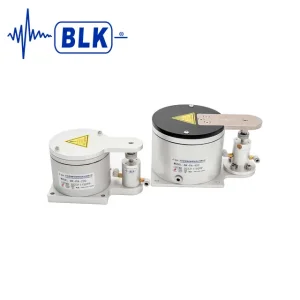
HDRM Solution: Hybrid pneumatic-rubber mounts (BK-PA and BK-AT series) utilizing ultra-low stiffness pneumatic bladders paired with high-damping elastomeric bump stops, achieving system natural frequencies down to 1.7 Hz.
3. HVAC Plant Rooms & Rooftop Chillers
Challenge: Heavy centrifugal chillers, cooling towers, and end-suction pumps creating dynamic unbalance and fluid pulsation during startup transient resonance.
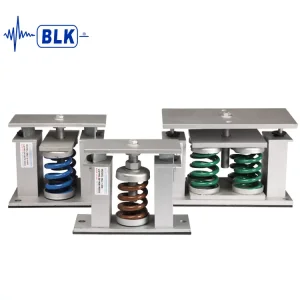
HDRM Solution: Engineered inertia bases paired with MD / MA type spring isolators featuring integrated high-damping rubber snubbers to limit lateral rocking and protect piping connections.
China Factory 4.0: Modern Manufacturing & Supply Chain Resilience
Operating out of our advanced manufacturing base in Kunshan, China, Bellking integrates digital manufacturing with strict raw material traceability to deliver global supply chain security.
Automated Internal Compounding
Computer-controlled Banbury mixers ensure batch-to-batch chemical consistency. Automated inline rheometers verify viscosity, Mooney cure rates, and scorch times before compound release.
Robotic Vacuum Vulcanization
High-tonnage hydraulic compression molding presses equipped with multi-axis robotic loaders eliminate air inclusion defects, achieving precise geometric tolerances for metal-to-rubber bonded mounts.
Dacromet Anti-Corrosion Line
In-house automated metal surface preparation and Dacromet coating lines provide zinc-aluminum flake protection passing 900 hours of neutral salt spray testing per ISO 9227.
Global Enterprise Procurement: Custom FEA Engineering Workflow
Procurement departments at global OEMs require clear verification before approving supplier engineering drawings. Our factory operates a transparent 5-step custom customization framework:
Dynamic Load Analysis
Buyer submits total operating weight, center of gravity (CoG), excitation frequencies (RPM), and installation footprints.
Non-Linear FEA Simulation
Mooney-Rivlin or Ogden material modeling in ANSYS simulates shear stress distribution and hyperelastic deformation under dynamic impact.
Compound & Mold Prototyping
Rapid 3D printed mold cores and custom compound mixing yield sample mounts within 3 to 5 working days.
Dynamic Characterization Testing
Servo-hydraulic shake-table testing verifies dynamic stiffness ($K_d$), static stiffness ($K_s$), and hysteresis loss loop curves.
PPAP & Volume Production
Production Part Approval Process (PPAP Level 3) documentation delivered alongside ISO 9001 quality certificates.
Regulatory Compliance, Standards Certification & Global Support
All High Damping Rubber Mounts exported from our facilities conform to international environmental and mechanical standards, ensuring smooth site acceptance testing (SAT):
RoHS & REACH Compliance
Elastomers are strictly formulated without SVHCs (Substances of Very High Concern), heavy metals, or hazardous polycyclic aromatic hydrocarbons (PAHs).
DIN 4150-3 & ISO 20233
Mounts engineered to limit structural vibration effects on commercial buildings and satisfy international rail transit shock resistance norms.
24/7 Global Engineering Desk
Direct access to technical engineers for selection calculations, replacement cross-referencing, and on-site retrofitting guidance.
Frequently Asked Technical Questions (Engineering Q&A)
Comprehensive technical answers regarding high damping rubber mount selection, chemistry, installation, and thermal degradation.
1. What distinguishes High Damping Rubber Mounts (HDRM) from standard rubber isolators?
2. How do ambient temperatures affect high damping elastomer performance?
3. How is the Dynamic-to-Static Stiffness Ratio ($K_d / K_s$) calculated and why is it crucial?
4. What parameters are required to specify a custom rubber mount solution?
1) Total wet/operating equipment mass (kg).
2) Exact Center of Gravity (CoG) location and support point layout.
3) Disturbing frequencies ($f_d$ in Hz or operating RPM).
4) Environmental parameters (ambient oil/chemical exposure, UV, temperature extremes).
5) Seismic or wind restraint requirement codes.
5. How does Dacromet coating compare to standard galvanizing for steel mount housings?
6. What is the operational service life of Bellking High Damping Rubber Mounts?
Featured High Damping Rubber & Isolation Mounts (Part II)
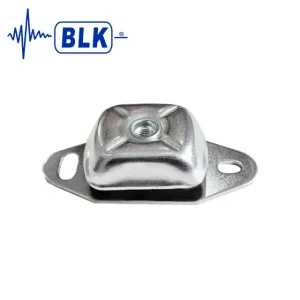
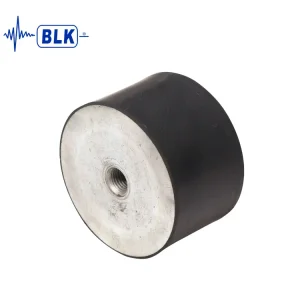
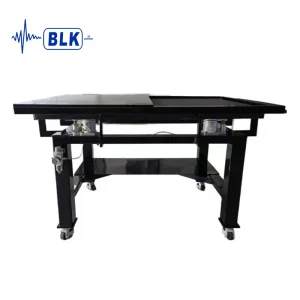
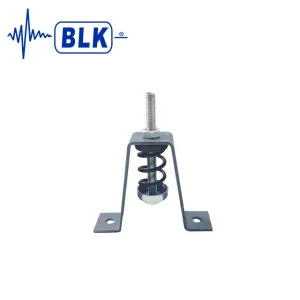
Explore our comprehensive range of high-efficiency polymer pads, matrix isolators, spring hangers, and precision platforms.


Request a Custom FEA Simulation & Vibration Calculation
Partner directly with our engineering team in Kunshan. We provide complete dynamic calculations, FEA verification, and customized sample prototyping within 3 to 5 working days.