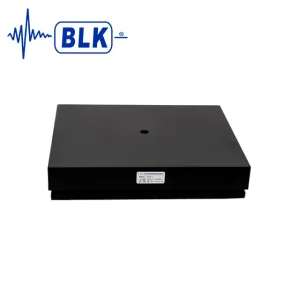
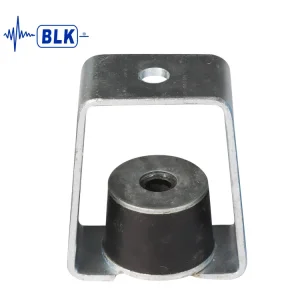
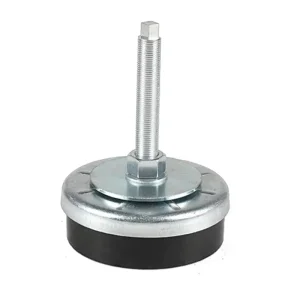
Heavy-Duty & Precision Rubber Isolators
Explore our top-tier anti-vibration rubber mounts, air mounts, and structural isolation dampening systems engineered for extreme industrial performance.
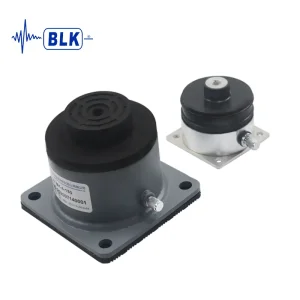
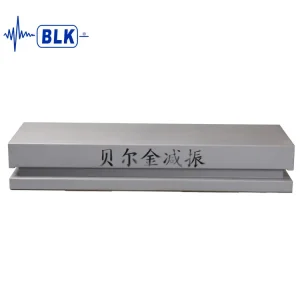
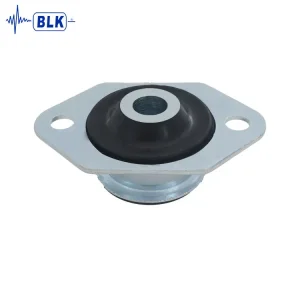
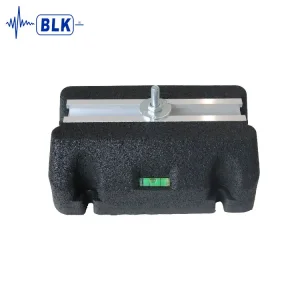
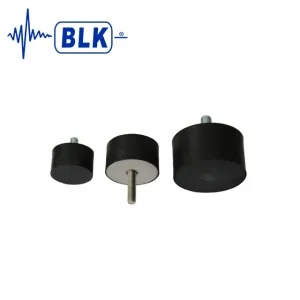
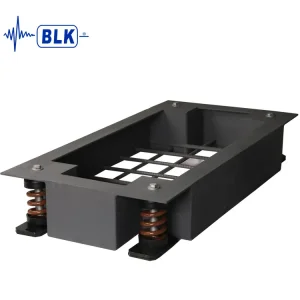
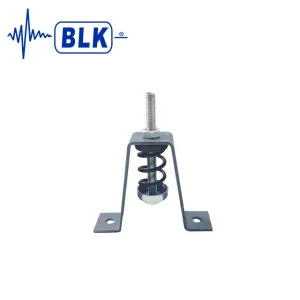
Global Commercial & Industrial Status of Anti-Vibration Systems
Navigating NVH (Noise, Vibration, and Harshness) challenges in modern Industry 4.0 infrastructure, precision manufacturing, and heavy energy installations.
The Macro-Industrial NVH Challenge
In the modern industrial landscape, uncontrolled structural vibration represents one of the primary drivers of mechanical fatigue, operational inefficiency, premature component failure, and environmental acoustic pollution. High-speed rotating equipment—such as HVAC centrifugal chillers, industrial air compressors, marine diesel engines, power transformers, and high-precision CNC machining centers—generates periodic dynamic forces.
When these forces transfer into surrounding floor structures, piping networks, or cleanroom foundations, they induce structural resonance. This can degrade equipment positioning tolerances to sub-micron levels and shorten machinery lifespan by up to 45%. Selecting an authoritative anti vibration rubber mounts factory is a imperative engineering decision rather than a simple procurement task.
Global Market Growth & Regulatory Drivers
According to recent industrial acoustic & vibration isolation market intelligence, the global market for elastomeric and pneumatic isolators is projected to reach USD 6.8 Billion by 2030, growing at a CAGR of 6.2%. Key growth drivers include stringent municipal noise regulations (such as DIN 4109 and ISO 3744), the surge in high-density data center construction requiring quiet power backup generators, and the global expansion of semiconductor fabrication plants.
Modern industrial buyers demand verified information gain, detailed static deflection metrics, dynamic-to-static stiffness ratios ($K_d/K_s$), and long-term viscoelastic creep telemetry to ensure compliance and structural safety.
Viscoelastic Damping Dynamics & Material Formulations
The mathematical rigor behind rubber-to-metal bonding, natural frequency attenuation, and polymer cross-linking chemistry.
Natural Frequency ($f_n$) & Transmissibility Ratio ($T_r$)
The primary function of an anti vibration rubber mount is to decouple a vibrating body from its supporting structure. The fundamental natural frequency of a single-degree-of-freedom rubber mounting system is calculated using static deflection ($d_s$ in mm):
f_n = (1 / 2π) * √(g / d_s) ≈ 5 / √(d_s) [Hz]
To achieve meaningful isolation, the excitation frequency ($f_d$) of the machine must satisfy the condition $f_d / f_n > \sqrt{2}$. When the ratio reaches $3$ or higher, isolation efficiency exceeds 88–95%, damping out destructive structural resonance.
Rubber-to-Metal Vulcanization Bonding
The mechanical integrity of heavy-duty cone mounts, matrix mounts, and cylindrical mounts depends entirely on the chemical bond interface between the elastomer compound and metal substrate (carbon steel or stainless steel).
Leading factories utilize multi-stage chemical surface cleaning (shot blasting, degreasing, and silane primer application) followed by high-pressure thermal compression molding. This yields a tear-resistant chemical bond with shear strength exceeding 12 MPa—ensuring the rubber tears internally before metal delamination occurs under severe shock loads (up to 3–5 G acceleration).
Polymer Compound Selection Strategy
Different industrial environments require specific rubber elastomer formulations:
- Natural Rubber (NR): Supreme dynamic elasticity, high tensile strength, and low internal hysteresis; ideal for general HVAC and engine mounts (-40°C to +80°C).
- EPDM: Excellent ozone, UV, and weather resistance; optimized for outdoor HVAC chillers and rooftop units.
- Nitrile (NBR): Superior resistance to oils, hydraulic fluids, and fuels; engineered for industrial gearbox and pump supports.
- Fluoroelastomer (FKM / Silicone): Ultra-high temperature tolerance (>200°C) and extreme chemical resistance for specialized chemical plant applications.
Technical Matrix: Anti-Vibration Mount Categories & Dynamic Performance
| Product Type Code | Elastomer / Spring Core | Natural Frequency Range | Damping Ratio (ζ) | Max Deflection Range | Target Application Industry |
|---|---|---|---|---|---|
| BKVD Series | High-Grade NR / NBR | 6.0 Hz – 12.0 Hz | 0.08 – 0.15 | 5 mm – 15 mm | Engine Generator Sets, Pumps, Compressors |
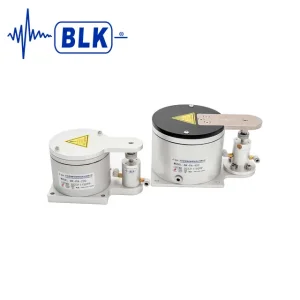
| BK-A Series | Reinforced Pneumatic Bladder | 1.7 Hz – 3.5 Hz | 0.05 – 0.20 (Adjustable) | 15 mm – 35 mm | Semiconductor Inspection, Cleanroom Metrology |
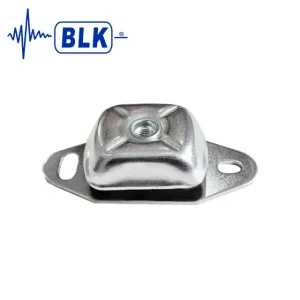
| BK-MT Series | Matrix Micro-Cellular Rubber | 7.0 Hz – 14.0 Hz | 0.10 – 0.18 | 8 mm – 20 mm | Heavy Metal Stamping, Industrial Presses |
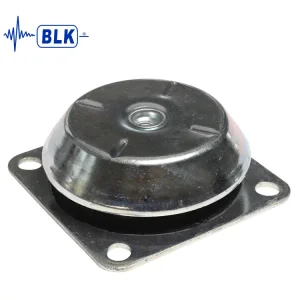
| BKCN Series | Tapered Cone Rubber Mount | 5.5 Hz – 10.0 Hz | 0.12 – 0.16 | 10 mm – 25 mm | Off-Highway Vehicles, Marine Engines, Defense |
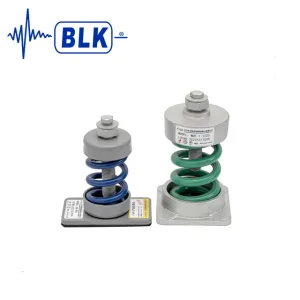
| CPB / HV Series | High-Tensile Alloy Spring + Rubber Base | 3.0 Hz – 5.0 Hz | 0.04 – 0.08 | 25 mm – 50 mm | HVAC Chillers, Cooling Towers, Suspended Ducts |
Localized Application Scenarios & Engineering Case Studies
How high-quality anti-vibration rubber mounts solve sector-specific vibration and noise issues across global industrial setups.
1. Commercial HVAC & Building Services
In high-rise commercial towers, hospital facilities, and data centers, rooftop chillers, air handling units (AHUs), and water pumps generate low-frequency structure-borne noise that propagates through concrete slabs.
Deploying BKVD Rubber Mounts and CPB Inertia Bases decouples equipment from structural floor slabs. This attenuates mechanical hum by up to 32 dB(A), keeping occupied office spaces compliant with ASHRAE noise criteria guidelines.
2. Automotive & EV Powertrain Test Benches
Automotive engine testing facilities require isolation systems that withstand dynamic dynamic torque spikes and extreme axial loads. Electric Vehicle (EV) battery packs and electric motor test rigs require high stiffness in shear coupled with soft vertical damping.
Custom-molded BKCN Cone Mounts absorb high dynamic force inputs, protecting sensitive torque transducers and laser calibration sensors from parasitic vibration noise.
3. Semiconductor Fab & Metrology Cleanrooms
Modern semiconductor photolithography, wafer probing, and Scanning Electron Microscopy (SEM) operate at nanometer scale. Ambient floor vibrations caused by nearby foot traffic or HVAC ducting disrupt imaging accuracy.
Installing ultra-low frequency BK-A Air Mounts reduces ambient excitation down to VC-E cleanroom vibration curves, maintaining measurement stability within sub-micron tolerances.
4. Marine Propulsion & Offshore Energy
Shipboard generator sets and main propulsion engines operate under constant pitching, rolling, and high-humidity salt spray conditions. Mount failure can cause drive shaft misalignment and hull acoustics issues.
Marine-grade BKVE Type Rubber Mounts equipped with captive safety interlocks prevent engine breakaway during rough sea conditions, while Dacromet coatings pass 900-hour ASTM B117 salt spray corrosion tests.
5. Power Transformers & Electrical Substations
Magnetostriction in electrical transformer cores produces a continuous 100Hz/120Hz audible hum. When mounted directly on concrete pad foundations, this vibration travels into surrounding residential zones.
Engineered transformer anti-vibration mounts isolate magnetostrictive forces, cutting structural vibration transmission by up to 90% and maintaining compliance with suburban acoustic zoning limits.
6. Industrial Stamping & Forging Presses
Heavy drop hammers and metal stamping presses release transient impact energy, causing localized ground shockwaves that can damage adjacent factory equipment and foundations.
High-capacity elastomeric BK-MT Matrix Dampers absorb massive dynamic impact energy, turning shock force into thermal dissipation through internal viscoelastic friction.
China Factory Supply Chain Resilience & Efficiency Advantages
Why global EPC contractors and OEMs partner directly with Kunshan & Yangtze River Delta manufacturing clusters for high-volume, precision vibration control hardware.
1. Fully Integrated Supply Chain Ecosystem
Located in the heart of Kunshan’s precision manufacturing corridor, our production ecosystem integrates raw natural rubber compounding, metal stamping, CNC turning, surface treatment, vulcanization molding, and finite element analysis (FEA) dynamic testing within a 30-kilometer radius.
This geographic concentration reduces raw material lead times by 60% compared to fragmented European or North American manufacturing networks.
2. Automated Tooling & Rapid Prototyping
Leveraging high-speed multi-axis CNC machining centers and 3D FEA simulation software, our engineering team converts customer CAD models into physical vulcanization molds in as fast as 3 working days.
Custom durometer variations (from Shore A 30 to 80), custom bolt hole patterns, and non-standard height profiles are seamlessly integrated into production lines without costly downtime.
3. Rigorous Total Cost of Ownership (TCO)
Direct factory procurement eliminates multi-tier distributor markups while guaranteeing strict quality standards. Advanced automated injection molding systems maintain tight dimensional tolerances (±0.1mm) and low scrap rates.
This allows global buyers to lower procurement costs by 30–45% without compromising mechanical endurance, dynamic stability, or certification compliance.
Technology Roadmap & Future Outlook (2025–2030)
The next generation of intelligent, bio-based, and active-passive hybrid vibration control solutions.
2025: Bio-Based Eco-Elastomer Formulations
Transitioning from pure petroleum-derived synthetic polymers to sustainable, bio-based natural rubber compounds reinforced with recycled carbon black nanostructures. Achieves a 35% reduction in product carbon footprint while preserving high tensile tear strength.
2026: IoT-Enabled Smart Vibration Mounts
Integrating embedded micro-piezoelectric sensors and RFID telemetry tags inside the rubber matrix. Enables real-time wireless monitoring of dynamic load stress, temperature spikes, and elastomer creep degradation directly to factory SCADA systems for predictive maintenance.
2028: Magnetorheological (MR) Adaptive Damping
Development of commercial MR-elastomer hybrid mounts capable of adjusting stiffness dynamically in milliseconds by modulating localized magnetic fields. Provides real-time adaptation against unpredictable seismic events or variable-frequency motor operation.
2030: Zero-Resonance Sub-Hz Active Air Mounts
Ultra-precision air mount designs combining pneumatic isolation with voice-coil magnetic actuators to achieve active cancelation of ground vibrations down to 0.5 Hz for next-generation EUV lithography systems.
Localized Engineering Support & Compliance Standards
Rigorous quality assurance, certified testing documentation, and global engineering consultancy.
ISO 9001:2015 Quality Management
Every batch of raw rubber undergoes durometer hardness testing (ASTM D2240), tensile strength analysis (ASTM D412), and rheometer cure profiling prior to molding.
RoHS & REACH Compliance
All elastomeric compounds are certified free from heavy metals, polycyclic aromatic hydrocarbons (PAHs), and SVHC chemicals, ensuring full access to EU and North American markets.
Third-Party Lab Verification
We supply full third-party test reports (SGS, TÜV, CNAS) covering dynamic stiffness, compression set under continuous load, and accelerated thermal aging endurance.
24/7 Application Consulting
Our application engineers provide fast sizing assistance—analyzing equipment operating weight, center of gravity location, and RPM data to return custom isolation plans within 24 hours.
Frequently Asked Engineering Questions (FAQ)
Expert technical responses to common questions from structural engineers, acoustic consultants, and industrial buyers.
1. Anti-Vibration Rubber Mounts: Best suited for medium-to-high frequency machinery (operating above 1,200 RPM / 20 Hz), such as electric motors, small rotary compressors, gearboxes, and internal combustion engines. They offer high shear stability, structural damping, and low cost.
2. Spring Isolators: Ideal for low-frequency equipment (300 to 1,200 RPM / 5 to 20 Hz) requiring high static deflection (25mm to 50mm), such as large HVAC chillers, cooling towers, and low-speed centrifugal pumps.
3. Pneumatic Air Mounts: Essential for ultra-low frequency applications (<5 Hz / down to 1.7 Hz) requiring micro-vibration attenuation, such as semiconductor optical benches, CMM inspection tools, and coordinate measuring machines.
• Total wet operating weight of the equipment (kg or lbs).
• Equipment center of gravity (CG) coordinates.
• Number and dimensional layout of mounting support points.
• Operating speed range (RPM) or dominant excitation frequency (Hz).
• Environmental exposure factors (oil splash, ambient temperature, UV exposure, chemical vapors).
• Seismic or wind-restraint structural requirements (if applicable).
Precision Vibration Dampers & Specialty Hangers
Discover our comprehensive lineup of precision air mounts, polymer damping pads, and adjustable vibration isolation feet.