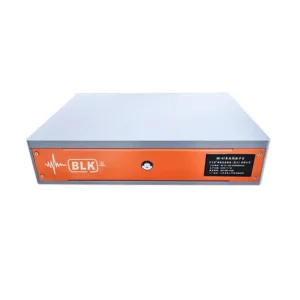
Primary Pump & Equipment Isolation Systems
Precision-engineered spring mounts, rubber pads, and damped platforms built to absorb low-frequency dynamic resonance, minimize structure-borne noise, and safeguard industrial pumping networks.
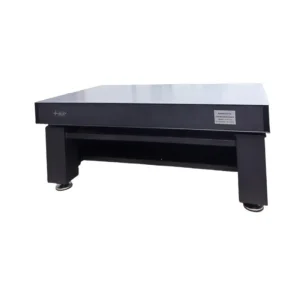
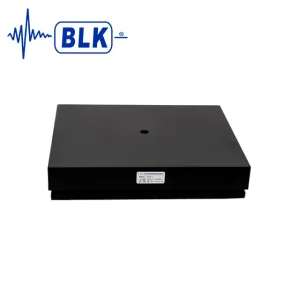
BK-RT Type Damped Vibration Isolation Platform
High-Quality BK-RT Type Damped Vibration Isolation Platform Factories, Manufacturers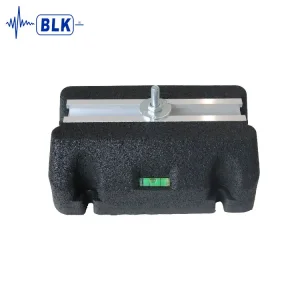
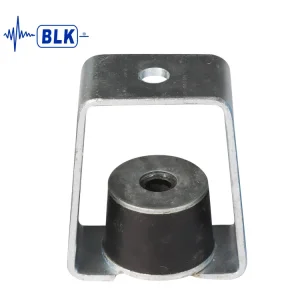
BK-DSR Type Viscous Damped Rubber Mounts
Custom BK-DSR Type Damped Rubber Mounts Factories, Manufacturer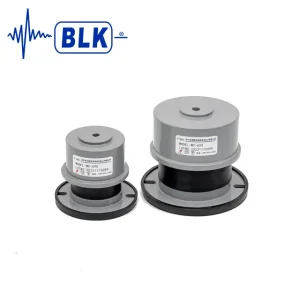
MC Type Anti-Vibration Spring Mounts
High-Quality MC Type Anti-vibration Spring Mounts Manufacturer, Price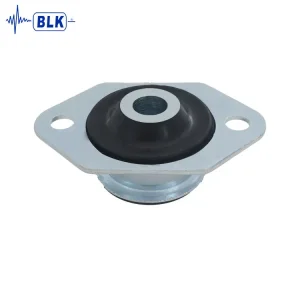
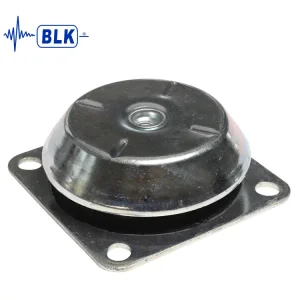
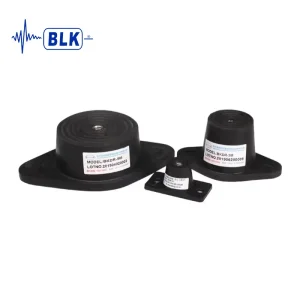
BKHQ Type High-Performance Rubber Mounts
High-Quality BKHQ Type Rubber Mounts Factory, ManufacturersGlobal Macro Trends in Pumping Station Vibration Control
Urbanization, stringent ESG mandates, and Industry 4.0 digitizations are fundamentally altering how fluid handling systems are specified, isolated, and maintained across municipal and industrial sectors.
Urban Encroachment & Acoustic Strictness
With municipal pumping facilities encroaching closer to residential zones and high-rise commercial complexes, acoustic standards such as ASHRAE 2023, ISO 3744, and local municipal sound boundaries demand structure-borne vibration isolation efficiencies exceeding 98% to prevent low-frequency hum (20–120 Hz) from propagating through building foundations.
Variable Frequency Drives (VFD) Challenge
Modern pumping stations rely heavily on Variable Frequency Drives to optimize energy consumption. However, operating across variable RPM ranges causes pumps to pass through natural resonant frequencies during ramp-up and ramp-down. Advanced vibration isolators must incorporate viscous or polymer damping to suppress transient resonance peaks.
ESG & Infrastructure Asset Longevity
Uncontrolled pump vibration induces structural fatigue, mechanical seal failure, pipe flange shearing, and premature bearing wear. Global EPC contractors now treat high-performance spring mounts and inertia bases as core asset-protection investments rather than passive mechanical accessories.
The Structural Physics of Pump Station Vibration Isolation
A detailed analysis of forced harmonic excitation, dynamic deflection, transmissibility ratios, and mass-stiffness optimization for centrifugal and positive displacement pumps.
1. Distributing Frequency ($f_d$) vs. Natural Frequency ($f_n$)
Industrial water pumps generate cyclic dynamic forces resulting from mechanical unbalance, hydraulic impeller pass frequencies, and motor rotation. The disturbing frequency $f_d$ (in Hz) is directly proportional to operating pump RPM:
EQUATION 1: Operating Disturbing Frequency
f_d = \frac{\text{RPM}}{60} \quad [\text{Hz}]Example: A 4-pole motor operating at 1,450 RPM yields f_d = 24.17 \text{ Hz}.
For an isolator to attenuate vibration rather than amplify it, the ratio of disturbing frequency to the isolator's natural frequency ($r = f_d / f_n$) must exceed \sqrt{2} \approx 1.414. Real-world structural engineering targets $r \ge 3.0$ to guarantee isolation performance exceeding 88–95%.
EQUATION 2: Dynamic Transmissibility (T)
T = \sqrt{ \frac{1 + (2 \zeta r)^2}{(1 - r^2)^2 + (2 \zeta r)^2} }Where \zeta is the damping ratio of the elastomeric or spring-viscous medium.
2. Role of Concrete Inertia Bases (CPB Type)
High-head pumps and end-suction centrifugal pumps generate significant side-thrust forces, nozzle torque, and transient start-up surges. Installing a pump directly on spring isolators can lead to excessive motion, pipe stress, and coupling misalignment. A high-density concrete inertia base solves this by providing three critical mechanical functions:
- Lowers System Center of Gravity (CoG): Stabilizes the pump assembly against tipping moments and nozzle reaction loads.
- Increases Total Oscillating Mass ($M$): Adding 1.5x to 2.0x the pump's weight reduces the vibration amplitude ($A \propto \frac{F_0}{M \cdot \omega^2}$).
- Maintains Rigid Motor-Pump Alignment: Prevents torsional flex between the drive motor and pump casing during structural transients.
Vibration Isolator Engineering Selection Guide
Compare mechanical attributes, static deflections, natural frequencies, and application bounds across major isolator categories.
| Isolator Type | Natural Freq ($f_n$) | Static Deflection | Damping Ratio ($\zeta$) | Load Capacity | Ideal Application | Price Index |
|---|---|---|---|---|---|---|
| Spring Mounts (MC/ME) | 3.0 - 5.0 Hz | 25 - 50 mm | 0.01 - 0.05 | 50 - 3,500 kg | Base-mounted pumps, chillers, heavy gensets | Medium |
| Viscous Damped Platforms (BK-RT) | 2.0 - 4.0 Hz | 30 - 75 mm | 0.15 - 0.25 | 200 - 5,000 kg | VFD-driven pumps, high-transient stations | High |
| Inertia Base Supports (CPB) | N/A (Rigid Base) | Paired with Spring | N/A | 500 - 15,000 kg | End-suction & double-suction split casing pumps | Upper-Mid |
| Neoprene/Rubber Mounts (BKDR/BKCN) | 7.0 - 12.0 Hz | 3 - 10 mm | 0.08 - 0.15 | 20 - 800 kg | High-speed small pumps (>1800 RPM), small fans | Economic |
| Polymer Damping Pads (BKDJ/BK-PM) | 12.0 - 20.0 Hz | 1 - 4 mm | 0.10 - 0.18 | Up to 50 kg/cm² | Pad foundations, structural acoustic breaks | Very Low |
| Suspended Hangers (HR Type) | 3.5 - 8.0 Hz | 15 - 35 mm | 0.02 - 0.08 | 15 - 1,200 kg | In-line pipe runs, suspended booster pumps | Low-Mid |
Tailored Solutions for Heavy-Duty Pumping Infrastructure
Different operational environments present distinct dynamic, chemical, and seismic challenges. We provide integrated macro-level solutions for four core industry verticals.
Municipal Water & Sewage Stations
Submersible and dry-pit sewage pumps experience frequent clogging transients and hydraulic turbulence. Utilizing CPB Inertia Bases combined with heavy static-deflection MC Spring Mounts isolates heavy low-frequency oscillations, protecting concrete civil structures from fatigue cracking.
Commercial HVAC Chilled Water Circuits
Located on penthouse plant rooms or basement levels, large chilled water pumps generate noise that can travel up through building columns. High-compliance spring mounts with neoprene anti-acoustic cups eliminate solid structural contact and satisfy tight noise criterion (NC) curves.
Chemical & Slurry Processing Plants
Aggressive chemical vapors and outdoor marine conditions degrade standard steel isolators. We specify Dacromet-coated springs or stainless-steel housings paired with fluoroelastomer (FKM) or EPDM rubber pads to resist acid, oil, and ozone attack.
Power Generation Cooling Water Loop
High-volume cooling tower pumps operate continuously under heavy load. Specialized seismic-restrained spring isolators absorb dynamic vibration while providing integral limit-stops to withstand wind loads, sudden pipe discharge thrusts, and seismic acceleration event forces.
Global Standards & Engineering Compliance
Our engineering design, alloy metallurgy, and quality testing procedures align strictly with international mechanical engineering and seismic codes.
ISO 9001:2015 & ISO 20816 Quality Control
Every lot of spring and elastomeric isolators undergoes 100% static load deflection testing and dynamic fatigue verification. Product manufacturing complies with ISO 20816 mechanical vibration evaluation guidelines.
ASCE 7 & IBC Seismic Restraint Standards
For installations in active seismic zones, our seismic-restrained spring mounts are engineered to withstand multi-axis lateral and vertical seismic forces (up to 2.0g spectral acceleration) per International Building Code (IBC) provisions.
Dacromet 900+ Hour Corrosion Standard
Steel coil springs receive high-durability Dacromet or hot-dip galvanizing coatings. Proven by 900-hour neutral salt spray tests (ASTM B117), guaranteeing long-term resistance in humid pump pits and outdoor environments.
Pump Station Isolation Pricing Dynamics & TCO
Understanding manufacturer price structures, material cost drivers, and Total Cost of Ownership (TCO) evaluation for major pump procurement projects.
Primary Cost Drivers in Manufacturing Vibration Isolators
When reviewing procurement quotes from factory manufacturers, unit pricing varies based on four key structural elements:
CAPEX vs. OPEX: Total Cost of Ownership Perspective
In a typical municipal pumping station, vibration isolators represent less than 1.5% of the total mechanical equipment procurement budget. However, installing sub-standard isolators leads to compounding operational expenditures:
- Premature Shaft & Seal Failures: Unmitigated mechanical vibration accelerates pump seal leakage, requiring $2,500-$8,000 per overhaul.
- Pipe Flange Cracking: Dynamic fatigue transferred to unisolated pipe elbows results in catastrophic water leaks and emergency plant downtime.
- Acoustic Remediation Retrofits: Retrofitting isolators into an active pump station after building handover costs up to 5x more than initial factory-integrated isolation installation.
Future Technical Roadmap for Intelligent Vibration Control
Exploring next-generation damping materials, IoT dynamic monitoring, and active piezo-hybrid isolation technologies.
IoT-Enabled Smart Isolator Sensors
Integrating wireless MEMS accelerometers directly inside spring housings allows real-time telemetry of static deflection, dynamic amplitude, and operational frequency shifts. Maintenance teams receive automated alerts if pump unbalance exceeds ISO 10816 thresholds.
Advanced Magnetorheological (MR) Damping
MR fluid dampers dynamically adjust damping coefficients within milliseconds in response to VFD motor speed ramps. This completely eliminates transient resonance amplification as the pump speeds up or slows down.
Eco-Polymer Nano-Composites
Transitioning from traditional synthetic rubber to bio-based, nano-silica reinforced elastomers. These green compounds offer 40% higher resistance to petroleum hydrolysis and chemical degreasing agents while reducing carbon footprint.
Frequently Asked Questions by Technical Procurement Teams
Direct technical answers regarding sizing, inertia base calculations, anti-vibration rubber selection, and price considerations.
Specialized & Custom Isolation Assemblies
Explore our specialized catalog of polymer damping pads, spring hangers, inertia pump bases, and desktop precision platforms engineered for direct factory procurement.
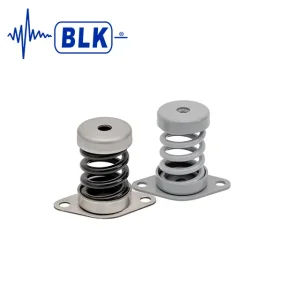
ME Type Heavy-Load Anti-Vibration Spring Mounts
High-Quality ME Type Anti-vibration Spring Mounts Factory, Factories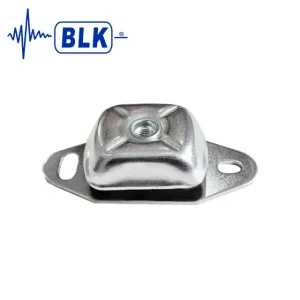
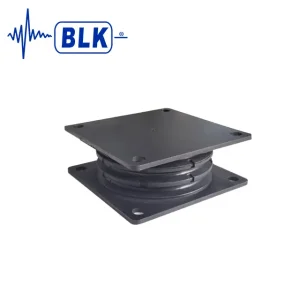
BKSWA Type Multi-Layer Antivibration Dampers
Custom BKSWA Type Multi-Layer Antivibration Dampers Factory, Price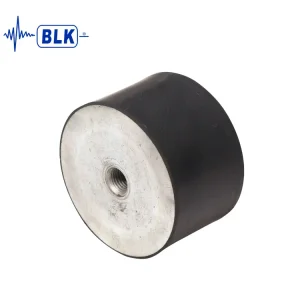
BKDD Type Double-Deflection Rubber Mounts
High-Quality BKDD Type Rubber Mounts Factories, Manufacturers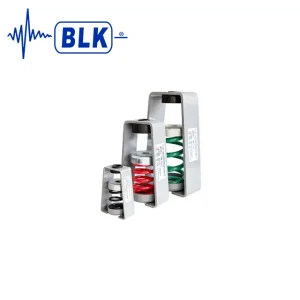
Custom Industrial Anti-Vibration Spring Hangers
Custom Anti-vibration Spring Hangers Factories, Manufacturers
BK-PM Type Polymer Structural Damping Pad
Low Price BK-PM Type Polymer Damping Pad Factories, Manufacturers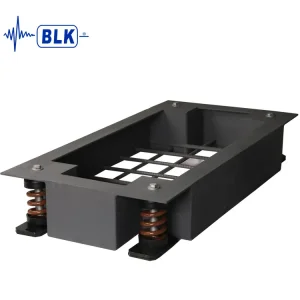
CPB Type Heavy Concrete Inertia Bases & Pump Supports
High-Quality CPB type Inertia Bases & Pump Supports Manufacturers, Manufacturer