
High-Performance Anti-Vibration Isolators & Mounts
Explore our engineering-grade vibration reduction series manufactured in our Kunshan automation facility. Designed for high load capacity, fatigue resistance, and severe environmental durability.




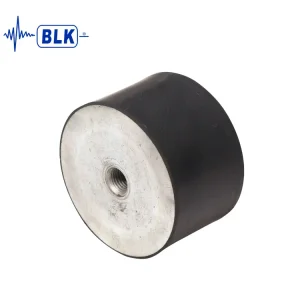



Anti-Vibration Rubber Washers: Industrial Mechanics & Sourcing Intelligence
A comprehensive whitepaper on viscoelastic elastomer physics, structural dynamic isolation, factory price structures, and procurement protocols for high-precision global machinery.
1. Executive Summary & Global Market Landscape
In modern industrial engineering, uncontrolled mechanical vibration represents one of the primary drivers of premature equipment failure, acoustic pollution, structural fatigue, and operational downtime. From high-capacity HVAC chillers and heavy automotive assembly presses to sensitive semiconductor metrology tools, mechanical harmonics generated by rotational or reciprocating machinery propagate through fasteners, mounting plates, and sub-frames.
Anti-vibration rubber washers (also referred to as elastomeric isolation washers, shock-absorbing grommets, and rubber damper rings) serve as critical, highly cost-effective isolation barriers inserted at mechanical fastener junctions. By introducing a localized, high-loss compliant medium between rigid metallic interfaces, these specialized components convert kinetic kinetic harmonic energy into negligible thermal energy via internal polymer chain friction.
2. Viscoelastic Damping Science & Dynamic Attenuation Formulas
Rubber isolation components operate based on the principles of viscoelasticity, possessing both elastic behavior (storing energy) and viscous behavior (dissipating energy). When subjected to cyclic dynamic loads, the mechanical stress and strain response of an elastomer exhibits a phase shift ($\delta$). The efficiency of energy absorption is governed by the hysteresis loss factor ($\tan \delta$):
$$\tan \delta = \frac{E''}{E'}$$
Where $E''$ represents the loss modulus (viscous damping component) and $E'$ represents the storage modulus (elastic stiffness component). To achieve optimal vibration isolation in industrial machinery, engineers must evaluate two fundamental parameters: the Natural Frequency ($f_n$) of the isolation system and the Disturbing Frequency ($f_d$) generated by the operating equipment.
The natural frequency of an elastomeric washer suspension is calculated using:
$$f_n = \frac{1}{2\pi} \sqrt{\frac{K_d}{m}}$$
Where $K_d$ is the dynamic stiffness of the rubber washer under operating compression, and $m$ is the supported mass per isolation point. Effective isolation occurs exclusively when the frequency ratio $r = f_d / f_n > \sqrt{2} \approx 1.414$. For maximum attenuation efficiency (>90%), professional engineering standards dictate targeting a frequency ratio of $r \ge 3.0$.
3. Material Chemistry & Performance Matrix
Selecting the optimal polymer compound dictates the fatigue life, chemical resistance, compression set resistance, and environmental durability of anti-vibration rubber washers. The table below outlines the primary industrial elastomers used in Bellking's automated molding lines:
| Elastomer Compound | Durometer (Shore A) | Working Temp Range | Damping Loss Factor ($\tan \delta$) | Chemical & Oil Resistance | Primary Application Profile |
|---|---|---|---|---|---|
| Neoprene (CR) | 40 - 75 | -35°C to +100°C | 0.15 - 0.25 (Moderate-High) | Excellent Ozone / Flame / Oil | HVAC, Industrial Machinery, Marine Mounts |
| Nitrile (NBR) | 50 - 80 | -30°C to +120°C | 0.10 - 0.20 (Moderate) | Outstanding Petroleum & Fuel | Automotive Engines, Hydraulic Pumps, Gearboxes |
| EPDM Rubber | 40 - 80 | -45°C to +150°C | 0.12 - 0.22 (Moderate) | Superior Weather / UV / Steam | Outdoor Transformers, Solar Sub-structures, Civil HVAC |
| Silicone (VMQ) | 30 - 70 | -60°C to +200°C | 0.05 - 0.15 (Low-Moderate) | High Temp / Cleanroom Inert | Semiconductor Metrology, Aerospace Avionics, Medical |
| Fluoroelastomer (FKM) | 60 - 90 | -20°C to +230°C | 0.10 - 0.18 (Moderate) | Extreme Acids / Solvents / Fuels | Chemical Processing Plants, Heavy Automotive Exhaust |
Why Sourcing Direct From Our Factory Delivers Ultimate ROI
Combining state-of-the-art polymer vulcanization, automated CNC quality inspection, and direct-from-manufacturer wholesale pricing economics.
Non-Linear Compression Engineering
Our custom rubber washer profiles feature molded concentric friction ribs and tapered cross-sections that deliver progressive stiffness, preventing bottom-out conditions under unexpected dynamic shock loads up to 5G acceleration.
Factory Direct Pricing Advantage
By eliminating middleman trading distributors, Bellking supplies OEM and tier-1 procurement buyers with genuine low-cost volume unit rates, direct custom tooling development (3-day samples), and flexible bulk order MOQs.
Zero-Defect Quality Control
Every production lot undergoes rigorous ASTM D2240 durometer testing, ASTM D395 compression set evaluation, and 900-hour salt spray corrosion testing on metal-bonded washer assemblies (Dacromet surface treatment).
Chinese Factory Efficiency Advantages & Global Sourcing Economics
Over the past two decades, China's Yangtze River Delta industrial belt—specifically the Kunshan and Suzhou manufacturing clusters in Jiangsu Province—has evolved into the world's premier production hub for precision elastomeric components and vibration reduction hardware. Sourcing anti-vibration rubber washers directly from an established Chinese manufacturer offers structural competitive advantages that extend far beyond raw unit cost savings:
1. Integrated Supply Chain & Compound Customization
Bellking’s Kunshan facility operates integrated raw rubber refining, polymer masterbatch compounding, precision mold manufacturing, and automated compression molding under one ISO 9001:2015 certified roof. This vertical integration allows us to formulate custom rubber durometers (from ultra-soft 30 Shore A for micro-vibration optical isolation to ultra-hard 85 Shore A for heavy stamping press pads) in hours rather than weeks.
2. Advanced Tooling Speed & Prototyping Agility
Traditional Western mold makers often require 4 to 8 weeks for custom tooling steel development. Leveraging high-speed 5-axis CNC machining centers and automated electrical discharge machining (EDM) within our factory, Bellking produces custom rubber washer prototypes and pre-production samples in as little as 3 to 5 working days. This rapid turnaround drastically accelerates our client's time-to-market for new equipment designs.
3. Scalability & Automated Production Cost Control
Equipped with vacuum compression molding presses ranging from 100 to 500 tons, robotic trimming cells, and optical automated sorting machines, our automated production lines yield over 100,000 precision elastomeric units annually. This mass production capacity reduces energy and labor overhead per piece, enabling us to offer global B2B buyers wholesale price tiers that are 30% to 50% lower than regional European or North American distributors without compromising material standards.
4. Strict Compliance with International Standards
Global procurement teams often express concern regarding quality consistency when sourcing offshore. Bellking eliminates this risk by subjecting all raw materials and finished products to international testing standards:
- REACH & RoHS Compliance: Elastomers are completely free of heavy metals, polycyclic aromatic hydrocarbons (PAHs), and restricted phthalates.
- ASTM D2000 Material Classification: Full traceability and standardized line-callout verification for rubber physical properties.
- ISO 37 & ISO 815 Testing: Standardized tensile testing and long-term compression set analysis under elevated temperatures.
Industrial Application Scenarios & Engineering Field Guidelines
From industrial plant infrastructure to high-tech cleanrooms, discover how our anti-vibration rubber washers and elastomeric mounts resolve critical harmonic challenges.
HVAC Chillers & Air Handling Units
Suspended ductwork, rooftop chillers, and centrifugal blowers generate low-frequency hums that travel through structural concrete. Installing Neoprene or EPDM rubber washers under bolt heads isolates structural noise and absorbs thermal expansion movements.
Electrical Power Transformers & Substations
Magnetostriction in transformer cores creates continuous 100Hz/120Hz audible hum. Bellking's high-damping transformer washers isolate mounting feet, reducing noise emissions by up to 18 dB(A) in residential substations.
Precision Optical Tables & Semiconductor Inspection
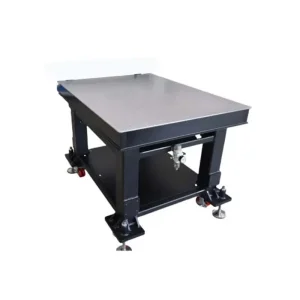
Sub-micron metrology tools demand complete elimination of ambient floor vibrations. Ultra-soft silicone or fluorosilicone rubber washers serve as secondary decoupling elements in multi-stage pneumatic optical platforms.
Global Industry Development Trends: The Future of Elastomeric Damping
As industrial automation accelerates towards Industry 4.0 and green manufacturing mandates tighten globally, the anti-vibration rubber washer market is experiencing transformative technological shifts:
1. Transition to Smart Magnetorheological & Viscoelastic Nanocomposites
Next-generation damping washers are moving beyond standard synthetic rubbers. By incorporating multi-walled carbon nanotubes (MWCNTs) and magnetorheological fluids into polymer matrices, advanced isolators can dynamically alter their shear modulus ($G$) in response to variable motor speeds, offering adaptive damping across wide frequency spectra.
2. Finite Element Analysis (FEA) Non-Linear Topology Optimization
Empirical trial-and-error design is officially obsolete. Modern engineering teams utilize FEA non-linear hyperelastic material models (such as Mooney-Rivlin and Ogden formulations) to simulate stress-strain distribution across washer geometry under static bolt preload and dynamic cyclic shear. This guarantees zero localized stress concentration and maximizes fatigue life.
3. Eco-Friendly Bio-Based Elastomers & Sustainable Manufacturing
With stringent global ESG requirements, leading manufacturers are substituting petroleum-based carbon black fillers with bio-derived silica from rice husk ash and adopting bio-butadiene polymers. Bellking is committed to continuous carbon footprint reduction, ensuring our production processes align with European Green Deal circular economy frameworks.
Frequently Asked Technical & Sourcing Questions
Clear, authoritative answers directly from Bellking's chief application engineers to assist your procurement decision-making.
How do I select the correct rubber durometer (hardness) for anti-vibration washers?
Durometer selection depends on the static load per fastener and target deflection. As a general engineering rule:
- 40-50 Shore A (Soft): Ideal for light loads, low-frequency isolation (<15 Hz), precision electronics, and delicate instruments.
- 60 Shore A (Medium Standard): The most versatile rating for HVAC equipment, pumps, industrial fans, and electric motors under medium torque bolt loads.
- 70-80 Shore A (Hard): Recommended for heavy industrial presses, automotive engine mounts, and high-preload structural bolt assemblies requiring high compressive strength.
What is the difference between static stiffness ($K_s$) and dynamic stiffness ($K_d$)?
Static stiffness ($K_s$) describes the washer's resistance to compression under a steady, constant force (e.g., tightening a mounting bolt). Dynamic stiffness ($K_d$) represents the washer's resistance under cyclic dynamic excitation. For elastomers, dynamic stiffness is always higher than static stiffness ($K_d / K_s \approx 1.2 \text{ to } 2.0$). Always use dynamic stiffness ($K_d$) when calculating natural frequencies and vibration isolation efficiency.
Why choose a metal-bonded rubber washer over a pure rubber washer?
Metal-bonded rubber washers (featuring an outer steel, stainless steel, or aluminum retaining collar vulcanized to an inner rubber ring) prevent the elastomer from bulging or extruding outward under heavy bolt torque. The metal sleeve acts as a positive mechanical stop while the rubber maintains continuous damping tension, extending component lifespan up to 300% under high preload.
How does Bellking guarantee competitive factory pricing for global enterprise buyers?
As a direct manufacturer located in Kunshan, China, we operate fully automated compounding and molding lines with zero intermediary agent markups. We purchase raw synthetic polymers in bulk directly from global chemical producers and pass these scale economics to our buyers, offering tiered wholesale pricing schedules and low tooling costs for OEM custom designs.
What lead times, MOQs, and quality documentation are provided with wholesale orders?
Standard model washers and stock rubber mounts ship within 24 hours. Custom tooling and custom rubber compound orders require 3 to 5 working days for samples and 10 to 14 days for mass production. Every shipment comes complete with ISO 9001 factory inspection certificates, material test reports (MTR), ROHS/REACH compliance letters, and optional 3rd-party lab test reports upon request.
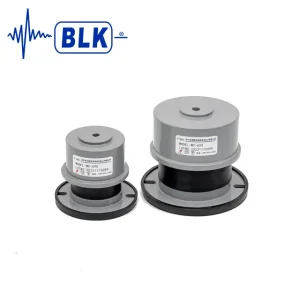
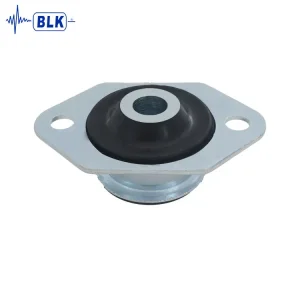
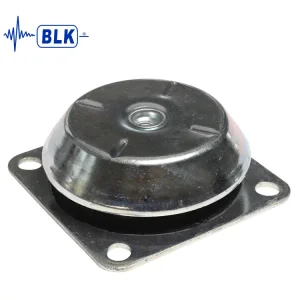
Precision Damping Platforms, Spring Mounts & Specialized Rubber Feet
Pair your anti-vibration washers with our engineered industrial isolation platforms, spring isolators, matrix mounts, and adjustable leveling feet.



Request Your Custom Rubber Washer Proposal & Factory Price Sheet
Send our application engineering team your equipment load specifications, operating RPM, and environmental conditions. Receive a comprehensive vibration isolation calculation report and factory-direct price quotation within 24 hours.
Contact Engineering Team