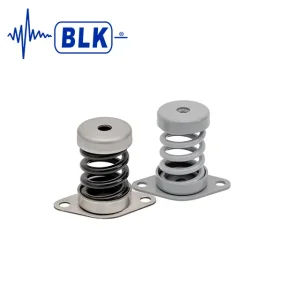
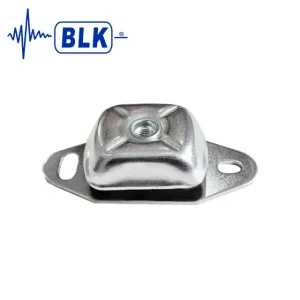
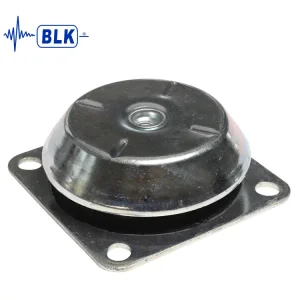
Primary Heavy-Duty Anti-Vibration Isolator Line
Precision-engineered rubber mounts, spring isolators, and high-load buffer pads straight from our ISO 9001 certified Kunshan manufacturing facility.
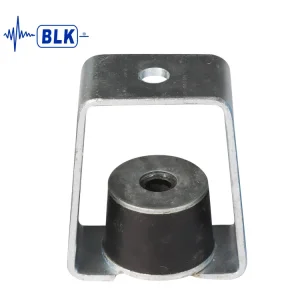
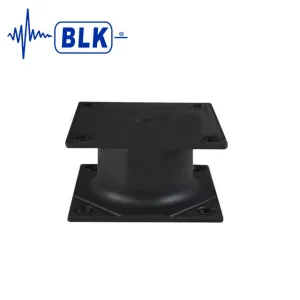
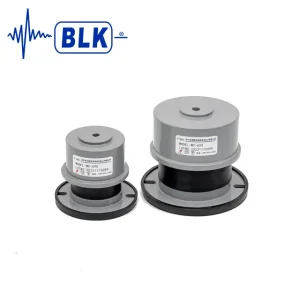

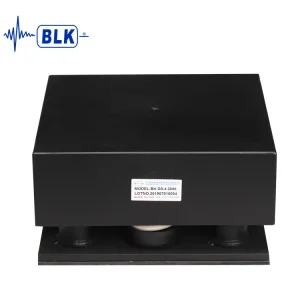



1. Structural Damping & Elastomer Physics in Heavy-Duty Anti Vibration Mats
In modern industrial facilities, uncontrolled mechanical vibration acts as a major catalyst for dynamic stress fatigue, catastrophic structural failure, high acoustic noise pollution, and process inaccuracy. A Heavy Duty Anti Vibration Mat serves as a critical viscoelastic boundary designed to decouple mechanical excitation forces generated by rotating, reciprocating, or impacting machinery from supporting building structures or sensitive process foundations.
Achieving superior structural damping requires balancing low natural frequency ($f_n$) with high load-bearing capacity. When heavy equipment operates, it imparts dynamic energy into the subfloor. Without proper isolation, energy propagates via structural sound waves ($16\text{ Hz}$ to $20\text{ kHz}$) and low-frequency mechanical oscillations. High-performance industrial mats utilize formulated elastomers—such as High-Durometer Natural Rubber (NR), Nitrile (NBR), Neoprene (CR), and Engineered EPDM—to absorb peak dynamic forces through internal friction, dissipating mechanical kinetic energy harmlessly into thermal energy.
Viscoelastic Hysteresis
Elastomeric compounds store energy elastically while dissipating dynamic force through molecular friction, providing localized damping that prevents amplification at resonance frequencies.
Load Profile Engineering
Designed to support ultra-heavy loading up to $50\text{ kg/cm}^2$ ($711\text{ PSI}$) without experiencing severe compression set, ensuring long-term structural alignment over 15+ years.
Multi-Axis Isolation
Specially engineered surface geometries (waffle, matrix, or studded patterns) isolate vertical compressive loads alongside lateral shear forces caused by severe startup torque.
Why China Factories Deliver Unmatched Price-to-Performance Advantages
Exploring the economic, chemical supply chain, and manufacturing efficiencies that enable top-tier Chinese facilities like Bellking to deliver heavy-duty anti-vibration mats at low factory direct prices.
Integrated Chemical Supply Chain
China leads global synthetic and natural rubber polymer refining. Located in Kunshan, Jiangsu, Bellking procures raw monomers, carbon black, and vulcanization additives directly from regional suppliers, eliminating import tariffs and international freight overheads on raw rubber compounding.
Precision Automated Vulcanization
Our facility utilizes automated high-tonnage hydraulic compression molding presses. Multi-cavity mold tooling minimizes cycle times and labor costs per unit while ensuring consistent durometer tolerances within $\pm 3$ Shore A across mass production runs.
Direct Factory Wholesale Pricing
By eliminating third-party trading intermediaries, distributor markups, and re-branding costs, international procurement teams secure true OEM factory direct pricing, reducing capital expenditure on anti-vibration infrastructure by 30% to 50%.
Advanced Kunshan Manufacturing Infrastructure
Operating a dedicated 2,000 m² heavy manufacturing facility equipped with state-of-the-art robotic compression presses, dynamic fatigue testing systems, tension-compression meters, and salt spray exposure chambers. Bellking seamlessly combines high-volume output with strict ISO 9001 quality compliance.
2. Technical Evolution & Macro Trends in Industrial Isolation (2026+)
The global heavy industrial sector is undergoing a major transition toward high-density automated manufacturing, sub-nanometer cleanroom operations, urban power substations, and strict environmental compliance standards. These structural shifts present unique challenges for vibration and acoustic isolation engineers:
A. Integration of High-Damping Recycled Polymers
In response to global carbon-neutral directives and environmental regulations (such as EU REACH and RoHS compliance), advanced factories are developing hybrid polymer matrices. By blending virgin EPDM or Neoprene with high-purity recycled tire crumb rubber, manufacturers achieve high internal damping loss factors ($\eta \ge 0.25$) while keeping unit material costs exceptionally competitive.
B. Micro-Vibration Isolation for Industry 4.0 Smart Factories
As semiconductor wafer fabrication plants, high-precision CMM inspection stations, and laser processing centers operate in proximity to heavy HVAC chillers and industrial stamping equipment, passive micro-vibration mats have evolved. Modern mats incorporate multi-layered composite matrix geometries (such as rubber-to-metal bonded plates) capable of suppressing broadband micro-vibration amplitudes down to sub-micron displacement thresholds.
C. Harsh Environment Surface Treatments & Chemical Durability
Industrial mats used in offshore oil platforms, chemical processing facilities, or outdoor electrical substations face continuous exposure to ozone, hydraulic fluids, acids, and salt spray corrosion. Premium China factories now treat integrated steel reinforcement plates with Dacromet or hot-dip galvanizing, passing stringent 900-hour salt spray tests without surface flaking or bonding layer degradation.
Material Specification Comparison Matrix
Selecting the optimal elastomer compound depends on the working environment, dynamic load requirements, and chemical contact risks:
| Elastomer / Material Type | Durometer (Shore A) | Max Static Load ($\text{kg/cm}^2$) | Damping Ratio ($\zeta$) | Oil & Chemical Resistance | Temperature Range (°C) |
|---|---|---|---|---|---|
| High-Grade Natural Rubber (NR) | 45 – 70 | 15 – 25 | 0.05 – 0.10 | Fair | -40 to +80 |
| Nitrile Rubber (NBR) | 50 – 80 | 20 – 35 | 0.08 – 0.15 | Excellent (Oils/Fuel) | -30 to +100 |
| Neoprene / Chloroprene (CR) | 50 – 75 | 18 – 30 | 0.10 – 0.18 | Good (Ozone/Weather) | -35 to +110 |
| EPDM Compound | 60 – 80 | 15 – 28 | 0.08 – 0.14 | Excellent (Acid/UV) | -45 to +130 |
| Composite Steel-Rubber Mat | 65 – 85 | 35 – 50+ | 0.15 – 0.25 | High (Dacromet Plated) | -30 to +90 |
Macro Solutions & Localized Application Scenarios
Proven engineering implementations across power generation, heavy manufacturing, commercial HVAC, and high-precision technical infrastructure.
Power Transformers & Electrical Substations
Dry-type and oil-immersed transformers produce continuous low-frequency hum ($100\text{ Hz} / 120\text{ Hz}$) driven by magnetostriction. Heavy-duty elastomer mats placed under transformer rails mitigate structure-borne noise transmision into surrounding commercial buildings and data center foundations.
Forging Presses & Impact Stamping Equipment
Impulsive shock loads generated by mechanical presses present extreme dynamic peaks. Heavy-duty ribbed pad matrices absorb shock energy, preventing foundation cracking, machine drift, and mechanical fatigue in adjacent manufacturing bays.
Commercial HVAC, Chillers & Cooling Towers
Rooftop chillers, large centrifugal pumps, and air handling units generate continuous structural vibration. Laying high-load anti-vibration mats under equipment inertia bases prevents severe noise transfer through concrete floor slabs, ensuring ASHRAE acoustic standard compliance.
Semiconductor Metrology & Optical Benches
Ultra-precision sub-micron inspection tools require near-zero background vibration. Composite passive rubber-and-air platforms reduce floor-borne ambient micro-vibration, ensuring high laser measurement accuracy and stable wafer probing.
Marine Propulsion & Heavy Auxiliaries
Shipboard diesel engine generators, thrusters, and compressor skids experience continuous wave displacement and structural vibration. High-durometer oil-resistant Neoprene mounts isolate engine energy while enduring harsh marine environments.
Building Acoustic Retrofit & Floating Floors
Architectural acoustic projects employ dense elastomeric waffle pads directly under floating concrete screeds. This setup breaks structural bridging, reducing impact sound insulation (IIC) and airborne sound transmission across multi-story buildings.
3. Global B2B Purchasing Intent & Sizing Guide
When engineering and procurement leaders evaluate anti-vibration mat suppliers, balancing unit cost against technical reliability and total cost of ownership (TCO) is essential. Below is a structured step-by-step sizing framework utilized by industrial procurement managers:
Step 1: Calculate Total Static Load per Support Point
Determine the maximum operating weight ($W_{\text{total}}$) of the equipment, including structural frames, filled fluid capacity, and dynamic operational payload. Divide by the total number of bearing pad contact points ($N$):
Step 2: Determine Required Mat Area & Thickness
Consult the elastomer's maximum allowable static working stress ($\sigma_{\text{allowable}}$). Calculate the required pad area ($A$) to avoid over-compression:
Step 3: Verify Forcing Frequency Ratio
Identify the lowest operating speed (RPM) of the machine. Convert RPM to excitation frequency ($f_d = \text{RPM} / 60$). Ensure the selected mat thickness and durometer yield a natural frequency ($f_n$) low enough to guarantee $f_d / f_n \ge 3.0$.
Factory Supplier Audit Checklist for B2B Buyers
- Raw Polymer Certificate: Verify whether raw compounds are certified virgin grade (NR/NBR/EPDM) with complete MSDS material safety datasheets.
- Compression Set Performance: Request ASTM D395 Test Reports demonstrating $<15\%$ permanent compression set after prolonged load exposure.
- Quality Control & Traceability: Ensure every batch is tested via durometer meters, tension-compression testers, and rheometers.
- Custom Tooling Speed: Confirm whether the factory maintains an in-house CNC mold workshop capable of delivering custom geometry prototypes within 3 to 5 business days.
Frequently Asked Questions (FAQ)
In-depth technical and commercial answers directly from Bellking's chief vibration control application engineers.
How do I choose between heavy-duty rubber mats and steel spring isolators?
Selection depends primarily on the required natural frequency ($f_n$) and operating speed of the machine:
- Heavy-Duty Rubber Mats: Ideal for higher-frequency applications (>1,200 RPM / 20 Hz), high-load impact shock attenuation (stamping presses), and environments with severe space constraints. Rubber mats provide higher internal damping ($\zeta = 0.08 - 0.15$), preventing excessive movement during machine startup.
- Spring Isolators: Recommended for low-frequency equipment (<1,200 RPM, such as slow-speed HVAC chillers or large pumps) requiring very low natural frequencies ($3.0 - 5.0\text{ Hz}$) to achieve high isolation efficiency (>95%).
Why are factory prices for anti-vibration mats significantly lower in China?
China's direct pricing advantages stem from complete vertical supply chain integration, localized raw polymer refining, automated high-tonnage compression molding, and lower manufacturing overheads. By purchasing directly from established Kunshan factories like Bellking, global procurement teams bypass multi-tier distributor markups while maintaining full ISO 9001 and international material standard compliance.
What surface geometry (ribbed, waffle, studded, or smooth) should I select?
Surface geometry dictates how the elastomer expands under load:
- Waffle / Cross-Ribbed Pads: Provide space for the rubber to bulge laterally under compression, yielding lower static stiffness and higher isolation efficiency for light to medium dynamic loads.
- Flat Solid Mats: Used for ultra-heavy static equipment where maximum load bearing capacity ($>35\text{ kg/cm}^2$) is critical.
- Studded / Matrix Pads: Offer multi-directional shear and compressive isolation, ideal for equipment subject to high horizontal operating forces.
How does oil, acid, and outdoor ozone exposure affect rubber mat lifespan?
Standard Natural Rubber (NR) degrades when exposed to petroleum oils and heavy UV/ozone. For environments with oil splashing, we formulate mats using Nitrile (NBR). For outdoor applications with severe weather exposure, EPDM or Neoprene (CR) compounds are used. Properly matched elastomer compounds maintain high damping performance for 15+ years.
Can Bellking manufacture custom dimensions, hole cutouts, and bonding plates?
Yes. Bellking operates a fully integrated CNC mold shop and automated steel plate bonding line. We provide 1:1 non-standard customization according to client CAD drawings, delivering custom prototypes within 3 to 5 working days.
Precision Anti-Vibration Platforms & Specialized Mounts
Explore our complete range of matrix mounts, pump supports, inertia bases, and precision isolation platforms.
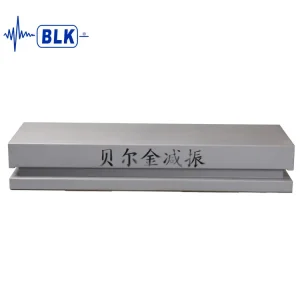
High-Quality BK-MT Type Matrix Anti-vibration Mount Manufacturers, Manufacturer
View Product Details
High-Quality CPB type Inertia Bases & Pump Supports Manufacturers, Manufacturer
View Product Details