
Engineered Inertia Bases & Industrial Mounts for Greece Infrastructure
Precision-manufactured dynamic pump frames and cone isolation systems tuned to attenuate rotational unbalanced forces and meet strict acoustic criteria across Mediterranean commercial, municipal, and marine environments.

CPB Type Reinforced Inertia Bases & Dynamic Pump Supports for Greece Facilities
Structural Welded Inertia Bases Serving Athens & Piraeus Port Pumping Projects
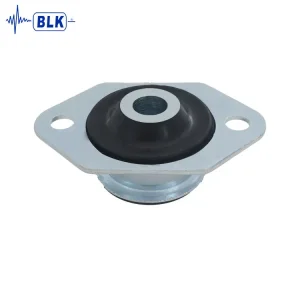
BKCN High-Deflection Industrial Cone Mounts for Maritime & Auxiliary Motors

BKDD Type Heavy-Duty Industrial Rubber Mounts for Greek Water Systems
The Mechanical Demand for Vibration Control in Modern Greece
Greece's infrastructure is undergoing a historic transformation. From landmark metropolitan redevelopments in Attica to massive luxury resort expansions across the Aegean archipelago, vibration isolation has evolved from an afterthought to a core mechanical compliance requirement.
Hellenic Tourism & Acoustic Standards
Greece's high-end hospitality sectors in Crete, Mykonos, Santorini, and the Athens Riviera demand near-silent central mechanical plant operation. Heavy primary chilled water pumps, condenser pumps, and domestic booster sets located on suspended slabs or penthouses require engineered inertia bases to prevent low-frequency structure-borne resonance from invading guest suites, adhering strictly to NC-25/NC-30 noise criteria.
Seismic Eurocode 8 Dynamic Restraints
Situated within Europe's highest seismic activity zone (the Hellenic Arc), mechanical installations in Greece must comply with Eurocode 8 (EN 1998-1). Standard open-frame pump mountings are prone to catastrophic failure during seismic shear events. Bellking's custom-fabricated inertia bases incorporate integrated seismic snubbers, maintaining equipment alignment while absorbing multi-directional tectonic acceleration.
Desalination & Marine Salinity Resistance
With municipal water shortages across the Cyclades and Dodecanese islands, seawater reverse osmosis (SWRO) desalination facilities are expanding rapidly. The high operating pressures (60–70 bar) of positive displacement and high-pressure centrifugal pumps cause intense piping pulsations. Moreover, the hyper-saline coastal Mediterranean air demands C4/C5 marine anti-corrosion finishes, which Bellking provides via 900-hour salt-spray tested Dacromet coating.
Strategic Alignment with Major Greek Industrial Centers
Whether providing seismic pump inertia blocks for mega-developments such as The Ellinikon in Athens, upgrading industrial pumping skids in the Thriasio Plain logistics corridor, or supplying marine anti-vibration assemblies for shipping drydocks in Piraeus and Syros, Bellking delivers factory-direct engineering solutions tailored to local Hellenic environmental stressors.
Why Centrifugal Pumps Demand Engineered Concrete Inertia Bases
In mechanical plant design, simply mounting an end-suction or horizontal split-case pump on four bare spring isolators is an invitation to mechanical failure. Centrifugal pumps operate with complex dynamic reactions: eccentric rotor imbalances, pulsating fluid discharge forces, dynamic torque reactions during motor start-up, and hydraulic thrust across pipe elbows. An inertia base functions as an indispensable rigid dynamic foundation that stabilizes the entire pump-motor assembly.
1. Dynamic Mass Elevation & Center of Gravity Optimization
The primary engineering objective of a Concrete-filled Inertia Base (CIB) is to increase the effective mass of the operational assembly. Per ASHRAE (American Society of Heating, Refrigerating and Air-Conditioning Engineers) guidelines, the mass of the concrete-filled inertia base should generally equal 1.5 to 2.5 times the total operational mass of the pump, driver, and fluid-filled casing. By adding this massive non-resonant deadweight:
- Center of Gravity Lowering: The composite center of gravity of the combined pump and base is lowered significantly closer to the isolator support plane. This minimizes rocking couples caused by high-pressure lateral pipe thrusts.
- Amplitude Reduction: According to Newton's Second Law ($F = m \cdot a$), increasing the structural mass ($m$) proportionally decreases the operational dynamic vibration amplitude ($a$) under equivalent cyclic dynamic forcing ($F$).
- Rotational Stability: During sudden start-up or emergency shutdown surges, high rotational torque causes excessive transient rocking. An inertia base provides high polar moments of inertia, arresting angular displacement before it transmits to flexible pipe connectors.
2. Preservation of Precision Drive Shaft Alignment
Modern industrial and HVAC pumps feature high-efficiency motors coupled via elastomeric or steel disc couplings. Operating tolerances require radial shaft alignment within 0.05 mm. If a pump is mounted onto an insufficiently rigid structural frame without concrete infill, uneven floor deflections, thermal piping expansion, and hydraulic nozzle forces induce torsional bedplate twisting. This bedplate warpage causes accelerated bearing fatigue, premature mechanical seal destruction, and impeller cavitation. Bellking’s structural channel perimeter frames, reinforced with internal two-way welded rebar grids, ensure zero torsional deflection under full hydrodynamic load.
3. Isolation Frequency Ratio ($f_d / f_n$) Tuning
Vibration isolation does not occur unless the disturbing excitation frequency ($f_d$) of the equipment is significantly greater than the natural frequency ($f_n$) of the mounting system:
For standard European electric motors running at 1,450 RPM (4-pole, disturbing frequency $f_d \approx 24.2\text{ Hz}$) or 2,900 RPM (2-pole, $f_d \approx 48.3\text{ Hz}$), a standard bare rubber pad provides a natural frequency of 8–12 Hz, achieving a mediocre frequency ratio ($f_d / f_n < 2.5$) and allowing 20% to 35% of vibrational energy to pass into the building structure. Combining a Bellking concrete inertia base with high-deflection open-spring mounts (natural frequency $f_n = 3.0–4.0\text{ Hz}$) yields a frequency ratio exceeding 6:1, delivering a theoretical isolation efficiency exceeding 98%.
Structural Foundation Typologies: Comparative Dynamic Performance
| Base System Type | Mass Ratio ($M_{base} / M_{pump}$) | System Natural Freq. ($f_n$) | Resonance Damping ($Q$) | Dynamic Bedplate Deflection | Typical Greek Application |
|---|---|---|---|---|---|
| Direct Slab Mounting (Rigid) | 0 : 1 | Building Dependent | Poor ($Q > 20$) | Transmits 100% to Slab | Sub-basement remote sumps only |
| Unfilled Steel Skid + Rubber Pads | 0.2–0.4 : 1 | 9.0 – 14.0 Hz | Moderate | High (Risk of coupling shear) | Non-critical light-duty fans |
| Bellking CPB Concrete Inertia Base | 1.5–2.0 : 1 | 3.2 – 4.5 Hz | High Internal Mass Damping | < 0.1 mm/m Torsional Rigidity | Hotel Rooftop & Mid-level HVAC pumps |
| Bellking Seismic Restrained Base (EC8) | 2.0–2.5 : 1 | 2.8 – 3.8 Hz | Tri-axial Snubbed Damping | Zero deflection under 1.5G lateral | Critical Hospital & Marine Terminal Pumps |
The Kunshan Factory Advantage: Bridging High-Tech Engineering with Global Delivery
International mechanical engineering firms face an escalating challenge: European-branded vibration equipment often carries prohibitive pricing and 12-to-16-week delivery lead times. Bellking provides direct factory-to-project manufacturing from our automated Kunshan industrial facility, reducing delivery cycles and capital expenditure while exceeding international technical specifications.
Automated CNC & Robotic Fabrication
Our 2,000 m² Kunshan manufacturing facility operates fully automated high-precision fiber laser cutting systems and robotic welding cells. Every structural C-channel inertia base perimeter, bracket cantilever, and internal cross-strut is cut and welded with sub-millimeter precision, guaranteeing exact bolt-hole alignment with Grundfos, Wilo, KSB, Flowserve, and Armstrong pump dimensions.
Dacromet 900-Hour Marine Anti-Corrosion
Standard zinc electroplating or single-coat primer finishes degrade rapidly in Mediterranean coastal microclimates. Bellking subjects its steel spring components, adjustment housings, and structural brackets to proprietary Dacromet zinc-flake dip-spin coatings, validated by 900-hour continuous salt spray chamber tests (ASTM B117). This guarantees 15+ years of operational service life in high-humidity Greek marine environments.
Rapid Design Turnaround & Piraeus Logistics
While local European distributors quote weeks just for submittal review, Bellking’s dedicated engineering team generates full 3D CAD/Revit BIM structural shop drawings within 24 to 48 hours of pump data receipt. Standard units ship in 24 hours; custom-engineered bases are manufactured in 3–5 working days, with direct container shipping routes servicing the Port of Piraeus.
Bellking Precision Manufacturing Capability Metric
ISO 9001 Certified Quality Infrastructure Backed by 37 National Patents
Years Dedicated Vibration R&D
Max System Isolation Efficiency
Salt Spray Test Passed (Dacromet)
Annual Isolator Units Output
Field-Proven Pumping Scenarios Across Greece
Tailored vibration attenuation systems engineered to resolve acoustic interference, structural resonance, and seismic loads in distinctive Hellenic installations.
Five-Star Resort Chilled Water Plant Rooms
The Challenge: Luxury cliffside hotels in Santorini and Mykonos place primary and secondary chilled water circulation pumps directly on elevated slabs adjacent to or above premium guest suites. Motor-frequency structure-borne humming (100 Hz hum) travels through reinforced concrete slabs, causing immediate guest complaints.
The Solution: Bellking custom CPB inertia bases filled with high-density aggregate concrete (2.0 mass ratio), supported on open spring mounts with 50 mm static deflection and neoprene acoustical friction pads, reducing structure-borne vibration transmissibility to under 1.5%.
Attica High-Rise Commercial HVAC & Booster Sets
The Challenge: Athens commercial buildings and high-rise developments encounter dynamic wind loads combined with seismic vulnerability. High-pressure multi-stage booster pumps supplying upper floors generate continuous pipe stress and high fluid discharge velocities.
The Solution: Seismically restrained concrete inertia base frames equipped with all-directional elastomeric snubbers. The design provides 25 mm operational spring travel for daily vibration mitigation, while locking rigidly under lateral seismic acceleration (≥ 1.2G) to protect pipe flanges from shearing.
Piraeus Marine Vessel Engine Room Pumping Skids
The Challenge: Marine auxiliary cooling water and bilge pumps operating within vessel hull engine rooms endure continuous wave rocking, pitch, and roll while producing high localized vibration that threatens adjacent navigational and electronics equipment.
The Solution: High-rigidity steel inertia bases fitted with captive BKCN cone mounts and multidirectional captive spring isolators. The system accommodates heavy rolling motion without bottoming out, while providing high oil, fuel, and seawater spray durability.
Emerging Trends Shaping the Future of Pump Isolation Systems
The vibration isolation industry is moving rapidly beyond passive mechanical metalwork into digitized, intelligent, and sustainability-driven building ecosystems. As building management systems (BMS) grow increasingly sophisticated throughout Europe, mechanical isolation foundations are evolving to deliver real-time data and lower whole-life carbon impacts.
1. IoT Predictive Vibration Monitoring
Modern inertia frames are increasingly specified with pre-machined mounting bosses for tri-axial MEMS accelerometers. Instead of relying on manual vibration route data, smart inertia bases monitor ISO 10816 vibration severity levels in real time. Anomalies in bearing harmonics, impeller cavitation, or shaft misalignment are identified weeks before catastrophic failure occurs, integrating directly into cloud-based maintenance dashboards.
2. Low-Carbon Geopolymer Infill Concretes
In response to stringent European Green Deal and LEED v4.1 / BREEAM carbon metrics, the structural concrete poured into inertia frames is shifting toward alkali-activated slag and fly-ash geopolymer infills. These novel geopolymer concretes achieve compressive strengths of C30/37 while reducing embodied carbon by up to 60%, providing superior vibration damping matrices compared to standard Portland cement.
3. Modular Pre-Engineered BIM Integration
Gone are the days of manual site-welded angle iron frames. MEP engineers demand certified Revit Families (LOD 300 / 400) with embedded parametric weight calculations and dynamic deflection outputs. Bellking provides native BIM assets, allowing Greek engineering consultants to detect spatial pipe clashes and accurately calculate slab dynamic loading prior to ground breaking.
Engineering Verification Checklist for Global Pumping Tenders
When specifying or procuring inertia bases and pump supports for mission-critical infrastructure projects in Greece and across the EU, ensure your supplier submittal package satisfies these five rigorous engineering criteria.
Structural Steel Perimeter Sizing
Ensure the perimeter structural C-channels comply with EN 10025 S235JR or ASTM A36, with depth measuring not less than 1/12th of the longest base span (minimum 150 mm for HVAC pumps up to 45 kW; 200–250 mm for larger industrial units) to prevent dynamic flexure under dynamic fluid pulsation.
Reinforcement Rebar Matrix
Inquire whether the inertia base includes a factory-welded reinforcement rebar matrix. Submittals must specify a minimum of 10–12 mm diameter ribbed steel bars welded on 150–200 mm centers in both directions, suspended at mid-depth, ensuring monolithic integrity when filled with site concrete.
Spring Isolator Deflection Criteria
Never accept generic "anti-vibration feet." Verify specified static deflection ($D_s$). For ground-supported slabs, 25 mm deflection springs are generally adequate. For upper suspended floors, roof decks, and long structural spans exceeding 12 meters, demand 50 mm static deflection to prevent resonant floor excitation.
Seismic Snubber Certification (EC8)
For installations in Greece, verify that isolation springs include enclosed all-directional ductile iron or heavy structural steel housings capable of withstanding minimum horizontal acceleration forces ($a_g$) of 0.24g to 0.36g with replaceable elastomeric impact bushings.
Corrosion Proofing Validation
Demand certified salt spray test documentation. In coastal zones like Attica, Piraeus, Rhodes, or Crete, standard primer finishes rust within 18 months. Require hot-dip galvanization (EN ISO 1461) or Dacromet zinc-flake coatings tested to a minimum of 900 hours per ASTM B117.
Pump-Specific Mounting Template Accuracy
Confirm that motor and pump bracket mounting holes, including motor slide-rail slots, are laser-cut per the pump manufacturer's certified dimensional footprint drawing (KSB, Grundfos, Wilo, etc.) to eliminate the need for hazardous site burning or re-drilling.
Frequently Asked Questions: Inertia Bases & Pump Supports
Detailed technical answers to common questions asked by mechanical consultants, MEP contractors, and procurement directors serving Greek and Mediterranean installations.
Why is an inertia base preferred over bare spring isolators for end-suction pumps in Greek hotels?
How do Bellking pump supports comply with Eurocode 8 (EN 1998-1) seismic requirements?
What concrete grade and casting procedure are recommended for Bellking CPB inertia bases?
How does Bellking ensure anti-corrosion durability in coastal Mediterranean installations?
Can Bellking provide customized pump support frames compatible with KSB, Grundfos, and Wilo pump sets?
What static spring deflection is required for pumps located on roof levels versus basement slabs?
What is the typical shipping lead time and customs procedure from Kunshan to Piraeus Port?
Specialist Anti-Vibration Mounts & Industrial Isolation Equipment
Explore Bellking's complete manufacturing spectrum of spring, elastomeric, and pneumatic isolation components engineered for precision laboratories, industrial machinery, and HVAC distribution across Greece.
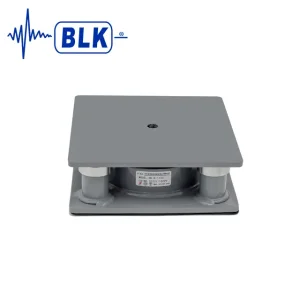
BK-R Type Pneumatic Air Mounts for Precision Metrology & Cleanrooms
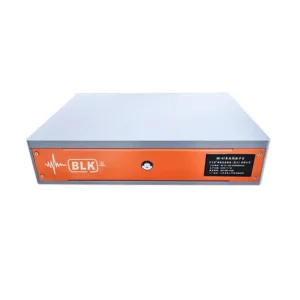
BK-AT Desktop Vibration Isolation Platform for Greek Research Institutions
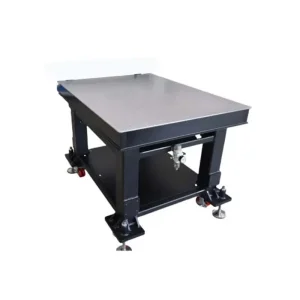
BK-DT Low-Frequency High-Damping Optical Isolation Platform

MD Type Heavy Open Spring Mounts for Greek HVAC Plant Rooms

BKVD Industrial Cylindrical Rubber Mounts for Marine Compressors

BK-DSR Type High-Performance Damped Rubber Mounts for Small Pumps

ME Type Enclosed Multi-Spring Isolators for Large Pumping Stations

BKSWA Multi-Layer Composite Anti-Vibration Pads for Heavy Skids
Need a Custom Sized Inertia Base or Dynamic Pump Vibration Plan?
Submit your equipment parameters (pump brand, operating weight, motor RPM, and floor elevation). Bellking’s dedicated vibration control engineering department will deliver a compliant dynamic selection report and submittal CAD drawings within 24 hours.