

Vertical Low-Freq
Explore Technical Specs
Tailored for the demanding environmental vibration frequencies generated by Chicagoland rail networks, industrial machining corridors, and heavy logistics facilities.
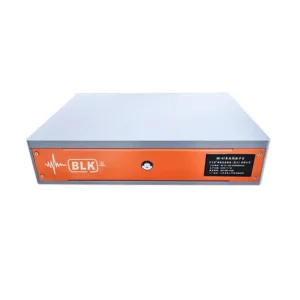
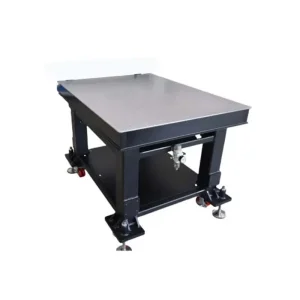

The Greater Chicago industrial corridor—encompassing key advanced manufacturing clusters in Cook, DuPage, Kane, and Lake counties, along with the high-tech precision manufacturing hubs in Elk Grove Village, Schaumburg, and Rockford—presents one of North America's most challenging dynamic vibration environments. As the primary intermodal freight rail crossroads of the United States, Chicago hosts continuous, low-frequency ground-borne vibration caused by heavy Class I freight traffic (BNSF, Union Pacific, Norfolk Southern) and the Chicago Transit Authority (CTA) elevated and subway systems.
For precision facilities operating scanning electron microscopes (SEM), transmission electron microscopes (TEM), coordinate measuring machines (CMM), laser micro-machining stations, and semiconductor wafer probers, environmental floor vibration consistently threatens yield, imaging resolution, and calibration tolerances. Ambient ground excitation in Chicagoland typically concentrates within the critical 4 Hz to 20 Hz bandwidth—precisely the natural frequency domain where conventional mechanical rubber pads and basic un-damped springs enter destructive resonance.
The Vibration Criterion (VC) Imperative: Nanotechnology and semiconductor laboratories in research corridors such as the University of Chicago, Northwestern University, and the Argonne National Laboratory Advanced Photon Source (APS) ecosystem require strict adherence to VC-D (250 µin/sec or 6.25 µm/s) and VC-E (125 µin/sec or 3.12 µm/s) operational limits. Passive-pneumatic platforms engineered by Bellking achieve sub-1.7 Hz resonance, isolating up to 99% of ambient structural interference.
Continuous cyclic low-frequency ground waves (5–12 Hz) generated by intermodal freight corridors in Clearing, Cicero, and O'Hare cargo areas induce structural flexure in industrial concrete slab-on-grade floors.
The concentration of high-speed multi-axis milling, stamping presses, and robotic tooling in Elk Grove Village industrial parks creates airborne acoustic resonance and floor-transmitted transient shocks.
Midwest seasonal shifts require intensive HVAC, cooling tower, and air handler duty cycles. Rooftop and basement plant mechanicals introduce continuous 15 Hz to 60 Hz hum across manufacturing superstructures.
For decades, midwestern procurement agents, academic labs, and machine builders were forced to purchase standard optical breadboards and pneumatic tables through domestic catalog houses with markups exceeding 200–300%, coupled with rigid lead times of 8 to 16 weeks.
Headquartered in Kunshan, China—the global center of advanced precision machinery fabrication—Bellking Vibration Reduction Equipment Manufacturing Co., Ltd. offers direct factory collaboration. We eliminate trading markups while delivering custom-machined platforms tailored to exact dimensional, natural frequency, and payload criteria within days.
Systematic comparison of damping physics, resonant frequency ranges, and field suitability for precision instruments operating in high-disturbance environments.
| Isolation Platform System | Natural Frequency (fn) | Transmissibility at Resonance | Isolation Efficiency @ 10 Hz | Recommended Applications | Service Life Cycle |
|---|---|---|---|---|---|
| BK-VT Auto-Leveling Air Platform | 1.2 Hz – 1.7 Hz | < 2.5 (High Damped) | 94% – 98% | FEI/Hitachi SEMs, Laser Optical Metrology, Wafer Probers | 8+ Years |
| BK-AT Desktop Pneumatic Stage | 1.5 Hz – 2.0 Hz | < 3.0 | 90% – 95% | Stylus Profilometers, AFM, Analytical Balances | 6+ Years |
| BK-DT High-Damping Optical Table | 1.8 Hz – 2.5 Hz | < 2.0 (Viscous Assisted) | 88% – 93% | Femtosecond Laser Systems, Interferometry, Holography | 15+ Years |
| BK-RT Tuned Honeycomb Platform | 3.0 Hz – 4.5 Hz | < 1.8 (Broadband Tuned) | 82% – 88% | Automated Optical Inspection (AOI), Coordinate Measuring | 15+ Years |
| Spring Damper Hybrid Systems (ME Type) | 3.0 Hz – 5.0 Hz | < 3.5 | 78% – 85% | Precision CNC Spindles, Dynamometers, Heavy Presses | 15+ Years (Dacromet) |
Damping Transmissibility Formula: Transmissibility is dictated by the ratio $r = f_d / f_n$, where $f_d$ represents the environmental forcing frequency and $f_n$ the isolator's natural resonance. Significant vibration attenuation begins strictly when $r > \sqrt{2} \approx 1.414$. To counteract Chicago's prevalent 8–15 Hz rail and machinery harmonics, an isolation system with $f_n \le 1.7\text{ Hz}$ achieves $r > 5$, ensuring operation deep in the isolation zone where attenuation rates surpass 95%.
Engineering deployments resolving micro-vibration challenges across Greater Chicago's most critical high-technology research and manufacturing nodes.
High-energy physics and synchrotron beamline experiments at the Advanced Photon Source demand isolation platforms free from low-frequency seismic and structural wander. Bellking custom pneumatic systems maintain nanometer-level beam stability.
Surrounded by the largest industrial park in the US, high-precision CMM quality control rooms face continuous floor vibration from nearby multi-axis turning, EDM, and mechanical presses. Our BK-RT and BK-VT platforms isolate metrology cells to VC-C standards.
Vibrations from heavy truck corridors and elevated rail lines in downtown Chicago directly disturb high-magnification confocal microscopes and live-cell imaging setups. Bellking desktop isolation platforms deliver vibration-neutral laboratory worktops.
Stringent AS9100 quality validation for turbine components and precision avionics requires dynamic calibration isolation. Bellking custom inertia base assemblies isolate dynamic test stands under extreme static loads.
With our specialized 2,000 m² CNC manufacturing plant in Kunshan, Bellking delivers industrial and precision isolation products with documented traceability, finite element dynamic testing, and ISO 9001:2015 execution.
Complete isolation suite for mechanical plant rooms, industrial equipment foundations, HVAC systems, and precision opto-mechanics across the Midwest.







When selecting a precision vibration isolation manufacturer, enterprise procurement departments cannot evaluate systems solely on static loading capacity. Dynamic deflection, transmissibility under broadband excitation, and recovery time following transient shocks represent the core engineering determinants of long-term operational success.
At Bellking, our OEM engineering engagement for North American enterprises follows a defined five-stage verification cycle:
We analyze customer-supplied FFT frequency acceleration data ($m/s^2$ or $\mu m/s$) across all three orthogonal axes ($X, Y, Z$) to map site-specific environmental vibration frequencies.
Our engineering software calculates the total operating mass, asymmetric center of gravity (CoG), and dynamic inertia moments to prevent angular rocking and tilt.
We size internal air-spring bladders, auxiliary damping orifices, and auto-leveling mechanical valves to maintain system natural resonance between 1.2 Hz and 1.7 Hz under varying loads.
In-depth engineering answers covering natural frequencies, rail vibration mitigation, cleanroom compliance, and trans-Pacific delivery logistics.
Elastomeric and rubber mounts typically exhibit natural frequencies between 8 Hz and 15 Hz. In Chicago, soil-transmitted vibrations from freight trains, CTA tracks, and roadway trucking peak directly in this 8–15 Hz band. Installing rubber mounts often leads to resonance amplification, doubling or tripling vibration amplitude. Bellking’s pneumatic systems achieve natural frequencies down to 1.2–1.7 Hz, placing the operational frequency ratio well past $\sqrt{2}$, where over 95% attenuation occurs.
Our precision pneumatic platforms (BK-VT and BK-PF) operate using standard compressed air or bottled nitrogen regulated between 0.35 to 0.6 MPa (50–85 psi). For Class 100 and Class 10 (ISO 4/ISO 5) semiconductor and nanotech cleanrooms, we employ electro-polished 304/316 stainless steel enclosures, fluoroelastomer air bladders with zero toxic off-gassing, and cleanroom-approved pneumatic mechanical leveling valves.
Standard model orders ship from our factory inventory within 24–48 hours. For customized non-standard platforms, engineering, fabrication, and laser testing take 3 to 7 working days. Expedited air freight delivers directly to Chicago O'Hare International Airport (ORD) within 5–7 transit days. Consolidated sea freight to Midwest intermodal terminals takes approximately 20–25 days, reducing logistics costs by up to 60%.
Yes. Many metrology systems, such as electron microscopes with heavy side spectrometers or robotic automated stages, feature shifting or off-center loads. Bellking integrates individual pressure-regulated air chambers and multi-point mechanical servo leveling valves. Each support point self-adjusts air volume independently, maintaining a 0.05 mm planar level across the entire granite or honeycomb surface.
All structural steel springs, brackets, and leveling components undergo an advanced Dacromet zinc-aluminum flake surface coating process. This treatment passes rigorous 900-hour salt spray corrosion testing without coating degradation or embrittlement, ensuring a service life exceeding 15 years in non-climate-controlled plant environments.
Connect directly with Bellking's vibration engineering team. Submit your equipment operating weight, footprint dimensions, and target vibration criteria to receive a tailored engineering proposal within 24 hours.