
High-Efficiency Ceiling Suspended Dampers & Heavy-Duty Mounts
Explore our foundational series of spring isolators, multi-layer rubber suspensions, and specialized mechanical damping systems certified for ceiling suspension and structural attenuation.
-

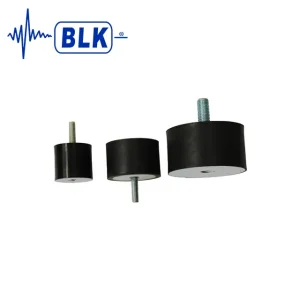
Custom BKSWA Type Multi-Layer Antivibration Dampers Factory, Price
-
-

Custom Anti-vibration Spring Hangers Factories, Manufacturers
-

-

High-Quality MC Type Anti-vibration Spring Mounts Manufacturer, Price
-

High-Quality MA Type Anti-vibration Spring Mounts Factory, Factories
-

Low Price BKP Type Rubber Mounts Manufacturers, Manufacturer
-

The Engineering Dynamics of Modern Ceiling Suspension Damping
From simple acoustic isolation to critical seismic-restrained active/passive attenuation across hyperscale facilities.
Acoustic Shift to Low Frequencies
Traditional ceiling hangers addressed audible motor hum above 100 Hz. Modern MEP (Mechanical, Electrical, and Plumbing) infrastructures generate complex variable-frequency drive (VFD) turbulence ranging from 3 Hz to 25 Hz, necessitating multi-stage helical springs coupled with high-damping nitrile elastomeric inserts.
- Elimination of mechanical resonance spikes
- Sub-4 Hz natural frequency engineering
- Hybrid elastomer-spring energy dissipation
Multi-Axis Seismic and Wind Restraint
Modern building codes (such as IBC and ASCE 7) no longer tolerate free-swinging ceiling isolators. Suspended damper manufacturers must integrate all-directional fail-safe snubbers, ensuring continuous vibration control during steady-state operation while absorbing lateral seismic loads up to 3.0g to 5.0g.
- Fail-safe interlocked steel architecture
- Pre-compressed rod-alignment bushings
- Dynamic lateral and uplift constraint
Corrosive Plant Atmosphere Resistance
Industrial suspensions installed in chemical processing plants, coastal HVAC rooftops, or subterranean subway tunnels face extreme corrosion. Leading custom factories deploy advanced organometallic coatings, zinc-flake passivation, and Dacromet processes passing rigorous multi-hundred-hour salt spray benchmarks.
- 900+ Hour ASTM B117 salt spray ratings
- Non-embrittling surface conversions
- High fatigue-life spring steel substrates
Global Enterprise Procurement Requirements for Ceiling Suspensions
Key parameters engineering leaders and strategic supply chain directors demand when evaluating OEM/ODM industrial damping facilities.
1. Dynamic Parameter Verification
Global specifiers reject theoretical load ratings. They demand FEA (Finite Element Analysis) displacement maps, dynamic dynamic mechanical analysis (DMA) of elastomer compounds, and full-scale static/dynamic test reports confirming spring constants ($k_z$, $k_x$), transmissibility curves, and deflection tolerances under operational load.
2. Bespoke Structural Customization
Because suspended ceiling envelopes are heavily congested with cable trays, fire suppression manifolds, and chilled water pipes, standard off-the-shelf hangers frequently encounter installation clashes. Factories must offer rapid 1:1 structural adaptation—such as dual-bracket offset configurations, custom rod drop lengths, and varied durometer pads.
3. Zero-Defect Quality Traceability
Failure of a suspended hanger can cause catastrophic pipe rupture or duct collapse. Industrial procurement contracts mandate strict ISO 9001 certified production pipelines, heat-number material traceability for spring alloy coils, robotic seam welding consistency, and individual proof-load testing prior to customs dispatch.
Macro Industry Solutions: Suspended Damper Implementations
Comprehensive engineering configurations tailored for mission-critical structural attenuation across severe operating environments.
| Industry Sector | Vibration Source & Dynamics | Recommended Ceiling Damper Solution | Target Natural Freq. | Critical Performance Result |
|---|---|---|---|---|
| Semiconductor & Cleanroom | Overhead Fan Filter Units (FFUs), vacuum exhaust lines, chemical piping | Ultra-low frequency hybrid spring hangers with high-loss factor silicone cores | 1.7 Hz – 3.0 Hz | Prevents sub-micron tool misalignment and metrology stage drift (VC-D/VC-E compliance). |
| Hyperscale Data Centers | Suspended condenser piping, heavy-flow chilled water pumps, rooftop AHUs | Seismic-rated pre-compressed spring hangers with ductile iron housings | 3.0 Hz – 4.5 Hz | Eliminates structural airborne resonance transferring into server rack chassis and HDDs. |
| Commercial & High-Rise MEP | HVAC ductwork, high-velocity axial extract fans, centrifugal water chillers | Multi-layer rubber-in-shear dampers with anti-friction spherical washers | 4.0 Hz – 8.0 Hz | Meets strict NC-25/NC-30 interior acoustic criteria for luxury hospitality and tenant floors. |
| Power Generation & Substations | Suspended bus ducts, overhead transformer oil piping, exhaust attenuators | All-metal heavy fatigue coil spring isolators with high-temp viscous damping | 2.5 Hz – 5.0 Hz | Withstands thermal expansion shock, 100 Hz hum resonance, and high dynamic forces. |
Localized Support, Engineering Rigor & Compliance Verification
Ensuring cross-border project delivery matches international building and acoustic mandates without execution delays.
ISO 9001 & Factory Pre-Calibration
Every suspended damper batch produced in our facilities undergoes mechanical deflection calibration, ensuring springs do not bottom out under design load. Comprehensive factory acceptance testing (FAT) packages accompany overseas shipments, including mill test certificates (MTC) and spring rate validation curves.
Global Code Alignment
Engineered to satisfy ASHRAE vibration isolation guidelines, DIN 4109 building acoustics criteria, and international seismic provisions. The spring geometry is designed with an outside diameter at least 0.8 times the loaded operating height, preventing lateral coil buckling even during catastrophic transient events.
Full Lifecycle Engineering Guidance
We provide localized project documentation, detailed CAD/BIM revit models, rod length sizing spreadsheets, and direct application engineer support. This seamless technical integration eliminates structural installation errors on site and accelerates EPC contractor handover timelines.
Technology Roadmap: The Future of Suspended Damping Systems
Bridging passive mechanical mechanics with intelligent facility monitoring and next-generation composite polymers.
FEA Predictive Optimization
Integrating non-linear finite element modeling to forecast stress concentrations and fatigue cycles in high-deflection ceiling spring isolators before production.
Nano-Elastomeric Composites
Synthesizing polymer matrices with carbon nanotubes to enhance internal energy dissipation, expanding damping across extreme operating thermal boundaries.
Smart Sensor Hangers
Embedding autonomous piezo-electric strain sensors directly within the suspension housing to provide real-time dynamic load monitoring to building BMS networks.
Semi-Active Attenuation
Deploying compact magnetorheological dampers inside suspended MEP clusters, enabling real-time stiffness tuning to combat sudden emergency fluid-hammer surges.
Specialized Precision Mounts, Hangers & Isolation Platforms
Review our specialized array of cone mounts, rubber pads, level-adjusting feet, and matrix platforms designed for demanding custom applications.
-

-
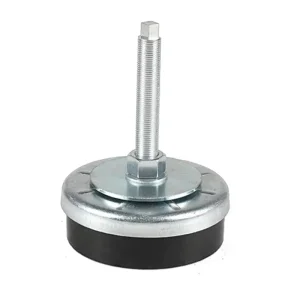
Low Price BKAL Type Adjustment Rubber Feet Factory, Manufacturers
-

High-Quality MB Type Anti-vibration Spring Mounts Factory, Manufacturer
-
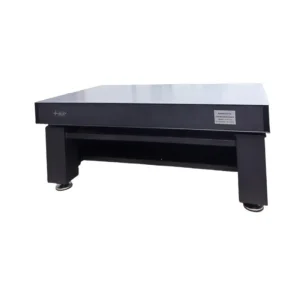
High-Quality BK-RT Type Damped Vibration Isolation Platform Factories, Manufacturers
-
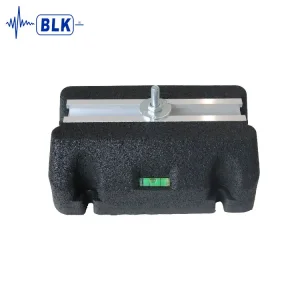
High-Quality BKDJ Type Rubber Pad Manufacturers, Manufacturer
-
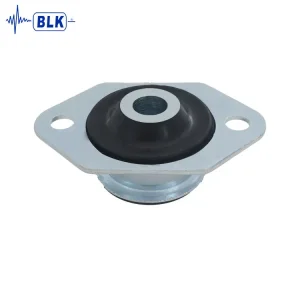
-
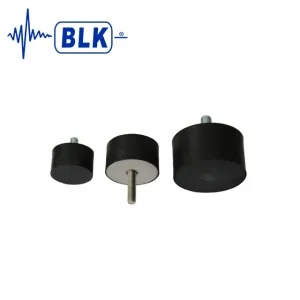
-

High-Quality BK-MT Type Matrix Anti-vibration Mount Manufacturers, Manufacturer
Frequently Asked Questions on Custom Ceiling Suspensions
Comprehensive engineering insights regarding selection, physical sizing, seismic compliance, and factory manufacturing lead times.