
High-Efficiency Spring & Polymer Damping Solutions
Engineered for maximum energy dissipation, tuned natural frequencies down to 1.7 Hz, and severe environmental durability.
-

High-Quality MD Type Anti-vibration Spring Mounts Factory, Manufacturer
View Details & Specs -

Low Price BK-DS Type Damped Spring Mounts Factory, Manufacturers
View Details & Specs -

Custom BKDE Type Rubber Mounts Factory, Manufacturer
View Details & Specs -

High-Quality BKDD Type Rubber Mounts Factories, Manufacturers
View Details & Specs -
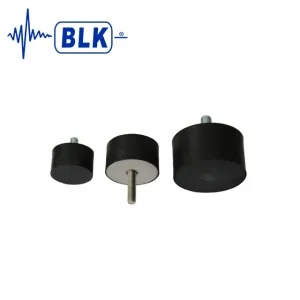
High-Quality BKVE Type Rubber Mounts Factory, Factories
View Details & Specs -

Low Price BK-PM Type Polymer Damping Pad Factories, Manufacturers
View Details & Specs -
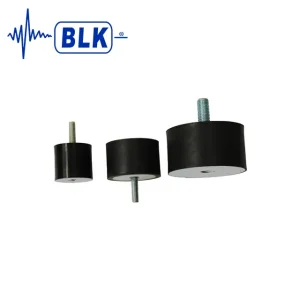
Custom BKVD Type Rubber Mounts Factories, Manufacturer
View Details & Specs -

High-Quality BK-MT Type Matrix Anti-vibration Mount Manufacturers, Manufacturer
View Details & Specs
ISO 9001 Certified Quality
Every composite damper batch undergoes dynamic stiffness matrix evaluation, shear strain hysteresis profiling, and automated fatigue testing.
Custom 1:1 Engineering
Rapid engineering response within 24 hours. Custom mold creation, FEA structural optimization, and tailored natural frequency targeting.
Global Compliance & Support
Dacromet surface treatment engineered for 900+ hour salt spray resistance, satisfying stringent EU RoHS, REACH, and IEEE seismic standards.
Executive Summary & Whitepaper Scope
In modern industrial, semiconductor, and commercial building infrastructure, mechanical vibration represents one of the primary catalysts for structural fatigue, equipment degradation, precision measurement distortion, and structure-borne acoustic pollution. As high-speed machinery operates at elevated RPMs and sensitive laboratory equipment reaches sub-nanometer tolerances, conventional single-material vibration mounts (such as standard un-damped steel helical springs or plain rubber blocks) fail to provide comprehensive isolation across complex dynamic frequency spectrums.
This industry whitepaper provides an exhaustive technical analysis of Composite Vibration Dampers. Engineered through the strategic synergy of elastomeric matrices, viscoelastic polymers, and high-tensile metallic spring structures, composite dampers bridge the structural gap between static load capacity and dynamic energy dissipation. As a leading manufacturer in Kunshan, China, Bellking Vibration Reduction Equipment Manufacturing Co., Ltd. delivers factory-direct engineering excellence, synthesizing theoretical physical dynamics with custom manufacturing to resolve micro-vibration challenges globally.
Core Takeaway for Procurement & Engineering Teams: Optimal vibration isolation is not merely a matter of supporting static weight; it requires matching the system's disturbing frequency ($f_d$) with an isolator exhibiting a natural frequency ($f_n$) such that the frequency ratio $f_d / f_n \ge \sqrt{2}$, with an optimal operational threshold of $f_d / f_n \ge 3$. Composite dampers uniquely provide high loss factors ($\eta$) to suppress resonance peaks while maintaining low dynamic stiffness ($K_d$) during continuous steady-state operation.
1. Physics & Materials Science of Composite Vibration Damping
Vibration isolation relies fundamentally on modifying the structural transfer path between a vibration source (chiller, pump, generator, photolithography stage) and its supporting foundation. The performance of any isolating interface is governed by its dynamic transmissibility equation:
Where r = f_d / f_n represents the frequency ratio, and \zeta represents the damping ratio. Single-material isolators present inherent engineering trade-offs:
- Metallic Springs: Provide low natural frequencies ($3\text{ Hz} - 5\text{ Hz}$) and high static load capacity, but possess near-zero internal damping ($\zeta \approx 0.005$). At resonance ($r = 1$), amplification factors can exceed 20x, inducing severe mechanical stress. Furthermore, high-frequency structure-borne sound waves freely travel through metallic coils via acoustic wave standing effects.
- Elastomeric Rubber Mounts: Offer superior high-frequency acoustic attenuation and internal hysteresis, but suffer from high dynamic stiffness creep under heavy static loads, limiting their low-frequency performance ($f_n \ge 8\text{ Hz} - 10\text{ Hz}$).
- Composite Vibration Dampers: Co-vulcanize synthetic rubber compounds, viscoelastic matrix linings, and precision spring coils into a unified structural element. The metallic component carries the heavy static dead load, while the internal viscoelastic composite dissipates transient kinetic energy via intermolecular friction (hysteresis loss). This dual-action design caps resonant amplification while maintaining ultra-low steady-state transmissibility ($T_r < 0.01$, achieving >99% isolation efficiency).
2. Global Industry Trends & Macro Driver Analysis
The global demand for custom composite vibration dampers is undergoing rapid expansion, driven by four macro industrial transformations:
A. Semiconductor Fab Micro-Vibration Strictness
As semiconductor node geometries shrink toward 2nm and below, optical lithography tools, scanning electron microscopes (SEMs), and wafer inspection platforms demand extreme foundation stability. Environmental ground vibrations must be attenuated to VC-E and VC-G acoustic space standards. Composite air mounts and matrix damping platforms are essential to prevent feature distortion.
B. Urban Data Center & Power Substation Acoustics
Hyperscale data centers and urban electrical substations are increasingly situated near high-density residential zones. Large dry-type transformers, HVAC chillers, and emergency backup diesel generators produce continuous low-frequency hum (50Hz/60Hz harmonics). Composite dampers provide structural isolation that prevents low-frequency sound from energizing building foundations.
C. High-Speed Rail & Transport Infrastructure
Modern rolling stock and elevated rail networks require long-life elastomeric-metallic composite components capable of enduring millions of cyclic fatigue stress events while resisting severe environmental exposure to salt fog, oil, and wide temperature swings (-40°C to +80°C).
D. HVAC Building Retrofits & Decarbonization
Commercial building efficiency standards mandate roof-mounted heat pumps, variable-refrigerant flow (VRF) units, and high-efficiency water chillers. Lightweight floor slabs in modern architecture demand high-deflection spring-composite isolators to eliminate structure-borne vibration transmitted into tenant spaces.
3. Technical Selection Matrix: Isolator Categories Comparison
Selecting the correct composite damper configuration requires evaluating excitation frequencies, static weights, and environmental conditions. The table below illustrates engineering selection parameters across major isolator categories:
| Isolator Architecture | Core Damping Mechanism | Natural Frequency ($f_n$) | Max Isolation Efficiency | Target Industrial Application |
|---|---|---|---|---|
| Pneumatic Composite Air Mounts | Pressurized Air + Viscous Fluid Hysteresis | 1.7 Hz – 2.5 Hz | >99.2% | Metrology, Semiconductor Lithography, CMM Machines |
| Viscoelastic Damped Spring Mounts | Helical Steel Spring + High-Viscosity Matrix | 3.0 Hz – 4.5 Hz | 95% – 99% | Heavy Industrial Chillers, Reciprocating Compressors |
| Co-Vulcanized Rubber Composite Mounts | Elastomer Matrix + Bonded Steel Plates | 6.0 Hz – 10.0 Hz | 90% – 95% | Electric Motors, Small Blowers, CNC Lathes |
| Polymer Matrix Damping Pads | High-Density Polyurethane / Nitrile Layering | 8.0 Hz – 15.0 Hz | 85% – 92% | Structural Foundation Decoupling, Heavy Press Beds |
| Inertia Base Integrated Assemblies | Concrete-Filled Steel Frame + Spring Dampers | 2.5 Hz – 4.0 Hz | >98% | High-Pressure End-Suction Pumps, Open-Drive Compressors |
4. Global OEM Procurement Intent & Risk Mitigation Strategy
When enterprise procurement engineering departments evaluate composite damper vendors, technical qualification extends beyond price-per-unit metrics. Key buying factors include:
- Dynamic-to-Static Stiffness Ratio ($K_d / K_s$): Inferior rubber dampers exhibit severe high-frequency stiffening ($K_d / K_s > 2.0$), causing vibration transmission under dynamic loading. Bellking composite formulations maintain a tight $K_d / K_s$ ratio between 1.15 and 1.35, ensuring predictable isolation across dynamic ranges.
- Surface Treatment Corrosion Resistance: Industrial installations in coastal petrochemical plants or cooling tower environments demand anti-corrosion protection. Bellking metallic housings undergo housing-wide Dacromet and electrostatic powder coating, exceeding 900 hours of salt spray testing (ASTM B117 standard) without base-metal oxidation.
- Creep Resistance & Fatigue Life: Vulcanized elastomeric matrices must resist long-term compression set under sustained dead weight. Bellking components undergo 2-million-cycle fatigue endurance testing, guaranteeing an operational lifespan exceeding 15 years for spring mounts and 6+ years for pneumatic systems.
- Global Technical Support & Rapid Prototyping: B2B engineering buyers require finite element modeling support, custom load-deflection curves, and fast-turnaround sample delivery. Bellking's internal R&D center provides complete vibration engineering plans within 24 hours and customized prototype molds in as few as 3 working days.
5. Manufacturing Process & Quality Control Architecture
Bellking’s 2,000 m² manufacturing facility in Kunshan, China operates under strict ISO 9001 management protocols. The production process integrates five core quality-assurance checkpoints:
Step 1: Raw Material Metallurgy
High-tensile alloy spring steel (60Si2Mn / 55CrSi) undergoes shot-peening to enhance surface fatigue resistance and eliminate micro-fractures.
Step 2: Viscoelastic Formulation
Proprietary nitrile-butadiene and neoprene elastomer blends are mixed with anti-aging agents to prevent ozone degradation and thermal hardening.
Step 3: Co-Vulcanization
Precision heat-and-pressure vulcanization bonding attaches steel load plates directly to the elastomer matrix, preventing delamination under shear stress.
6. Technical Roadmap & Future Technology Outlook (2025–2035)
As smart manufacturing, Industry 4.0, and automated predictive maintenance become baseline standards, composite vibration dampers are evolving from passive components into intelligent structural systems. Bellking's R&D engineering roadmap focuses on three next-generation breakthroughs:
- Active-Passive Hybrid Matrix Dampers: Integrating embedded piezoelectric sensor layers within viscoelastic composite linings. These sensors track real-time vibration amplitude and dynamic load changes, supplying operational data directly to building management systems (BMS).
- Graphene-Reinforced Elastomer Compounds: Incorporating graphene nanoplatelets into synthetic rubber matrices to increase thermal conductivity by 300%. This rapid heat dissipation prevents internal thermal degradation in high-frequency, high-amplitude industrial shaker tables.
- Zero-Creep Polymer Formulations: Developing eco-friendly, recyclable thermoplastic elastomers (TPE) engineered for ultra-low long-term compression set, reducing lifecycle replacement frequency in remote offshore wind facilities.
Engineering FAQ: Custom Composite Vibration Dampers
Expert insights from our application engineers addressing critical procurement, design, and installation questions.
How do composite vibration dampers differ from standard spring or rubber isolators?
What key mechanical parameters are required to size a custom damper?
Why is the ratio of dynamic stiffness to static stiffness ($K_d / K_s$) important?
How do Bellking dampers perform in highly corrosive or coastal environments?
What is the expected operational service life of Bellking composite dampers?
Can Bellking manufacture custom non-standard isolators for specialized OEM machinery?
Precision Platforms, Matrix Mounts & Industrial Hangers
Explore our full range of heavy-duty, high-deflection, and low-frequency composite vibration control products.
-
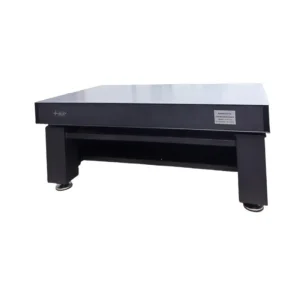
High-Quality BK-RT Type Damped Vibration Isolation Platform Factories, Manufacturers
View Details & Specs -

High-Quality MB Type Anti-vibration Spring Mounts Factory, Manufacturer
View Details & Specs -

Custom BKDR Type Rubber Mounts Factories, Price
View Details & Specs -
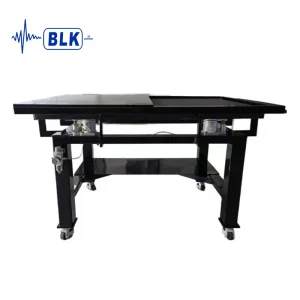
Custom BK-VT Type Vibration Isolation Platform Factories, Manufacturer
View Details & Specs -

Custom BKSWA Type Multi-Layer Antivibration Dampers Factory, Price
View Details & Specs -

Custom BKM Type Rubber Mounts Factories, Manufacturers
View Details & Specs -

Low Price HR Type Rubber Hangers Factory, Factories
View Details & Specs -

High-Quality CPB type Inertia Bases & Pump Supports Manufacturers, Manufacturer
View Details & Specs
Request Your Custom Vibration Control Engineering Plan
Send our senior application engineers your machinery specifications (weight, CG, operating RPM, support point layout), and receive a complete calculations report and quote within 24 hours.