
Precision Structural Isolation Mounts & Elastomeric Solutions
Explore high-performance shock absorption modules engineered for industrial plant chillers, reciprocating pumps, generator assemblies, and sensitive optical testing equipment.
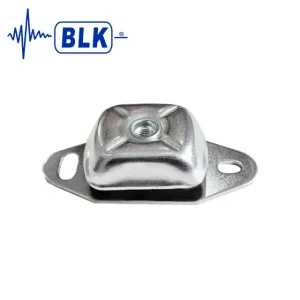
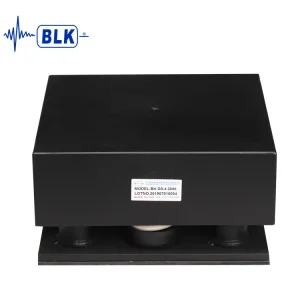


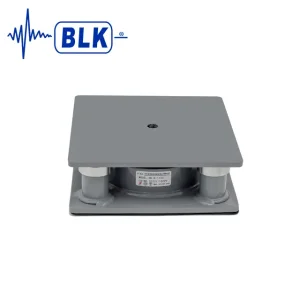


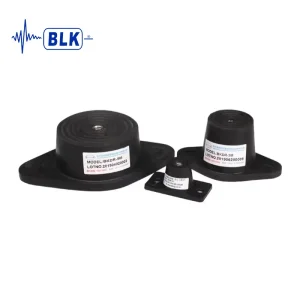
Global Industrial Machinery Dynamics & Vibration Isolation Mandates
The convergence of high-output rotary equipment, tighter acoustic urban zoning regulations, and micro-scale semiconductor manufacturing demands an unprecedented tier of kinematic isolation control.
Global Urbanization & Strict Noise Codes
Worldwide environmental protection agencies (EPA, CE, and OSHA) have placed rigorous thresholds on structure-borne vibration and low-frequency secondary acoustic emissions. Modern commercial complexes, data centers, and multi-tenant high-rises can no longer tolerate harmonic feedback from HVAC rooftop chillers and cooling towers transmitting through reinforced concrete slabs.
Sub-Micron Semiconductor Precision
In modern cleanrooms, photolithography steppers, atomic force microscopes (AFM), and coordinate measuring machines (CMM) operate at sub-nanometer tolerances. Passive elastomeric pads and active pneumatic mounts serve as the primary defensive barrier against ambient seismic noise, foot traffic, and peripheral compressor resonance.
Plant Lifecycle & Asset Protection
Unchecked mechanical vibration leads directly to bearing brinelling, shaft misalignment, bolt loosening, and weld fatigue. Custom elastomeric and compound spring isolation pads absorb rotational imbalance energies, effectively expanding the mean time between failures (MTBF) of critical plant equipment by upwards of 300%.
Chinese Manufacturing Efficiency: The Kunshan Supply Advantage
Combining world-class polymer synthesis, fully integrated robotic metalworking, and rapid prototyping ecosystems to eliminate offshore procurement bottlenecks.
Vertically Integrated Raw-to-Finish Production
Situated within China's premier industrial corridor in Kunshan, our facility directly incorporates automated elastomer compounding, vulcanization compression molding, CNC steel stamping, and advanced Dacromet robotic surface treatment. This unified production structure eliminates multi-tier middleman markups and enforces strict ISO 9001 quality audits over tensile elongation, shore durometer consistency, and dynamic shear modulus testing.
Rapid 1:1 Engineering Customization Cycle
Unlike catalog distributors limited to rigid standardized parts, our in-house engineering squad drafts customized equipment isolation pads based on explicit equipment footprints, center-of-gravity shifts, and dynamic excitation vectors. We routinely deliver validated CAD schematics, dynamic resonance simulations, and material verification reports within 24 hours, transitioning from initial prototype to volume production in 3 to 5 business days.
Vibration Isolation Physics: Transmissibility & Natural Frequency
Mathematical precision ensures equipment does not operate near resonant zones, preventing catastrophic amplification.
Understanding the Transmissibility Ratio (T)
Vibration isolation does not operate by "absorbing" vibration through bulk softness alone. True kinematic attenuation requires matching the isolator's natural resonance frequency (fn) to the excitation frequency (fd) generated by the mechanical equipment's rotational velocity (RPM).
The mathematical transmissibility across an undamped single-degree-of-freedom system is defined as:
Isolation occurs strictly when the excitation-to-natural frequency ratio satisfies: fd / fn > √2 (≈ 1.414). When this ratio is below 1.414, the isolation pad actually amplifies vibration, causing severe machine wear and excessive structural noise.
Target Frequency Ratio: The 3:1 Gold Standard
For high-efficiency industrial installations (>90% to 99% attenuation), mechanical engineers specify an operational frequency ratio of fd / fn ≥ 3.0.
- Low-Speed Heavy Equipment (300 - 900 RPM): Demands low natural frequencies (3 to 5 Hz), achieved via compound spring mounts or cushioned steel inertia bases.
- High-Speed Motors & Pumps (1,500 - 3,600 RPM): Handled efficiently with engineered neoprene, nitrile, or polyurethane elastomeric isolation pads (8 to 15 Hz fn).
- Metrology & Nanotechnology (0 - 50 Hz ambient): Requires pneumatic low-frequency air mounts operating down to 1.7 Hz.
Custom Equipment Isolation Pad Pricing: Strategic Cost Drivers
A rigorous engineering analysis of price determinants across custom elastomeric compounds, metallic damping configurations, and factory-direct volume scaling.
| Pad & Isolator Classification | Natural Frequency (fn) | Target Machine Types | Corrosion & Harsh Protection | Indicative Price Scale (Direct) |
|---|---|---|---|---|
| Molded Ribbed Elastomeric Pads | 10 – 18 Hz | Transformers, Small Compressors, Cabinets | Oil, Grease, & UV Resilient | Low / Cost-Effective ($) |
| Steel-Interleaved Compound Rubber Pads | 8 – 14 Hz | Punch Presses, Shears, Stamping Dies | High Dynamic Shear & Impact | Moderate ($$) |
| Viscous-Damped Spring Pad Mounts | 3 – 5 Hz | HVAC Chillers, Gensets, Cooling Towers | Dacromet 900h Salt Spray Shield | Competitive Mid-Tier ($$$) |
| Pneumatic Micro-Vibration Isolation Mounts | 1.7 – 3 Hz | Cleanroom Lithography, Laser Metrology | Stainless / Anodized Cleanroom Spec | Specialized High-Value ($$$$) |
1. Polymer Compounding & Durometer
Pricing varies significantly by base compound: standard Neoprene (CR) provides exceptional general resistance, Nitrile (NBR) protects against intense hydraulic oils, and specialized fluoroelastomers or EPDM withstand high-temperature acid environments. Precision durometer tolerances (±3 Shore A) ensure reliable deflection curves without premature degradation.
2. Dynamic Deflection & Steel Shims
Thicker isolation pads or multi-layer units interleaved with internal steel shims offer superior weight distribution and transverse shear resistance. While internal steel plating adds modest material and vulcanization labor costs, it prevents lateral creep and prevents premature catastrophic pad collapse under concentrated dynamic point loads.
3. Volume Scalability & Tooling Costs
By operating our own dedicated mold design and CNC tooling facilities in Kunshan, initial NRE (non-recurring engineering) tooling costs for custom dimensional pads are reduced by up to 70% compared to European or North American mold shops, reaching zero-tooling amortization on commercial volume orders.
Localized Engineering Application Scenarios
Real-world integration protocols ensuring absolute kinematic stability across diverse industrial sectors.
Rooftop HVAC & Plant Chillers
Eliminates structural resonance transfer across multi-story buildings. Prevents low-frequency humming in executive suites below plant rooms with targeted compound damping.
High-Speed Stamping & Forging
Engineered to absorb severe 3G to 5G kinetic impact shock pulses, stopping shock waves from misaligning neighboring precision CNC machines on shared floor slabs.
Cleanrooms & Metrology Labs
Sub-nanometer stabilization for scanning electron microscopes (SEM), optical benches, and coordinate measuring machines using low-frequency active-pneumatic isolation.
Substations & Power Transformers
Mitigates continuous 100 Hz / 120 Hz core magnetostrictive hum in institutional power grids, preventing structure-borne transmission to adjacent commercial premises.
Emerging Trends & International Sourcing Requirements
How next-generation acoustic engineering, environmental mandates, and digitalized manufacturing are transforming isolation procurement.
Green Polymeric Materials & Non-Toxic Vulcanization
Global supply chains now strictly monitor VOC off-gassing and RoHS/REACH compliance within industrial damping components. Modern manufacturing mandates halogen-free, recyclable elastomeric compounds that do not release hazardous fumes during installation or prolonged exposure in confined HVAC air-handling plenums. Our ongoing material research partnerships with universities focus directly on high-damping polymers with low environmental life-cycle impacts.
Seismic Restraint & Extreme Climate Resilience
With increased coastal infrastructure investments and tightening seismic design standards (IBC, ASCE 7), procurement managers require all-in-one equipment isolation pads featuring integrated omnidirectional seismic snubber restraints. Surface treatments like 900-hour Dacromet coatings and marine-grade stainless hardware ensure zero rust failure in humid coastal installations and offshore wind platforms.
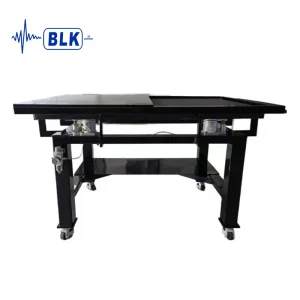
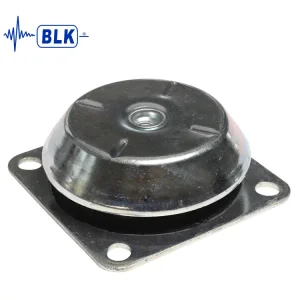
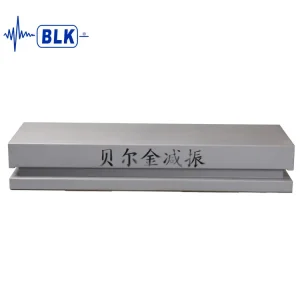
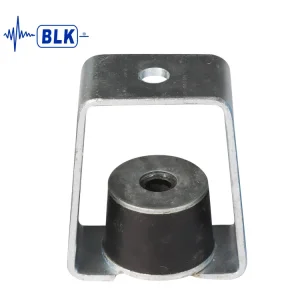
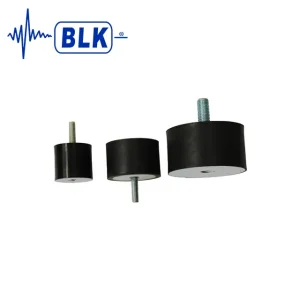
Advanced Vibration Platforms, Hangers & Custom Matrix Isolators
Explore specialized anti-vibration mount arrays, overhead pipe isolation hangers, and desktop stabilization platforms.



Frequently Asked Questions on Custom Isolation Pads
In-depth responses from our application engineering team addressing load sizing, compound selection, and long-term performance.
How do I accurately calculate the required thickness and surface area of an isolation pad?
What is the operational lifespan of elastomeric pads under continuous oil and outdoor exposure?
When should an engineer specify spring isolators instead of elastomeric pads?
Can Bellking manufacture custom non-standard footprints, bolt-hole patterns, or composite durometers?
What lead times, quality certificates, and documentation accompany factory orders?
Request an Engineered Sizing Plan & Direct Factory Quote
Submit your machine weight, operational RPM, and mounting footprint. Our engineering team will supply a calculated vibration isolation report and competitive factory-direct pricing within 24 hours.