
Precision Foundation Isolation Solutions (Part I)
Explore our certified range of heavy-duty elastomer, spring, and pneumatic mounts designed for factory-direct integration and engineered foundation damping.
-
-
-

-

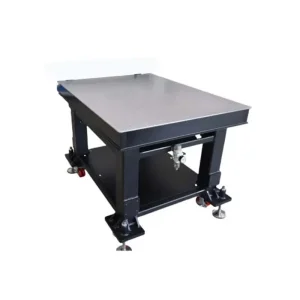
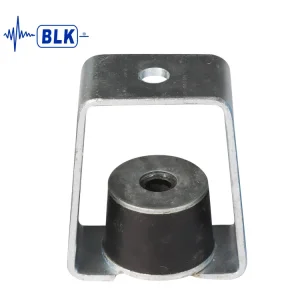
Custom BK-AT Type Desktop Vibration Isolation Platform Manufacturers, Price
-

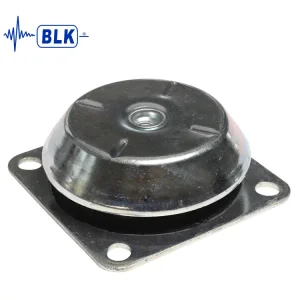
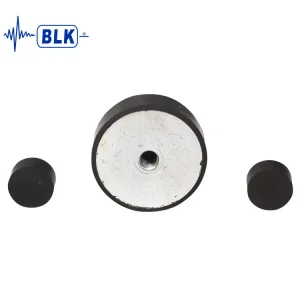
Low Price BKP Type Rubber Mounts Manufacturers, Manufacturer
-
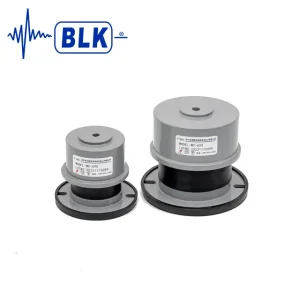
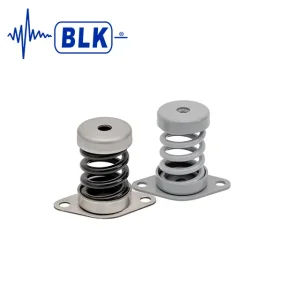
High-Quality MC Type Anti-vibration Spring Mounts Manufacturer, Price
-
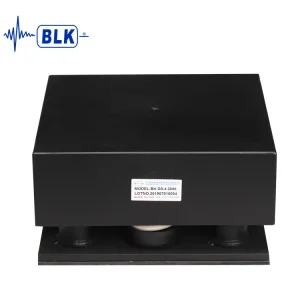
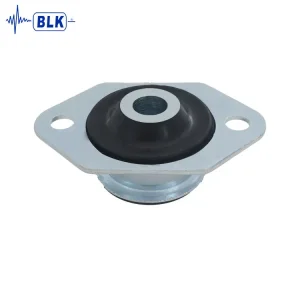
Low Price BK-DS Type Damped Spring Mounts Factory, Manufacturers
-

High-Quality MD Type Anti-vibration Spring Mounts Factory, Manufacturer
Macro-Industrial Dynamics & Modern Foundation Isolation Engineering
Analyzing global market shifts, high-frequency excitation challenges, and foundation structural design for modern automated facilities.
Global Market Landscape & Vibration Trends
In modern industrial engineering, controlling ambient structure-borne vibration has evolved from a simple maintenance mitigation effort into a foundational design requirement. As global production scales toward sub-nanometer semiconductor node fabrication, automated heavy forging, high-speed rail transportation, and mega-watt HVAC installations, uncontrolled vibration energy poses severe operational risks.
Micro-vibrations originating from external traffic, adjacent rotating equipment, or seismic events can transmit directly through concrete slab foundations. Without engineered **foundation vibration isolation systems**, sensitive precision instruments experience measurement drift, machinery suffers accelerated bearing wear, and surrounding building structures encounter acoustic fatigue and regulatory non-compliance.
The Role of a Specialized OEM/ODM Factory
Standard off-the-shelf isolators frequently fail to account for dynamic shifts in equipment mass centers, variable harmonic loads, or site-specific soil-structure interaction. As a dedicated **custom foundation vibration isolation factory and manufacturer**, we bridge the engineering gap between dynamic theoretical modeling and physical implementation.
By delivering tailored concrete inertia bases, open dynamic spring mounts, high-viscosity elastomeric dampers, and active-passive pneumatic systems, we provide target isolation efficiency exceeding 99% across critical frequency spectrums, ensuring long-term structural integrity and process stability.
Engineering Physics: Transmissibility, Resonance, and Deflection Mechanics
Understanding the fundamental mathematical principles behind low-frequency foundation isolation systems.
To establish effective foundation vibration isolation, engineers must determine the system's **Transmissibility ($T$)**, defined as the ratio of force transmitted to the foundation slab relative to the force generated by the disturbing equipment. The mathematical equation governing single-degree-of-freedom (SDOF) passive isolation is expressed as:
Vibration Transmissibility Equation
T = \sqrt{ \frac{1 + (2 \zeta r)^2}{(1 - r^2)^2 + (2 \zeta r)^2} }
Where:
- $r = f_d / f_n$: Frequency Ratio (Disturbing Frequency $f_d$ divided by System Natural Frequency $f_n$).
- $\zeta$: Damping Ratio of the isolation medium (rubber, steel spring with viscous fluid, or air cushion).
- $f_n = \frac{1}{2\pi} \sqrt{\frac{k}{m}}$: System Natural Frequency derived from dynamic spring stiffness ($k$) and static suspended mass ($m$).
Key Design Criteria for Foundation Isolation
1. Avoidance of Resonance Zone ($r < \sqrt{2}$)
When the disturbing frequency matches the natural frequency ($r = 1$), amplification occurs, dramatically increasing force transmission to the building structure. Foundation mounts must be engineered so that $r > 2.8$, driving transmissibility below 10%.
2. Static Deflection ($\delta_s$) Engineering
System natural frequency is directly tied to static deflection via the formula $f_n \approx 4.98 / \sqrt{\delta_s}$ (where $\delta_s$ is measured in centimeters). Achieving ultra-low natural frequencies (e.g., 2.5 Hz) requires mounts capable of maintaining deep, linear static deflection under heavy multi-ton loads without structural sagging.
3. Concrete Inertia Base Mass Ratio
For heavy pumps, chillers, and reciprocating compressors, mounting equipment directly on isolators can lead to dynamic instability during start-up. Adding a reinforced concrete inertia base increases overall mass ($m$), lowers the system center of gravity (CG), and dampens dynamic rocking moments.
Concrete Inertia Base & Structural Foundation Engineering
Tailored steel-framed inertia bases combined with high-performance spring and elastomeric isolation units.
Why Inertia Bases Are Essential for Industrial Foundations
In high-capacity industrial installations, simply placing anti-vibration rubber pads or standalone spring mounts underneath high-torque machinery is insufficient. **Inertia Bases (CPB Series)** act as rigid structural extensions of the equipment, providing critical operational advantages:
- Center of Gravity Reduction: Lowers the overall operational center of mass, preventing excessive tilting and dynamic motion under high-torque startup conditions.
- Load Equalization: Distributes concentrated point loads across multiple spring isolators, preventing localized slab overload and uneven deflections.
- Structural Rigidity Maintenance: Prevents equipment frame distortion and alignment offset between driving motors and driven shafts (e.g., large centrifugal pumps and compressors).
- Noise Transmission Damping: High-mass concrete pours effectively absorb high-frequency structure-borne acoustics before energy reaches sub-grade floor foundations.
Inertia Base Mass Calculation Standard
Our engineering team applies rigorous mass-ratio formulas based on operational load characteristics:
| Equipment Category | Recommended Inertia Mass Ratio |
|---|---|
| Split-Case Centrifugal Pumps | 1.0× to 1.5× Equipment Weight |
| Reciprocating Air Compressors | 2.0× to 3.0× Equipment Weight |
| High-Static Emergency Generators | 1.5× to 2.0× Equipment Weight |
| Low-RPM Rooftop Chillers | 1.5× Equipment Weight |
Foundation Isolator Material & Mechanism Technical Matrix
Comprehensive engineering comparison across primary vibration isolation technical routes.
| Isolator Type | Natural Frequency Range ($f_n$) | Max Isolation Efficiency | Primary Damping Mechanism | Ideal Application Scenario |
|---|---|---|---|---|
| Open Steel Spring Mounts (MC/MD Series) | 2.5 Hz - 5.0 Hz | Up to 98% | High static deflection coil springs with elastomeric noise pads | Low-speed chillers, air handling units, pumps, emergency power generators. |
| Viscous Damped Springs (BK-DS Series) | 2.0 Hz - 4.5 Hz | Up to 99% | Helical coil spring coupled with internal high-viscosity fluid cylinder | High-impact forging presses, stamping lines, variable frequency drives crossing resonance. |
| Pneumatic Air Mounts (BK-DT Series) | 1.0 Hz - 2.5 Hz | Up to 99.5% | Pressurized air chamber with auto-leveling mechanical valves | Optical inspection benches, semiconductor sub-fab tools, electron microscopes (SEM/TEM). |
| Elastomeric Rubber Mounts (BKHQ/BKH/BKP) | 6.0 Hz - 12.0 Hz | Up to 90% | Internal polymer friction damping & shear deformation | High-speed rotating motors, small HVAC fans, transformer substations, electrical cabinets. |
| Concrete Inertia Base + Springs (CPB Type) | 2.0 Hz - 4.0 Hz | Up to 99% | High structural mass inertia combined with perimeter spring isolators | Large end-suction pumps, heavy industrial compressors, rooftop cooling towers. |
Tailored Isolation Engineering Across Industrial Vertical Sectors
Deploying specialized foundation damping technologies to meet stringent industry standards worldwide.
1. Data Centers & Urban Transformer Substations
Challenge: Low-frequency hum (100Hz/120Hz harmonics) from power transformers transmits into structural concrete foundations, causing building resonant noise in commercial complexes.
Solution: Custom transformer anti-vibration mounts engineered with oil-resistant elastomeric cores, stopping structure-borne tonal acoustic radiation and ensuring compliance with local municipal noise ordinances.
2. Semiconductor Cleanrooms & Metrology Labs
Challenge: Micro-vibrations from ambient foot traffic and HVAC ducting disrupt nanometer-scale lithography tools and coordinate measuring machines (CMM).
Solution: Active-ready passive pneumatic platforms (BK-DT / BK-AT Series) providing sub-1.5 Hz natural frequencies, maintaining spatial level stability via ultra-precise mechanical height control valves.
3. Heavy Stamping & Dynamic Mechanical Forging
Challenge: Intense shock loads from heavy mechanical presses crack concrete floor slabs, transmit structural impacts to surrounding property lines, and ruin nearby calibration tools.
Solution: Viscous damped spring mount arrays (BK-DS Type) paired with deep foundation inertia blocks, absorbing shock impact forces up to 5G while stabilizing press alignment.
Global Standards, Regulatory Compliance & Quality Engineering
Ensuring absolute structural reliability, corrosion resistance, and seismic compliance across international markets.
International Structural & Acoustic Standards
Every foundation isolator designed in our factory is tested and manufactured to align strictly with international engineering codes:
- ISO 9001:2015 Quality Management Systems: Full traceability from raw spring steel heat treatment to final elastomeric vulcanization.
- DIN 4150-3 Structural Vibration Standards: Engineered to keep structural velocity levels ($mm/s$) well below destruction thresholds for commercial buildings.
- ASHRAE Chapter 48 HVAC Applications: Adhering to baseline deflection guidelines for chillers, cooling towers, and suspended acoustic piping hangers.
- IBC Seismic Restraint Standards: Optional integrated seismic snubbers designed to withstand lateral earthquake loads ($Z_a$ acceleration forces) without structural shearing.
Extreme Environment Surface Finishing
Foundation isolators installed in sub-grade mechanical rooms, chemical plants, or rooftop cooling towers face extreme moisture and corrosive atmospheric exposure:
- 900-Hour Salt Spray Protection: Steel housing and coil components undergo high-performance **Dacromet** and hot-dip galvanizing treatments, resisting red rust formation under extreme humidity.
- Neoprene & Nitrile Elastomer Options: Rubber mounting components are formulated to resist oil contamination, ozone degradation, and thermal aging from -40°C to +120°C.
- Third-Party Laboratory Verification: Every production batch undergoes dynamic tension-compression load curve verification and finite element fatigue testing (FEA).
Future Outlook: Smart Sensors, AI-Driven Active Damping & Sustainable Materials
Pioneering next-generation foundation vibration control technologies for Smart Factories and Industry 4.0.
1. IoT Embedded Wireless Telemetry
Integrating MEMS tri-axial acceleration sensors directly inside steel spring baseplates, sending real-time vibration amplitude and deflection data to cloud-based predictive maintenance dashboards.
2. Hybrid Active Electro-Electromagnetic Isolation
Combining passive high-deflection coil springs with rapid electromagnetic voice-coil actuators to actively cancel low-frequency sub-Hz vibrations ($0.5 - 2.0 Hz$) in real time for ultra-precision semiconductor tools.
3. Eco-Friendly Bio-Polymer Elastomers
Developing zero-VOC, fully recyclable thermoplastic elastomeric materials engineered to maintain stable damping loss factors ($tan \delta$) without off-gassing in critical cleanroom environments.
Precision Foundation Isolation Solutions (Part II)
Complete product offerings engineered for maximum attenuation, long service life, and effortless factory installation.




Frequently Asked Questions (FAQ)
In-depth responses from our senior vibration engineering directors regarding sizing, custom foundation design, and installation protocols.
How do I accurately calculate the required static deflection for custom foundation isolators?
Required static deflection ($\delta_s$) depends directly on the operating RPM of the machinery to be isolated. The target natural frequency ($f_n$) should be selected so that the ratio $f_d / f_n \ge 3.0$. For example, if a large centrifugal pump runs at 1,200 RPM, its disturbing frequency ($f_d$) is $1200 / 60 = 20\text{ Hz}$. Targeting a 92% isolation efficiency requires a system natural frequency around 4.0 Hz.
Using the deflection formula $f_n \approx 4.98 / \sqrt{\delta_s\text{ (cm)}}$, a 4.0 Hz natural frequency requires a minimum static deflection of approximately $1.55\text{ cm}$ ($15.5\text{ mm}$) under full operating load. Our engineering team calculates these parameters automatically when you submit equipment load distributions and operating speeds.
When should an industrial concrete inertia base (CPB Series) be used instead of direct mounting?
An inertia base is essential under four primary conditions: (1) When the equipment has high starting torque or unbalance forces, such as reciprocating compressors and heavy pumps; (2) When the equipment frame lacks structural rigidity and requires a solid sub-base to maintain shaft alignment; (3) When the center of gravity is unusually high, posing a tipping hazard during dynamic operation; and (4) When installed on suspended upper-floor concrete slabs where mass loading is required to reduce local slab response amplitudes.
What is the operational lifespan of Bellking spring and rubber foundation mounts in aggressive environments?
Under standard operating conditions, steel spring isolators coated with our Dacromet corrosion-resistant surface treatment perform efficiently for over 15 years. Elastomeric pads and rubber mounts formulated from high-grade neoprene/nitrile maintain elastomeric memory for 8 to 12 years before requiring routine inspection. For marine or highly acidic industrial environments, 304/316 stainless steel housings and custom fluoroelastomer dampers are available upon request.
What design inputs are required for customized (OEM/ODM) foundation isolation solutions?
To deliver a 1:1 tailored isolation solution within 24–48 hours, our technical team requires: (1) Total operational equipment mass and center of gravity coordinates; (2) Mounting point layout diagram; (3) Operating speed range (RPM) or forcing frequency spectrum; (4) Site installation constraints (floor slab load limit, height restrictions); and (5) Environmental conditions (outdoor, cleanroom, exposure to oils/chemicals, seismic zone requirements).
How do open spring mounts (MC Type) compare to housed damped spring mounts (BK-DS Type)?
Open spring mounts (MC Type) offer direct visual inspection of coil deflection and are ideal for steady-state rotating equipment where lateral stability is provided by external piping or guide frames. Housed damped spring mounts (BK-DS Type) integrate internal viscous fluid dampers and side thrust restraints, making them vastly superior for equipment subjected to transient shock loads, variable speed motor sweeps, or high wind/seismic shear forces.
Partner with a Premier Custom Isolation Factory
From single-unit precision optical platforms to complete mega-factory inertia foundation isolator deployments, our senior engineering team provides end-to-end dynamic modeling, custom manufacturing, and global technical guidance.