
Standard & Custom Power Vibration Isolators
Explore our core vibration damping catalog engineered to eliminate structural resonance, isolate shock loads, and maximize mechanical uptime across energy facilities.
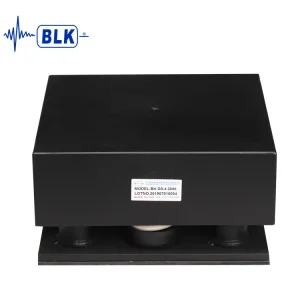
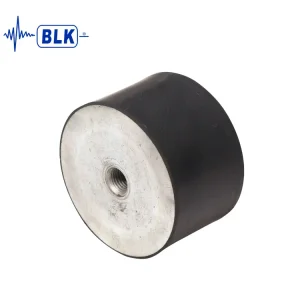

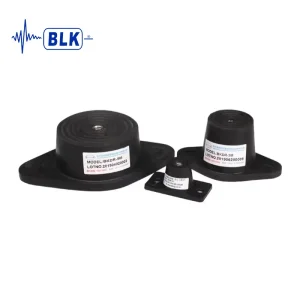

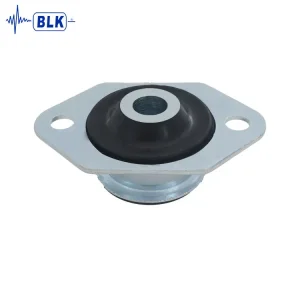
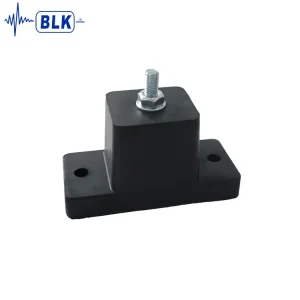

Engineering Fundamentals of Power Generation Vibration Control
A rigorous examination of dynamic transmissibility, harmonic resonance attenuation, and heavy-equipment isolation in high-load continuous operating environments.
The Physics of Dynamic Isolation in Heavy Power Machinery
Power generation assets—ranging from multi-megawatt reciprocating gas engines and heavy diesel gen-sets to combined-cycle gas turbines and power transformers—generate severe harmonic excitation forces. Mechanical unbalance, firing pulses, and electromagnetic magnetostriction translate directly into high-amplitude mechanical vibration. Without targeted damping, these dynamic forces travel into foundation slabs, structural steelwork, and surrounding facilities, leading to premature structural fatigue, bolt loosening, sensor drift, and catastrophic equipment failure.
To quantify the required isolation, engineering teams rely on the fundamental transmissibility equation ($T$):
$$T = \sqrt{\frac{1 + (2\zeta \cdot r)^2}{(1 - r^2)^2 + (2\zeta \cdot r)^2}}$$
Where $r = f_d / f_n$ represents the ratio of disturbing frequency ($f_d$) to system natural frequency ($f_n$), and $\zeta$ represents the viscous damping ratio. Isolation is physically achieved only when $r > \sqrt{2}$ (approximately 1.414). However, in high-duty power plants, aiming for $r \ge 3$ to $5$ is mandatory to achieve isolation efficiencies exceeding 95% to 99%.
Transient Resonance Mitigation
During startup and shutdown cycles, equipment passes through its natural resonance frequency. Bellking viscous-damped spring mounts limit transient peak amplification ($\zeta = 0.08 - 0.15$), preventing structural whipping and safeguarding equipment anchor points.
Heavy Load Deflection Stability
Power spring isolators are pre-compressed and lateral-stiffness balanced ($K_x / K_y \ge 0.8 - 1.0$) to withstand extreme dynamic torque surges during sudden grid sync, short-circuit faults, or emergency load rejections.
Acoustic Structure-Borne Noise Reduction
Low-frequency noise below 200 Hz easily propagates through rigid building structures. Bellking hybrid elastomer-spring isolators decouple acoustic bridges, reducing structure-borne noise levels by up to 32 dBA.
Global Dynamics & Industrial Vibration Mandates
Navigating environmental compliance, urban grid densification, and modern power generation standards across global industrial markets.
The global transition toward decentralized power generation, combined-cycle natural gas plants, hyperscale data center backup power, and renewable energy integration has reshaped acoustic and vibration isolation requirements. Modern power facilities are increasingly sited near high-density urban centers, hyperscale tech parks, or sensitive coastal ecosystems, triggering stringent regulatory codes including ISO 10816 (Vibration Severity Standard), ANSI/AHRI 575, and IEEE 693 for substation seismic qualification.
Urban Grid Densification
Substations and peaking power plants located within 100 meters of residential zone boundaries require strict compliance with low-frequency hum limits (under 40 dB at 100 Hz / 120 Hz core magnetostriction frequencies).
Hyperscale Data Center Backup
Continuous-duty multi-megawatt backup genset arrays demand zero dynamic transmission into raised data center floors to safeguard solid-state storage arrays from acoustic vibration corruption.
Offshore & Extreme Environments
Offshore wind farm power conversion platforms and marine gensets demand corrosion-proof mounts capable of resisting salt spray (900+ hr Dacromet/316SS) while mitigating wave motion shock loads.
Engineered Field Solutions for Power Equipment
Specific engineering implementations designed for severe multi-industry power applications.
1. High-Megawatt Diesel & Gas Gensets
Challenge: Reciprocating engines (V12, V16, V20 configurations) operating at 1500–1800 RPM generate strong 1st and 2nd order primary unbalance forces, causing resonance in supporting sub-bases.
Solution: Custom Bellking BK-DS heavy-duty viscous damped spring mounts engineered with natural frequencies of 3.0 Hz to 4.5 Hz and lateral seismic snubbers. Result: >97.8% vibration isolation efficiency and complete elimination of structural fatigue cracks in skid frames.
2. Power Transformers & Grid Substations
Challenge: Magnetostrictive core hum at 100 Hz / 120 Hz and harmonic overtones travel through oil tank bases into concrete pad foundations, causing environmental noise complaints.
Solution: Specialized oil-resistant polymer-elastomer damping pads (BKDJ and BKTS series) installed beneath transformer base rails. The high static load capacity (up to 25 N/mm²) absorbs micro-amplitude high-frequency oscillations, cutting noise transmission by 18 to 26 dB.
3. Industrial Gas Turbines & CCPP
Challenge: Combined-cycle thermal expansion combined with high-frequency rotor unbalance creates multi-axis stress on mounting footings in high ambient temperatures (>150°C near casing points).
Solution: High-temperature stainless steel spring matrices combined with thermal-insulating ceramic spacer blocks. Provides consistent static deflection without elastomer degradation over 15+ years of continuous service.
4. Offshore Wind Nacelles & Auxiliary Gearboxes
Challenge: Wind turbulence creates extreme transient peak shock loads (up to 4.5G) while ocean spray aggressively attacks exposed mounting components.
Solution: Heavy-duty cone mounts (BKCN series) treated with multi-layer Dacromet coating (passing 900-hour salt spray ASTM B117 tests) incorporating internal rebound washers to capture upward dynamic movement.
5. Nuclear Power Emergency Cooling Pumps
Challenge: Auxiliary cooling water pumps demand zero failure tolerance, continuous seismic restraint (IEEE 693 0.5g ZPA rating), and radiation-resistant polymer compounds.
Solution: All-metal spring isolators with integrated multi-directional seismic limit stops (MD type mounts). Certified load ratings ensure 100% operational retention during catastrophic seismic events.
The Future of Industrial Vibration Damping: Next-Gen R&D
Transitioning from traditional passive damping to smart, responsive, and eco-optimized vibration control technologies.
IoT Smart Damping Sensors
Integrating tri-axial MEMS accelerometers directly inside viscous spring housing to continuously stream dynamic deflection, temperature, and frequency data to cloud maintenance platforms.
Magnetorheological Damping
Developing semi-active MR fluid dampers that change viscosity in milliseconds upon voltage signal input, dynamically adapting damping coefficient ($\zeta$) to fluctuating turbine load states.
Nano-Polymer Compounds
Formulating carbon-nanotube reinforced fluoroelastomers providing unprecedented fatigue resistance—achieving over 10 million load cycles with under 2% permanent compression set.
Topology-Optimized Housings
Utilizing generative AI structural modeling to cast lighter, ultra-rigid ductile iron housings that eliminate internal stress concentrations while reducing raw metal mass by 22%.
China Supply Chain Resilience & Production Efficiency
Leveraging Kunshan's industrial manufacturing ecosystem to deliver fast turnaround times, rigid quality control, and cost competitiveness.
Located in the heart of Kunshan’s precision manufacturing cluster (Jiangsu Province, China), Bellking Vibration Reduction Equipment Manufacturing Co., Ltd. operates a streamlined, vertically integrated 2,000 m² modern manufacturing facility. By consolidating raw material procurement, CNC machining, automated spring coiling, robotic welding, vulcanization, and acoustic laboratory testing under one ISO 9001 certified roof, we deliver decisive structural advantages to international power OEM clients.
Vertical Raw Material Sourcing
Direct supply partnerships with tier-one alloy spring steel mills (60Si2MnA, 50CrVa grade) and raw rubber compounders ensure strict batch consistency, lower material input costs, and zero material lead-time delays.
Rapid Customization Cycle
Where traditional Western suppliers require 8 to 12 weeks for non-standard mount engineering, Bellking turns around complete FEA-validated dynamic vibration isolation drawings in 24 hours and delivers prototypes in 3 working days.
Unmatched Scale & Delivery Speed
With an annual capacity exceeding 100,000 heavy isolator units, standard inventory items ship within 24 hours worldwide, backed by complete factory test certificates and third-party inspection reports.
Power Isolation Selection Comparison Guide
Technical performance metrics for selecting optimal mount families based on equipment operating profiles.
| Isolator Series | Natural Frequency ($f_n$) | Load Capacity Range | Core Application Profile | Damping System | Service Life |
|---|---|---|---|---|---|
| BK-DS Damped Spring Mounts | 3.0 Hz – 5.0 Hz | 50 kg – 5,000 kg per mount | Reciprocating Gensets, Heavy Chillers, Compressors | Viscous Damping Fluid / Polymer Snubbers | 15+ Years |
| BKDD / BKDR Heavy Rubber Mounts | 8.0 Hz – 15.0 Hz | 20 kg – 1,200 kg per mount | High-RPM Motors, Auxiliary Pumps, Small Gensets | Internal Elastomeric Hysteresis | 8+ Years |
| BKDJ / BKTS Polymer Damping Pads | 12.0 Hz – 20.0 Hz | Up to 25 N/mm² static pressure | Power Transformers, Substation Rails, Inertia Bases | High-Density Elastomer Polymer Matrix | 15+ Years |
| BKCN Cone Anti-Shock Mounts | 6.0 Hz – 10.0 Hz | 100 kg – 2,500 kg per mount | Marine Engines, Offshore Wind Nacelles, Mobile Power | Shear/Compression Rubber Cone + Fail-Safe Washer | 10+ Years |
| MD / ME Seismic Spring Isolators | 3.2 Hz – 4.8 Hz | 100 kg – 8,000 kg per mount | Nuclear Power Auxiliaries, Seismic Zone Substations | All-Steel Spring + Heavy Duty Limit Snubbers | 15+ Years |
| BK-AT Precision Desktop Platforms | 1.7 Hz – 3.0 Hz | 10 kg – 300 kg total payload | Power Plant Metrology, Laser Alignment Benches | Pneumatic Air Membrane / Active Damping Ready | 6+ Years |
Global Engineering Support & Quality Assurance
Providing end-to-end technical backup, field vibration measurement, and international compliance guarantees for mission-critical installations.
24-Hour Technical Support
Our dedicated application engineering team analyzes your equipment parameters (operating weight, center of gravity, RPM, support layout) and provides full vibration isolation calculation reports within 24 hours.
ISO 9001 & International Standards
All production operates under ISO 9001 quality management systems. Materials comply fully with CE marking, REACH, and RoHS environmental directives, ensuring trouble-free site audits.
Full Inspection Documentation
Every shipment comes complete with mill test certificates, static load-deflection test curves, dynamic stiffness verification, and optional third-party (SGS/TÜV) inspection documentation.
Specialized & High-Performance Isolator Catalog
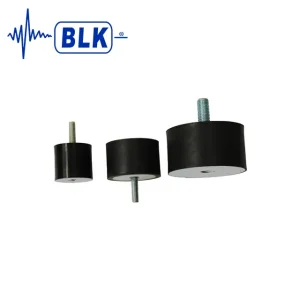
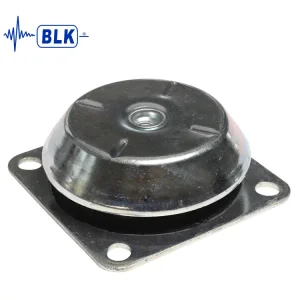
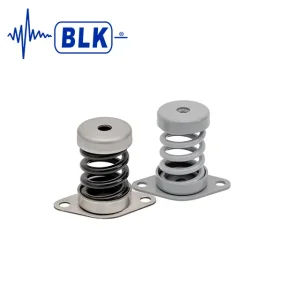
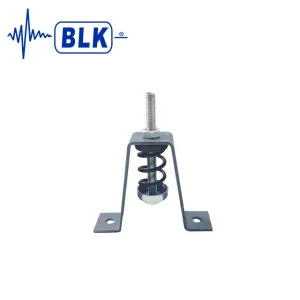
Explore our specialized range of rubber mounts, adjusting feet, and spring hangers for power plant secondary systems.




Engineering FAQ: Power Generation Vibration Control
In-depth answers from our senior vibration engineering team regarding sizing, design criteria, and field installation.
How do I calculate the correct static deflection required for a power generator set isolator?
Why are viscous damped spring mounts mandatory for power gen-sets instead of standard open springs?
What is the difference between static stiffness ($K_s$) and dynamic stiffness ($K_d$) in rubber mounts?
How does Bellking protect vibration mounts operating in harsh outdoor or marine environments?
What data is required to request a custom non-standard isolator design?
- Total operating weight of equipment + sub-base + fluid payload
- Coordinates of Center of Gravity (CoG) relative to mounting points
- Operating speed range (RPM) or forcing frequencies (Hz)
- Layout dimensions and number of mounting support locations
- Environmental conditions (ambient temperature, oil exposure, outdoor/indoor)
- Seismic or wind-load restraint requirement standards (e.g., IEEE 693, IBC)