
Precision Engineering Isolators & Spring Mounts
Direct factory supply featuring ISO 9001 certified dynamic anti-vibration mounts, spring hangers, and tuned elastomeric pads for heavy industrial applications.
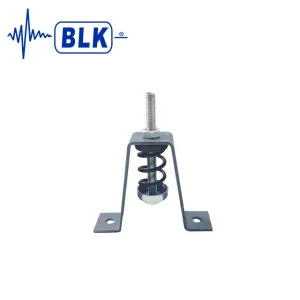






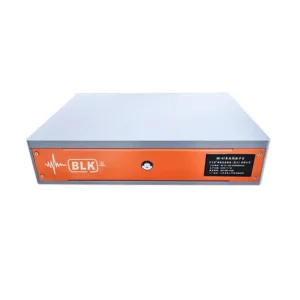
Global Commercial & Industrial Landscape of Custom Elastomeric Mounts
Mechanical vibration remains one of the primary catalysts for structural fatigue, acoustic radiation, and operational failure across modern industrial infrastructure. As machinery accelerates toward higher power densities and micro-scale precision demands become standard in semiconductor and medical manufacturing, the global market for custom rubber mounts and isolators has undergone a major paradigm shift. No longer viewed as commoditized rubber-to-metal hardware, high-performance isolators are now engineered structural components critical to operational compliance, safety standards (such as ISO 10816 for mechanical vibration), and long-term asset protection.
The acceleration of global industrial automation, electric vehicle (EV) powertrain integration, high-capacity HVAC systems for data centers, and marine electrification has driven unprecedented growth in demand for specialized elastomeric damping solutions. According to market intelligence data, the custom vibration isolation sector is expanding rapidly, with major manufacturing hubs in East Asia (notably specialized industrial clusters in Kunshan, China), Central Europe, and North America driving advanced polymer compounding innovation.
Engineering Physics of Elastomeric Vibration Isolation
To specify or custom-manufacture a rubber isolator effectively, procurement and engineering teams must evaluate the underlying dynamic physics governing mechanical energy conversion. Elastomers reduce vibration transfer by acting as compliant spring-damper elements that shift the system's natural frequency away from forcing frequencies while converting kinetic energy into thermal energy via internal hysteresis loss.
• r = f_d / f_n (Frequency Ratio: Excitation Frequency f_d divided by Natural Frequency f_n)
• ζ (Zeta) = Damping Ratio of the Elastomeric Compound (c / c_c)
• Isolation zone occurs ONLY when r > √2 (≈ 1.414). Optimal isolation requires r ≥ 3.0.
• g = Acceleration due to gravity (9.81 m/s²)
• δ_s = Static deflection under dead load (m or cm)
Custom rubber engineering requires precise balancing between static stiffness ($K_s$) and dynamic stiffness ($K_d$). Rubber exhibits dynamic stiffening—where the dynamic modulus is higher than the static modulus depending on loading frequency, strain amplitude, and temperature. The dynamic multiplier ($K_d/K_s$) varies from 1.2 for Natural Rubber up to 2.5+ for high-damping synthetic compounds.
| Elastomer Compound | Shore A Durometer Range | Temp Limits (°C) | Loss Factor (η) | Oil & Chemical Resistance | Primary Industrial Application |
|---|---|---|---|---|---|
| Natural Rubber (NR) | 30A - 80A | -40 to +80 | 0.05 - 0.15 | Fair / Poor | High-resilience mounts, HVAC compressors, motor mounts |
| Neoprene (CR) | 40A - 90A | -35 to +100 | 0.10 - 0.25 | Good | Marine engine mounts, industrial machinery, HVAC pads |
| Nitrile (NBR) | 40A - 90A | -30 to +120 | 0.08 - 0.20 | Excellent | Oil-immersed mounts, hydraulic pump supports, automotive |
| EPDM | 40A - 85A | -45 to +150 | 0.08 - 0.18 | Good (Ozone/UV) | Outdoor electrical transformers, HVAC chillers, solar arrays |
| Silicone (VMQ) | 25A - 80A | -60 to +200 | 0.15 - 0.40 | Good | Aerospace electronics, cleanrooms, medical isolation platforms |
| Fluoroelastomer (FKM) | 50A - 90A | -20 to +230 | 0.20 - 0.45 | Superior | Aggressive chemical plants, high-temp exhaust mounts |
Localized Application Scenarios & Sector-Specific Deployments
Different industrial sectors present unique structural dynamic, environmental, and acoustic challenges. Custom elastomeric mounting solutions must be calculated based on real-world duty cycles.
HVAC & Commercial Building Acoustics
Heavy roof-top chillers, cooling towers, and air-handling units (AHUs) transfer low-frequency structure-borne noise (10 Hz – 60 Hz) directly into concrete floor slabs. Custom rubber pads (BKDJ type) and neoprene double-deflection mounts isolate shear and axial forces, ensuring compliance with ASHRAE noise standards and preventing acoustic fatigue in commercial real estate.
Power Generation & Transformer Noise Mitigation
Electrical transformers emit persistent magnetostrictive hum at double the line frequency (100 Hz / 120 Hz). Custom oil-resistant EPDM or Nitrile mounts installed underneath dry-type and oil-filled transformers absorb sub-millimeter amplitude micro-vibrations, isolating electrical substations and urban data centers from structure-borne hum.
Semiconductor Metrology & Cleanroom Platforms
In sub-nanometer lithography and atomic force microscopy (AFM), ambient floor vibrations from foot traffic and cleanroom HVAC pumps distort measurements. Custom active-passive desktop platforms (BK-AT type) combining high-damping silicone matrices with precision leveling control isolate micro-seismic background motion down to 1.7 Hz.
Technical Roadmap: Next-Gen Elastomeric Isolation Systems
As industrial Internet of Things (IIoT) and adaptive smart factories become standard, the vibration control industry is evolving beyond traditional static elastomeric bonding.
Phase 1: Magnetorheological (MR) Elastomers
Integrating micro-scale iron particles into rubber matrices allows real-time stiffness tuning. By applying a variable magnetic field, the mount’s storage modulus ($G'$) can shift within milliseconds, mitigating resonance spikes during variable-speed equipment startup.
Phase 2: Embedded Piezoelectric IIoT Sensors
Future custom mounts integrate thin-film piezoelectric sensors directly into the bonded steel-elastomer interface. These self-powered sensors transmit continuous dynamic strain, temperature, and degradation telemetry to predictive maintenance platforms.
Phase 3: Bio-Based Sustainable Polymers
Transitioning from petroleum-derived polymers to bio-based polyisoprene and recycled silica reinforcement agents lowers embodied carbon while maintaining tear strength (>45 N/mm) and compression set resistance (<20% under 70°C x 22h testing).
Custom Rubber Mounts Price Drivers & OEM Cost Matrix
Understanding the pricing architecture of custom elastomeric isolators is critical for OEM procurement managers and engineering directors. Unit pricing is non-linear and governed by four primary structural cost variables: tooling complexity, polymer compound formulation, metal plate bonding prep, and quality verification testing.
| Order Volume Tier | Tooling NRE Cost (USD) | Avg Unit Price (Standard Rubber) | Avg Unit Price (High-Temp FKM/Silicone) | Lead Time (Prototypes to Mass Production) |
|---|---|---|---|---|
| Prototype / Sample (1 - 50 Pcs) | $350 - $800 (Single-cavity) | $12.50 - $28.00 | $35.00 - $75.00 | 3 - 5 Working Days |
| Low-Volume OEM (51 - 500 Pcs) | $800 - $1,500 (Multi-cavity) | $6.80 - $14.50 | $18.00 - $38.00 | 10 - 14 Working Days |
| Mid-Volume Industrial (501 - 5,000 Pcs) | Amortized / Waived | $3.20 - $7.50 | $9.50 - $19.00 | 2 - 3 Weeks |
| High-Volume OEM (5,000+ Pcs) | Fully Amortized ($0) | $1.45 - $3.80 | $4.80 - $9.20 | Scheduled Blanket Orders |
Key Factors Influencing Custom Isolator Pricing:
- Elastomer Vulcanization Method: Transfer molding vs. compression molding vs. injection molding. Compression molding offers lower tooling cost for small runs, while injection molding delivers ultra-tight dimensional tolerances (±0.05mm) for high-volume automated production.
- Metal Insert Surface Preparation: Dynamic elastomer-to-metal bonding requires chemical shot-blasting, degreasing, and dual-layer Chemlok/Thixon primer application to ensure rubber tearing failure (100% R) rather than bond line failure during shear overload tests.
- Surface Finish & Plating: Standard zinc plating vs. high-durability Dacromet or electro-galvanized coatings capable of passing 900+ hours of continuous salt spray testing per ASTM B117 standards.
Factory Audit Guidelines: Vetting Custom Isolator Manufacturers
To ensure supply chain reliability and prevent field failures under severe dynamic load conditions, OEM procurement teams should evaluate potential rubber mount factories against a strict E-E-A-T (Experience, Expertise, Authoritativeness, Trustworthiness) verification matrix. A certified manufacturer must prove in-house design capabilities, raw material batch control, and dynamic testing infrastructure.
1. Material Batch Rheology & Testing
Verify that the factory utilizes a Moving Die Rheometer (MDR) to analyze cure curves ($t_{10}, t_{90}$), minimum viscosity ($M_L$), and maximum torque ($M_H$) for every rubber masterbatch, ensuring consistent durometer and elasticity batch-to-batch.
2. Dynamic Fatigue & FEA Capabilities
Ensure the manufacturer performs Finite Element Analysis (FEA) using hyperelastic material models (Mooney-Rivlin, Ogden) to predict strain distribution, combined with servo-hydraulic dynamic fatigue test rigs operating at up to 10^7 cycles.
3. ISO 9001 & Environmental Audits
Factory facilities must maintain ISO 9001:2015 Quality Management certification, ISO 14001 environmental compliance, and full REACH / RoHS documentation guaranteeing zero toxic off-gassing or restricted heavy metals.
Frequently Asked Questions (FAQ) - Engineering Deep Dive
Direct answers to crucial design, procurement, and implementation questions provided by our senior elastomeric applications engineers.
Specialized Damping Pads & Heavy Duty Isolator Platforms
Explore our full range of custom BK-PM, BK-VT, BKP, and multi-layer isolation dampers manufactured for global industrial deployment.







