
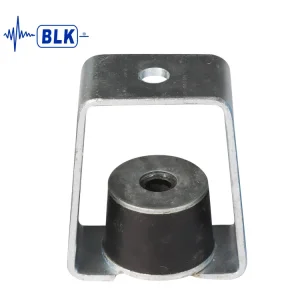
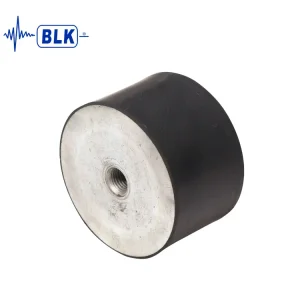
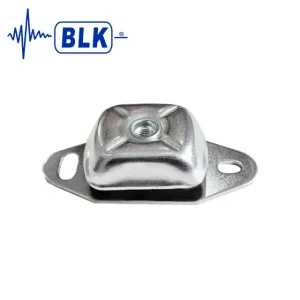
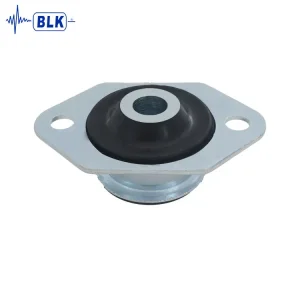
Featured Precision Isolation Hangers & Mounts
Direct OEM/ODM factory inventory engineered for MEP piping, HVAC ductwork, high-static air handlers, and sensitive suspended infrastructure.




Macro Industry Context & Global Commercial Demand Analysis
In modern structural acoustic engineering and mechanical, electrical, and plumbing (MEP) infrastructure, controlling structure-borne noise and dynamic vibrational energy transfer is paramount. Dynamic mechanical systems—such as high-pressure HVAC blowers, suspended chilled water loops, axial ventilation fans, and industrial piping networks—generate continuous low-frequency dynamic forces. If unmitigated, these micro-vibrations traverse structural concrete slabs, steel joists, and ceiling decks, transforming structural elements into acoustic radiators that degrade indoor environmental quality (IEQ) and violate stringent municipal noise ordinances.
Custom vibration isolation hangers act as critical dynamic decoupled interfaces. By inserting precisely calibrated elastic elements (helical steel coils, elastomer elements, or composite pneumatic bladders) in series with structural ceiling anchor rods, these hangers attenuate oscillatory forces across a broad spectral range. As green building standards (such as LEED v4.1 and WELL Building Standard v2) enforce lower background sound criteria (NC/NR 25–35 curves), global procurement teams are shifting away from generic off-the-shelf isolators toward heavy-duty, factory-customized vibration isolation hangers backed by rigorous mechanical testing and transparent dynamic stiffness parameters.
Dynamic Stiffness Mechanics & Physics of Isolation
Designing an effective hanger isolation matrix requires analyzing the single-degree-of-freedom (SDOF) or multi-degree-of-freedom (MDOF) harmonic oscillation governed by mechanical dynamics. The system's fundamental undamped natural frequency ($f_n$) is governed by the structural stiffness ($k$) and suspended load mass ($m$):
Where g represents gravitational acceleration (9.81 m/s²) and δ_st represents static spring deflection. To avoid the destructive phenomenon of mechanical resonance, the disturbing operational frequency of the suspended equipment (f_d) must maintain a minimum ratio of f_d / f_n > √2 (1.414) relative to the hanger system.
Transmissibility (T) Controls
Transmissibility represents the fraction of dynamic force transmitted into the supporting ceiling slab. Operating at f_d / f_n ≥ 3.0 routinely achieves transmissibility values below 0.10 (>90% dynamic energy attenuation).
Damping Factor (ζ) Mechanics
Internal material damping dissipates transient peak loads during motor startup and shutdown. High-grade elastomer inserts introduce damping ratios between 0.05 and 0.15, preventing excessive physical displacement.
High-Frequency Acoustic Bridging
Steel springs alone can permit high-frequency sound waves to travel through steel coil wire (acoustic bridging). Integrated elastomeric pads in series eliminate acoustic short-circuiting.
Hanger Engineering Technical Specifications Matrix
Comprehensive comparative metrics across standardized industrial hanger architectures to assist structural engineers and MEP procurement teams.
| Hanger Series / Type | Isolation Media | Static Deflection Range | Natural Freq. (f_n) | Max Load Range per Hanger | Corrosion Protection Options |
|---|---|---|---|---|---|
| HR Series Rubber Hanger | Neoprene / Natural Rubber | 5 mm – 12 mm | 8.0 Hz – 12.0 Hz | 15 kg – 450 kg | Zinc Electroplated / E-Coated Steel Housing |
| HS Series Spring Hanger | High-Tensile Helical Steel Coil | 25 mm – 50 mm | 3.2 Hz – 5.0 Hz | 25 kg – 1,800 kg | Hot-Dip Galvanized / Powder Coated / Dacromet |
| HSC Combination Hanger | Steel Coil + Elastomer Cup | 25 mm – 75 mm | 2.5 Hz – 4.5 Hz | 30 kg – 2,200 kg | Dacromet 900-Hr Salt Spray Coating |
| Heavy-Duty Seismic Hanger | Constraint Steel + Dual Springs | 50 mm – 100 mm | 1.8 Hz – 3.5 Hz | 100 kg – 5,000+ kg | Thermally Sprayed Zinc / HDG Stainless Steel |
Custom OEM/ODM Manufacturing Architecture & Price Drivers
Understanding factory cost drivers empowers global buyers to optimize procurement budgets without sacrificing structural safety or dynamic acoustic performance.
1. Metallurgy & Raw Material Selection
Spring steel formulation (ASTM A229 oil-tempered steel, 60Si2Mn silicon-manganese alloy, or 304/316 stainless steel) dictates elastic limit performance, fatigue lifecycle, and baseline material cost. Precision shot-peening increases spring fatigue life by over 300% under high-cycle dynamic loading.
2. Elastomer Compound Formulation
Compounding pure natural rubber (NR) or synthetic ethylene propylene diene monomer (EPDM) with specialized carbon black and antioxidants ensures oil resistance, low creep, and thermal stability from -40°C to +120°C. Raw elastomeric grade directly influences creep deformation rates over a 15-year service life.
3. Surface Treatment & Environmental Protection
Standard electro-zinc plating provides minimal protection (under 72 hours salt spray). Factory options like Dacromet coating or hot-dip galvanizing (HDG) exceeding 900 hours of ASTM B117 salt spray exposure ensure corrosion endurance in marine and industrial environments, impacting unit costs by 12–25%.
4. Custom Tooling & Quality Control Testing
Custom hanger geometry, non-standard threaded rod diameters, and integrated seismic restraint brackets require dedicated stamping and welding fixtures. Automated robotic welding and 100% dynamic load cell testing ensure zero-defect manufacturing for high-risk infrastructure.
Localized Application Scenarios & Industry Deployments
Commercial High-Rise HVAC Networks
Suspended chilled water risers, main supply ductwork, and ceiling-hung fan coil units (FCUs) in luxury hotel towers and commercial offices rely on spring hangers to prevent airborne low-frequency hums from passing into occupied spaces below.
Semiconductor & Cleanroom Ceiling Platforms
Micro-vibration control is mandatory in wafer fabrication facilities. Custom isolation hangers isolate suspended cleanroom air recirculating units (FFUs) from sensitive optical lithography tools operating beneath structural decks.
Industrial Power Plants & Exhaust Piping
Heavy-duty exhaust piping networks connected to emergency diesel generators subject suspension systems to extreme thermal expansion, fluid hammer, and cyclic vibration. Combination hangers absorb dual thermal expansion and dynamic force.
Technology Roadmap: Next-Generation Vibration Isolation
As intelligent building infrastructure evolves, factory R&D is focusing on smart materials, predictive maintenance, and sustainable manufacturing processes.
Embedded IoT Strain Sensors
Integrating wireless micro-strain sensors inside hanger coils to transmit real-time load distribution and fatigue data to BMS platforms.
Bio-Based Elastomers
Developing eco-friendly vulcanized compounds sourced from sustainable plant oils without compromising dynamic damping or tear strength.
Magnetorheological Hangers
Hybrid passive-active hangers using MR fluids to dynamically alter damping coefficient in response to transient equipment variable speeds.
Zero-Waste Manufacturing
Closed-loop metallurgical reprocessing and solvent-free Dacromet finishing to align with global Net-Zero carbon targets.
Complete Industrial Mounts & Isolation Systems
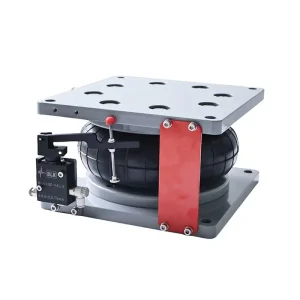
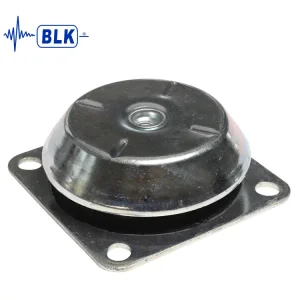
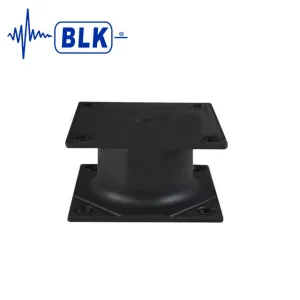
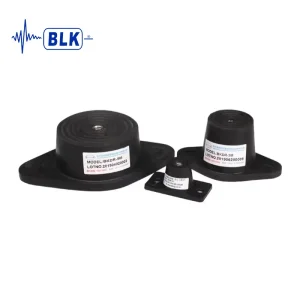
Explore our extended catalog of factory-priced spring mounts, air isolators, rubber buffers, and precision leveling platforms.



Frequently Asked Questions (FAQ) & Procurement Insights
Direct technical guidance from application engineers to streamline specification and factory purchasing decisions.