
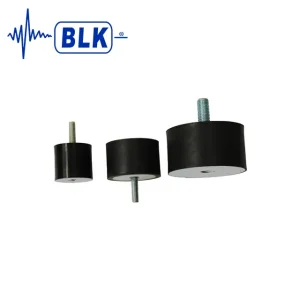
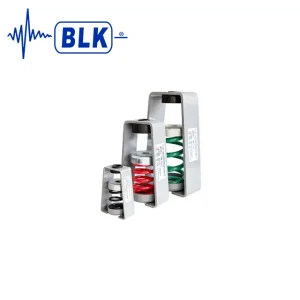
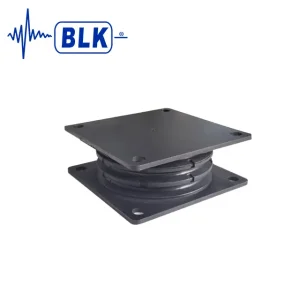
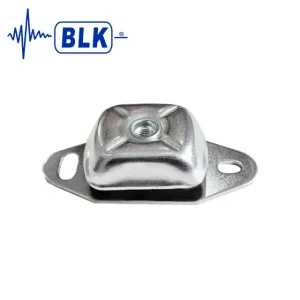
Primary Vibration Control Equipment & Mount Series
Engineered rubber, spring, and specialized isolation components designed for industrial machinery, HVAC systems, and heavy-duty structural dampening.
Technical Deep-Dive: The Mechanics of Air Spring Vibration Isolation
An authoritative engineering breakdown of low-frequency dynamic attenuation, pneumatic stiffness tuning, and micro-vibration dampening mechanics.
In modern high-precision industrial operations, parasitic structural vibrations represent a critical threat to equipment yield, structural integrity, and operational longevity. Advanced industrial equipment—ranging from sub-nanometer semiconductor photolithography scanners and coordinate measuring machines (CMM) to heavy industrial stamping presses and power transformers—requires sophisticated dynamic isolation strategies. Among available technologies, air spring vibration isolators stand as the gold standard for low-frequency attenuation due to their uniquely adaptable pneumatic compliance and variable load-bearing mechanics.
Pneumatic Compliance vs. Mechanical Spring Dynamics
Unlike traditional steel coil springs or elastomer elastomeric mounts, which exhibit fixed mechanical stiffness ($K_m$), pneumatic isolators operate by harnessing the compressibility of enclosed gas volumes (typically compressed air or high-purity nitrogen). The fundamental natural frequency ($f_n$) of an air spring isolator system is expressed by the thermodynamic gas compression equation:
f_n = (1 / 2π) * √((γ * P_a * A_e^2) / (V_0 * M))
Where γ represents the polytropic gas constant (1.4 for air under adiabatic conditions), P_a is absolute working pressure, A_e is effective pneumatic area, V_0 is internal air reservoir volume, and M is supported mass. By decoupling natural frequency from physical spring deformation, high-quality air spring manufacturers can achieve natural frequencies as low as 0.8 Hz to 3.0 Hz—a feat impossible with standard mechanical steel springs without compromising lateral physical stability.
Dynamic Damping & Resonant Suppression Matrix
Isolation efficiency ($\eta$) is governed by the frequency ratio ($r = f_d / f_n$), where $f_d$ is the disturbing excitation frequency generated by nearby motors, pumps, or seismic footfalls:
T_d = √((1 + (2ζr)^2) / ((1 - r^2)^2 + (2ζr)^2))
When the disturbing frequency ratio $r > \sqrt{2}$, isolation begins ($\eta > 0$). At ratios $r \ge 3$, transmissibility ($T_d$) drops dramatically, yielding isolation efficiencies exceeding 95% to 99%. To eliminate dangerous amplification spikes during system start-up or transient impact shocks, leading air spring vibration isolator manufacturers integrate auxiliary surge tanks, orifice flow restrictors, and viscous fluid damping chambers into the pneumatic circuit.
Global Enterprise Procurement Needs & Selection Criteria
How multinational engineering teams evaluate vendor capabilities, structural safety factors, and material durability for strategic sourcing.
Burst Pressure & Tensile Safety Factors
Global procurement standards require rubber air sleeves to endure minimum burst pressures of 3.0x to 4.0x operating pressure. Multi-ply elastomeric bladders reinforced with high-tensile synthetic cord layers ensure creep resistance under continuous high loads.
Automated Pneumatic Height Control
Precision manufacturing operations demand automatic leveling valves (ALV) with deadband tolerances under ±0.01 mm. Mechanical or optoelectronic leveling valves automatically compensate for mass shift during dynamic machining processes.
Corrosion Resistance & Environmental Endurance
For chemical cleanrooms and outdoor HVAC/transformer installations, metal hardware must undergo anodization, electro-galvanization, or Dacromet surface treatments capable of passing 900+ hour salt spray testing (ASTM B117 standards).
| Isolation Platform Type | Target Frequency Range | Damping Mechanism | Auto Leveling Precision | Primary Industrial Sector |
|---|---|---|---|---|
| Low-Frequency Air Mounts (BK-A Series) | 1.2 Hz - 3.5 Hz | Orifice Restrictor + Air Chamber | ±0.05 mm | Semiconductor, Metrology, Optical Benches |
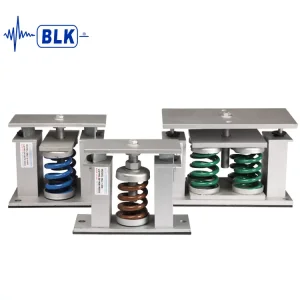
| Heavy-Duty Damped Springs (MD / MA Series) | 3.0 Hz - 6.0 Hz | Viscous Fluid + Helical Coil | Manual Mechanical Adjustment | Chilliers, Cooling Towers, Generator Sets |
| Precision Desktop Platforms (BK-AT Series) | 1.5 Hz - 4.0 Hz | Pneumatic Membrane + Dynamic Valve | ±0.01 mm | Atomic Force Microscopes, Lab Balances |
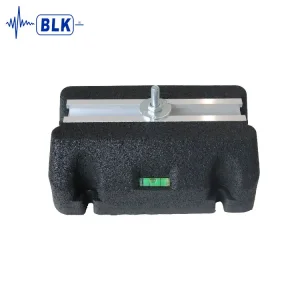
| High-Load Matrix Mounts (BK-MT Series) | 4.5 Hz - 8.0 Hz | High-Damping Elastomer Compound | N/A (Passive Static) | Transformers, Heavy Stamping, Foundations |
Strategic Supply Chain Advantages of China Manufacturing
Combining end-to-end component sourcing, precision rubber compounding, and high-capacity CNC machining within an integrated industrial cluster.
Full Vertical Integration
From custom synthetic rubber vulcanization (chloroprene, NBR, EPDM) to internal metallic rim machining and automated sealing assembly, centralized production eliminates multi-vendor markups and reduces technical lead times by up to 60%.
Advanced Quality Assurance & Testing
Factories employ modern dynamic stiffness testing rigs, laser doppler vibrometers, air leakage mass spectrometers, and dynamic fatigue lifecycle actuators capable of simulating millions of shock cycles prior to mass delivery.
Optimized Total Cost of Ownership (TCO)
By leveraging mature regional supply ecosystems, Chinese manufacturers offer high-performance air spring mounts at highly competitive capital costs—enabling global OEMs to integrate high-margin vibration mitigation into standard product builds.
Localization Support & Regulatory Compliance Assurance
Ensuring frictionless global deployment through complete certification compliance, tailored localized engineering, and rapid field support.
Procuring vibration isolation hardware across international boundaries requires strict adherence to regional safety standards and local architectural codes. A reliable air spring vibration isolator manufacturer must provide comprehensive engineering support, comprehensive technical documentation, and full regulatory compliance.
International Standards & Certifications
All air spring components and rubber vibration isolators are manufactured under strict quality management systems certified to ISO 9001:2015 and environmental management protocols under ISO 14001:2015. For European and North American installations, materials comply with RoHS Directive 2011/65/EU and REACH regulations, ensuring zero hazardous substance off-gassing in critical cleanroom environments.
- Seismic Restraints & Building Codes: Optional internal or external seismic snubbers engineered to withstand high lateral shear force overloads in accordance with IBC (International Building Code) specifications.
- Pressure Vessel Directives: High-pressure pneumatic reservoirs certified under CE pressure equipment directives (PED) and ASME safety margins.
- Cleanroom Compatibility: Low-particulate elastomer compounds tested for ISO Class 1 and Class 3 cleanroom applications.
Localized Field Engineering & Custom Adaptation
To overcome site-specific space constraints or unusual equipment weight distributions, manufacturer application engineers provide 3D CAD modeling, Finite Element Analysis (FEA) dynamic simulations, and custom mounting plate adaptations. On-site installation guidance and vibration diagnostic measurements (FFT spectrum analysis) ensure real-world attenuation performance matches theoretical calculations.
Localized Application Scenarios & Real-World Deployments
Field-tested vibration control strategies tailored for demanding operational environments across diverse industry sectors.
Semiconductor Manufacturing & Metrology
Cleanroom-installed lithography scanners, wafer probers, and electron microscopes require total isolation from ambient floor vibrations. Low-frequency pneumatic air mounts eliminate environmental sub-Hz disturbances, ensuring nanometer line-width precision.
Power Transformers & Electrical Substations
Magnetostriction forces inside large power transformers generate continuous 100 Hz/120 Hz hum noise that propagates through concrete building structures. Matrix vibration mounts and rubber pads attenuate solid-borne acoustic transmission effectively.
HVAC & High-Rise Building Infrastructure
Rooftop chillers, cooling towers, and large air handling units (AHUs) transmit heavy dynamic loads into building slabs. Damped spring mounts and air spring isolators isolate equipment vibrations, preserving structural stability and occupant comfort.
Emerging Trends in Smart Vibration Control Technology
The convergence of active pneumatic control, IoT sensor integration, and sustainable polymer chemistry shaping the future of industrial dampening.
The vibration control industry is undergoing a rapid technological evolution driven by automated manufacturing, zero-defect quality mandates, and Smart Factory (Industry 4.0) initiatives. Modern facilities no longer view vibration isolators as passive rubber hardware, but as active digital components within predictive plant networks.
1. Active & Hybrid Pneumatic Isolation Systems
While passive air springs provide exceptional low-frequency attenuation above $\sqrt{2} f_n$, they cannot fully suppress internal low-frequency structural resonance without added stiffness. Next-generation systems integrate electro-magnetic linear actuators and fast piezoelectric valves in parallel with pneumatic chambers. Closed-loop digital controllers sense real-time floor acceleration, canceling micro-disturbances instantaneously with near-zero phase lag.
2. IoT-Enabled Predictive Health Monitoring
Smart air spring isolators are increasingly equipped with embedded wireless pressure transducers, temperature sensors, and tri-axial MEMS accelerometers. Continuous monitoring of air chamber pressure and height changes allows automated diagnostic software to detect micro-leaks, pressure drops, or uneven structural settling long before catastrophic equipment misalignment occurs.
3. Eco-Friendly Elastomers & Sustainable Manufacturing
In response to global carbon-neutral mandates, chemical engineers are developing bio-based elastomer blends and recycled synthetic polymers that match the tensile resilience and ozone resistance of conventional petroleum-derived neoprene and NBR compounds. These green material formulations lower manufacturing carbon footprints while maintaining strict compliance with global environmental standards.
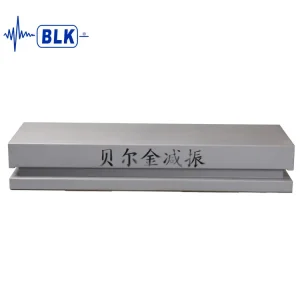
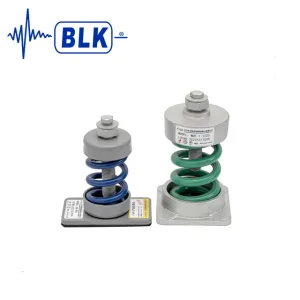
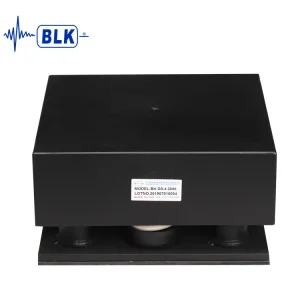
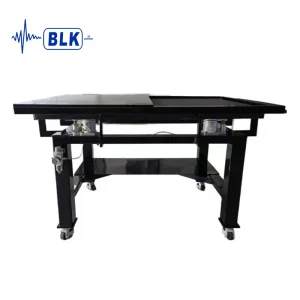
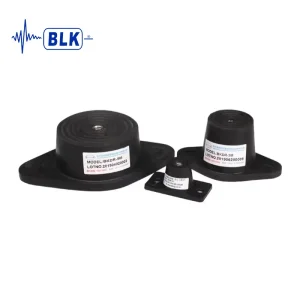
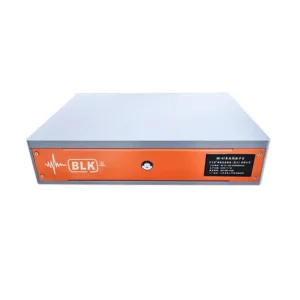
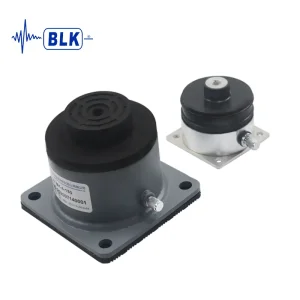
Advanced Isolation Platforms & Precision Hardware Series
Explore specialized damped springs, desktop micro-vibration platforms, matrix mounts, and polymer damping pads built for exacting tolerances.

Engineering FAQ: Sourcing & Sizing Air Spring Vibration Isolators
Comprehensive answers to frequent engineering questions regarding calculation methods, installation procedures, and vendor procurement.