
Featured Isolation Systems & Matrix Mounts
Explore our certified product line of spring isolators, rubber mounts, and air suspension platforms designed for all-thread assembly, HVAC isolation, and heavy machine stabilization.
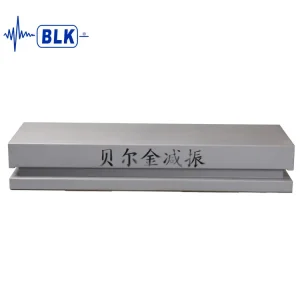

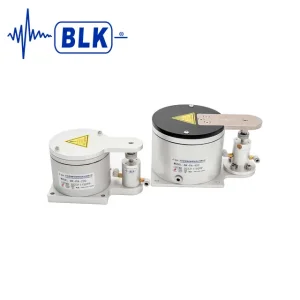





Global & Industrial Landscape of All Thread Vibration Isolators
In modern industrial infrastructure, mechanical vibration control is no longer a peripheral acoustic luxury; it is a fundamental engineering necessity governing structural longevity, process yield, and regulatory noise compliance. As industrial facilities transition toward automated, high-precision, and heavy-duty continuous operations, the demand for high-performance All Thread Vibration Isolators and threaded rod isolation assemblies has surged globally.
Threaded rod vibration isolators serve as the dynamic mechanical link between vibrating machinery—such as HVAC air handling units, suspended water chillers, centrifugal pumps, exhaust ducts, and heavy industrial transformers—and structural building foundations or ceiling grids. By integrating continuous threaded rod pass-through channels, matrix elastomeric elements, and heavy-duty steel spring housings, modern manufacturers solve a complex physics challenge: maintaining structural tension load safety while decoupling high-frequency harmonics and low-frequency resonance.
High-Precision Micro-Vibration Mitigation
In semiconductor photolithography, optical metrology, and advanced nanotech manufacturing, ambient structural vibration in sub-micron regimes can ruin yield rates. Matrix-type elastomeric and pneumatic air mounts isolate high-frequency building chatter down to sub-Hertz thresholds.
Acoustic & Building Code Compliance
Strict urban acoustic standards (DIN 4109, ISO 2017, ASHRAE Chapter 48) enforce stringent decibel limits in commercial high-rises and data centers. All-thread spring hangers and damped rubber mounts stop structure-borne noise transmission before it reaches living or working quarters.
Engineering Physics & Dynamics of All Thread Vibration Isolators
To understand why premier engineering consultants specify customized All Thread Vibration Isolators, one must evaluate the mathematical dynamics of force transmissibility ($T$). Vibration isolation occurs when the disturbing frequency ($f_e$) produced by mechanical equipment significantly exceeds the natural frequency ($f_n$) of the isolator mount assembly.
The transmissibility formula governs structural energy transfer across a spring-mass-damper system:
Where r = f_e / f_n is the frequency ratio, and ζ (zeta) represents the damping ratio of the elastomeric polymer or viscous fluid. Vibration reduction only initiates when r > √2 (≈ 1.414). Optimal isolation (>90–98%) demands a frequency ratio of r ≥ 3 to 5.
Dynamic vs Static Stiffness
Rubber and polymer damping pads exhibit a dynamic stiffness ratio ($K_d / K_s$) ranging from 1.2 to 2.0. High-grade natural rubber matrix formulations stabilize $K_d / K_s$ across variable operating temperatures, preventing pad hardening under heavy static preloads.
Threaded Stud Tensile Dynamics
Continuous all-thread rods pass through the isolator core, delivering fail-safe structural support. In seismic or high-wind environments, captive housing flanges prevent complete equipment displacement even if the internal elastomeric matrix or coil spring suffers extreme physical overloads.
Multi-Directional Shear & Compression
Matrix anti-vibration mounts combine radial shear damping with axial compression resilience. This dual-axis response neutralizes unpredictable torsional forces generated during motor startup, dynamic braking, or fluid line pressure surges.
| Isolator Family Type | Natural Frequency Range (f_n) | Typical Deflection (mm) | Primary Industrial Application | Corrosion Protection Standard |
|---|---|---|---|---|
| BK-MT Matrix Mounts | 6.0 Hz – 12.0 Hz | 3 mm – 8 mm | Pumps, Compressors, Generator Sub-bases | Zinc-Plated / Dacromet Housing |
| MA / MB Spring Isolators | 2.8 Hz – 5.0 Hz | 25 mm – 50 mm | Roof Chiller Plants, Cooling Towers, AHUs | Hot-Dip Galvanized / Powder Coated |
| BK-PA Precision Air Mounts | 1.7 Hz – 3.0 Hz | Self-Leveling Air Chamber | Semiconductor Probers, CMM Metrology | Anodized Aluminum / Stainless Steel |
| HV / HR Hangers | 3.5 Hz – 8.0 Hz | 12 mm – 38 mm | Suspended Piping, Acoustic Ductwork | Electro-Galvanized Threaded Rods |
| BK-PM Polymer Damping Pads | 8.0 Hz – 15.0 Hz | 2 mm – 5 mm | Transformer Base Plates, Heavy Stamping | Oil-Resistant Synthetic Elastomer |
Macro Industry Solutions & Custom OEM Engineering
Every industrial sector presents distinct operational environments, ambient temperatures, chemical exposures, and vibrational spectra. As a direct factory manufacturer, we engineer specific macro-level solutions tailored to modern engineering domains:
Power Generation & Electrical Transformers
Dry-type and oil-immersed electrical transformers emit continuous magnetostrictive hum at twice the grid frequency (100 Hz / 120 Hz). Left unmitigated, these micro-vibrations travel into building concrete structures. Our high-load transformer mounts utilize multi-layer polymer matrix pads and heavy-duty steel baseplates to attenuate low-frequency hum by up to 28 dB(A).
HVAC, Central Chiller Plants & Mechanical Rooms
Central HVAC installations situated on roof decks or upper mechanical floors generate combined static loads and dynamic fluid surges. Utilizing open spring isolators equipped with all-thread height adjustment rods allows mechanical contractors to level heavy chillers precisely while achieving 95%+ isolation efficiency against floor deflection.
Semiconductor Cleanrooms & Precision Optics
In silicon wafer fabrication, footfall noise, nearby highway traffic, or cleanroom fan filter unit (FFU) harmonics compromise photolithography focus depth. Pneumatic air mounts (BK-PA series) integrate active-ready pneumatic chambers with natural frequencies down to 1.7 Hz, creating a stable inertia zone for nanometer-scale inspection.
Automotive & Battery Gigafactory Stamping Press Lines
Heavy mechanical stamping presses impart extreme impact shocks (up to 3G–5G peak acceleration) into factory slab floors. Customized heavy-duty matrix elastomeric mounts and polymer damping bases absorb impulse energy, preventing structural cracking in surrounding concrete and protecting nearby automated robotics.
Technical Roadmap & Future Industry Outlook
As smart factories, Industry 4.0, and sustainable building certifications (LEED / BREEAM) advance globally, isolation technology is evolving from passive mechanical dampeners toward intelligent, eco-engineered acoustic ecosystems.
Advanced Elastomer Synthesis & Anti-Corrosion Coatings
Transitioning from standard NR/SBR rubber compounds to specialized fluoroelastomer matrices and high-damping synthetic polymers. Surface treatments like Dacromet and multi-layer powder coating routinely pass 900+ hour salt spray testing (ASTM B117).
IoT-Enabled Smart Isolators & Telemetry
Embedding wireless MEMS accelerometer sensors and load-cell telemetry directly inside threaded isolator housings. Real-time dynamic monitoring detects structural fatigue, rubber degradation, or unexpected imbalance before catastrophic equipment downtime occurs.
Acoustic Metamaterials & Magnetorheological Damping
Integration of active magnetorheological (MR) fluids and 3D metamaterial structures capable of altering dynamic stiffness in real time based on feedback loops, neutralizing variable-speed drive (VSD) resonances automatically.
Localized Application Scenarios & Empirical Case Studies
Below are real-world engineering deployment examples demonstrating how tailored threaded rod isolators and matrix mounts solve complex structural acoustic challenges:
Sub-Level Commercial Data Center Cooling Retrofit
Challenge: High-frequency vibration from roof-mounted secondary chilled water pumps radiated down into server rack frames, threatening hard drive optical arm accuracy.
Solution: Retrofitted existing threaded hanger rods with HV Type Spring Hangers and BKDJ Polymer Rubber Pads. Achieved 96.4% vibrational decoupling, reducing structural vibration velocity from 4.8 mm/s to 0.3 mm/s (compliant with ISO 10816 Class I).
Urban Substation Transformer Noise Abatement
Challenge: A 110kV residential substation exceeded night-time acoustic boundaries due to 100Hz tonal transformer hum passing into surrounding soil and nearby residential walls.
Solution: Installed custom BK-MT Matrix Mounts under transformer support rails with continuous all-thread tie-downs. Reduced ambient low-frequency noise by 18 dB(A) at the property boundary line.
Semiconductor Wafer Inspection Room Stabilization
Challenge: Optical Coordinate Measuring Machines (CMM) experienced scanning error spikes whenever adjacent cleanroom air handlers cycled on.
Solution: Deployed BK-PA Type Precision Air Mounts featuring natural frequencies of 1.8 Hz beneath an granite optical table. Completely eliminated scanner error spikes, improving measurement yield by 14.2%.
Industrial Hangers, Damping Platforms & Specialized Rubber Mounts
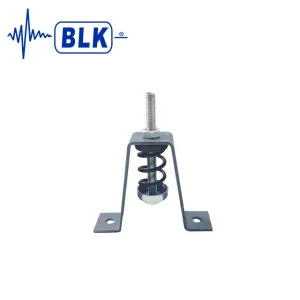
Explore our suspended piping hangers, damped platforms, and polymer vibration pads engineered for seamless integration into OEM machinery and ceiling grids.







Frequently Asked Questions (Technical & Procurement Guidance)
How do I select between spring, matrix rubber, and pneumatic vibration isolators for threaded rod mounting?
What exact engineering parameters are required to calculate custom isolator load ratings?
- Total operating weight of equipment (including fluid content, piping, and frame attachments).
- Number and spatial layout of mounting points.
- Exact Center of Gravity (CG) location if equipment mass is non-symmetrical.
- Disturbing frequency ($f_e$) based on operational motor RPM or stroke cycles per minute.
- Ambient environmental conditions (temperature extremes, outdoor UV exposure, oil or solvent contact).