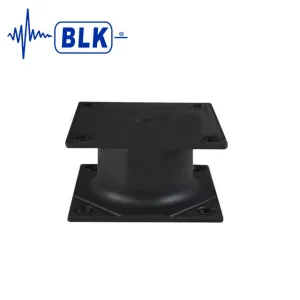
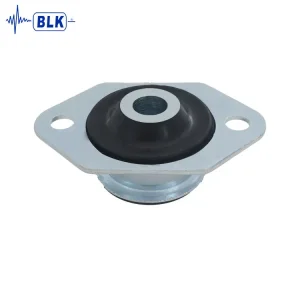
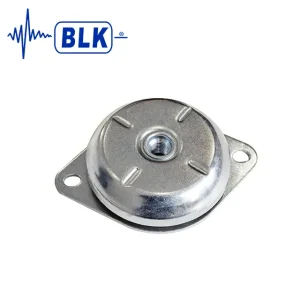
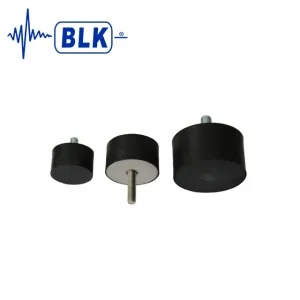
Featured Precision Shock Absorbers & Anti-Vibration Mounts
Explore our primary compliance-engineered industrial damping components, designed for micro-vibration mitigation, dynamic load absorption, and structural resonance isolation.






Technical Whitepaper: ANSI Compliant Kinetic Energy Absorption Systems
In modern automated manufacturing, precision metrology, heavy infrastructure, and structural engineering, controlling kinetic mechanical energy and dynamic impact shock is critical for equipment longevity and structural integrity.
Understanding ANSI Compliance in Shock Isolation
American National Standards Institute (ANSI Compliance) standards dictate rigid thresholds for physical safety, load capabilities, mechanical fatigue durability, and thermal operating envelopes. Industrial shock absorbers designed under guidelines such as ANSI/ASME B29 and structural vibration specifications like ANSI S2.61 ensure predictable deceleration curves without generating excessive peak counter-forces.
When high-mass automation components or structural elements decelerate, non-compliant damping solutions create extreme force spikes. ANSI-compliant shock absorbers utilize engineered internal metering orifices, dynamic hydraulic displacement, or viscoelastic elastomers to maintain constant resistance throughout the entire stroke length, maximizing energy conversion efficiency.
Kinetic Energy Dissipation Physics
The primary role of an industrial shock absorber is converting kinetic energy ($E_k = \frac{1}{2}m v^2$) into thermal energy, which safely dissipates into the environment. Unlike steel springs or elastomeric bumpers that store kinetic energy and release it as violent rebound force, hydraulic and viscous damping systems absorb up to 99% of impact forces seamlessly.
By enforcing smooth deceleration, ANSI-compliant dampers prevent structural metal fatigue, eliminate acoustic resonance transmission, and shield sensitive robotic arm end-effectors, high-frequency spindles, and heavy power transformers from catastrophic micro-shocks.
Strategic Advantages of Chinese OEM Shock Absorber Manufacturing
China has evolved into the world's epicenter for advanced precision damping engineering, leveraging hyper-integrated supply chains, advanced CNC machining automation, and highly stringent quality assurance frameworks.
Full Vertical Integration
Chinese production hubs integrate alloy forging, precision grinding, heat treatment, nitrile/viton vulcanization, and robotic hydraulic testing within unified industrial ecosystems. This drastically slashes lead times for custom strokes, bore diameters, and mounting flanges.
Ultra-Rigid Quality Control
Top Chinese factories operate under strict ISO 9001:2015 standards and utilize multi-axis CNC lathes, high-precision CMMs, dynamic force-displacement spectrum analyzers, and 900-hour Dacromet salt-spray corrosion chamber testing for every export batch.
Cost-Performance Ratio
By optimizing raw material sourcing—such as high-grade AISI 4140 alloy steels and hard-chrome plated piston rods—Chinese factories provide tier-1 engineering performance at competitive wholesale price points, maximizing global ROI.
Macro Industry Solutions & Localized Application Scenarios
ANSI compliant shock absorbers and vibration mounts are critical across diverse sector-specific applications where motion control directly influences operational safety and dynamic yield.
1. Automated Manufacturing & AS/RS Logistics
In high-speed Automated Storage and Retrieval Systems (AS/RS), stacker cranes and transfer cars move at velocities exceeding 5 m/s. Emergency end-of-track buffers and linear hydraulic shock absorbers absorb high-velocity over-travel impacts, shielding structural racking and valuable goods from damage without causing severe rebound spikes.
2. Semiconductor & Precision Metrology Cleanrooms
Sub-micron lithography platforms, wafer inspection systems, and coordinate measuring machines (CMMs) require complete isolation from environmental micro-vibrations. Precision pneumatic air mounts with active auto-leveling valves provide ultra-low natural frequencies down to 1.7 Hz, dampening floor resonances caused by HVAC systems and foot traffic.
3. Heavy Power Generation & Substation Infrastructure
Large dry-type and oil-immersed electrical transformers emit continuous low-frequency electromagnetic hum (100 Hz–120 Hz harmonic vibrations). Specialized transformer anti-vibration spring mounts eliminate structure-borne noise, preventing acoustic amplification through building foundations while meeting seismic restraint requirements.
4. Civil Structural & Heavy Mechanical Stamping
Industrial forging presses, mechanical stamping dies, and gantry port cranes subjected to heavy impact force rely on spring-damped inertia bases and heavy-duty shock buffers. These components absorb up to 3–5 G acceleration loads, stabilizing surrounding equipment and preventing slab cracking in factory floorings.
Industry Trends: The Next Generation of Damping Technology
The motion control landscape is transitioning from passive damping elements toward intelligent, adaptive, and ecologically sustainable energy management systems.
Magnetorheological (MR) Adaptive Dampers
Utilizing smart fluids containing iron micro-particles that realign in milliseconds under an electromagnetic field, MR shock absorbers automatically adjust damping coefficients in real-time based on payload variance and impact velocity.
IoT Sensor Telemetry
Modern ANSI compliant shock absorbers are increasingly integrated with embedded MEMS accelerometers, temperature sensors, and stroke counter chips, streaming real-time operational data to predictive maintenance dashboards.
Eco-Hydraulic & Biodegradable Fluids
In response to international environmental regulations (RoHS/REACH), leading manufacturers are replacing traditional mineral oils with synthetic, fire-resistant, non-toxic bio-fluids that maintain consistent viscosity across radical temperature ranges.
Global Engineering Sourcing Matrix & Compliance Standards
Use this selection guide to evaluate technical parameters when issuing RFQs for ANSI compliant shock absorbers and vibration isolation platforms.
| Damping Category | Primary Technology | Target Frequency Range | ANSI / ISO Certification Criteria | Primary Application Field |
|---|---|---|---|---|
| Pneumatic Isolation Mounts | Air Chamber + Active Leveling | 1.7 Hz - 5.0 Hz | ANSI S2.61 / ISO 9001:2015 | Semiconductor, Optics, CMM Inspection |
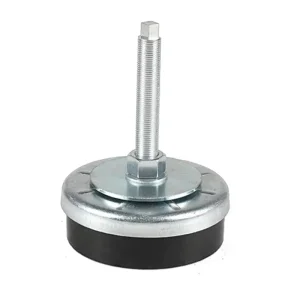
| Spring Isolation Mounts | Helical Steel Spring + Viscous Damping | 3.0 Hz - 8.0 Hz | ANSI/ASME B29 / Dacromet 900h | Chillers, Pumps, Generators, HVAC |
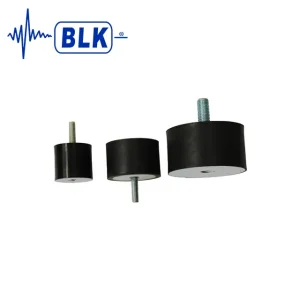
| Rubber & Elastomeric Buffers | High-Damping Polymer Rubber | 10.0 Hz - 30.0 Hz | RoHS / REACH Environmental Standard | Motors, Small Compressors, Cabinets |
| Industrial Hydraulic Shock Absorbers | Metering Orifice Hydraulic Fluid Displacement | Impact Deceleration (Up to 5 m/s) | ANSI B29 Compliance / CE Heavy Duty | AS/RS Logistics, Automated Conveyors, Cranes |
Frequently Asked Questions (Engineering Q&A)
Answers to common procurement, compliance, and application engineering inquiries regarding industrial shock absorbers and isolators.
Additional Specialized Isolation & Buffer Product Series
Browse our full range of heavy-duty polymer damping pads, rubber buffers, cone mounts, and low-frequency pneumatic platforms.