High-Quality Anti Vibration Machine Feet Factory & Price
Engineering Principles, Dynamic Load Sizing, OEM Customization, and Direct Supply Chain Economics for Global Automation & Precision Machinery
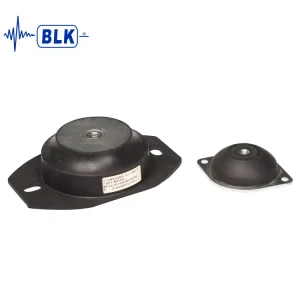
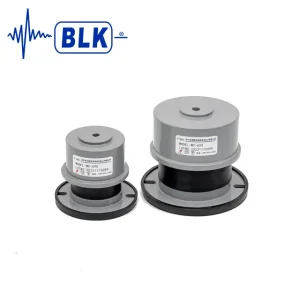
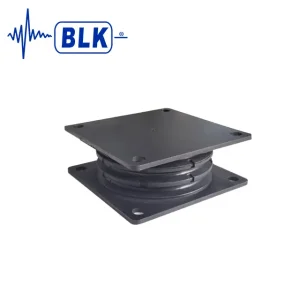
Featured Anti-Vibration Isolators & Mounts (Tier 1 Direct Factory)
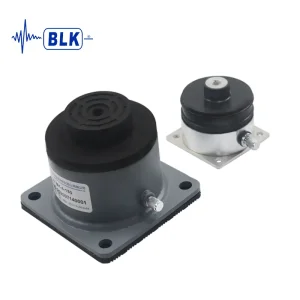
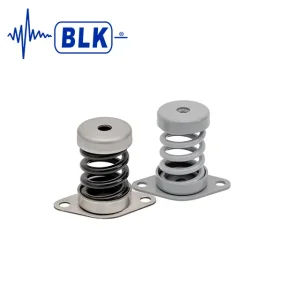
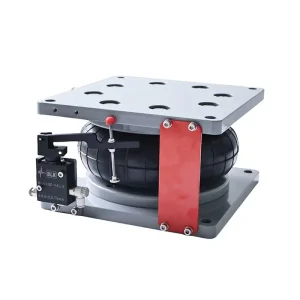
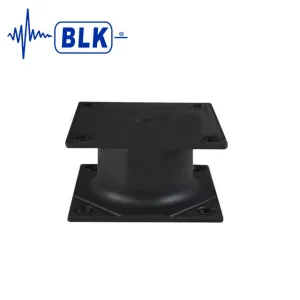
Explore our foundational range of precision pneumatic mounts, industrial spring isolators, and heavy-duty elastomeric machine feet engineered for zero-resonance operation.

Executive Technical Summary: Fundamentals of Industrial Vibration Control
In high-speed manufacturing, automated machining, micro-electronics manufacturing, and heavy industrial plant operations, mechanical vibration is one of the primary drivers of structural fatigue, dimensional inaccuracy, component premature wear, and acoustic noise pollution. High-quality anti-vibration machine feet serve as the critical mechanical interface between dynamic operational machinery and structural sub-floors, converting kinetic vibrational energy into negligible thermal dissipation through calibrated viscoelastic hysteresis, pneumatic damping, or metallic spring deflection.
Achieving optimal isolation efficiency ($I_e$) requires a meticulous understanding of structural mechanics, dynamic stiffness ($K_d$), damping loss factors ($\eta$), and disturbing forcing frequencies ($f_d$). Uncontrolled vibration transmitted from rotating, reciprocating, or impacting machinery not only violates occupational health and safety standards (such as ISO 2631 for human exposure to mechanical vibration) but also causes micro-chatter marks in CNC metal processing, invalidates metrology room measurements, and damages surrounding building structures.
Natural Frequency ($f_n$) Rule
To achieve vibration attenuation rather than amplification, the ratio of excitation frequency to system natural frequency ($f_d / f_n$) must exceed $\sqrt{2} \approx 1.414$. Premium engineering targets a ratio of $f_d / f_n \ge 3.0$, yielding over 88% isolation efficiency.
Transmissibility Equation
Where $r = f_d / f_n$ is the frequency ratio, and $\zeta$ is the damping ratio. Lower $f_n$ delivers superior high-frequency isolation, while adequate damping prevents violent movement during machine startup and shutdown resonance passages.
Bellking Vibration Reduction Equipment Manufacturing (Kunshan) Co., Ltd., established in 2013, has developed over 37 national patents and thousands of specialized isolator configurations to solve complex isolation challenges across HVAC, semiconductor, power generation, and precision manufacturing sectors.
Global Industry Trends: The Shift Toward Smart & Low-Frequency Isolation
The global market for machine mounting and anti-vibration feet is undergoing a technological transition driven by industrial automation, ultra-precision manufacturing, urban densification of commercial real estate, and strict ESG acoustic regulations. Modern industrial buyers no longer evaluate leveling feet solely as passive hardware; they are increasingly treated as critical performance-enabling sub-systems.
Smart IoT Integration & Predictive Condition Monitoring
Leading Smart Factories (Industry 4.0) are integrating MEMS tri-axial piezoelectric accelerometers directly into heavy-duty leveling feet. Real-time vibration telemetry allows plant engineers to detect bearing wear, motor imbalance, and leveling drift before catastrophic equipment failure occurs.
Sub-2Hz Micro-Vibration Isolation for Nanometer Fabs
As semiconductor node sizes shrink below 2nm and photolithography tools demand extreme stability, standard rubber mounts are insufficient. The market is shifting toward active pneumatic mounts (such as the Bellking BK-PF series) capable of achieving natural frequencies as low as 1.7 Hz with dynamic auto-leveling precision under ±10 μm.
Advanced Polymer Science & Extreme Environment Resilience
Traditional natural rubber compounds degrade under exposure to synthetic cutting fluids, oils, ozone, and UV radiation. Advanced machine feet now utilize engineered Nitrile (NBR), Fluoroelastomer (FKM), and specialized Polyurethane-matrix formulations paired with Dacromet 900-hour salt-spray resistant steel coatings.
Furthermore, global building codes (such as ASHRAE guidelines for HVAC equipment isolation and DIN 4150-3 for structural vibration) enforce mandatory vibration isolation on roof-mounted chillers, cooling towers, and heavy air handling units to prevent structure-borne noise propagation into inhabited spaces below.
Global Procurement Needs & Buyer Intent Mining
When procurement directors, OEM design engineers, and facility MRO managers search for Anti Vibration Machine Feet Factory & Price, their intent spans multiple operational and financial criteria beyond simple unit pricing. Based on global buyer behavior data, purchasing decisions hinge on three core pillars:
1. OEM Engineering Support & Sizing Validation
Engineering buyers require dynamic load calculators, CAD STEP files, and expert engineering validation to verify that chosen mounts will not induce resonance at operating RPMs. Over-specifying inflates capital expenditure, while under-specifying leads to rubber shear failure or spring bottoming-out.
2. Total Cost of Ownership (TCO) vs. Initial Price
Low-cost unverified rubber mounts frequently suffer from permanent creep set within 12 months, requiring machine re-leveling and costly downtime. Premium factory-direct feet utilizing high-tensile steel springs and anti-aging elastomers deliver a service life exceeding 15 years, vastly lowering TCO.
3. Supply Chain Agility & Customization Capability
Global machinery OEMs frequently require custom mounting thread lengths (M12 to M36), stainless steel (SUS304/316) for food/pharmaceutical cleanrooms, or custom mounting plates. A robust factory partner must offer 3-day rapid engineering customization and flexible MOQs.
China Factory 4.0: Supply Chain Resilience & Kunshan Efficiency Advantages
Located in Kunshan, Jiangsu Province—the heart of China's high-tech machinery manufacturing corridor—Bellking Vibration Reduction Equipment Manufacturing Co., Ltd. demonstrates the competitive advantages of China's modern smart manufacturing cluster. By combining fully integrated raw material sourcing, automated CNC machining, robotic spring coiling, and in-house acoustic dynamic testing, Bellking delivers world-class quality at factory-direct pricing.
The traditional global supply chain for anti-vibration hardware often involves multi-tier distributors, brand markup agents, and extended logistics delays. By partnering directly with a specialized China 4.0 factory, international buyers eliminate up to 40% in intermediary markups while gaining direct access to application engineers.
- Fully Automated Precision Production: Advanced multi-axis CNC lathes ensure micrometer-accurate threads on leveling studs, while automated rubber vulcanization presses deliver uniform elastomer density free of internal air voids.
- Rigorous In-House Testing Laboratory: Every batch undergoes static load deflection testing, dynamic stiffness spectrum analysis, tensile-compression fatigue testing (exceeding 2,000,000 cycles), and salt-spray chamber testing.
- Rapid Prototyping & Mass Production Scaling: With an annual production capacity exceeding 100,000 sets, Bellking can ship standard catalog models within 24 hours and deliver custom-designed OEM prototypes in as few as 3 working days.
- Full Environmental Compliance (RoHS & REACH): Rubber compounds and surface plating process strictly comply with global environmental standards, ensuring no hazardous heavy metals or volatile organic compounds (VOCs) impair cleanroom installations.
Technical Selection Matrix: Anti-Vibration Isolator Classification
Selecting the correct machine foot requires matching the physical and operational parameters of your machinery to the dynamic characteristics of the mount type. The table below outlines key engineering metrics across Bellking's core isolation product families:
| Isolator Category | Primary Mechanism | Natural Freq. ($f_n$) | Load Capacity / Unit | Isolation Efficiency | Key Industrial Applications |
|---|---|---|---|---|---|
| Pneumatic Air Mounts (BK-A / BK-PF) | Pressurized Air Chamber & Damping Orifice | 1.7 Hz - 3.0 Hz | 50 kg - 5,000 kg | Up to 99% | Semiconductor Lithography, CMM Metrology, Electron Microscopes |
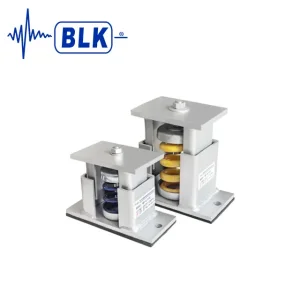
| Spring Mounts (ME / MC / MB Type) | Helical Steel Spring with Viscous Damping Pad | 3.0 Hz - 5.0 Hz | 30 kg - 3,500 kg | 90% - 98% | HVAC Chillers, Large Air Handling Units, Diesel Generators, Cooling Towers |
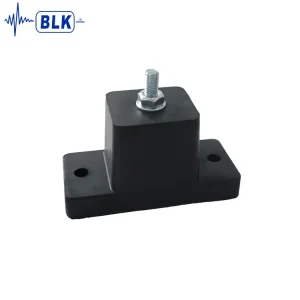
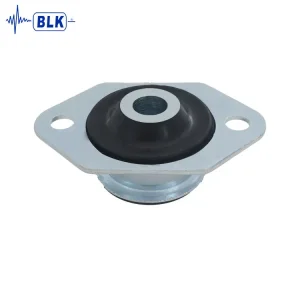
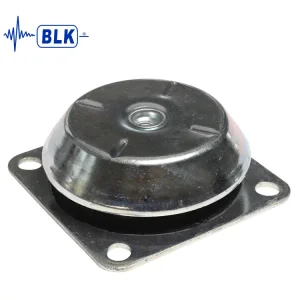
| Rubber Buffers & Mounts (BKSW / BKP / BKVV) | Viscoelastic Elastomer Hysteresis Shear/Compression | 8.0 Hz - 15.0 Hz | 10 kg - 1,200 kg | 75% - 90% | CNC Lathes, Electric Motors, Air Compressors, Stamping Presses |
| Transformer Anti-Vibration Mounts | Multi-stage Damped Steel/Elastomer Matrix | 4.0 Hz - 8.0 Hz | 200 kg - 10,000 kg | 85% - 95% | Electrical Power Transformers, Grid Substations, Data Centers |
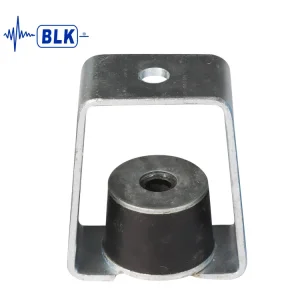
| Isolation Hangers (HR / Spring Hangers) | Suspended Spring / Elastomer Combination | 3.5 Hz - 6.0 Hz | 15 kg - 800 kg | 88% - 96% | Suspended Industrial Piping, Exhaust Ducts, Ceiling HVAC Fans |
Localized Application Scenarios & Real-World Engineering Success
Anti-vibration machine feet are deployed across widely divergent industrial environments, each presenting unique mechanical, thermal, and environmental demands. Below are five detailed application engineering scenarios showcasing Bellking solutions in the field:
Scenario A: Semiconductor Cleanroom Inspection Systems
Challenge: Footstep noise and low-frequency floor vibrations (5–12 Hz) in a semiconductor fab caused sub-micron measurement errors on optical coordinate measuring machines (CMM).
Solution: Installation of Bellking BK-PF Precision Pneumatic Air Mounts featuring automatic height regulation. The natural frequency was reduced to 1.8 Hz, eliminating 98.5% of ambient floor vibration and restoring measurement repeat precision within ±0.2 μm.
Scenario B: High-Speed CNC Metal Milling & Turning Centers
Challenge: Heavy cutting forces during rapid aluminum milling caused machine frame sway and surface chatter marks on machined components, while transmitting vibration to adjacent finishing tools.
Solution: Implementation of BKSW Custom Rubber Buffers and high-stiffness leveling feet with oil-resistant NBR elastomeric bases. The high internal damping ratio ($\zeta \approx 0.15$) absorbed impact energy, improved surface finish quality, and doubled cutting tool operational lifespan.
Scenario C: Roof-Mounted Commercial HVAC Central Chillers
Challenge: A 12-ton centrifugal water chiller mounted on a high-rise commercial building roof transmitted severe low-frequency hum (29 Hz driving frequency) into executive offices directly below.
Solution: Retrofitting with ME Type Anti-vibration Spring Mounts outfitted with viscous damping inserts and non-skid neoprene bottom pads. Transmissibility dropped below 3%, fully satisfying local noise ordinance standards (<35 dBA indoor ambient sound level).
Scenario D: Power Substation Dry-Type Electrical Transformers
Challenge: Magnetostrictive core hum (100 Hz / 120 Hz fundamental frequency) from 2,500 kVA power transformers radiated structure-borne noise through concrete floor slabs in a urban hospital basement.
Solution: Engineering specialized multi-layer Transformer Anti-vibration Mounts designed to handle extreme static dead loads while isolating high-frequency harmonic hum, resulting in an 18 dB reduction in structural noise transmission.
Pricing Architecture & Cost Determinants
Understanding the price structure of industrial machine feet enables procurement teams to optimize budgets without compromising mechanical safety or vibration performance. Factory pricing typically scales based on raw material grades, structural design complexity, and load rating:
| Product Category | Typical Wholesale Price Range (USD) | Primary Cost Factors | Value Proposition |
|---|---|---|---|
| Standard Rubber Mounts / Buffers | $3.50 - $22.00 / unit | Elastomer blend (NR vs. NBR/FKM), Thread diameter (M8 - M20), Metal plating type | Lowest upfront cost for general machinery and electric motors. |
| Heavy-Duty Spring Mounts | $25.00 - $140.00 / unit | Spring steel alloy, Load capacity (up to 3,500kg), Housing material, Dacromet coating | Long-term durability (15+ yrs) for heavy HVAC, gensets, and pumps. |
| Precision Pneumatic Air Mounts | $120.00 - $650.00 / unit | Auto-leveling valve precision, Internal membrane compound, Air chamber volume | Maximum isolation efficiency (>98%) for ultra-sensitive metrology and semiconductor gear. |
| Custom Engineered OEM Solutions | Project-based quotation | Tooling development, Non-standard dimensions, Custom damping fluid, Stainless steel 316 | Tailored exactly to machine CAD geometry and dynamic load distributions. |
Note: Volume discounts are available for wholesale orders, OEM machinery builders, and long-term supply agreements. Contact Bellking sales engineers for a customized project quotation.
Frequently Asked Questions (Technical & Procurement FAQ)
Expert engineering answers to common questions regarding anti-vibration mount sizing, installation, longevity, and maintenance.
How do I calculate the correct load rating for machine feet under an uneven machine weight distribution?
What is the difference between static deflection and dynamic stiffness in spring mounts?
Why is natural resonance dangerous, and how do Bellking mounts avoid it?
Can anti-vibration machine feet withstand harsh chemical environments, oils, and outdoor weather?
What lead times can global procurement teams expect for standard vs. custom OEM feet?
How long is the service life of Bellking spring and rubber vibration isolators?
Additional Precision Mounts & Specialized Vibration Control Products
Complete product portfolio including damped rubber mounts, vibration platforms, matrix isolators, and specialized hangers.