
Precision Anti-Vibration Pads & Industrial Mount Series
Explore high-performance dampening platforms, elastomeric matrix pads, and heavy-duty spring mounts engineered for low dynamic transmissibility.








1. Executive Summary: Micro-Vibration Isolation & Macro-Industrial Demands
Why modern industrial manufacturing requires engineered elastomeric compounds over generic rubber matting.
In modern industrial manufacturing, unwanted mechanical vibration represents an invisible driver of premature machinery wear, structural fatigue, micro-precision calibration drift, and severe acoustic contamination. Modern production floors feature high-speed CNC centers, heavy stamping presses, rotary HVAC compressors, micro-lithography lines, and massive transformer vaults—all operating simultaneously within shared building envelopes. When uncontrolled dynamic forces transfer to building foundations or structural sub-floors, structural resonance damages both the machinery and the surrounding infrastructure.
Anti vibration machine pads serve as the critical mechanical interface between high-energy dynamic equipment and structural foundations. Unlike basic commercial rubber sheets, engineered anti-vibration isolation pads are highly specialized elastomeric matrices designed to provide specific static deflections, predictable dynamic-to-static stiffness ratios ($K_d/K_s$), controlled damping factors ($\eta$), and resilience against severe chemical, oil, thermal, and atmospheric exposure. Selecting the appropriate pad formulation and structural geometry is an essential engineering decision that directly impacts operational uptime, component wear, and safety compliance.
Key Engineering Takeaway: The Frequency Ratio Requirement ($\sqrt{2}$ Rule)
Mechanical vibration isolation does not begin until the excitation frequency ($f_d$) of the machine exceeds $\sqrt{2} \approx 1.414$ times the natural frequency ($f_n$) of the anti-vibration pad system. Operating at a ratio where $f_d / f_n \approx 1$ causes severe structural resonance, amplifying dynamic force transfer by up to 500%. Professional engineering targets a minimum frequency ratio of $f_d / f_n \ge 3.0$, achieving over 90% attenuation efficiency.
2. Global Commercial & Industrial Market Analysis
Evaluating sector-specific dynamic loading requirements and industrial adoption trends.
Semiconductors & Metrology
Sub-micron manufacturing environment requires active-ready passive elastomeric pads capable of isolating low-amplitude ambient micro-tremors ($VCE-B$ to $VCE-E$ standards) across 1–100 Hz bandwidths.
Heavy Stamping & CNC Machine Tools
Extreme shock absorption pads designed to handle high-velocity impact energy (3–5 G load spikes) while maintaining continuous levelling accuracy without structural permanent set or creep deformation.
HVAC, MEP & Power Transformers
High-deflection multi-layer composite pads formulated specifically to eliminate persistent structural hum, 120 Hz electrical transformer magnetostriction noise, and chiller compressor harmonics.
3. Mechanical Metallurgy & Compound Formulations
Understanding elastomer dynamics, shore durometer selection, and internal hysteresis damping.
The isolation performance of an anti vibration machine pad depends primarily on polymer formulation and physical geometry. Generic, unengineered commercial rubbers often exhibit unpredictable stiffening under dynamic stress, causing the isolator's natural frequency to shift upward into the excitation zone during operation. High-tier industrial manufacturers use specialized elastomer matrices engineered for predictable static and dynamic behaviors:
| Elastomer Compound | Shore Hardness (A) | Dynamic/Static Ratio ($K_d/K_s$) | Oil & Chemical Resistance | Optimal Application Band |
|---|---|---|---|---|
| High-Grade Neoprene (CR) | 45 – 70 Shore A | 1.25 – 1.40 | Excellent (Oils, Fuels, Ozone) | General HVAC, Pumps, Compressors |
| Nitrile Elastomer (NBR) | 50 – 80 Shore A | 1.30 – 1.50 | Maximum Hydrocarbon Isolation | CNC Lathes, Machine Tool Sump Areas |
| Cast Polyurethane (PU) | 60 – 90 Shore A | 1.40 – 1.75 | High Abrasion / Heavy Load | Forging Presses, Heavy Stamping Tools |
| Cross-Linked EPDM | 40 – 65 Shore A | 1.20 – 1.35 | Superior Outdoor / Thermal | Rooftop Chillers & Cooling Towers |
| Cork-Elastomer Composite | 55 – 75 Shore A | 1.15 – 1.30 | Low Lateral Expansion | Inertia Base Underlayments, Transformers |
Geometric Surface Profiling
Waffle, suction-cup, rib-grid, and dimpled profiles allow free lateral expansion (Poisson displacement) under vertical compression load. Unribbed solid blocks restrict bulge capability, artificially inflating dynamic stiffness and reducing isolation efficiency.
Hysteresis Damping ($\eta$)
Controlled internal friction within the elastomer absorbs resonant energy during machine start-up and shutdown cycles, reducing peak displacement amplitudes without requiring external hydraulic shock absorbers.
Creep & Long-Term Set
Premium vulcanization techniques maintain structural height drift under full static load to less than 3% over a 10-year period, protecting pipe alignment and mechanical couplings from stress fractures.
4. Engineering Comparison: Machine Pads vs. Spring Mounts vs. Air Isolators
A systematic framework for specifying isolation hardware based on operating parameters.
| Isolation Technology | Achievable Natural Freq. ($f_n$) | Max Load Density | High Frequency Noise Attenuation | Maintenance Profile |
|---|---|---|---|---|
| Anti Vibration Machine Pads | 6.0 Hz – 15.0 Hz | Up to 50 kg/cm² (5 MPa) | Exceptional (Blocks acoustic structure-borne noise) | Zero Maintenance (Solid State) |
| Open / Enclosed Spring Mounts | 2.5 Hz – 5.0 Hz | Up to 5,000 kg / mount | Poor (High frequency sound passes through coils) | Periodic Inspection (Rust / Fatigue) |
| Pneumatic Air Mounts | 1.2 Hz – 2.5 Hz | Up to 2,500 kg / mount | Moderate to High | Requires Compressed Air & Level Sensors |
5. Localized Application Scenarios & Industrial Implementation
Real-world integration workflows across modern industrial installations.
Upper-Floor HVAC Plant Rooms
Installing heavy centrifugal chillers or air handlers directly over commercial office space demands sandwich-style anti-vibration pads (steel plates vulcanized between high-deflection elastomeric layers) beneath inertia bases to control structure-borne sound transfer.
High-Precision CNC Machining Centers
Unbolted anchorless pad installations utilize high-friction, suction-profile nitrilic rubber pads. This prevents machine walking during rapid spindle acceleration, dampens cutting tool chatter, and improves surface finish tolerances.
Substation Power Transformers
Transformers generate continuous 100/120 Hz electrical hum due to core magnetostriction. High-temperature elastomeric cork composite pads placed directly beneath transformer skids dampen low-frequency acoustic transmission into surrounding concrete vaults.
6. Global Compliance, ISO Standards & Factory Quality Controls
Ensuring compliance with structural safety, dynamic performance, and environmental directives.
ISO 9001:2015 Certification
Every batch of raw elastomer undergoes rheometer vulcanization testing, durometer verification, and tensile strength analysis to guarantee repeatable mechanical properties.
DIN 4150-3 Structural Standards
Evaluates structural vibration in buildings. Our pad solutions ensure low vibration velocities ($v_{rms}$) to prevent cosmetic or structural damage to adjacent property walls.
RoHS & REACH Compliance
Formulated without SVHCs (Substances of Very High Concern), heavy metals, or hazardous plasticizers, allowing installation within cleanroom environments and globally exported machinery.
900-Hour Salt Spray Tested
Integrated metal plates and steel shims undergo Dacromet surface coating treatments, delivering exceptional corrosion resistance against marine air and industrial chemical washes.
7. Manufacturer Pricing Models & Cost Drivers Analysis
Understanding unit pricing dynamics, volume tiers, and custom formulation expenses.
When evaluating unit costs for industrial machine vibration pads, procurement teams must look beyond initial unit purchase prices to account for long-term compound stability, load degradation rates, and replacement labor costs. The primary cost components include:
- Raw Elastomer Chemistry: Premium Nitrile (NBR), Neoprene (CR), and engineered Polyurethanes command a 25–40% premium over basic recycled SBR compounds, but offer superior oil resistance and negligible long-term set.
- Structural Lamination: Multi-layer sandwich pads incorporating hot-vulcanized stainless steel or Dacromet-coated internal plates increase unit production costs, but allow significantly higher load capacities ($35–50\text{ kg/cm}^2$).
- Tooling & Molding Customization: Standard sizes (e.g., $300 \times 300\text{ mm}$ or $450 \times 450\text{ mm}$ sheets) benefit from automated continuous extrusion or compression molding. Custom shapes or pre-drilled bolt-isolation sleeves require customized compression molds.
Procurement ROI Metric: The Cost of Improper Isolation
A low-cost, unengineered rubber pad ($5–$15/unit) often degrades within 12–18 months under industrial oil exposure, resulting in machine misalignment and tool wear. Premium engineered machine pads ($35–$120/unit) deliver stable vibration attenuation over a 10- to 15-year operational lifecycle, preventing thousands of dollars in annual maintenance costs and unplanned downtime.
8. Technical Roadmap & Future Damping Innovations (2025–2030)
Emerging developments in smart vibration control and sustainable material chemistry.
Smart IoT-Embedded Pads
Integration of flexible thin-film piezoelectric sensors directly inside elastomeric pads to transmit real-time load distribution and spectrum analyses to predictive maintenance dashboards via industrial wireless protocols.
Acoustic Metamaterial Cores
Utilizing internal geometric lattice arrays engineered via additive manufacturing to create wide acoustic bandgaps, reflecting low-frequency vibration waves without increasing overall pad thickness.
Bio-Based Bio-Elastomers
Developing next-generation bio-derived synthetic polymers that meet strict REACH environmental standards while providing high tear strength, superior ozone resistance, and low dynamic stiffening factors.
9. Frequently Asked Questions (Engineering Q&A)
Direct answers from our senior vibration control engineers.
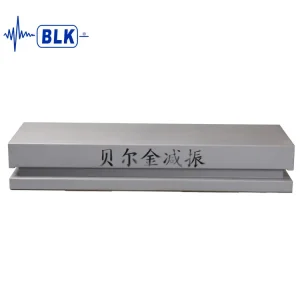
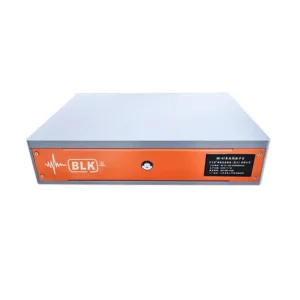
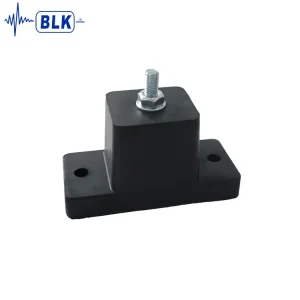
Precision Damping Platforms & Specialized Isolation Hardware
Explore matrix mounts, precision air platforms, and heavy-duty structural hangers.





Request a Custom Vibration Isolation Plan
Submit your equipment operating parameters (total static weight, support layout, dynamic operating RPM, and site environmental conditions) to receive a custom vibration isolation sizing report within 24 hours.
Contact Technical Engineering