
High-Performance Anti-Vibration Mounts & Rubber Isolators
Precision-engineered damping solutions designed to minimize structural vibration, reduce cabin noise, and increase machinery service life.
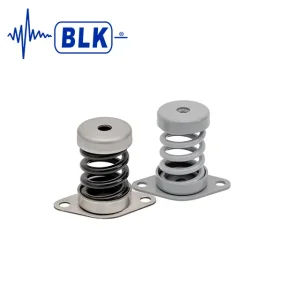
High-Quality ME Type Anti-vibration Spring Mounts Factory
View Details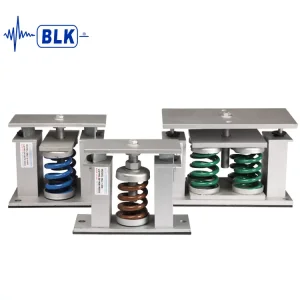
High-Quality MA Type Anti-vibration Spring Mounts Factory
View Details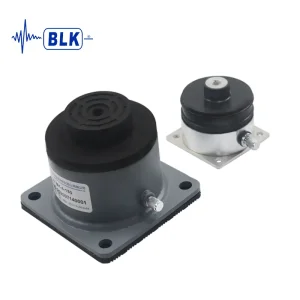
High-Quality BK-A Type Air Mounts Factories, Price
View Details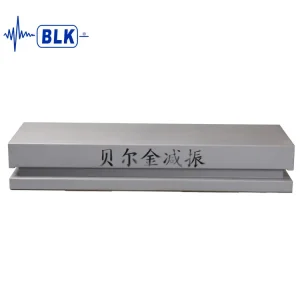
High-Quality BK-MT Type Matrix Anti-vibration Mount Manufacturers
View Details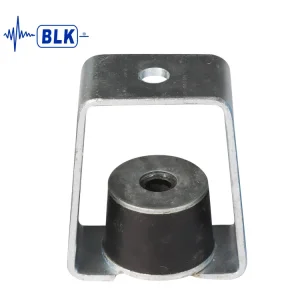
Low Price HR Type Rubber Hangers Factory, Factories
View Details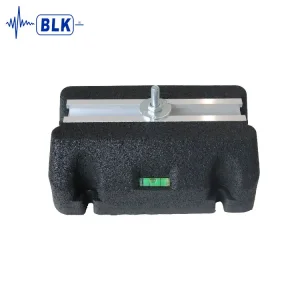
High-Quality BKDJ Type Rubber Pad Manufacturers
View Details
Low Price BKVV Type Rubber Mounts Factories, Manufacturers
View Details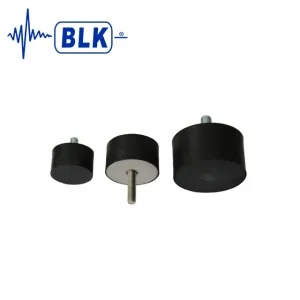
High-Quality BKVE Type Rubber Mounts Factory
View DetailsDynamics of Construction Machinery Dampers: Physics, Materials & Architecture
Construction machinery dampers—commonly spanning hydraulic engine mounts, viscous torsional dampers, elastomeric cab isolators, and heavy-duty spring dampers—serve as the foundational defense against destructive kinetic energy in heavy off-highway equipment. Operating within harsh earthmoving, mining, and civil engineering environments, modern construction machinery subjects internal power units and structural chassis to extreme multi-axial vibration spectra, harmonic resonance, and transient shock impacts exceeding 50G.
Without high-efficiency vibration isolation, structural fatigue accelerates, operator health deteriorates due to Whole-Body Vibration (WBV), and sensitive digital equipment (such as ECU controllers, GPS guidance modules, and LIDAR sensors) suffers early catastrophic failure. Original Equipment Manufacturers (OEMs) and aftermarket procurement directors must analyze three fundamental dynamic factors when specifying construction machinery dampers:
- Dynamic Stiffness ($K_{dyn}$) vs. Static Stiffness ($K_{stat}$): The dynamic ratio ($K_{dyn}/K_{stat}$) determines an isolator's capacity to remain soft under static payload shifts while hardening under high-frequency excitation to suppress harmonic resonance. Modern elastomeric-viscous hybrid dampers maintain a low dynamic ratio ($1.2 - 1.4$), minimizing force transmission.
- Loss Factor ($\tan \delta$) & Viscous Energy Dissipation: High-damping rubber compounds and silicone fluid chambers convert kinetic mechanical shock energy directly into thermal energy, rapidly dampening transient spikes caused by bucket digging forces or rough terrain transport.
- Transmissibility ($T$) & Frequency Isolation Threshold: Effective vibration isolation occurs strictly when the equipment's disturbing excitation frequency ($f_d$) exceeds $\sqrt{2}$ times the mount's natural frequency ($f_n$). Achieving a ratio of $f_d / f_n \ge 3$ delivers over 90% isolation efficiency, preventing vibration propagation into the operator cabin or frame.
E-E-A-T Engineering Note (Bellking R&D Laboratory): "In high-tonnage hydraulic excavators, utilizing static rubber pads alone leads to severe cabin resonance at 12–18 Hz (matching human spine natural frequencies). Integrating hydraulic-viscous combination mounts drops the natural system frequency to under 5 Hz, eliminating operator fatigue and complying with ISO 2631-1 safety benchmarks."
Comprehensive Damper Technology Matrix for Heavy Equipment
Selecting the optimal damper requires balancing dynamic load capacity, operating temperature range, ambient fluid resistance, and unit production economics. The matrix below outlines the primary technology branches utilized across construction machinery OEMs:
| Damper Technology Type | Core Damping Mechanism | Natural Frequency Range ($f_n$) | Operating Temperature | Primary Equipment Application | Relative Unit Cost Structure |
|---|---|---|---|---|---|
| Hydraulic Viscous Cabs/Engine Mounts | Fluid orifice displacement + Natural Rubber diaphragm | 4.5 Hz – 7.5 Hz | -30°C to +90°C | Excavator cabs, Diesel engine cradles, Compactors | Moderate to High (OEM Standard) |
| Torsional Viscous Crankshaft Dampers | High-viscosity silicone fluid shearing in shear gap | Engine harmonics specific | -40°C to +110°C | Heavy diesel engines (6-16 Cylinder) | High Precision / Technical Investment |
| Bonded Elastomeric Cone / Cup Mounts | Compounded NR/EPDM shear & compression flexure | 8.0 Hz – 15.0 Hz | -40°C to +100°C | Gearboxes, radiators, cab floorboards, pumps | Cost-Effective / High Utility |
| Steel Spring Mounts with Viscous Damping | Helical spring resilience + Viscous fluid pot | 2.5 Hz – 5.0 Hz | -50°C to +120°C | Heavy crushers, vibrating screens, power gensets | Moderate / Longevity Focused |
Macro Industry Solutions: Equipment-Specific Damping Engineering
Tailored vibration isolation and shock absorption strategies across major heavy equipment categories.
Hydraulic Excavators & Diggers
Excavator operation exposes cabs to severe low-frequency rocking during swing operations and high-frequency hydraulic pump noise. Bellking's hydraulic fluid mounts decouple the operator cabin from frame flexure, cutting interior sound levels below 68 dB(A) while suppressing 85%+ of hydraulic pump resonance.
Earthmoving Wheel Loaders & Tractors
Rough terrain movement creates vertical rebound impacts that strain engine mounts and transmission housings. Custom bonded elastomeric cone isolators offer high multi-directional snubbing limiters, preventing engine over-travel under full bucket loads while extending powertrain lifespan by up to 40%.
Mining Dump Trucks & Ultra-Class Haulers
Mining haulers carrying 100+ ton payloads demand extreme shock absorption. Heavy-duty rubber-metal matrix mounts (BK-MT Type) absorb intense payload drop impacts at loading sites, protecting chassis weldments against fatigue cracking and structural deformation under 24/7 continuous operation.
Mobile Cranes & Material Handlers
Boom telescoping and slewing create side-load forces that stress operator cabins and outrigger control modules. Multi-axis shear dampers absorb lateral forces, stabilizing crane cabs during heavy lifts and protecting sensitive load-moment indicators (LMI) from vibration drift.
Road Rollers & Soil Compactors
Soil compactors deliberately generate massive eccentric vibration forces (25–50 Hz) to densify soil. Specialized high-deflection rubber buffers isolate the drum excitation unit from the vehicle frame, ensuring 98%+ of compaction force targets the ground while protecting vehicle electronics.
Mobile Concrete & Asphalt Equipment
Continuous mixing, pumping, and paving induce high sustained vibration levels. Highly durable EPDM and fluoroelastomer (FKM) vibration dampers resist chemical splash from concrete additives, hydraulic oils, and high temperatures, ensuring continuous duty without elastomer swelling.
China Factory 4.0: Supply Chain Resilience & Transparent Pricing Structure
Navigating global procurement for construction machinery dampers requires balancing upfront component cost against long-term reliability and supplier lead times. Operating out of our advanced 2,000 m² manufacturing facility in Kunshan, Jiangsu—China's premier precision engineering cluster—Bellking Vibration Reduction Equipment Manufacturing Co., Ltd. redefines the value proposition for global OEMs and Tier-1 machinery distributors.
1. Smart Automation & Metallurgical Superiority
Our Factory 4.0 infrastructure integrates fully automated rubber vulcanization presses, robotic multi-axis arc welding stations, and high-precision CNC machining centers. Key manufacturing advantages include:
- Formulation Control: In-house mixing of virgin Natural Rubber (NR), Nitrile (NBR), and EPDM with proprietary anti-aging additives guarantees high tensile strength (>20 MPa) and tear resistance under continuous dynamic flexure.
- Dacromet & Electro-Phoretic Coating: All steel housings and metal inserts undergo Dacromet anti-corrosion surface treatments, successfully passing 900+ hours of continuous salt spray testing (ASTM B117 compliant)—outperforming standard zinc-plated alternatives by 300%.
- 100% Dynamic Deflection Testing: Every batch of engine and cab dampers undergoes dynamic stiffness testing and axial/radial load verification prior to shipment, eliminating out-of-spec parts.
2. Unraveling the Construction Machinery Damper Price Structure
Procurement costs for construction machinery dampers vary depending on technology, material specs, and order volume. Understanding the cost drivers helps procurement teams optimize sourcing budgets:
| Damper Category | Estimated OEM Wholesale Price Range (USD) | Primary Cost Drivers | Bellking Supply Chain Advantage |
|---|---|---|---|
| Standard Rubber Stud Mounts (BKVV / BKVE) | $2.50 – $12.00 / piece | Rubber compound volume, thread stud metal quality, order MOQ | Direct mold inventory; 24-hour stock dispatch for standard sizes. |
| Heavy-Duty Cabin Elastomeric Mounts | $15.00 – $45.00 / piece | Interlocking metal insert machining, tear-resistant compound, bond strength | 30-40% savings vs. European/US brands with zero quality compromise. |
| Hydraulic Viscous Engine/Cab Dampers | $48.00 – $135.00 / piece | Fluid chamber seal integrity, high-viscosity silicone fluid grade, dynamic valving | In-house fluid testing lab ensures zero leakage across 1M+ cycles. |
| Viscous Torsional Crankshaft Dampers | $120.00 – $380.00 / piece | Laser-welded housing precision, internal shear gap tolerances (<0.05mm), silicone stability | High-precision balance testing guarantees prolonged engine crank safety. |
By leveraging Kunshan's complete localized raw material supply chain—from high-grade spring steel mills to synthetic rubber chemical suppliers—Bellking cuts manufacturing overhead by 30% to 45% compared to Western suppliers while adhering strictly to ISO 9001 quality guidelines.
Global Enterprise Sourcing Matrix & Quality Protocols
Rigorous testing and verification procedures ensuring zero-defect delivery for global heavy machinery builders.
Dynamic Fatigue Testing (3M+ Cycles)
Dampers undergo severe dynamic endurance testing on servo-hydraulic test rigs. Mounts are subjected to continuous 3,000,000-cycle sinusoidal loading under maximum payload conditions to verify zero rubber-to-metal debonding and less than 5% stiffness drift.
Finite Element Analysis (FEA) Simulation
Before cutting steel tooling, our engineering team executes 3D FEA stress simulation to analyze hyperelastic rubber behavior under high strain. FEA modeling identifies stress concentration zones, optimizing mount geometry for maximum shock absorption.
Environmental & Thermal Chamber Testing
Exposing products to temperature extremes (-40°C arctic cold to +120°C engine compartment heat), our thermal chambers test fluid viscosity retention, elastomer compression set, and ozone cracking resistance for field reliability anywhere on Earth.
Technology Roadmap & Future Outlook: Construction Machinery Dampers (2025–2035)
The construction machinery sector is undergoing a massive transformation driven by electrification, autonomous operation, telematics, and stringent environmental regulations. As heavy equipment evolves from traditional internal combustion diesel powertrains to battery-electric (BEV) and hydrogen fuel cell architectures, the demands placed on vibration dampers are shifting dramatically.
1. Adaptive Magnetorheological (MR) & Active Dampers
Conventional passive rubber mounts represent a fixed compromise between static load support and dynamic shock absorption. Next-generation smart machinery leverages semi-active Magnetorheological (MR) fluid dampers. By altering an electromagnetic field surrounding an MR fluid chamber in milliseconds, an ECU can dynamically adjust damping coefficients in real time based on terrain sensors, bucket digging pressure, and vehicle velocity—reducing cabin vibration by an additional 60% compared to passive mounts.
2. IoT-Connected Smart Mounts with Integrated Health Telemetry
Predictive maintenance is becoming standard across mining and mega-construction fleets. Bellking is pioneering the development of sensored engine and cab mounts embedded with wireless micro-piezoelectric accelerometer nodes. These smart mounts continuously stream vibration spectrum data to the machine's CAN-bus network and cloud management portals. Early detection of rubber fatigue, fluid loss, or misalignment alerts fleet managers before mechanical downtime occurs, avoiding costly field breakdowns.
3. E-Powertrain Damping Challenges in Electric Heavy Machinery
Electric excavators and loaders eliminate low-frequency diesel engine shaking, revealing previously masked high-frequency electromagnetic hums (500 Hz – 2,000 Hz) generated by electric motors and inverter switching. Future damping solutions utilize high-loss polymer formulations tuned specifically to block high-frequency micro-vibrations, ensuring cleanroom-quiet operator cabins in zero-emission construction sites.
Localization Support, Global Compliance & Safety Standards
Meeting world-class environmental, safety, and operational standards for overseas deployment.
ISO 2631-1 Whole-Body Vibration Compliance
Prolonged exposure to heavy equipment vibration causes occupational spinal disorders. Bellking cab mounts are calculated to reduce weighted RMS acceleration values ($a_w$) well below the ISO 2631-1 health warning action limit ($0.5 m/s^2$), protecting operators and satisfying EU health directives.
REACH & RoHS Environmental Safety
All elastomeric formulations strictly comply with EU REACH (EC 1907/2006) regulations and RoHS directives. Our raw materials contain zero heavy metals, polycyclic aromatic hydrocarbons (PAHs), or hazardous plasticizers, allowing hassle-free machine export into North America and Western Europe.
Rapid 24-Hour Global Engineering Support
Our dedicated team of application engineers offers 1:1 customization support. By submitting equipment weight distribution, CAD boundary files, and operating RPMs, global buyers receive custom 3D mount designs and vibration isolation reports within 24 hours.
Specialized Damping Pads, Mounts & Heavy Support Systems
Explore our complete catalog of shock absorbing mounts, matrix isolators, and heavy-duty structural pads.

High-Quality BKDD Type Rubber Mounts Factories, Manufacturers
View Details
Custom BKDR Type Rubber Mounts Factories, Price
View Details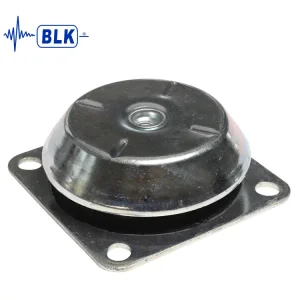
High-Quality BKHQ Type Rubber Mounts Factory
View Details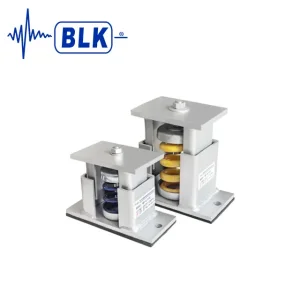
High-Quality MB Type Anti-vibration Spring Mounts Factory
View Details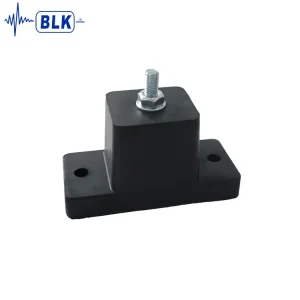
Low Price BKTS Type Rubber Pad Factory, Manufacturer
View Details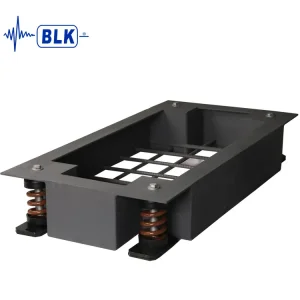
High-Quality CPB type Inertia Bases & Pump Supports
View Details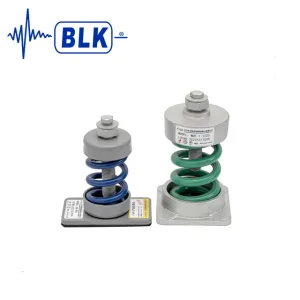
High-Quality MD Type Anti-vibration Spring Mounts Factory
View Details
Low Price BK-DS Type Damped Spring Mounts Factory
View DetailsFrequently Asked Questions (FAQ) – Procurement & Engineering
In-depth engineering answers covering damper selection, custom manufacturing, dynamic pricing, and maintenance.
How do I choose between standard rubber mounts, hydraulic mounts, and viscous dampers for heavy equipment?
The selection depends primarily on disturbing frequency, shock intensity, and required isolation efficiency:
- Rubber Mounts (e.g., BKVV, BKVE): Best suited for medium-to-high frequency vibration (>15 Hz) generated by auxiliary motors, hydraulic gear pumps, and electrical enclosures. They offer high structural stability and economical cost.
- Hydraulic Viscous Cabs/Engine Mounts: Essential for main diesel power modules and operator cabs. They feature a fluid chamber that dissipates high-amplitude shock during rough terrain driving while maintaining soft isolation at high engine RPMs.
- Viscous Torsional Dampers: Specifically designed for engine crankshafts to absorb rotational torsional harmonics, preventing crankshaft snapping under heavy engine loading.
What technical parameters are required to calculate a custom damper solution for OEM equipment?
To deliver an accurate 24-hour vibration isolation design proposal, Bellking engineering requires:
- Total wet operating weight of the machine or sub-assembly.
- Center of Gravity (CG) location coordinates (X, Y, Z).
- Number and spatial position of mounting support points.
- Excitation frequency ranges (Idle RPM, Max Operating RPM, or Hydraulic Pump frequencies).
- Environmental conditions (Ambient temperature extremes, chemical/oil exposure, UV exposure).
- Transient shock requirements (e.g., maximum allowable G-force deceleration under impact).
What causes rubber-to-metal bond failure in construction machinery mounts, and how does Bellking prevent it?
Rubber-to-metal debonding occurs due to inadequate metal surface cleaning, sub-standard adhesive application, or extreme shear overload. Bellking prevents debonding through a 3-step quality protocol: First, metal inserts undergo shot-blasting to achieve a Sa 2.5 surface roughness profile. Second, automated robotic sprayers apply dual-coat Chemlok adhesive systems. Third, vulcanization takes place under precise temperature/pressure controls, yielding a bond strength exceeding 12 MPa—ensuring the rubber tears before the bond breaks during extreme load testing.
How does Dacromet coating compare to traditional galvanizing for construction machinery dampers?
Traditional zinc electroplating provides 72–120 hours of salt spray resistance before red rust appears. Dacromet coating consists of zinc and aluminum flakes bonded in a chromate matrix, offering superior corrosion protection that easily passes 900+ hours in ASTM B117 salt spray testing. Furthermore, Dacromet processing avoids hydrogen embrittlement in high-tensile steel fasteners and housings, preserving structural integrity in coastal, marine, and mining applications.
What lead time can enterprise procurement expect for custom OEM damper orders?
Standard off-the-shelf dampers ship within 24 to 48 hours. For custom OEM damper tooling and prototypes, our agile engineering framework delivers 3D samples within 3 to 5 working days. Mass production tooling and first-article inspection (FAI) approval typically require 15 to 20 calendar days, supported by complete ISO 9001 material test reports, dimensional inspection sheets, and dynamic load test certificates.
How do ambient temperature variations affect the performance of hydraulic viscous dampers?
Standard fluid viscometrics exhibit thinning in hot environments and thickening in arctic conditions, altering damping forces. Bellking utilizes high-index synthetic silicone fluids with temperature-stable viscosity profiles (-40°C to +120°C). Combined with thermal-expansion compensating orifices within the internal fluid cartridge, our hydraulic mounts maintain consistent dynamic damping coefficients regardless of geographic deployment.
Can Bellking dampers replace legacy Western OEM part numbers (e.g., Lord, Trelleborg, Continental)?
Yes. Bellking maintains a comprehensive cross-reference database for heavy machinery isolators. We can manufacture drop-in 1:1 functional replacements matching bolt-pattern dimensions, static height, dynamic stiffness, and load capacity—delivering 30% to 45% cost savings while matching or exceeding original equipment operational service life.
What is the expected operating life of Bellking heavy equipment dampers under 24/7 field use?
Under continuous operating conditions, Bellking bonded elastomeric cab/engine mounts offer a service life exceeding 8,000 operational hours (or 5 to 7 years of typical construction equipment usage). Steel spring viscous dampers utilized on stationary crushers and power generators operate reliably for over 15 years with minimal maintenance inspections.