Featured Adjustable Anti-Vibration Mounts & Hangers
Explore our direct factory-manufactured adjustable spring mounts, rubber isolators, inertia bases, and suspension hangers engineered for high-efficiency dynamic energy dissipation.

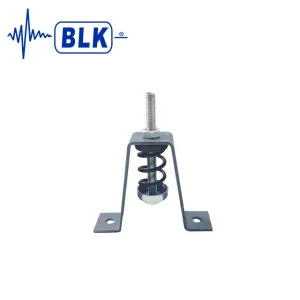
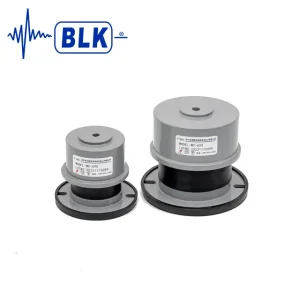

Theoretical Mechanics of Adjustable Vibration Dampers
In modern industrial operations, harmonic vibration and transient shock loads present critical challenges to structural integrity, mechanical endurance, and operational precision. An Adjustable Vibration Damper serves as a specialized mechanical isolator designed to modify its natural frequency ($f_n$) and damping ratio ($\zeta$) in response to varying static loads and dynamic excitation frequencies ($f_d$). Unlike fixed-rate rubber mounts or unguided steel springs, adjustable dampers feature integrated leveling threads, variable height adjusters, viscous damping inserts, or pneumatic chamber controls that allow precision tuning in the field.
Mathematical Formulation of Vibration Isolation Efficiency
The fundamental performance of any adjustable damper relies on the mechanical transmissibility ratio ($T$), defined as the ratio of force transmitted to the foundation versus the force generated by the rotating machine:
T = √ [ (1 + (2 · ζ · r)²) / ((1 - r²)² + (2 · ζ · r)²) ]
Where r = f_d / f_n represents the frequency ratio between the disturbing frequency ($f_d$) and the isolator's natural frequency ($f_n$). Isolation only occurs when r > √2 (≈ 1.414). To achieve isolation efficiencies exceeding 95%, engineering guidelines mandate maintaining an $r$ ratio between 3 and 5. By adjusting the pre-compression height or fluid damping chamber volume, engineers can fine-tune the system's static deflection ($\delta_s$), directly controlling natural frequency via $f_n = \frac{1}{2\pi} \sqrt{\frac{g}{\delta_s}}$.
Mechanical Design Architectures & Classification Matrix
Adjustable vibration dampers are architected across three major elastomeric and mechanical branches to accommodate varying load spectrums, environmental conditions, and damping requirements.
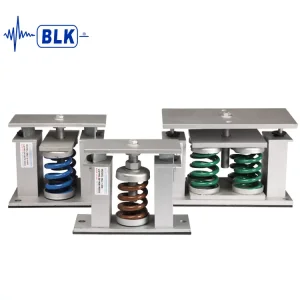
Adjustable Spring Dampers
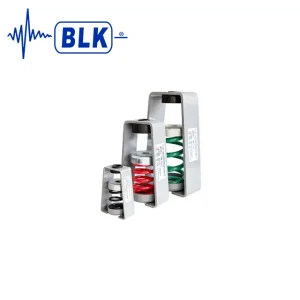
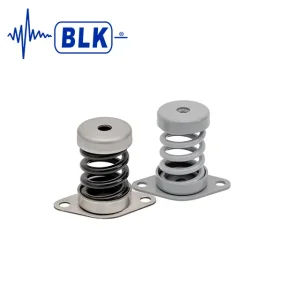
Utilizes high-tensile alloy steel coils paired with a central threaded adjusting bolt and top housing plate. Features viscous fluid inserts or internal rubber snubbers to limit high-frequency surge and transient resonance during startup.
- Natural Frequency: 3.0 Hz – 5.0 Hz
- Static Deflection: 25mm – 75mm
- Best For: Chillers, cooling towers, large pumps, diesel generators.
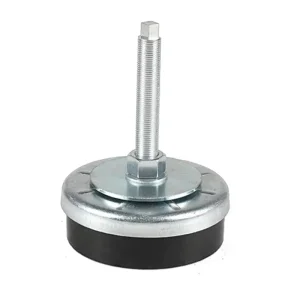
Adjustable Rubber Feet & Pads
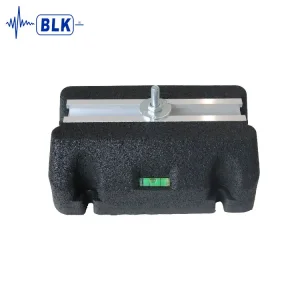
Engineered using high-grade Neoprene or Nitrile compounds bonded to precision zinc-plated steel leveling studs. Provide combined structure-borne sound attenuation and leveling on uneven plant flooring.
- Natural Frequency: 8.0 Hz – 15.0 Hz
- Shore Hardness: 40 to 70 Durometer (A)
- Best For: CNC lathes, packaging machinery, electrical cabinets.
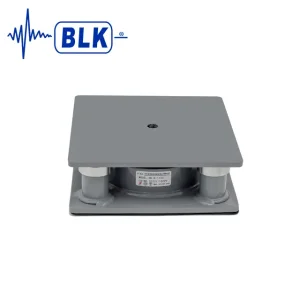
Pneumatic Air Mount Isolators
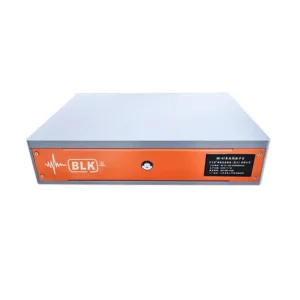
Integrates flexible elastomer air bladders with internal automatic level control valves. Pressure height adjustments tune natural frequencies down to sub-audible levels for ultra-sensitive environments.
- Natural Frequency: 1.7 Hz – 2.5 Hz
- Leveling Accuracy: ± 0.05 mm
- Best For: Semiconductor probing, optical benches, CMM metrology.
| Damper Technology | Load Range per Mount | Natural Freq ($f_n$) | Damping Ratio ($\zeta$) | Leveling Mechanism | Corrosion Resistance |
|---|---|---|---|---|---|
| ME/MC Spring Dampers | 15 kg – 3,500 kg | 3.2 Hz – 4.5 Hz | 0.05 – 0.15 | Top M12-M24 Adjusting Bolt | Dacromet 900hr Salt Spray |
| BKP/BKDR Rubber Mounts | 10 kg – 800 kg | 8.0 Hz – 12.0 Hz | 0.10 – 0.20 | Threaded Stud Footing | Electro-Galvanized / Stainless |
| BK-R Pneumatic Mounts | 50 kg – 5,000 kg | 1.7 Hz – 2.2 Hz | 0.15 – 0.25 | Auto-Level Pneumatic Valve | Anodized Aluminum / Epoxy Coating |
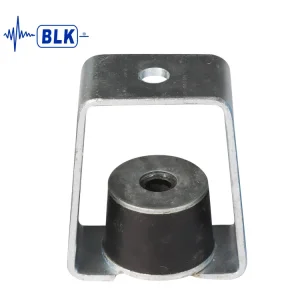
| HV/HR Spring Hangers | 20 kg – 2,000 kg | 3.5 Hz – 5.0 Hz | 0.04 – 0.10 | Threaded Hanger Rods | Powder Coated Steel Frame |
Localized Application Scenarios & Engineering Field Implementations
Selecting the correct adjustable vibration damper requires aligning physical load demands with localized environmental and operational conditions. Below are five real-world application benchmarks where customized Bellking isolators yielded operational excellence.
Roof-Mounted Centrifugal Chiller Plant Isolation
Challenge: A 48-story commercial tower installed three 20-ton centrifugal chillers directly on the upper mechanical penthouse slab. Operating at 1,750 RPM (29.1 Hz), the raw equipment generated severe low-frequency hum throughout executive suites on the top five floors.
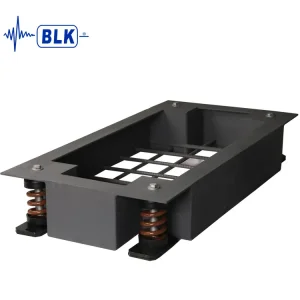
Solution: Installed Bellking ME-Type Adjustable Spring Mounts paired with CPB Concrete Inertia Bases. The height-adjusting bolts accommodated uneven slab deflections, providing uniform 38mm static compression.
Result: Overall vibration transmissibility dropped by 97.4%, bringing noise levels well within NC-30 acoustic rating criteria.
Sub-Micron Wafer Inspection Metrology Platforms
Challenge: Nearby automated guided vehicle (AGV) traffic and HVAC ducting caused ambient floor micro-vibrations exceeding VC-C criteria in a cleanroom, leading to image blurring during optical wafer inspection.
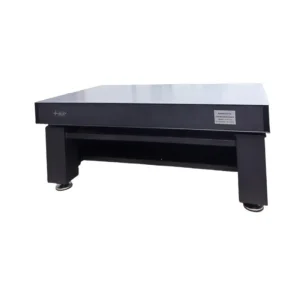
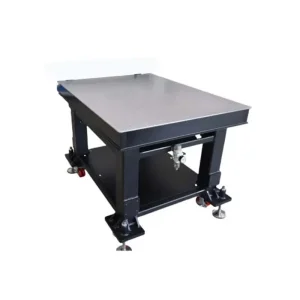
Solution: Integrated BK-DT High-Damping Optical Isolation Platforms supported by BK-R Pneumatic Air Mounts featuring auto-leveling mechanical sensing valves.
Result: System natural frequency lowered to 1.8 Hz, meeting VC-E micro-vibration standards and restoring sub-nanometer measurement repeatability.
Substation Power Transformer Acoustic Mitigation
Challenge: Magnetostriction in a 110kV oil-immersed transformer generated 100 Hz and 200 Hz tonal hums, prompting noise complaints from adjacent residential developments.
Solution: Retrofitted high-capacity Transformer Anti-Vibration Mounts with oil-resistant Nitrile matrix dampeners beneath the transformer skid rails.
Result: Structural ground transmission was attenuated by 22 dB(A), reducing boundary noise levels below municipal environmental thresholds.
High-Speed Stamping Press Impact Isolation
Challenge: A 400-ton metal stamping press operating at 120 strokes/min produced transient shock forces up to 4G, causing cracking in adjacent factory floor slabs and misaligning neighboring CNC tools.
Solution: Implemented heavy-duty BK-MT Matrix Anti-vibration Mounts equipped with viscous fluid energy dissipators and 50G shock-rated containment housings.
Result: Peak transient shock impulse transmitted to the foundation was reduced by 88%, preserving structural integrity and machine tool alignment.
China Supply Chain Resilience & Direct Factory Cost Efficiency
Industrial buyers seeking Low Price Adjustable Vibration Dampers often face trade-offs between unit cost and mechanical reliability. Bellking Vibration Reduction Equipment Manufacturing (Kunshan) Co., Ltd. resolves this dichotomy through advanced manufacturing integration, raw material leverage, and lean manufacturing processes located in the heart of East China’s industrial cluster.
Integrated Kunshan Cluster
Our facility in Kunshan, Jiangsu operates within a 50 km supply radius for high-tensile 60Si2Mn spring steel coil winding, precision CNC machining, and raw elastomer compounding. This proximity eliminates supply bottlenecks and minimizes intra-factory transit costs.
100% Factory Direct Pricing
By eliminating multi-tiered international distribution networks, agent markups, and brand re-labeling fees, Bellking provides genuine OEM pricing—reducing procurement costs by 35% to 50% compared to European or North American catalog brands.
Rapid Prototyping & OEM Scale
With robotic welding centers, automated electrostatic powder coating lines, and an annual production capacity exceeding 100,000 units, custom non-standard dampers can transition from CAD design to physical prototype within 3 working days.
Technical Roadmap & Future Outlook (2025–2035)
As smart factories, clean energy grids, and sub-nanometer manufacturing facilities evolve, passive vibration isolation technology is transitioning toward adaptive, intelligent, and environmentally sustainable architectures. Bellking’s R&D vision focuses on four technological pillars:
1. IoT-Enabled Smart Dampers
Embedding wireless micro-electromechanical (MEMS) accelerometers, temperature sensors, and strain gauges directly into the damper housing. Real-time vibration telemetry is streamed via MQTT to edge processing units, enabling predictive maintenance before fatigue failure occurs.
2. Magnetorheological (MR) Fluid Adaptive Damping
Integrating MR fluids into adjustable spring dampers to allow real-time viscosity adjustment via electromagnetic coils. The damping coefficient ($\zeta$) alters within milliseconds, dynamically mitigating seismic excitation or unpredictable shock loads.
3. Eco-Friendly & Recyclable Elastomers
Developing non-petroleum bio-based elastomer matrix compounds that retain physical tear resistance and durometer stability across extreme temperatures (-40°C to +120°C) while reducing carbon footprints in compliance with global Net-Zero initiatives.
4. Ultra-Compact High-Load Air Springs
Utilizing carbon-nanotube reinforced elastomer bladders capable of supporting high pneumatic pressures (>10 bar) within compact footprints, delivering ultra-low natural frequencies (down to 1.2 Hz) for space-constrained semiconductor tools.
Global Compliance Standards & Quality Assurance
To ensure seamless integration into international projects, Bellking products undergo rigorous quality management and third-party validation certified under global engineering codes:
ISO 9001:2015 Certification
Every step—from raw steel chemical analysis to spring coil pitch verification and final hydraulic load testing—is executed under strict ISO quality protocols.
Dacromet Corrosion Protection
Steel springs and frames are treated with Dacromet or hot-dip galvanizing, passing 900-hour salt spray corrosion testing (ISO 9227 / ASTM B117) for harsh marine and outdoor installations.
ASHRAE & Seismic Compliance
Designed in accordance with ASHRAE Chapter 48 guidelines for HVAC sound and vibration control, with optional seismic snubbing restraints built to handle lateral shear shock forces.
Frequently Asked Questions (Engineering & Procurement FAQ)
Clear technical answers to common queries raised by mechanical project managers, HVAC engineers, and procurement teams.
Precision Platforms, Air Mounts & Custom Rubber Dampers
Explore our optical platforms, low-frequency air mounts, desktop isolators, and specialized leveling feet engineered for precision laboratory and industrial applications.