
Featured Industrial Vibration Mounts & Isolation Systems
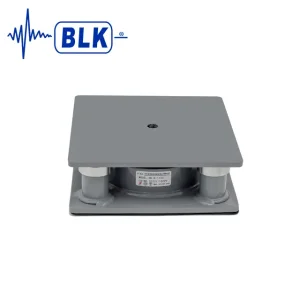
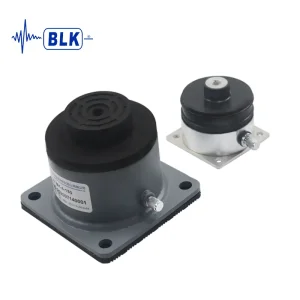
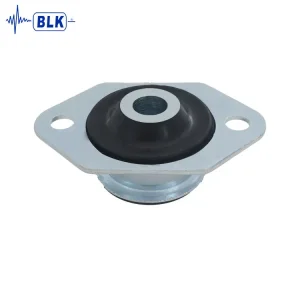
Direct factory configurations manufactured in Kunshan, China. Designed for HVAC chillers, heavy reciprocating compressors, semiconductor lithography tables, and industrial foundation decoupling.


Global Procurement Economics: Factory-Direct vs. Intermediated Supply Chains
Analyzing the total cost of ownership (TCO), elastomeric vulcanization capacity, and supply chain rationalization for international engineering contractors and tier-1 EPC procurement directors.
Elimination of Tiered Margins
Sourcing directly from our Kunshan vulcanization plant eliminates regional distributor markups of 35% to 50%. Bellking provides verifiable factory-gate FOB/CIF unit economics, batch certs, and raw material polymer tracking sheets directly to global procurement offices without trade broker latency.
Full Traceability & ASTM Testing
Every anti-vibration pad production run is governed by our ISO 9001 certified quality protocol. From raw elastomer durometer tests (Shore A 40 to 80) to mechanical compression sets (ASTM D395 Method B) and tensile elongation evaluations, every delivery arrives with localized third-party compliance proof.
Rapid Turnaround & Tooling Agility
With more than 100,000 standard isolation units manufactured annually across our 2,000 m² clean facility, in-stock standard models ship within 24 hours. Custom multi-layer composite tooling, bespoke geometry vulcanization molds, and special cut pads are delivered in as few as 3 to 5 business days.
Polymer Matrix Engineering: Damping Loss Factor & Environmental Resilience
Anti-vibration rubber pads are not generic rubber slabs. The mechanical performance of an isolation system depends entirely on compound hysteresis, dynamic shear modulus ($G_d$), and chemical resistance in aggressive industrial atmospheres.
| Polymer Formulation | Shore Hardness | Loss Factor ($\eta$) | Thermal Range | Chemical Resistance (Oils/Ozone) | Primary Industrial Application |
|---|---|---|---|---|---|
| Neoprene (Chloroprene - CR) | 50 - 70 Shore A | 0.12 - 0.22 | -30°C to +100°C | High resistance to oil, ozone & UV | HVAC chillers, outdoor rooftop AHUs, industrial pumps |
| Nitrile Rubber (NBR) | 55 - 75 Shore A | 0.15 - 0.25 | -25°C to +120°C | Superior petroleum hydrocarbon defense | Machine shop CNC lathes, hydraulic power packs, gearboxes |
| Natural Rubber (NR - Polyisoprene) | 40 - 65 Shore A | 0.05 - 0.10 | -45°C to +75°C | Moderate; vulnerable to prolonged petroleum | Heavy railway roadbeds, low-frequency impact isolation, forging presses |
| EPDM (Terpolymer) | 45 - 80 Shore A | 0.08 - 0.18 | -40°C to +140°C | Immune to extreme weathering & steam | Chemical processing plants, cooling towers, outdoor substations |
| Polyurethane Composite (PU) | 60 - 90 Shore A | 0.20 - 0.38 | -35°C to +85°C | Outstanding tensile tear & abrasion resistance | High-tonnage stamping presses, multi-layer sandwich damping pads |
Waffle & Cross-Ribbed Geometry
Our engineered waffle pattern and bidirectionally ribbed surfaces allow the elastomer to deform laterally under compression. Rubber is virtually incompressible in volume; without void relief grids, bulk solid pads lock into high stiffness, drastically deteriorating vibration transmissibility.
Steel-Interleaved Sandwich Architecture
To support high static loads exceeding 100 psi without excessive creep or sideways bulging, Bellking manufactures vulcanized sandwich pads featuring internal hot-rolled steel plates treated with 900-hour Dacromet coating for guaranteed anti-corrosion life.
Dynamic-to-Static Ratio ($K_d/K_s$) Control
Conventional low-grade rubbers exhibit dynamic stiffness ratios of 2.0 or higher, stiffening drastically under excitation. Bellking's custom-formulated polymers keep $K_d/K_s$ within a strictly calibrated 1.2 to 1.4 range, preserving low natural frequencies under high-frequency load cycles.
Engineering Selection Calculus: Resonant Frequency & Isolation Transmissibility
Rigorous dynamic selection prevents premature fatigue, structural acoustic flanking, and equipment resonance disasters. Our engineering team utilizes fundamental vibration equations to tailor pad dimensions to each asset.
Where fn is the natural frequency of the mounted assembly (Hz), kd is the dynamic stiffness of the rubber pad (N/m), m represents the supported operating mass (kg), and δst is the static deflection (cm). For elastomeric pads, typical static deflections range from 2 mm to 10 mm, yielding natural frequencies between 5 Hz and 15 Hz.
Here, r represents the frequency tuning ratio between the machine's disturbing excitation frequency (fd) and the isolator's natural frequency (fn), and ζ is the damping ratio of the selected rubber matrix. Active isolation occurs exclusively when r > √2 (1.414). Bellking targets r ≥ 3.0 for all critical HVAC and compressor applications, ensuring more than 88% to 95% total vibration energy attenuation.
Static Load Optimization
Under-loading an anti-vibration pad causes severe lack of deflection, trapping the system in high resonance. Over-loading drives the rubber into extreme non-linear stiffening and accelerates mechanical aging. We calibrate loading precisely between 30 psi and 120 psi depending on compound Shore rating.
Combating Structure-Borne Noise
While coiled metal springs isolate low-frequency bulk oscillations down to 3 Hz, they are susceptible to high-frequency surge transmission ("spring surge") in audible ranges (250 Hz - 2000 Hz). Combining Bellking rubber pads under springs decouples audible acoustic flanking into concrete subfloors.
Seismic & Wind Snubbing Restraints
For rooftop installations and earthquake-prone seismic zones, Bellking integrates elastomeric pads inside captive all-steel housing brackets (tested up to 3G - 5G lateral acceleration). This ensures complete isolation without risking equipment displacement during catastrophic storms.
Industrial Sector Deployments: From Mission-Critical Power to Cleanrooms
Over 1,000+ commercial installations deployed across tier-one data centers, semiconductor fabrication plants, heavy municipal water pumping stations, and commercial skyscraper mechanical penthouses.
HVAC, Cooling Towers & Plant Rooms
Centrifugal water chillers, variable speed cooling towers, and multi-stage AHUs emit intense continuous structural vibration. Bellking ribbed neoprene and composite cork-rubber pads eliminate dynamic excitation transfer into floor slabs, preventing structural resonance and occupant acoustic complaints.
Heavy Stamping Presses & Machine Tools
Punch presses, forging machinery, and guillotine shears subject plant foundations to intense shock impulses. Our high-density polyurethane and multi-layer steel composite pads absorb shock energy within sub-millisecond compression phases, protecting precision CNC equipment nearby from alignment drift.
Electrical Power Transformers & Gensets
Operating magnetostrictive hum at 100 Hz / 120 Hz from dry-type and oil-immersed substations causes irritating structure-borne rumbling through corporate buildings. Bellking transformer-rated damping pads cut core hum transmission by up to 25 dB, ensuring compliance with strict environmental noise mandates.
Cleanroom & Metrology Inspection Stages
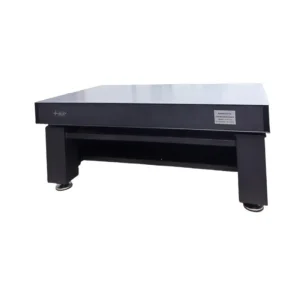
Coordinate Measuring Machines (CMMs), optical tables, and semiconductor wafer probers cannot tolerate ambient micro-tremors from footfall or street transit. When paired with passive or pneumatic isolation platforms, our precision elastomer underlay provides critical damping at the platform perimeter.
Acoustic Building Retrofit & Floating Floors
Architectural acoustic isolation in recording studios, fitness centers, and luxury penthouses requires decoupling entire concrete floating floors. Bellking elastomeric floor isolator pads are installed under jack-up or pour-in-place concrete slabs to satisfy DIN 4150-3 structural vibration standards.
Piping Decoupling & Duct Isolation Hangers
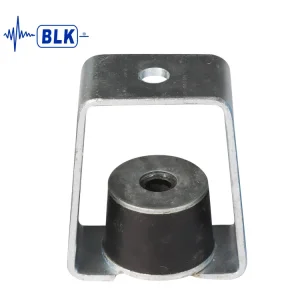
Fluid turbulence in pressurized chiller and boiler pipe runs causes destructive vibrational energy to propagate through building ceilings. Our HR-type rubber hangers and pad inserts absorb axial and radial hydraulic shock pulses before they excite drywall or structural beams.
Quality Control, Global Compliance & Factory Verification
Rigorous engineering governance ensures that our factory-direct products meet the exacting standards of the American Society of Heating, Refrigerating and Air-Conditioning Engineers (ASHRAE) and European environmental standards.
ISO 9001:2015 & Full Batch Audits
Our complete manufacturing workflow—from compound compounding, internal Banbury mixing, and compression molding vulcanization to CNC finishing—is managed under strict ISO 9001 governance. Full material test reports (MTRs) and batch rheometer curves accompany every export container.
RoHS, REACH & Zero Hazardous PAHs
Industrial health regulations in North America and the EU strictly forbid off-gassing carcinogenic plasticizers or heavy polycyclic aromatic hydrocarbons (PAHs). Bellking compounds comply fully with EU REACH Annex XVII and RoHS 3 directives, ensuring clean, indoor-certified installations.
900-Hour Salt Spray Dacromet Coating
For rubber mounts with embedded steel studs, baseplates, or sandwich shims, Bellking applies state-of-the-art Dacromet and zinc-nickel electro-coatings. Verified via ASTM B117 salt spray testing for over 900 continuous hours, our hardware thrives in harsh coastal and rooftop chemical environments.
Technology Roadmap: The Future of Elastomeric Vibration Mitigation
As manufacturing tolerances narrow and sustainable lifecycle demands intensify, Bellking's R&D engineering division is pioneering next-generation materials to expand the operational envelope of passive vibration damping.
Nano-Carbon Reinforced Compounds
Integrating surface-functionalized graphene and carbon nanotubes into the polymer matrix. This advances thermal dissipation during high-frequency cycling and increases fatigue life by up to 300% without increasing Shore stiffness.
Bio-Based & Recycled Polymers
Developing sulfur-crosslinked elastomeric compounds utilizing 40%+ bio-derived isoprenes and devulcanized circular rubber. Meeting strict net-zero lifecycle carbon audits without sacrificing dynamic mechanical performance.
Sensorized IoT Damping Pads
Embedding ultra-thin piezoresistive foil sensor layers directly within the sandwich core. Providing real-time structural health monitoring, dynamic loading telemetry, and predictive maintenance alerts for plant engineering managers.
Metamaterial Geometric Phononic Cells
Manufacturing 3D topological elastomeric metamaterials with targeted phononic band gaps. Blocking specific disturbance frequencies in sub-millimeter scales for ultra-demanding extreme-ultraviolet (EUV) semiconductor fabrication.
Frequently Asked Technical & Procurement Questions
Direct, unvarnished engineering answers addressing material aging, selection pitfalls, custom tooling timelines, and international commercial shipping protocols.
When should engineers specify rubber pads instead of open spring mounts?
What is the realistic operating lifespan of Bellking elastomeric pads in industrial environments?
How do I avoid equipment rocking or walk-off without bolting into concrete floors?
What parameters must procurement provide for a 24-hour engineering selection plan?
What is Bellking's custom mold lead time and minimum order quantity (MOQ)?
How does Bellking prevent low-frequency resonant amplification during machine startup?
What factory inspection and third-party validation reports are provided?
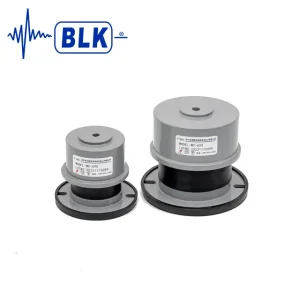
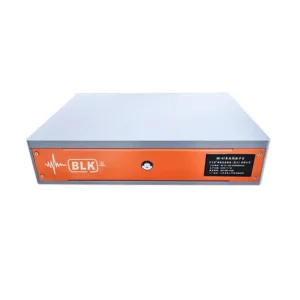
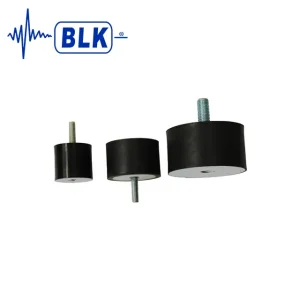
Heavy-Duty Mounts, Multi-Layer Dampers & Precision Platforms
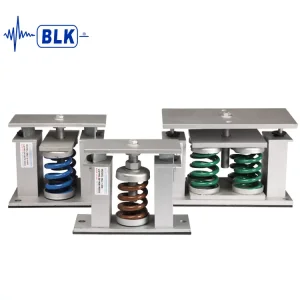
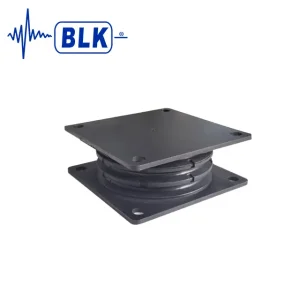
Continuing our complete catalog of industrial vibration dampers, engineered spring mounts, and precision composite bases manufactured to exact international standards.



Accelerate Your Global Procurement With Factory-Direct Engineering
Submit your machinery weights, excitation RPM, and environmental criteria today. Bellking's engineering specialists provide comprehensive vibration calculations, static deflection simulations, and transparent volume factory quotations within 24 hours.