
Precision Air Mounts & Industrial Damping Systems
Direct factory-priced isolation solutions manufactured in ISO 9001 certified facilities. Scientifically sized for reciprocating, rotary screw, and centrifugal air compression systems.






Global Industrial Status & Economics of Compressor Vibration Pads
In modern manufacturing, processing plants, energy stations, and commercial HVAC infrastructures, industrial air compressors represent core mechanical assets. However, high-frequency kinetic energy, dynamic unbalance, and reciprocating piston stroke forces generate substantial low-frequency kinetic vibrations. Without high-efficiency compressor vibration pads, these forces transfer directly into structural concrete floors, piping networks, and building foundations, causing catastrophic structural fatigue, acoustic radiation, and premature component destruction.
The global industrial vibration isolation market is undergoing a rapid transition toward high-performance elastomeric matrix polymers, viscoelastic damped composites, and precision air-spring platforms. Factory-direct procurement strategies have become paramount for EPC contractors, plant operators, and original equipment manufacturers (OEMs). Sourcing low-cost yet highly engineered vibration pads directly from specialized OEM facilities—such as Bellking’s 2,000 m² advanced production base in Kunshan, China—eliminates intermediary trading markups while maintaining compliance with rigorous ISO 9001 quality frameworks.
Achieving direct factory pricing for compressor isolation pads does not require compromising material density, shear modulus, or dynamic stability. Factory pricing structures are governed by raw material volume efficiencies (e.g., high-grade synthetic Nitrile NBR, Neoprene, and EPDM formulations), robotic steel welding efficiency, and automated rubber vulcanization processes. By cutting out supply chain inefficiencies, engineering teams can implement military-grade dynamic isolation pads at fractional procurement expenditures.
Vibration Dynamics & Isolation Transmissibility Mechanics
To properly size compressor vibration pads, plant engineers must analyze forced vibration excitation frequencies ($f_d$) against the system's natural frequency ($f_n$). Isolation effectiveness begins exclusively when the frequency ratio ($f_d / f_n$) exceeds $\sqrt{2} \approx 1.414$. Beyond this threshold, the system transitions from a magnification phase into an attenuation regime.
The Golden Frequency Ratio Rule
For commercial chillers and industrial air compressors, optimal isolation efficiency (>90% attenuation) requires a frequency ratio equal to or greater than 3.0:
If a rotary screw compressor operates at 1,750 RPM ($f_d \approx 29.17 \text{ Hz}$), installing a polymer or elastomeric pad designed for a natural frequency ($f_n$) of 5 Hz yields a ratio of $r = 5.83$, delivering over 96% dynamic kinetic isolation efficiency.
Viscoelastic Damping & Hysteresis
Purely elastic elements (such as un-damped steel coils) can store energy and create severe resonance spikes during compressor startup and shutdown coast-down cycles. Viscoelastic polymer pads convert kinetic mechanical energy directly into internal micro-thermal heat via elastomeric molecular chain hysteresis.
Bellking's specialized polymer damping pads (BK-PM series) utilize cross-linked elastomeric blends engineered for high damping loss factors ($\eta \ge 0.15$), constraining transient resonance amplification while providing physical stability under high compressive loads.
| Pad / Isolator Type | Material Core & Coating | Natural Frequency ($f_n$) | Max Load Range (per pad) | Primary Industrial Application |
|---|---|---|---|---|
| BK-PM Polymer Damping Pad | Cross-linked Synthetic Polymer | 8.0 Hz – 12.0 Hz | 50 kg – 5,000 kg | Heavy Rotary Screw Compressors, High-Speed Motors |
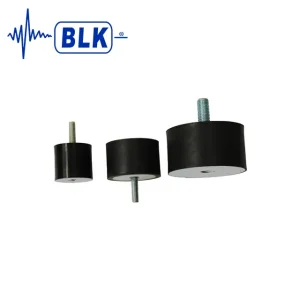
| BKVD Elastomeric Mount | Vulcanized Neoprene / Steel Plate | 6.0 Hz – 10.0 Hz | 20 kg – 1,200 kg | Reciprocating Piston Compressors, Refrigeration Units |
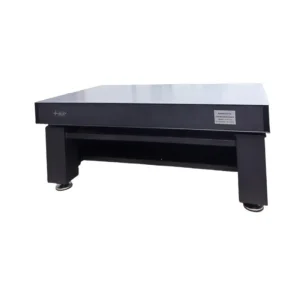
| BK-PA Precision Air Mount | Pneumatic Air-Chamber Rubber Body | 1.7 Hz – 3.0 Hz | 100 kg – 3,500 kg | Cleanroom Micro-compressors, High-Precision Metrology |
| MD Spring Isolator Mount | High-Tensile Steel / Dacromet Coating | 3.0 Hz – 5.0 Hz | 50 kg – 8,000 kg | Low-RPM Heavy Industrial Chillers & Gensets |
Future Trends: Energy Efficiency, Decarbonization & Smart Isolation
Industrial manufacturing facilities globally face increasing pressure to meet ESG (Environmental, Social, and Governance) targets and net-zero carbon goals. The role of mechanical vibration isolation in energy efficiency is frequently overlooked: unmitigated dynamic vibration represents lost mechanical kinetic energy and causes accelerated wear on shaft bearings, mechanical seals, and drive couplings, directly elevating power consumption.
Kinetic Loss Reduction
When a compressor vibrates excessively against a rigid foundation, structural resonance reflects dynamic energy back into the compressor chassis. Well-engineered vibration pads convert parasitic micro-vibrations into damping absorption, reducing motor stress and cutting electrical power losses by up to 3.5%.
Eco-Compliant Polymer Matrices
Traditional rubber manufacturing relied on toxic plasticizers and high-volatile organic compound (VOC) vulcanizing agents. Modern industrial standards demand REACH and RoHS compliant elastomer compounds. Bellking’s zero-off-gassing synthetic elastomer pads eliminate toxic odor emission, ensuring compliance with cleanroom and pharmaceutical site audits.
IoT & Sensor-Embedded Pads
The industry is shifting toward smart condition monitoring. Next-generation compressor pads incorporate embedded MEMS accelerometers and strain gauges, enabling real-time structural health monitoring, dynamic deflection tracking, and predictive maintenance alerts before mechanical seal failure occurs.
Localized Application Scenarios & Field Engineering Solutions
Compressors operate under vastly different environmental and mechanical parameters depending on their industry. Sizing vibration pads requires matching material resistance to localized plant conditions:
1. Petrochemical & Heavy Industrial Gas Compression
Environment: Corrosive atmospheres, ambient hydrocarbon exposure, continuous 24/7 heavy duty operation.
Challenge: Standard natural rubber pads degrade rapidly when exposed to airborne oils, hydraulic fluids, and chemical fumes, leading to elastomer swelling, crumbling, and loss of static deflection.
Solution: High-density oil-resistant Nitrile (NBR) and Fluorocarbon (FKM) polymer damping pads combined with Dacromet 900-hour salt spray tested metal plates, ensuring over 15 years of uninterrupted structural integrity.
2. Semiconductor Cleanrooms & Medical Air Systems
Environment: Class 1 / Class 10 cleanroom environments requiring zero particle off-gassing and ultra-low noise levels.
Challenge: Micro-vibrations generated by high-pressure medical air compressors pass through floor slabs, interfering with electron microscopes, photolithography tools, and laser measurement systems.
Solution: Implementation of BK-PA Precision Air Mounts featuring automatic level regulation and a 1.7 Hz natural frequency, eliminating micro-vibrations across all frequencies.
3. High-Rise Commercial Rooftop HVAC & Refrigeration
Environment: Roof-mounted chiller units, cooling towers, and large screw compressors on suspended concrete floors.
Challenge: Suspended building floors exhibit high flexibility and lower natural frequencies, increasing the risk of mechanical resonance amplification through the building superstructure.
Solution: Combination of inertia base pump supports with open-spring or enclosed viscous-damped spring mounts (MD/MC types), elevating static deflection up to 50 mm to isolate low-frequency structure-borne noise.
4. Offshore Marine Platforms & Mobile Pneumatic Units
Environment: Severe marine salinity, continuous wave motion impact, severe wind shears, and dynamic deck movement.
Challenge: Un-restrained isolation pads allow excessive equipment sway during wave impacts, risking pipe shears and fitting bursts.
Solution: Seismically restrained vibration mounts with integral multi-directional snubbers capable of withstanding 3–5 G dynamic acceleration loads without physical displacement.
4-Step Engineering Protocol for Sizing Compressor Isolation
To prevent under-specifying or over-specifying isolators, procurement officers and mechanical engineers should adhere to Bellking’s standardized 4-step engineering selection process:
Operating Weight Calculation
Calculate total wet operating weight ($W_{\text{total}}$), including compressor chassis, electric motor, lubricant volume, piping dead loads, and attached sub-assemblies.
Center of Gravity (CG) Mapping
Identify CG coordinates to account for unequal weight distribution. Position pads or adjust spring stiffness ratings proportionally so every mount deflects uniformly under static load.
Disturbing Frequency Verification
Identify lowest operational RPM ($N$). Convert to Hertz: $f_d = N / 60$. Select a pad matrix yielding a natural frequency $f_n \le f_d / 3.0$ to guarantee >90% isolation efficiency.
Environmental & Safety Rating
Select compound elastomeric coatings (e.g. Dacromet plating for steel, NBR/EPDM vulcanization for rubbers) based on temperature extremes, oil misting, UV exposure, and seismic code requirements.
Compressor Vibration Pads Sizing, Pricing & Factory FAQ
Detailed technical guidance directly from Bellking’s application engineering team based on over 1,000 successful factory installations worldwide.
Why should I source compressor vibration pads direct from a manufacturer rather than a distributor?
What is the difference between elastomeric rubber pads, polymer pads, and spring mounts?
How do I determine if my compressor requires an inertia base in addition to isolation pads?
What testing standards are used to verify Bellking compressor vibration pads?
What is the typical lead time for custom non-standard compressor isolation pads?
How long do Bellking industrial compressor vibration pads last in harsh environments?
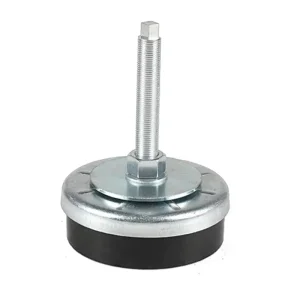
Desktop Platforms, Adjustment Feet & Hangers
Complete product lineup designed to isolate structure-borne noise and dynamic kinetic shocks across all industrial compression machinery.







Request Custom Sizing & Factory Direct Pricing
Need a 1:1 customized vibration isolation plan for your specific compressor model? Our engineering team in Kunshan will calculate static deflection, natural frequencies, and load balances within 24 hours.