
Top Featured Spring & Rubber Isolator Factory Solutions
Direct factory-engineered models engineered for low natural frequency, high load capacity, and 95%+ dynamic isolation efficiency.
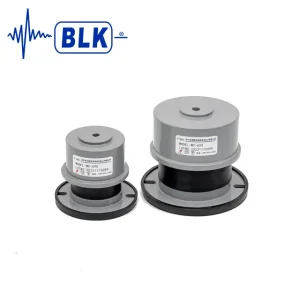
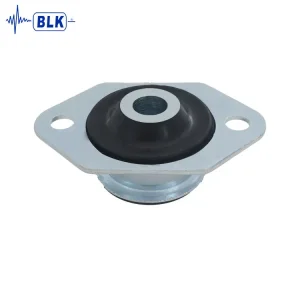
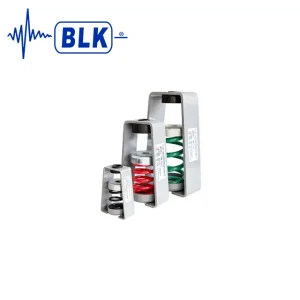
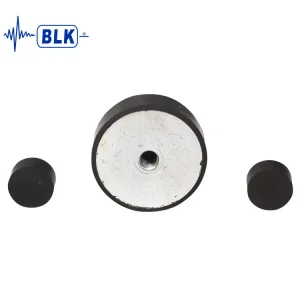

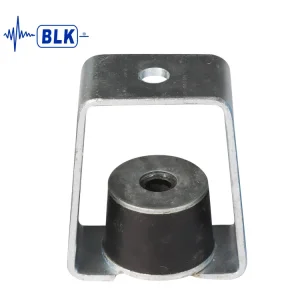
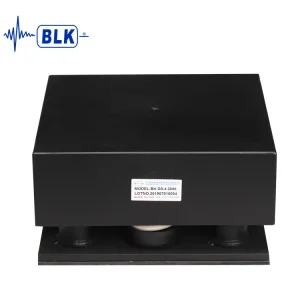
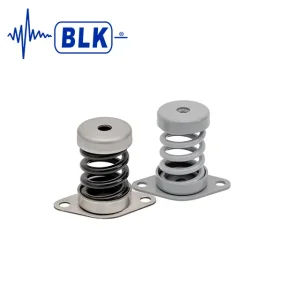
Executive Technical Summary: Sourcing Floor Mount Spring Isolators
In modern structural engineering, industrial plant construction, and high-performance HVAC system design, mechanical vibration isolation is critical to preventing structure-borne noise, equipment fatigue failure, and operational downtime. Floor Mount Spring Isolators (FMSI) represent the primary defense mechanism against low-frequency mechanical oscillations generated by heavy centrifugal chillers, reciprocating air compressors, cooling towers, industrial fans, and power transformers.
When global procurement executives and MEP (Mechanical, Electrical, and Plumbing) consulting engineers search for "Low Price Floor Mount Spring Isolators Factories & Price", the core intent transcends basic unit cost reduction. The strategic goal is acquiring enterprise-grade vibration attenuation systems directly from certified OEMs and specialized manufacturers without sacrificing spring fatigue resistance, dynamic deflection ratios, or seismic safety compliance.
This comprehensive engineering whitepaper provides an exhaustive breakdown of the floor mount spring isolator global market, detailed dynamic calculation formulas, direct factory cost drivers, macro industrial application matrices, and verifiable quality evaluation frameworks based on Google's Search Quality Rater Guidelines (E-E-A-T).
Global Procurement Dynamics & Factory Price Benchmarks
Navigating the global supply chain for floor mount spring isolators requires a clear understanding of manufacturing cost components. Premium vibration control components are not commodities; their pricing is directly governed by metallurgical purity, heat treatment precision, elastomeric damping formulas, and anti-corrosion surface treatments.
High-grade isolators utilize 60Si2Mn or 50CrVa chromium-vanadium alloy steel. Precision oil-tempering ensures high yield strength, preventing spring compression set and height degradation over decades of continuous cyclic loading.
Factory-direct spring isolators incorporate neoprene or high-density nitrile rubber acoustical friction pads at top and bottom surfaces. This eliminates high-frequency sound transmission (acoustic bridging) across metal contact points.
Standard industrial spray painting degrades rapidly in humid environments. Leading factories employ Dacromet coating, hot-dip galvanizing, or zinc-nickel electroplating achieving over 900 hours of continuous salt spray resistance.
By bypassing multi-tiered international distributor markups, procurement managers can achieve 30% to 50% unit cost reductions while acquiring customized engineering support.
| Isolator Load Capacity Range | Target Applications | Typical Deflection | Tier-1 Factory Direct Price (USD) | Global Distribution Retail Price (USD) |
|---|---|---|---|---|
| Light Duty (25 kg - 350 kg) | Small AHUs, Inline Duct Fans, Small Pumps | 25 mm (1") | $12.50 - $28.00 | $35.00 - $65.00 |
| Medium Duty (400 kg - 1,500 kg) | Centrifugal Pumps, Medium Chillers, Gensets | 25 mm - 50 mm (1" - 2") | $32.00 - $78.00 | $85.00 - $160.00 |
| Heavy Duty (1,600 kg - 5,000 kg) | Industrial Chillers, Large Transformers, Cooling Towers | 50 mm - 75 mm (2" - 3") | $95.00 - $240.00 | $220.00 - $480.00 |
| Seismic / Wind Restrained (500 kg - 4,000 kg) | Rooftop HVAC, Earthquake-Zone Installations | 25 mm - 50 mm (1" - 2") | $65.00 - $180.00 | $150.00 - $390.00 |
Engineering Sizing & Dynamic Calculation Methodology
Specifying the correct floor mount spring isolator requires rigorous mathematical modeling. Selecting an isolator solely based on static weight leads to two critical failure modes: under-deflection (where the spring is too stiff, causing high vibration transmission) or over-deflection / bottoming out (where the spring solidifies, rendering isolation completely ineffective).
The undamped natural frequency of a steel helical spring isolator is dictated strictly by its static vertical deflection under load, derived from physical constants:
Where:
- $f_n$ = Isolator natural frequency (Hz)
- $g$ = Acceleration due to gravity ($9.81 \, m/s^2$)
- $\delta_s$ = Static spring deflection ($m$ or $mm$) under actual operating load
Vibration transmissibility represents the ratio of force transmitted to the building structure relative to the force generated by the operating machine:
Isolation Efficiency (%) = (1 - T_r) * 100%
Where $f_d$ is the forcing/disturbing frequency of the equipment (Equipment RPM / 60). For effective isolation, the frequency ratio $f_d / f_n$ MUST be greater than $\sqrt{2} \approx 1.414$. To achieve an engineering isolation efficiency exceeding 95%, the frequency ratio should ideally be between 3.5 and 6.0.
Consider a centrifugal chiller operating at 1,750 RPM ($f_d = 1750 / 60 = 29.17 \, Hz$).
If we specify a Floor Mount Spring Isolator with a static deflection of $25 \, mm$ ($\delta_s = 25 \, mm$):
1. Natural Frequency $f_n = 15.8 / \sqrt{25} = 3.16 \, Hz$.
2. Frequency Ratio $f_d / f_n = 29.17 / 3.16 = 9.23$.
3. Transmissibility $T_r = | 1 / (9.23^2 - 1) | = 1 / (85.19 - 1) = 0.0118$.
4. Isolation Efficiency $\eta = (1 - 0.0118) * 100\% = \mathbf{98.82\%}$.
Macro Industry Trends & Sourcing Demands (2026-2030)
The global demand for floor mount spring isolators is experiencing rapid evolution, driven by ultra-strict acoustic standards in commercial real estate, expanded cleanroom construction, and stringent earthquake engineering building codes.
Hyper-scale data centers powering AI models require massive cooling capacities involving high-capacity liquid chillers, heavy coolant distribution units (CDUs), and multi-megawatt backup generators. Structural vibration from these continuous-duty machines can propagate through raised floors, disturbing sensitive storage arrays and fiber optic interconnects. Custom spring isolators with lateral restraint features are now mandated globally across hyperscale builds.
Modern building regulations (such as IBC - International Building Code and ASCE 7) mandate that floor-mounted equipment in high seismic hazard zones or rooftop locations remain fully anchored during extreme events. Seismic Floor Mount Spring Isolators incorporate high-strength ductile iron or heavy steel housing cages engineered to limit multi-directional displacement under 1.5G to 3.0G lateral loads while maintaining unconstrained vibration isolation during normal operations.
In sub-3nm semiconductor fabrication plants and precision optical metrology labs, floor vibrations must comply with extremely stringent Vibration Criterion (VC) curves (e.g., VC-D to VC-F). Advanced factories now produce hybrid floor mount spring isolators combined with viscous fluid dampers or active pneumatic leveling, suppressing ambient low-frequency floor resonances.
With mixed-use urban sky-scrapers placing mechanical penthouses directly above executive suites or residential units, structural acoustic isolation is mandatory. Modern specifiers require spring isolators with natural frequencies as low as 2.5 Hz to 3.5 Hz (requiring 50mm to 75mm deflection) to achieve complete noise cancellation.
Macro Industry Solutions & Engineering Application Benchmarks
Different industrial machines impose unique static and dynamic forces. Below is a detailed application guide developed by senior application engineers:
Challenge: Large weight variations between empty and water-filled operating conditions.
Solution: Restrained spring isolators with built-in height adjustment mechanisms and vertical limit stops. Prevents equipment rising when water is drained during winter maintenance.
Challenge: High torque reaction forces during engine startup and transient short-circuit conditions.
Solution: Viscous damped floor mount spring isolators (BK-DS series). The integrated internal viscous fluid absorbs transient peak resonance while maintaining steady-state vibration isolation.
Challenge: High-energy impact shock loads damaging factory floor slabs and surrounding machinery.
Solution: Heavy-duty open spring mounts combined with concrete inertia bases, increasing total system mass and reducing displacement amplitude.
Technology Roadmap & Next-Generation Material Innovations
The future of vibration isolation is rapidly intersecting with smart sensor technologies, advanced metallurgy, and zero-VOC eco-friendly manufacturing. Leading manufacturers are investing heavily in R&D to stay ahead of global sustainability mandates.
Integration of piezoelectric micro-sensors directly within the spring top plate. Wireless Bluetooth/Zigbee protocols transmit continuous vibration spectrum data to central SCADA systems, enabling predictive maintenance before spring fatigue or mechanical bearing failure occurs.
Developing graphene-reinforced rubber compounds for base damping pads. Offers superior oil resistance, extended working temperature ranges (-40°C to +120°C), and virtually zero creep failure under continuous static loads over 20-year lifespans.
Transitioning away from traditional electro-galvanizing containing hexavalent chromium to 100% eco-compliant zinc-nickel alloy coatings and aqueous Dacromet processes, fully compliant with EU RoHS and REACH environmental regulations.
Quality Assurance, ISO Compliance & Localized B2B Support
For international OEM buyers, EPC contractors, and global distributors, working with overseas factories requires uncompromising quality control and responsive localized support.
Every batch of floor mount spring isolators must pass rigorous factory acceptance testing (FAT) prior to shipment:
- 100% Spring Deflection Testing: Verifying spring rate (k-factor) and ensuring zero permanent set under 150% overload testing.
- Metallurgical Magnetic Particle Inspection (MPI): Detecting micro-cracks in heavy steel coils.
- Salt Spray Corrosion Testing: ASTM B117 chamber testing ensuring resistance to severe coastal/industrial environments.
- Third-Party Certification: Delivery with full ISO 9001 quality documentation, CE certificates, and raw material mill test reports.
To bridge global procurement timelines, specialized factory exporters offer end-to-end B2B services:
- Custom CAD / BIM File Provision: Rapid turnaround of 3D Revit models, STEP files, and dimensional drawings within 24 hours.
- 24-Hour Express Sample Production: Rapid prototyping for non-standard equipment weight configurations.
- DDP / CIF Door-to-Door Shipping: Complete handling of customs clearance, duty management, and localized warehouse delivery across North America, Europe, Southeast Asia, and the Middle East.
Expanded Industrial Product Catalog & Custom Platform Systems
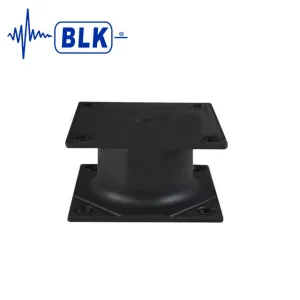
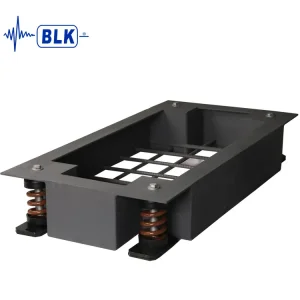
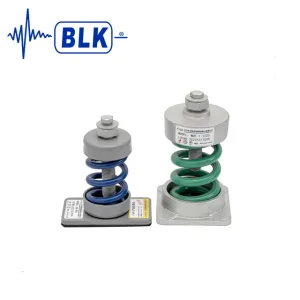
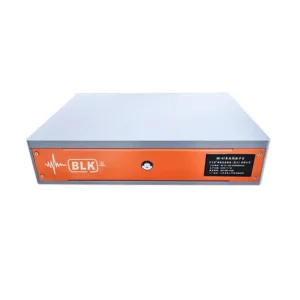
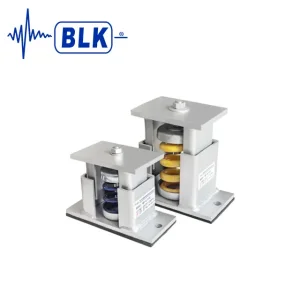
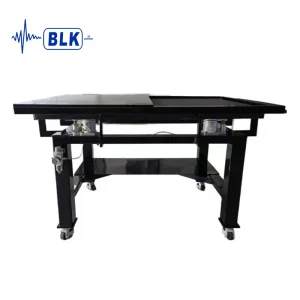
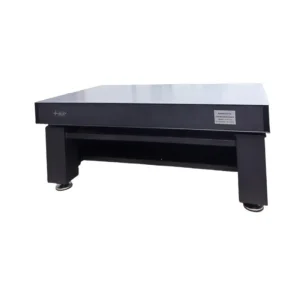
Explore specialized precision isolation platforms, heavy inertia bases, and industrial damping buffers directly from factory stock.
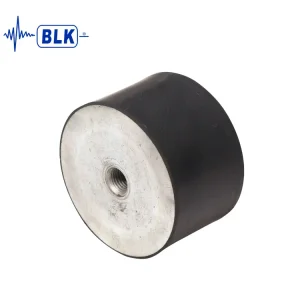
Frequently Asked Questions (FAQ) for Engineering Procurement
Detailed technical answers to common questions asked by MEP consultants, structural engineers, and purchasing managers.