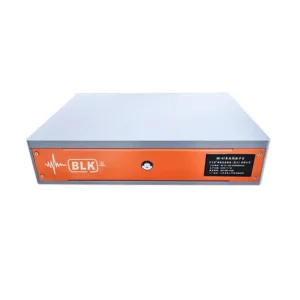
Precision-Engineered Floor Mount Isolator Series
Explore our core OEM factory product line designed for extreme dynamic stability, structural vibration attenuation, and heavy industrial equipment decoupling.



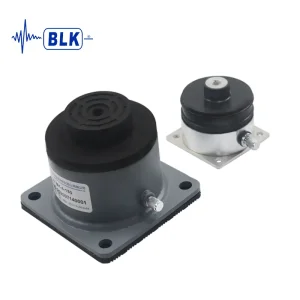




In modern industrial manufacturing, civil building design, precision metrology, and heavy utility operations, mechanical vibration represents a primary mechanism of kinetic energy dissipation, operational noise, structural fatigue, and precision degradation. Unmitigated vibration generated by rotating or reciprocating equipment—such as HVAC chillers, water pumps, air compressors, diesel generators, and manufacturing presses—transmits structure-borne energy into supporting slabs, structural beams, and sensitive adjacent spaces.
A Floor Mount Vibration Isolator serves as a vital dynamic decoupling interface placed between mechanical equipment bases and structural floors. As a leading Low Price Floor Mount Vibration Isolator Factory & Manufacturer, Bellking integrates advanced elastomeric formulations, high-tensile alloy spring physics, pneumatic air spring kinematics, and viscous damping technologies to achieve up to 99% vibration isolation efficiency while maintaining exceptional factory-direct cost competitiveness.
Mechanical Vibration Isolation Dynamics & Transmissibility
To mathematically quantify the isolation efficiency ($\eta$) of a floor-mounted isolation system, engineers evaluate the mechanical Transmissibility ($T$), defined as the ratio of the dynamic force transmitted to the building floor ($F_t$) to the exciting dynamic force generated by the operating machine ($F_0$):
T = | F_t / F_0 | = √ [ ( 1 + (2 · ζ · (f_d / f_n))^2 ) / ( (1 - (f_d / f_n)^2)^2 + (2 · ζ · (f_d / f_n))^2 ) ]
Where:
- f_d = Disturbing frequency of the equipment (Hz), derived directly from operating RPM ($f_d = \text{RPM} / 60$).
- f_n = Natural frequency of the floor mount vibration isolator system (Hz).
- ζ (Zeta) = Critical damping ratio of the elastomeric polymer or viscous fluid core.
System isolation occurs exclusively when the frequency ratio ($f_d / f_n$) exceeds $\sqrt{2} \approx 1.414$. When $f_d / f_n < 1.414$, the isolator enters the amplification zone, causing structural resonance. Bellking isolators are engineered to maintain a frequency ratio $f_d / f_n \ge 3.0$, guaranteeing operation deep within the high-attenuation region where force transmissibility drops below 5% to 1%.
| Isolator Mechanism Type | Static Deflection Range ($\delta_{st}$) | Natural Frequency ($f_n$) | Target Dynamic Application | Structural Attenuation Range |
|---|---|---|---|---|
| Open Steel Spring Isolators | 25 mm - 100 mm (1" - 4") | 2.5 Hz - 4.5 Hz | Low-speed chillers, large cooling towers, heavy HVAC pumps | 95% - 99% Efficiency |
| Enclosed / Restrained Springs | 25 mm - 75 mm | 3.0 Hz - 5.0 Hz | High-wind rooftop equipment, seismic structural zones | 92% - 98% Efficiency |
| Elastomeric & Rubber Mounts | 3 mm - 12 mm | 6.0 Hz - 12.0 Hz | High-speed motors, rotary compressors, transformers | 85% - 94% Efficiency |
| Pneumatic Air Spring Mounts | Variable / Self-Leveling | 1.2 Hz - 2.5 Hz | Semiconductor CMMs, optical benches, electron microscopes | 98% - 99.9% Efficiency |
| Polymer Damping Pads | 1 mm - 5 mm | 10.0 Hz - 25.0 Hz | High-frequency impacts, acoustic decoupling sub-floors | 75% - 90% Efficiency |
Architectural Engineering & Mechanical Classification
Selecting the correct floor mount isolator requires matching the structural characteristics of the machinery base with the exact mechanical impedance of the mounting hardware. Bellking manufactures five specialized isolator architectures:
Fabricated using high-strain spring alloy steel subjected to specialized heat treatment and shot-peening. Designed with horizontal stiffness ($K_x$) equal to or greater than vertical stiffness ($K_y$) to prevent lateral instability without requiring external guide rods.
Integrates dynamic vertical travel limiters and heavy-duty ductile iron housings. Ideal for outdoor rooftop HVAC equipment subject to severe wind shear loads or facility floors located in active earthquake seismic zones.
Molded from custom neoprene, nitrile, or natural rubber compounds. Engineered for mid-to-high frequency isolation where high structural damping (ζ = 0.10 - 0.15) is necessary to eliminate audible noise transmission.
Global Commercial & Industrial Market Scale
Bellking operates as a certified high-tech manufacturer supplying critical vibration control systems to infrastructure projects across North America, Europe, Asia-Pacific, and the Middle East.
Sector-Specific Market Growth Drivers
The global demand for industrial vibration isolators is expanding at an accelerated CAGR, driven by strict building acoustic codes (such as ASHRAE guidelines and ISO 2631 human exposure standards), rapid expansion of microelectronics fabrication, and ultra-quiet data center requirements.
Bellking’s direct factory model addresses these demanding sectors by combining precision mechanical engineering with scalable, low-cost Chinese manufacturing infrastructure, offering OEM customers up to 40% cost reduction compared to regional distributor markups.
Localized Application Scenarios & Field Engineering
Proper floor mounting requires evaluating ambient soil conditions, concrete slab rigidity, localized seismic codes, and structural acoustic limits. Below are field installation scenarios engineered by Bellking:
Challenge: Large 500-ton centrifugal chillers mounted on elevated steel roof decks generate low-frequency hum (20–40 Hz) that transmits into top-floor corporate offices.
Solution: Installation of Bellking Restrained Spring Isolators featuring 50 mm static deflection combined with elastomeric damping bases. Restraint housings lock the unit during seasonal fluid draining while preventing dynamic over-travel under high wind gust loading.
Challenge: Wafer inspection CMM tools and lithography equipment require VC-E or VC-G micro-vibration floor standards. Nearby foot traffic and cleanroom air handlers disrupt nanometer measurement precision.
Solution: Implementation of Bellking BK-A Series Pneumatic Air Mounts beneath heavy granite inertia bases, achieving dynamic natural frequencies as low as 1.7 Hz with automatic micro-leveling control valves.
Challenge: Dry-type and oil-filled transformers generate continuous magnetostrictive core hum at 100 Hz / 120 Hz, causing structural noise complaints in urban commercial buildings.
Solution: Heavy-duty Bellking Polymer Damping Pads and customized BKHQ series rubber mounts installed directly beneath transformer base rails, delivering 25 dB structure-borne acoustic attenuation.
Challenge: High-impact forging presses deliver transient shock impulse forces ($3\text{--}5\text{ G}$) that crack surrounding concrete floors and disturb adjacent machinery calibration.
Solution: Viscous-damped floor mount spring isolators combined with concrete-filled steel inertia bases (CPB Type), effectively absorbing kinetic shock loads and spreading force distribution over a broader foundation area.
China Factory Supply Chain Resilience & Cost Efficiency
The term "Low Price" at Bellking does not signify compromised quality; rather, it represents superior manufacturing efficiency, vertical supply chain integration, and direct factory-to-site distribution from our primary manufacturing base in Kunshan, Jiangsu Province.
1. Integrated Raw Material Sourcing
Located within the Yangtze River Delta industrial cluster, Bellking maintains direct procurement agreements with top-tier steel mills and rubber elastomer refineries. This localized supply network eliminates intermediary material markups and guarantees trace-certified high-tensile alloy spring steel and high-purity natural rubber compounds.
2. Automated Robotics & CNC Precision
Our 2,000 m² modern factory utilizes CNC continuous cold-coiling spring machines, robotic laser welding cells, and automated powder coating lines. Automation increases throughput consistency, reduces scrap rates to below 0.2%, and dramatically lowers labor hours per unit produced.
3. Superior Dacromet Coating Protection
Unlike standard paint finishes that flake and rust within months of installation, Bellking spring isolators undergo multi-stage Dacromet surface treatment. This zinc-aluminum chromate process achieves over 900 hours of continuous salt spray corrosion resistance (ASTM B117), ideal for harsh chemical plants and marine offshore platforms.
Technical Roadmap & Future Outlook (2025–2030)
As industrial automation transforms into Industry 4.0, dynamic vibration control is evolving from static passive mounting into intelligent, adaptive, and sensor-monitored structural damping systems.
A. Active-Passive Smart Hybrid Isolators
Integrating electromagnetic actuators in parallel with primary steel coil springs. Real-time digital signal processors (DSP) monitor ground vibration in micro-seconds and fire counter-phase forces to eliminate zero-frequency disturbances in nanometer cleanrooms.
B. IoT-Embedded Piezoelectric Sensor Mounts
Embedding wireless MEMS accelerometers directly inside the top load plate of floor mounts. Operators receive real-time predictive maintenance metrics regarding equipment bearing wear, unbalance, and structural settlement directly via cloud dashboards.
C. Eco-Compliant Elastomer Formulations
Transitioning rubber synthesis away from traditional petroleum base stocks toward fully recyclable thermoplastic vulcanizates (TPV) that comply with ultra-strict REACH, RoHS, and green building LEED certification criteria.
D. Ultra-Low Frequency Compact Air Springs
Developing next-generation dual-chamber pneumatic isolators capable of achieving stable 1.0 Hz natural frequencies within ultra-low profile footprint enclosures for space-restricted semiconductor tools.
Global Standards, Technical Compliance & OEM Support
Exporting vibration isolators globally requires strict compliance with regional building safety, seismic structural requirements, and acoustic standards. Bellking maintains rigorous quality assurance throughout design, manufacturing, and shipment phases.
Operates under ISO 9001:2015 Quality Management Systems. Every batch undergoes load-deflection rate testing on calibrated hydraulic tension-compression machines to guarantee spring rate tolerance within ±5%.
Restrained isolators engineered in compliance with International Building Code (IBC) seismic design categories A through F, as well as ASHRAE 170 guidelines for mechanical equipment support.
Standard catalog products ship within 24 hours of order confirmation. Custom engineered non-standard mounts transition from CAD drawing approval to factory sample dispatch in as fast as 3 to 5 business days.
Frequently Asked Questions (Technical & Commercial FAQ)
Detailed engineering responses to key questions raised by MEP consultants, structural engineers, and factory procurement managers.
How do I correctly select between spring, rubber, and pneumatic floor mount isolators?
Selection depends primarily on the equipment disturbing frequency ($f_d$) and required isolation efficiency. As a general rule:
- Rubber Isolators: Ideal for high-speed equipment ($\ge 1200\text{ RPM} / 20\text{ Hz}$) such as small motors and rotary compressors where small static deflections ($3\text{--}10\text{ mm}$) suffice.
- Steel Spring Isolators: Essential for low-speed equipment ($300\text{--}1800\text{ RPM}$) like chillers, AHUs, cooling towers, and heavy pumps requiring significant static deflection ($25\text{--}50\text{ mm}$) to yield low natural frequencies ($3\text{--}5\text{ Hz}$).
- Pneumatic Air Mounts: Reserved for ultra-sensitive micro-vibration applications (metrology, cleanrooms, CMMs) demanding natural frequencies below $2.0\text{ Hz}$.
What parameters are required to calculate customized floor mount isolator sizes?
To receive a complete 24-hour engineering selection report from Bellking, provide:
- Total operating weight of equipment including internal fluids.
- Exact Center of Gravity (CG) location and weight distribution across support points.
- Equipment excitation operating speeds (RPM or Hz).
- Installation environment details (indoor, outdoor rooftop, coastal corrosive area).
- Seismic or wind restraint shear force specifications if required.
Why is horizontal stiffness ($K_x / K_y$) critical in open spring floor mounts?
If an open steel coil spring lacks adequate lateral stiffness, the unbalance forces generated during equipment startup or shutdown transient resonance will cause the machine to sway horizontally or tip over. Bellking springs are designed with a minimum $K_x / K_y$ ratio of 0.80 to 1.0, ensuring structural self-stability without needing mechanical guide rods.
How does a concrete inertia base improve floor isolator performance?
Inertia bases (CPB Type) add heavy structural mass below the equipment, lowering the overall Center of Gravity. This mass addition reduces equipment displacement amplitude during startup shock, stabilizes piping connection alignment on pumps, and provides structural rigidity to prevent frame warping.
What corrosion protection treatments are applied to Bellking isolators?
All structural steel housings receive heavy powder coating or hot-dip galvanizing, while high-stress spring coils are treated with Dacromet coating. Dacromet provides a self-healing zinc-aluminum matrix tested to withstand over 900 hours of continuous salt spray exposure without red rust formation.
Complete Factory Catalog & Custom Isolator Lineup
Explore additional specialized vibration control solutions manufactured directly in our ISO 9001 certified Kunshan facility.