
Primary Food Equipment Mount Series
Direct factory engineering series designed for high washdown resilience, structural damping, and mechanical stability across food machinery applications.
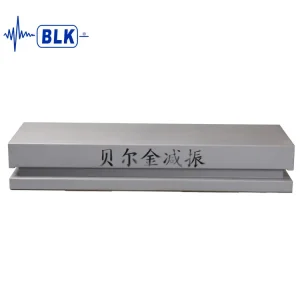

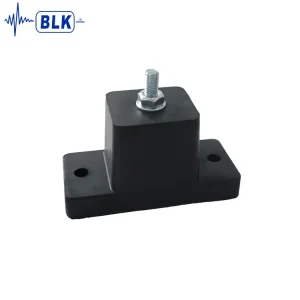



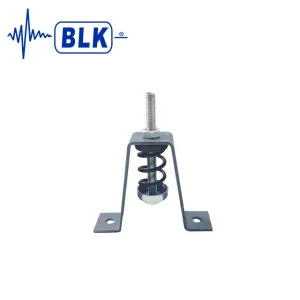

Executive Technical Overview: The Engineering Physics of Food Machinery Vibration Control
Understanding dynamic resonance, microbiological harbor risk, and mechanical wear mitigation in modern food processing plants.
Sanitary Risks in Unsealed Mount Infrastructure
In high-speed food production facilities—ranging from rotary dairy bottling lines to high-shear meat grinders—vibration mounts are often overlooked structural components. Conventional industrial mounts utilize exposed threads, non-sealed elastomeric joints, and carbon steel hardware. Under daily Clean-in-Place (CIP) and high-pressure hot water washdowns (up to 100 bar at 80°C), organic matter, water, and cleaning solutions collect in microscopic crevices.
This creates harborage points for pathogenic bacteria such as Listeria monocytogenes, Salmonella spp., and E. coli. Bellking's engineered hygienic food equipment vibration mounts incorporate continuous smooth-surface geometries, 316L stainless steel shrouds, and FDA-grade vulcanized seals to completely prevent microbiological contamination.
Dynamic Resonance & Machinery Fatigue Mitigation
Food processing machinery generates significant cyclic forces during operation. Unmitigated vibration transmitted to factory floors leads to structural concrete cracking, bolt loosening, sensor miscalibration, and premature bearing failure. The dynamic natural frequency ($f_n$) of an anti-vibration mount must be tailored precisely to the disturbing frequency ($f_d$) of the machine.
When the frequency ratio ($f_d / f_n$) exceeds $\sqrt{2} \approx 1.414$, vibration isolation begins. Achieving an isolation efficiency of >92% requires engineered rubber mounts or damped spring systems where $f_d / f_n \ge 3.0$. Selecting low-price, factory-direct mounts engineered with verified dynamic stiffness ensures long equipment life without sacrificing capital expenditure.
The mathematical efficacy of an anti-vibration isolator in food plants is governed by the dynamic transmissibility formula:
T = \sqrt{ \frac{1 + (2 \zeta r)^2}{(1 - r^2)^2 + (2 \zeta r)^2} }
Where $r = f_d / f_n$ represents the frequency ratio (disturbing frequency to natural frequency), and $\zeta$ is the damping loss factor of the elastomer compound. Bellking’s proprietary nitrile and silicone rubber formulations optimize $\zeta$ (0.05 to 0.18) to minimize amplification at startup resonance while maintaining high high-frequency attenuation.
Global Technological Trends Transforming Food Machinery Mounts
How evolving sanitary mandates, automated washdowns, and Industry 4.0 IoT smart factories are reshaping procurement standards.
1. EHEDG & 3-A Sanitary Guidelines Compliance
Global food OEMs in Europe and North America are mandating full compliance with EHEDG (European Hygienic Engineering & Design Group) Doc 8, Doc 13, and 3-A Sanitary Standard 88-00. Modern vibration mounts must feature self-draining surfaces (minimum $3^\circ$ slope), zero exposed threads above the seal ring, and blue non-marking rubber compounds certified under FDA 21 CFR 177.2600 for direct food contact safety.
2. Aggressive Chemical & Thermal Resistance
Modern automated food factories utilize aggressive chemical sanitation cycles involving caustic soda (NaOH), nitric acid ($HNO_3$), peracetic acid (PAA), and quaternary ammonium compounds at temperatures exceeding 85°C. Traditional natural rubber mounts disintegrate under these conditions. Sourcing high-performance EPDM, Fluoroelastomers (FKM/Viton), or custom NBR formulations ensures multi-year elastomer integrity without hardening or cracking.
3. Smart Mount Integration & Predictive Maintenance
Food Factory 4.0 implementations incorporate wireless IoT vibration and temperature sensors directly inside or adjacent to primary machine support points. By tracking real-time vibration spectral changes (FFT spectral shifts), engineering teams can detect early misalignment, unbalance, or rubber fatigue weeks before catastrophic failure occurs, shifting from reactive maintenance to zero-downtime predictive care.
Global Enterprise Procurement Strategy: Low-Price vs. TCO
Analyzing procurement economics, risk-adjusted component lifespan, and factory-direct OEM advantages.
When purchasing managers search for "Low Price Food Equipment Vibration Mount Manufacturers & Price", balancing initial unit acquisition cost against Total Cost of Ownership (TCO) is critical. Cheap, non-certified mounts sourced from third-party trading intermediaries frequently suffer from inferior vulcanization bonding, leading to elastomer delamination within 6 months of exposure to fatty oils and washdown chemicals.
The true cost of a failed mount in a food processing facility is not the $15-$45 cost of the part—it is the $10,000 per hour line stoppage, batch contamination risk, and potential product recall. Bellking eliminates intermediary markups by delivering direct-from-factory pricing from our ISO 9001:2015 manufacturing plant in Kunshan, combining high engineering standards with low direct costs.
Technical Elastomer Selection Matrix for Food Processing Equipment
| Elastomer Material | Shore A Hardness | Temp Range (°C) | CIP Chemical Resilience | FDA 21 CFR 177.2600 | Recommended Applications |
|---|---|---|---|---|---|
| Food-Grade NBR (Nitrile) | 40 - 70 Shore A | -25°C to +110°C | Good (Oils, Fats, Mild Acids) | Certified Compliant | Bakeries, Meat Grinders, Conveyors |
| Sanitary EPDM Rubber | 50 - 75 Shore A | -40°C to +145°C | Excellent (Steam, Acid/Caustic) | Certified Compliant | Dairy Pasteurization, Beverage Bottling |
| Hygienic Silicone (VMQ) | 30 - 70 Shore A | -60°C to +200°C | Moderate (High Heat, Low Oil) | Certified Compliant | Industrial Ovens, Ultra-Low Temp Freezers |
| Fluorocarbon (FKM / Viton) | 60 - 80 Shore A | -20°C to +230°C | Outstanding (Aggressive Solvents) | Specialty Formulations | Chemical Dosing Pumps, Deep Fryers |
China Factory 4.0: Bellking Kunshan Manufacturing Advantage
Combining state-of-the-art CNC automation, robotic vulcanization, and strict quality assurance to serve global OEMs.
Automated Precision Production
Situated in the heart of Kunshan’s advanced industrial manufacturing hub, Bellking’s 2,000 m² facility features multi-axis CNC turning centers, robotic laser welding, and automated vacuum vulcanization presses. This automated ecosystem guarantees sub-millimeter dimensional tolerances and consistent rubber-to-metal bonding strength (>12 MPa tensile shear resistance).
Dacromet & Electropolish Finishing
For steel components subjected to aggressive environment classes, Bellking applies advanced Dacromet surface coatings capable of passing 900+ hours of continuous neutral salt spray testing (ASTM B117). Stainless steel food mounts undergo electrochemical polishing to achieve a surface roughness ($R_a$) below 0.4 µm, fulfilling strict hygienic requirements.
Rapid OEM Tooling & Dispatch
Leveraging an integrated local raw material supply chain, Bellking transitions non-standard custom drawings into physical prototypes within as few as 3 working days. Standard catalog items are maintained in automated inventory, enabling 24-hour dispatch for emergency plant maintenance or tight OEM manufacturing schedules.
Localized Engineering Application Scenarios
Tailored vibration isolation configurations across specialized sectors of food and beverage manufacturing.
Beverage Bottling & High-Speed Rotary Fillers
Challenge: Rotary liquid fillers and capping machines operate at high rotational speeds with continuous fluid transfer. Uncontrolled dynamic oscillation causes liquid sloshing, filling volume inaccuracy, and mechanical fatigue on bottle grippers.
Bellking Solution: Installing high-damping matrix rubber mounts (BK-MT and BKH series) with integrated height adjustment locks provides high shear stiffness and limits lateral sway, preserving accurate volumetric filling within $\pm 0.5\%$.
Industrial Bakery Dough Kneaders & Mixers
Challenge: High-viscosity dough mixing creates heavy, low-frequency impulse shock loads ($3 - 10\text{ Hz}$) that transmit severe structural vibration through factory floors, loosening anchoring bolts and disturbing nearby automated packaging lines.
Bellking Solution: Heavy-duty spring vibration mounts fitted with viscous dampening (MA Type) or inertia base support platforms isolate low-frequency shock spikes, reducing floor transmissibility by over 94%.
Dairy Homogenizers & High-Pressure Pumps
Challenge: Reciprocating triplex plunger pumps in milk homogenizers generate continuous high-amplitude pressure pulsation and vibration at pressures up to 300 bar, leading to pipe weld fractures.
Bellking Solution: CPB Type inertia bases combined with BKDD double-deflection rubber isolators stabilize the pump center of gravity, relieving mechanical strain on high-pressure sanitary piping manifolds.
Meat Processing Washdown Conveyors & Slicers
Challenge: High-speed automated meat slicers require daily IP69K sanitation using chemical foams and high-pressure steam. Standard steel mounts rust and harbor grease in exposed adjustment threads.
Bellking Solution: Sealed BKVE series rubber mounts enclosed in 316L stainless steel housings with internal vulcanized O-rings ensure full washdown protection without chemical degradation.
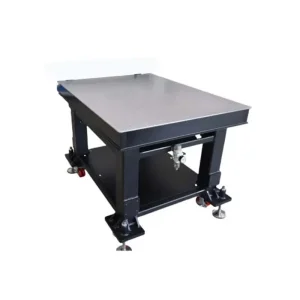
Precision Platforms & Heavy-Duty Damping Mounts
Explore the full range of low-frequency platforms, spring hangers, rubber buffers, and inertia base supports.







Frequently Asked Technical & Sourcing Questions
Expert engineering advice for plant managers, OEM design engineers, and procurement specialists.
What factors determine the price of low-cost food equipment vibration mounts?
How do I select between rubber mounts and spring isolators for food processing lines?
Are Bellking rubber compounds compliant with FDA 21 CFR 177.2600?
What IP rating or washdown standard do these hygienic mounts support?
Can custom bolt threads (NPT, Metric, UNC) and heights be manufactured?
How does temperature affect the performance of rubber vibration mounts?
What documentation is provided with OEM shipments?
What is the typical lead time for international bulk orders?
Optimize Your Food Machinery Isolation Efficiency Today
Contact Bellking’s application engineering team in Kunshan, China for full technical calculations, 3D CAD downloads, and factory-direct wholesale pricing within 24 hours.