
Direct Factory Industrial Vibration Isolators & Mounts
Explore our engineering-grade heavy-duty dynamic dampers, rubber mounts, and spring hangers manufactured directly at our ISO 9001:2015 facility.



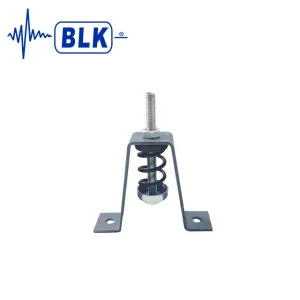




Executive Summary: Engineering Foundations of Heavy-Duty Vibration Dampers
A comprehensive analysis of dynamic force mitigation, structural impedance matching, and cost-effective OEM sourcing for modern industrial applications.
In modern industrial engineering, structural vibration represents one of the primary mechanisms responsible for mechanical fatigue, acoustic pollution, and operational downtime. Heavy-duty vibration dampers—ranging from high-deflection coil spring isolators to elastomeric buffers and pneumatic air mounts—act as essential dynamic decoupling components between reciprocating/rotating machinery and structural foundations. Selecting a qualified low price heavy-duty vibration damper factory requires evaluating technical performance parameters beyond mere initial unit cost, ensuring long-term thermal stability, high load capacity, and precise natural frequency targeting.
Mechanical Transmissibility
Targeting transmissibility ratios (T < 0.10) by ensuring the disturbance frequency (fd) exceeds the isolator natural frequency (fn) by at least a factor of 3 to achieve >90% isolation efficiency.
Damping Ratio (ζ) Optimization
Balancing viscous and elastomeric damping ratios to prevent destructive transient resonance during equipment startup and coast-down phases while maintaining minimal static deflection.
C5-M Heavy Corrosion Resistance
Deploying advanced hot-dip galvanizing, electro-galvanized Dacromet, and fluorocarbon coatings passing 900+ hours of continuous salt spray testing for marine and harsh chemical industrial exposures.
Global procurement teams and mechanical design engineers often search for "low price heavy-duty vibration damper factories" with a dual objective: mitigating mechanical vibration transmission into sub-structures while maintaining strict project capital expenditure (CAPEX) budgets. True cost-effectiveness in damper manufacturing is achieved through high-volume automated coil winding, precision rubber vulcanization moulding, and direct-from-factory engineering support that eliminates intermediary markups.
Heavy-Duty Vibration Control: Global Industry Trends & Innovations
Key architectural and mechanical trends driving the demand for next-generation heavy vibration damping systems from 2025 to 2035.
Modern industrial facilities are transitioning toward Industry 4.0 predictive maintenance. Heavy-duty vibration dampers are increasingly retrofitted or integrated with micro-electro-mechanical system (MEMS) accelerometers and wireless IoT telemetry nodes. These sensors monitor real-time deflection, dynamic fatigue cycles, and operational temperature shifts, alerting site managers before elastomeric degradation or coil spring failure occurs.
Environmental standards such as EU REACH, RoHS 3, and LEED v4.1 building acoustics criteria strictly restrict toxic off-gassing and heavy metal additives in synthetic rubbers. Factory innovation focuses on custom-compounded EPDM, Neoprene, and Fluorosilicone elastomers that deliver superior damping coefficients without polycyclic aromatic hydrocarbons (PAHs) or volatile organic compounds.
Standard vertical vibration dampers are no longer sufficient for critical infrastructure located in seismic zones or coastal hurricane belts. Leading factories manufacture hybrid spring mounts equipped with integrated snubber brackets and multi-directional seismic limit stops compliant with IBC (International Building Code) and ASCE 7 force criteria.
As semiconductor node sizes shrink below 2nm and optical metrology relies on sub-micron accuracy, ambient building floor vibrations disrupt manufacturing yields. Ultra-low frequency pneumatic isolation platforms and active piezoelectric-assisted dampers represent the fastest-growing technology sector within the industrial isolation market.
Macro Industry Solutions: Engineering Applications & Selection Criteria
Tailored vibration control methodologies designed for major global sectors, balancing load requirements, environmental constraints, and acoustic compliance.
| Industrial Sector | Dominant Disturbance Forces | Recommended Damper / Isolator Solution | Target Natural Frequency (fn) | Key Compliance & Standards |
|---|---|---|---|---|
| HVAC & Commercial MEP | Rotational unbalance, fluid pulsation from chillers, cooling towers & pumps | Open/Enclosed Spring Isolators with Viscous Damping Pads (MC, HV Types) | 3.0 Hz - 5.0 Hz | ASHRAE Guidelines, ISO 10816, LEED v4.1 Acoustics |
| Power Generation & Transformers | 100Hz/120Hz magnetostrictive hum, low-frequency engine frame harmonics | Heavy-Duty High-Damping Transformer Mounts & Inertia Base Spring Mounts | 4.0 Hz - 8.0 Hz | IEC 60076-10, IEEE C57.12.00, DIN 45635 |
| Semiconductor & Nanotech | Ambient foot traffic, microseismic motion, acoustic pressure waves | Precision Pneumatic Air Mounts (BK-PF Type) & Optical Isolation Tables | 1.7 Hz - 2.5 Hz | VC-A to VC-G Micro-vibration Curves, ISO Class 1 Cleanroom |
| Heavy Stamping & Pressing | High-energy impact shock, high peak force transient excitation | Custom Cylindrical Rubber Buffers (BKSW Type) & Heavy Friction Dampers | 8.0 Hz - 15.0 Hz | OSHA Machinery Safety, ISO 20233 Shock Testing |
| Marine & Offshore Energy | Engine roll/pitch motion, wave slapping, continuous multi-axis vibration | Captive Anti-Vibration Rubber Cone Mounts (BKCN Type) with Dacromet Finish | 6.0 Hz - 10.0 Hz | DNV-GL Marine Type Approval, Lloyds Register, C5-M Corrosion |
In applications such as end-suction water pumps and high-static air handling unit (AHU) installations, mounting equipment directly onto spring isolators can result in excessive rocking motion during start-up due to starting torque. A direct factory partner manufactures heavy-duty steel inertia base frames that are filled with high-density concrete on-site. The inertia base lowers the center of gravity, adds structural rigidity, and increases the overall mounted mass by 1.5 to 2.0 times equipment weight, dampening rotational transient motion and protecting rigid pipe flanges from shear stress.
Global Procurement Strategy: Auditing Low Price Vibration Damper Factories
How B2B buyers can achieve optimal cost efficiency without compromising on metallurgical quality, dynamic safety factors, or ISO compliance.
1. Metallurgical & Spring Steel Verification
Insist on certified high-tensile spring steel (ASTM A228 or EN 10270-3). Substandard factories cut prices by utilizing secondary carbon steel wire prone to premature sag, permanent plastic deformation, and micro-cracking under cyclic loads.
2. Vulcanization Bonding Integrity
In rubber-to-metal anti-vibration mounts (e.g., BKHQ and BKVE types), bond failure under shear force is a primary hazard. Ensure the manufacturing facility utilizes chemical primer bonding agents and automated vulcanization presses tested according to ASTM D429 bonding strength standards.
3. In-House Testing Capabilities
Direct factory partners should possess in-house dynamic fatigue test rigs, digital stiffness analyzers, drop-shock testers, and salt spray corrosion chambers. Request batch test reports (CoA) and third-party ISO 9001 quality documentation prior to placing volume production orders.
By establishing direct relationship protocols with a verified manufacturer, global engineering procurement organizations eliminate up to 30-40% in distributor markups while securing custom 1:1 engineering adjustments, OEM private labeling, and expedited 24-hour dispatch for standard catalog items.
Regulatory Compliance, Localization Support & Technical Workflows
Ensuring global engineering specifications translate into localized, fully certified field deployments.
Deploying vibration control equipment internationally demands strict alignment with regional engineering codes and environmental standards. Our direct manufacturing facility operates under an audited ISO 9001:2015 Quality Management System and ISO 14001 Environmental Management System. Products comply with global directives including:
- CE Mark & Machinery Directive 2006/42/EC: Ensuring safe structural integration in European industrial installations.
- RoHS 3 & REACH Compliance: Zero heavy metals or restricted phthalates in synthetic rubber compounds.
- Seismic Restraint Certification (IBC / OSHPD): Meeting structural resistance requirements for healthcare and critical infrastructure facilities.
- DIN 4109 & BS 8233 Sound Insulation Standards: Meeting strict decibel (dBA) noise transmission limits in commercial environments.
No two machinery installations possess identical weight distributions or excitation frequencies. Our dedicated engineering team works directly with EPC project engineers to deliver tailored vibration control solutions in as few as 3 to 5 working days:
- Step 1 - Data Mining & Spectrum Analysis: Assessment of equipment operating weight, Center of Gravity (CoG), RPM, and structural foundation resonance.
- Step 2 - CAD/FEA Modeling: Finite Element Analysis (FEA) to simulate static deflection, dynamic stiffness, and localized stress concentrations.
- Step 3 - Prototype & Testing: Rapid prototyping with full dynamic spring stiffness testing and rubber shear validation.
- Step 4 - Turnkey Production & On-Site Guidance: Serial factory manufacturing with detailed installation drawing packs and global engineering field support.
Technical FAQ: Vibration Damper Sizing & Factory Procurement
Comprehensive engineering answers to common procurement, calculation, and field installation questions.
How do I calculate the required natural frequency (fn) for a heavy-duty vibration damper?
fn (Hz) = 5 / √δ (cm) or fn (Hz) = 3.13 / √δ (inches)
To achieve high isolation efficiency (>90%), the forcing frequency of the machine (fd = RPM / 60) should be at least 3 times greater than fn. For example, a pump running at 1750 RPM has a disturbance frequency of ~29.1 Hz. A spring mount with 25mm (1 inch) static deflection yields fn ≈ 3.13 Hz, resulting in a ratio fd / fn ≈ 9.3, providing over 98% isolation efficiency.
What is the difference between open spring isolators, enclosed spring isolators, and rubber mounts?
Enclosed Spring Isolators: House the coil spring inside a heavy-duty cast iron or steel housing with integrated lateral limit snubbers, making them ideal for high wind load outdoor equipment like rooftop chillers and cooling towers.
Rubber Mounts: Provide higher natural frequencies (8Hz to 15Hz) and built-in acoustic damping for high-frequency vibration (motors, small compressors, transformers). They offer high shear stability and compact vertical profiles.
Why is factory-direct pricing for heavy-duty dampers significantly lower without quality trade-offs?
How does viscous damping impact vibration isolator performance during machine startup?
What surface treatment is recommended for vibration dampers installed in marine or chemical environments?
Can standard rubber mounts replace coil spring isolators for heavy chillers?
What information is needed by factory engineers to design custom OEM vibration dampers?
Complete Range: Heavy-Duty Industrial Vibration Mounts & Platforms
Explore our additional customized vibration isolator models, air platforms, and precision mounting solutions available with direct factory pricing.





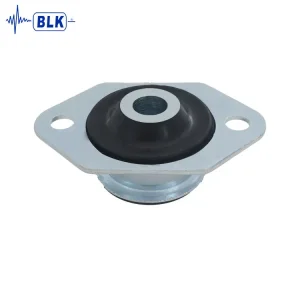
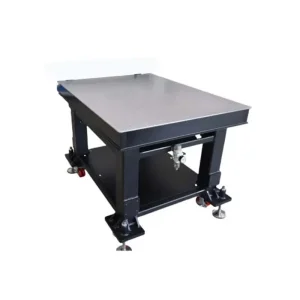
High-Quality BK-DT Type Low-Frequency High-Damping Optical Vibration Isolation Platform Factory, Manufacturer
View Technical Specs
Partner with a Direct Low Price Heavy-Duty Vibration Damper Factory
Request 1:1 engineering calculations, custom CAD drawings, and direct bulk factory quotes within 24 hours.
Whether you are designing a high-capacity HVAC system, retrofitting power generation equipment, or engineering sub-micron isolation for semiconductor fabrication, our direct factory team delivers certified vibration control products built to withstand severe dynamic loads and harsh operating environments.