
Featured High-Damping & Anti-Vibration Isolator Series
Factory-direct engineering components designed for precise vibration absorption, seismic attenuation, and structural energy dissipation.
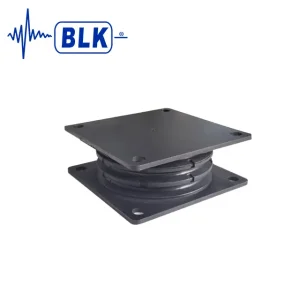
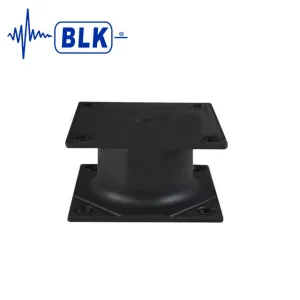
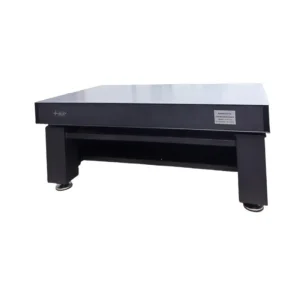
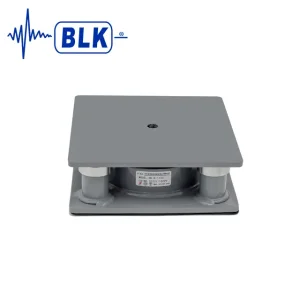
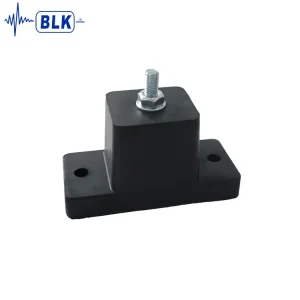


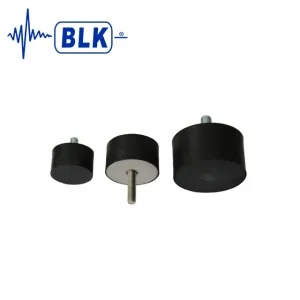
1. Executive Summary & Physics of High-Damping Rubber Dampers (HDRD)
In modern structural dynamics and mechanical engineering, mitigating unwanted kinetic energy caused by seismic shocks, wind-induced motion, and mechanical resonance is paramount. High-Damping Rubber Dampers (HDRD) represent an advanced evolution in passive energy dissipation technology. Unlike conventional natural rubber bearings that exhibit low equivalent damping ratios ($\xi \approx 2\% - 5\%$), high-damping rubber compounds are engineered with specialized fillers—such as carbon black, micro-silica, petroleum resins, and synthetic vulcanizing agents—that elevate the compound's intrinsic loss factor ($\eta$) to yield damping ratios between 10% and 20%.
Key Engineering Insight: Equivalent Energy Dissipation Formula
The total energy dissipated per cycle ($W_d$) in a High-Damping Rubber Damper during steady-state harmonic shear stress is mathematically expressed as: W_d = \pi \cdot K_h \cdot u_{max}^2 \cdot \eta Where K_h represents the horizontal effective stiffness, u_{max} is the maximum dynamic shear displacement, and \eta is the polymer loss factor. This non-linear viscoelastic behavior converts kinetic shock energy directly into thermal energy without requiring external power sources or mechanical hydraulic linkages.
Comparative Analysis: HDRD vs. LRB vs. Traditional Elastomeric Isolators
When structural engineers evaluate passive damping systems for bridges, industrial facilities, high-rise buildings, or heavy machinery platforms, choosing between High-Damping Rubber Dampers (HDRD), Lead-Core Rubber Bearings (LRB), and Low-Damping Natural Rubber Bearings (LNR) requires balancing mechanical performance, environmental fatigue, and total lifecycle costs.
| Performance Parameter | High-Damping Rubber Damper (HDRD) | Lead-Core Rubber Bearing (LRB) | Standard Natural Rubber Bearing (LNR) |
|---|---|---|---|
| Equivalent Damping Ratio ($\xi_{eq}$) | 10% – 20% (High intrinsically) | 15% – 30% (Concentrated in lead core) | 2% – 5% (Requires external dampers) |
| Energy Dissipation Mode | Distributed viscoelastic molecular friction | Plastic shear deformation of lead core | Minimal elastic strain recovery |
| Post-Yield Residual Deformation | Near zero (Excellent restoring force) | Moderate (Lead core re-crystallization required) | Zero (Purely elastic) |
| Environmental & Aging Resistance | High (Anti-ozonant compound protection) | Moderate (Potential lead oxidation & fatigue) | High (Standard polymer formulation) |
| Maintenance Complexity | Zero maintenance (Solid-state polymer) | Periodic inspection for core extrusion | Requires inspection of added dampers |
| Manufacturing Cost Efficiency | Highly Cost-Effective (Low Unit Price) | High (Complex lead insertion process) | Lowest upfront unit cost |
2. Global Commercial & Industrial Status of High-Damping Rubber Dampers
The global industrial market for high-damping rubber isolators and structural shock absorbers is experiencing unprecedented expansion driven by stringent international building codes, rapid expansion of high-tech manufacturing cleanrooms, and global infrastructure modernization initiatives. According to industry statistics, the worldwide seismic protection and industrial vibration control market is projected to reach over USD 6.5 Billion by 2030, with high-damping rubber solutions accounting for a dominant segment due to their solid-state reliability and lack of toxic fluid leaks.
Civil Infrastructure & Bridges
Governments in earthquake-prone belts (Pacific Rim, Southern Europe, Middle East) mandate high-damping rubber isolators for highway overpasses, cable-stayed bridges, and critical hospital structures to maintain operational continuity following Major Basis Earthquakes (MBE).
Semiconductor Fabs & Metrology
Micro-vibration isolators utilizing high-damping viscoelastic polymers prevent ambient building vibrations (VC-C to VC-E standards) from disturbing lithography steppers, electron microscopes, and high-precision CMM inspection rooms.
Power Grid & Heavy HVAC
High-capacity power transformers, massive centrifugal chillers, and rooftop cooling towers generate continuous structural hum. Custom rubber dampers block low-frequency acoustic transmission into commercial floor slabs.
3. Manufacturing Advantages & Efficiency of China HDRD Suppliers
Procurement directors and structural engineering firms globally are increasingly partnering directly with specialized Chinese vibration control manufacturers. China's industrial ecosystem offers unmatched advantages in compounding chemistry precision, large-scale vulcanization equipment, robust quality assurance frameworks, and significant cost savings.
Complete Industrial Supply Chain Integration
From internal compounding of refined natural rubber with specialized carbon black to automated laser cutting of internal steel constraint plates, Chinese production hubs maintain 100% in-house control over raw material quality and lead times.
Advanced High-Tonnage Vulcanization Presses
State-of-the-art multi-daylight hydraulic curing presses ranging up to 5,000 metric tons ensure uniform thermal polymerization across thick rubber layers, eliminating internal voiding and delamination risks.
Stringent International Quality Testing
Top-tier manufacturers operate CNAS and ISO 17025 accredited laboratories equipped with dynamic multi-axis shear testing machines, full-scale fatigue rigs ($10^6$ cycles), and environmental salt spray corrosion chambers.
Procurement Value Insight: Direct Factory Pricing vs. Tier-1 Middlemen
By sourcing high-damping rubber dampers directly from established Chinese manufacturing plants (such as Bellking's 2,000 m² facilities in Kunshan), global engineering contractors achieve 30% to 50% cost reductions compared to Western OEMs—without sacrificing compliance with ISO 9001, GB 20688, EN 15129, or AASHTO structural standards.
4. In-Depth Application Scenarios & Engineering Field Practice
High-damping rubber dampers are versatile engineering components deployed across diverse structural and industrial environments. Below are four key localized scenarios where HDRD technology provides essential isolation performance:
Scenario A: Highway Viaducts & Urban Elevated Bridges
Overpasses subject to continuous heavy truck traffic and sudden thermal expansion demand bearings that provide both structural vertical support and high horizontal energy dissipation. High-Damping Rubber Bearings installed at pier tops absorb high-frequency vehicular impact while protecting pier footings against seismic shear failure during earthquake events.
Scenario B: Electrical Power Transformers in Urban Substations
Substation transformers emit continuous magnetostrictive hum at 100Hz/120Hz harmonics. Mounting 50-ton transformers on tuned high-damping rubber pads reduces structure-borne acoustic vibration by up to 28 dB(A), protecting surrounding residential zones from environmental noise pollution.
Scenario C: Precision Cleanroom Optical Benches & Metrology Equipment
In semiconductor fabrication lines, floor vibrations generated by nearby HVAC pumps or foot traffic corrupt sub-micron measurements. Multi-layer rubber isolation platforms damp higher-frequency floor harmonics and provide a stable inertial base for coordinate measuring machines (CMMs) and laser interferometers.
Scenario D: Industrial Rooftop HVAC Chillers & Heavy Generator Sets
Massive centrifugal water chillers installed on commercial building roofs can create severe dynamic excitation. Integrating high-damping rubber mounts with viscous damping characteristics prevents building resonance, eliminating floor vibration without the need for complex hydraulic piping.
5. Global Procurement Guide: Technical Criteria for Buyer Evaluation
When requesting quotations or auditing factories for high-damping rubber dampers, procurement directors and engineering consultants must evaluate vendor capabilities against rigid technical benchmarks rather than relying solely on upfront unit price.
1. Shear Strain Amplitude ($100\% - 250\%$)
Verify that the manufacturer provides dynamic shear test curves proving stable hysteresis loops under strain amplitudes reaching up to 250% without bond failure or polymer tearing.
2. Temperature Dependency Coefficient
Polymer stiffness varies with ambient temperature. High-grade HDRD formulations maintain stable stiffness properties across operational ranges from $-20^\circ\text{C}$ to $+50^\circ\text{C}$.
3. Aging & Creep Resistance
Request accelerated thermal aging test reports ($70^\circ\text{C}$ for 168 hours) ensuring horizontal stiffness change stays within $\pm 10\%$ over a projected 50+ year design life.
6. Emerging Trends in High-Damping Polymer & Seismic Control Technology
The vibration isolation industry is undergoing rapid innovation focused on material science breakthroughs and digital health monitoring. Leading R&D facility trends include:
- Graphene & Nanofiller Reinforcement: Incorporating graphene nanoplatelets into synthetic rubber matrix structures to boost damping efficiency up to 22% while simultaneously increasing shear fatigue limit.
- Smart HDRD with Embedded IoT Fiber-Optic Sensors: Integrating micro-FBG (Fiber Bragg Grating) strain sensors inside rubber layers enables real-time structural health monitoring (SHM) during seismic events via cloud dashboards.
- Eco-Friendly Bio-Based Polymers: Utilizing sustainable bio-derived elastomer matrices to meet global green building zero-carbon supply chain mandates without sacrificing damping loss factors.
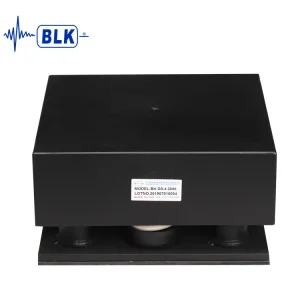
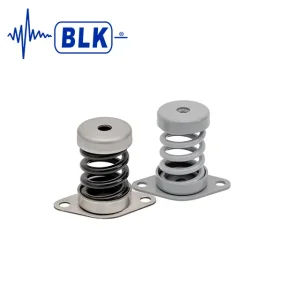
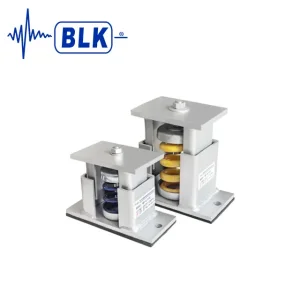
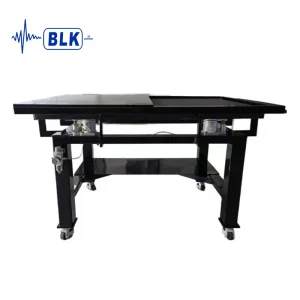
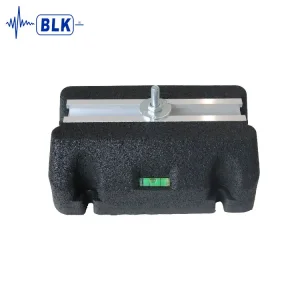
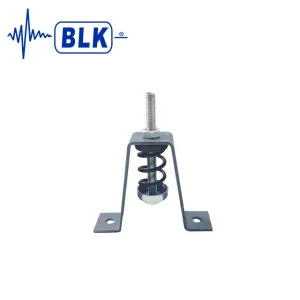
Complete Anti-Vibration Mounts & Rubber Isolator Solutions
Explore our full line of low-price, high-durability rubber isolators, spring mounts, and precision damping platforms.


7. Frequently Asked Questions (FAQ) - Engineering & Procurement
Technical insights and practical sourcing guidance from our senior application engineers.