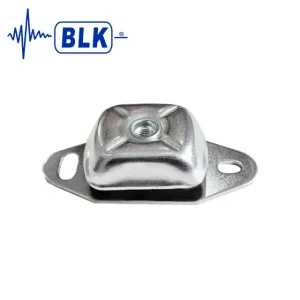
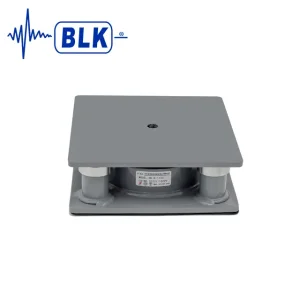
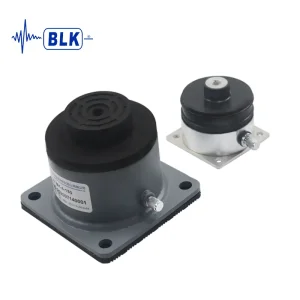
Precision Anti-Vibration Mounts & Springs (Catalog Part I)
Engineered for low-frequency structural isolation, high load-bearing efficiency, and strict resonance suppression across industrial installations.






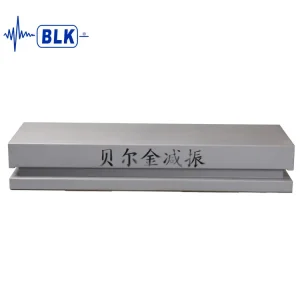
Global Procurement Needs & Industrial Isolation Demands
Analyzing the macro trends, high-frequency kinetic challenges, and strategic purchasing requirements driving modern manufacturing infrastructure.
Total Cost of Ownership (TCO)
Industrial buyers prioritize structural resilience. Cheap rubber pads often undergo rapid viscoelastic degradation, causing mechanical misalignment, severe bearing wear, and premature motor failure. Sourcing factory-direct elastomeric compounds optimized for zero-creep performance drastically cuts unplanned downtime.
HVAC & Building Acoustics Standards
Modern commercial buildings demand strict acoustic isolation adhering to ASHRAE guidelines and ISO 3744 acoustic measurement norms. Anti-vibration pads prevent structure-borne noise from heavy rooftop chillers, air-handling units (AHUs), and cooling towers from transmitting into occupied spaces.
Precision Heavy Machinery
High-tonnage stamping presses, CNC milling machines, and injection molding units generate massive kinetic impulse shocks. Custom polymer matrices absorb lateral shear forces and vertical shock loads, protecting factory floor foundations and maintaining tight machining tolerances.
Material Physics & Dynamic Transmissibility Equations
Understanding the mathematical fundamentals of dynamic structural isolation, damping ratios, and elastomeric load-deflection profiles.
To achieve maximum vibration isolation, the natural frequency of the isolation system (fn) must be significantly lower than the forcing/disturbing frequency (fd) generated by the operating machinery. Isolation begins only when the frequency ratio (fd / fn) exceeds √2 (≈ 1.414). For industrial applications requiring superior isolation efficiency (>90%), a frequency ratio of 3.0 or higher is required.
Engineering Insight: Resonance Avoidance & Damping Factor (ζ)
Operating near a frequency ratio of 1.0 triggers destructive mechanical resonance, expanding vibration amplitudes dramatically. High-performance machine anti-vibration pads integrate viscous polymer blends or internal air chambers that raise the critical damping ratio (ζ), suppressing resonance peaks during machine spin-up and coast-down phases.
Comprehensive Material Comparison Matrix for Machine Pads
| Elastomer / Material Type | Shore Hardness (A) | Damping Factor (&tan; δ) | Oil & Chemical Resistance | Temp Range (°C) | Primary Industrial Application |
|---|---|---|---|---|---|
| High-Grade Nitrile (NBR) | 45 – 70 | 0.15 – 0.25 | Excellent (Petroleum, Oils) | -25 to +100 | Industrial Lathes, CNC Machining Centers, Hydraulic Pumps |
| Neoprene (Chloroprene) | 50 – 75 | 0.10 – 0.20 | Moderate to High | -30 to +110 | HVAC Chillers, Air Compressors, Rooftop Fans |
| Cross-Linked Polyurethane | 30 – 90 | 0.25 – 0.45 | High (Grease, Solvents) | -20 to +80 | Heavy Stamping Presses, Mining Crushers, Metal Forging |
| Viscous-Damped Steel Springs | N/A (Steel Coil) | 0.05 – 0.30 (Combined) | High (Coated/Dacromet) | -40 to +120 | Ultra-Low Frequency Generators, Cooling Towers (<5 Hz) |
| Pneumatic Elastomeric Air Bladders | Dynamic Air Chamber | 0.15 – 0.40 (Adjustable) | Moderate | 0 to +60 | Semiconductor CMMs, Optical Tables, Precision Metrology |
Industrial Solutions Across Global Sector Deployments
Customized vibration isolation strategies designed specifically for demanding operating environments and critical infrastructure.
1. Semiconductor & Precision Metrology Solutions
In sub-micron semiconductor fabrication cleanrooms, ambient floor vibrations exceeding VC-A to VC-E micro-vibration curves degrade photolithography precision and CMM repeatability. Implementing multi-layer pneumatic and matrix elastomeric pads isolates high-frequency building rumble, achieving nanometer-level positional stability.
2. Heavy Industrial Stamping & Dynamic Impact Mitigation
Forging hammers and high-speed mechanical punch presses generate high-magnitude impact impulses that transmit destructive floor shock waves to neighboring precision tools. High-capacity polyurethane and matrix rubber pads provide high strain-energy capacity, absorbing kinetic transients efficiently without permanent deformation.
3. Power Transformers & Electrical Grid Infrastructure
Substation power transformers emit continuous magnetostrictive hum at 100 Hz / 120 Hz core harmonics. Specially formulated transformer anti-vibration mounts prevent structural hum transmission into civil foundations and adjacent residential areas, supporting compliance with strict environmental noise directives.
4. HVAC Systems, Chillers & Commercial Building Retrofits
Commercial HVAC networks utilize variable-speed chillers, pumps, and fans operating across fluctuating RPMs. Matrix damped spring mounts and anti-vibration pads accommodate dynamic operational weight shifts, prevent fatigue cracking in rigid fluid piping, and virtually eliminate structure-borne noise.
Future Outlook: Next-Generation Smart Damping Systems
Transitioning from passive elastomeric compounds to IoT-connected, active-ready micro-vibration management.
Embedded Micro-Sensor Networks
Future industrial pads integrate MEMS accelerometers directly into the elastomer core. Real-time tri-axial vibration spectrum analytics detect early bearing failure, misalignment, and amplitude spikes before catastrophic equipment downtime occurs.
Magnetorheological (MR) Adaptive Polymers
Next-gen elastomeric matrix designs incorporate magnetorheological fluids, altering pad shear stiffness instantaneously via electromagnetic feedback loops to counteract varying operational machine speeds dynamically.
Eco-Friendly Elastomeric Compounds
Aligning with global ESG mandates, advanced polymer R&D replaces petroleum-heavy synthetic rubbers with bio-based elastomer monomers and fully recyclable cross-linked thermoplastic elastomers (TPE) boasting zero volatile organic compound (VOC) emissions.
Global Compliance, Standardizations & Quality Assurance
Stringent manufacturing controls, international testing certifications, and custom engineering support.
ISO 9001:2015 Manufacturing Quality
Every anti-vibration pad batch undergoes rigorous testing including static compression set tests (ASTM D395), tensile strength evaluations (ASTM D412), and dynamic stiffness characterization under simulated load limits.
Environmental & Safety Compliance
All elastomeric formulas comply fully with EU RoHS (Restriction of Hazardous Substances) and REACH directives, ensuring freedom from heavy metals, polycyclic aromatic hydrocarbons (PAHs), and toxic softeners.
Dacromet & Anti-Corrosion Surface Protection
Metal plates, spring casings, and threaded inserts integrated with anti-vibration pads feature heavy-duty Dacromet surface coatings, withstanding 900+ hours of continuous salt spray testing for harsh marine and outdoor environments.
Engineering FAQ: Machine Anti-Vibration Pads Selection
Expert insights answering critical engineering, procurement, and installation questions.
How do I calculate the total pad area required for a heavy machine installation?
What is the functional difference between elastomeric rubber pads and steel spring isolators?
Can anti-vibration pads be installed without floor anchoring bolts?
How does chemical and oil exposure affect long-term pad durability?
What leads to long-term "creep" in rubber anti-vibration pads?
What thermal bounds can industrial machine anti-vibration pads tolerate?
Specialized Isolation Mounts & Buffers (Catalog Part II)
Explore specialized anti-vibration solutions designed for structural suspensions, air damping, and heavy industrial machinery buffering.