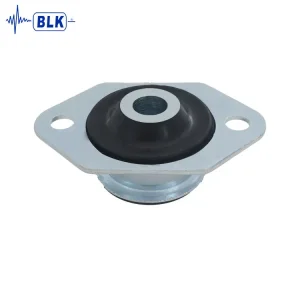
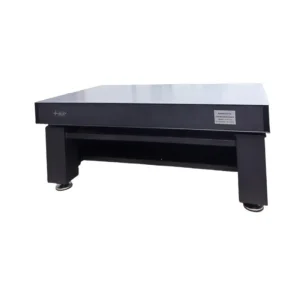
Featured Maintenance-Free Damping Products
Explore our core catalog of precision-engineered spring, rubber, and pneumatic vibration isolators manufactured directly at our factory.
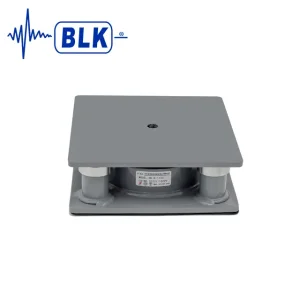



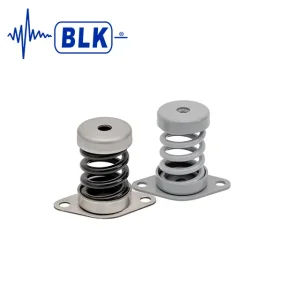
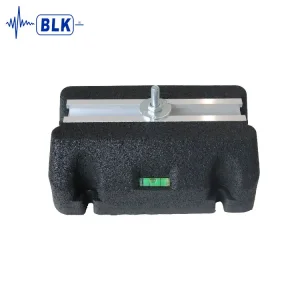


Global Enterprise Procurement Trends & Demand Analysis
Shift towards zero-maintenance damping technology across tier-1 industrial supply chains
In modern industrial engineering, operational efficiency is tied inextricably to structural health and acoustic mitigation. Global procurement managers across HVAC, power transmission, semiconductor manufacturing, and precision mechanics face a growing mandate: reducing Total Cost of Ownership (TCO) while upholding rigorous continuous-uptime metrics. Traditional elastomeric and basic viscous dampers—plagued by fluid leakage, thermal degradation, and periodic elastomeric hardening—are rapidly being phased out in favor of Low Price Maintenance-Free Vibration Dampers engineered with advanced alloy springs, non-degrading viscous elements, and corrosion-resistant surface coatings.
Market research indicates that unscheduled downtime triggered by mechanical fatigue and unmitigated harmonic vibration accounts for millions of dollars in annual industrial losses worldwide. By sourcing maintenance-free dampers directly from OEM factories, procurement teams achieve immediate capital expenditure (CapEx) savings without sacrificing technical durability. The integration of zero-maintenance vibration isolation units eliminates scheduled lubrication cycles, seal replacements, and visual degradation inspections, converting recurring operational expense (OpEx) into long-term gross margin preservation.
Deep Mechanical Engineering Principles & Information Gain
Mathematical modeling of frequency ratios, dynamic stiffness, and resonance suppression
Transmissibility & Frequency Ratio Dynamics
Vibration isolation efficiency is governed by the mathematical relationship between disturbing frequency ($f_d$, generated by equipment operating speed in RPM) and the natural frequency ($f_n$) of the vibration damper. The transmissibility ratio ($T$) defines the fraction of force transmitted through the damper to the supporting structure:
T = | 1 / (1 - (f_d / f_n)^2) |
Isolation occurs exclusively when the frequency ratio ($f_d / f_n$) exceeds $\sqrt{2}$ ($\approx 1.414$). Below this threshold, isolation is mathematically impossible, and force amplification (resonance) occurs. Bellking’s engineering process targets an optimal operating ratio of $f_d / f_n \ge 3.0$, yielding over 90% to 99% energy attenuation across industrial dynamic ranges.
| Frequency Ratio ($f_d / f_n$) | Isolation Efficiency (%) | Transmissibility ($T$) | Engineering State |
|---|---|---|---|
| < 1.00 | 0% (Amplification) | > 1.00 | Resonance Zone (Structural Stress) |
| 1.414 ($\sqrt{2}$) | 0% (Crossover) | 1.00 | Zero Isolation Threshold |
| 2.00 | 66.7% | 0.333 | Basic Commercial Isolation |
| 3.00 | 87.5% | 0.125 | Standard Industrial Isolation |
| 4.50+ | 95.0% - 99.0% | 0.010 - 0.050 | Precision Maintenance-Free Target Zone |
Why "Maintenance-Free" is an Architectural Breakthrough
Standard dampers rely heavily on dynamic liquid seals and rubber bladders that suffer from ozone degradation, micro-fissuring, and mechanical fatigue under continuous cyclical load. Bellking's maintenance-free damper architecture replaces leak-prone seals with solid-state viscous damping cores, high-grade alloy steel springs treated with Dacromet surface passivation (withstanding 900+ hours of salt spray testing), and eco-compliant polymer isolation interfaces.
Macro-Industry Enterprise Applications & Case Engineering
Tailored damping solutions implemented across core global industrial sectors
Challenge: Low-frequency structural hum transmitting through concrete floor slabs, causing acoustic discomfort and structural stress.
Solution: Application of BK-R and ME spring isolators with natural frequencies tuned to 3–5 Hz, cutting structure-borne vibration by >95%.
Challenge: Magnetostriction-induced core hum occurring at 100 Hz / 120 Hz, propagating into neighboring residential or office zones.
Solution: Specialized transformer anti-vibration mounts engineered for heavy static payloads with minimal creep over 15+ years.
Challenge: Ambient micro-vibrations disrupting sub-micron alignment and lithography precision.
Solution: Pneumatic air mount isolation platforms featuring dynamic auto-leveling and natural frequencies down to 1.7 Hz.
Technical Roadmap & Future Outlook (2025–2035)
Innovations in active-passive hybrid damping, smart sensor telemetry, and sustainable material synthesis
Global Commercial Compliance & Quality Assurance Framework
Ensuring seamless integration with international engineering standards and local building codes
Global procurement requires strict compliance with international manufacturing, environmental, and seismic safety standards. Bellking Vibration Reduction Equipment Manufacturing (Kunshan) Co., Ltd. operates under an integrated quality management framework certified to ISO 9001 standards. Every production lot undergoes rigorous tension-compression testing, spectral frequency analysis, and dynamic overload validation prior to export dispatch.
To support multinational engineering contractors and local municipal requirements, our maintenance-free dampers are engineered to comply with:
Engineering Sizing & Technical Selection Matrix
Step-by-step guidance for calculating load requirements and damper selection
To select the correct maintenance-free damper for your application, collect the following primary physical parameters:
- Total Operating Weight ($W$): Equipment weight including internal fluids, piping, and frame.
- Support Point Distribution ($N$): Total number of mounting locations (typically 4, 6, or 8 points).
- Equipment Operating Speed (RPM): Determines disturbing frequency $f_d = \text{RPM} / 60$.
- Center of Gravity (CG): Ensures asymmetrical load compensation if weight distribution is uneven.
| Damper Series | Isolation Type | Load Range per Mount | Deflection Range | Primary Industrial Match |
|---|---|---|---|---|
| BK-R Series | Pneumatic Air Mount | 50 kg - 2,000 kg | Constant Leveling | Semiconductor Probers, CMM, Optics Benches |
| MA / MB Series | Enclosed Spring Mount | 100 kg - 5,000 kg | 25 mm - 50 mm | Heavy Chillers, Cooling Towers, Large Generators |
| ME Series | Open Spring Mount | 30 kg - 1,200 kg | 25 mm | HVAC Fans, Air Handling Units, Compact Pumps |
| HR Series | Rubber Isolator Hanger | 15 kg - 500 kg | 6 mm - 12 mm | Suspended Piping, Ceiling Exhaust Fans, Ductwork |
| BKDJ Series | Polymer Damping Pad | Up to 50 kg/cm² | 3 mm - 8 mm | Punch Presses, Industrial Machinery Bases |
Procurement & Engineering Q&A
Direct answers from our senior vibration isolation application engineers
Additional Industrial Vibration Isolation Products
Explore our complete manufacturing portfolio for specialized mounting, heavy industry, and micro-vibration applications.