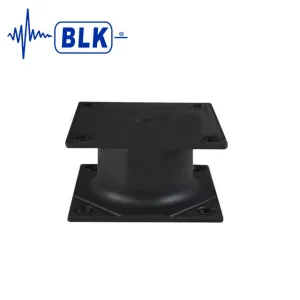
Featured Printing Press Vibration Control Systems (Part I)
Explore high-performance rubber mounts, leveling feet, and air isolation platforms engineered directly by specialized Chinese manufacturing facilities.

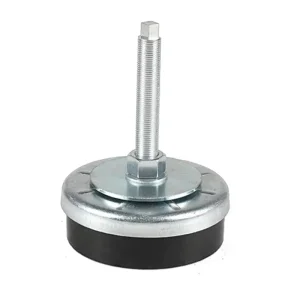





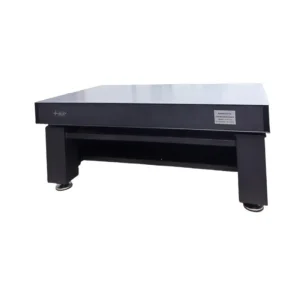
Global Commercial Printing Dynamics & Vibration Challenges
Analyzing the critical mechanical impact of harmonic excitation and transient shocks on modern offset, flexo, and digital press production lines.
In high-speed commercial printing, packaging manufacturing, and industrial publishing, mechanical stability directly governs print quality, equipment operational lifespan, and facility structural integrity. Modern multi-color sheet-fed offset presses, rotary web flexographic lines, high-speed rotogravure units, and digital inkjet web presses operate at extraordinary throughput velocities. Cylinder speeds frequently exceed 18,000 to 22,000 impressions per hour (IPH), generating complex rotational harmonics, dynamic unbalanced forces, and intense transient shocks during plate cylinder gap passages and blanket cylinder compressions.
Unmitigated kinetic energy generated by printing machinery transfers rapidly into factory floor slabs, building framing, and adjacent sensitive electronics. Without specialized, scientifically engineered dampening mounts, these vibrations induce severe operational anomalies:
Dot Gain & Ghosting
Harmonic micro-vibrations destabilize fluid ink film transfer between the plate cylinder and blanket, resulting in color shift, streaking, dot slur, and halo distortion.
Gear & Bearing Fatigue
Unisolated transient impacts accelerate backlash wear on helical power transmission gears, leading to premature spindle bearing failure and catastrophic press downtime.
Registration Misalignment
Lateral structural oscillations disrupt precise web tension control and multi-station unit alignment, making sub-tenth-millimeter color registration impossible.
Facility Degradation
Continuous resonance transmission causes micro-fracturing in concrete floor slabs, compromises architectural structural joints, and transmits intrusive airborne/structure-borne noise.
The Economic Reality: For commercial print operations, unmitigated press vibration represents a hidden tax. Industry audits indicate that press vibration causes up to 14% of unscheduled paper web breaks, 8% elevated ink/paper substrate waste during setup, and reduces total equipment effective life by 25-30%. Investing in precision-engineered vibration dampers directly yields a rapid return on investment (ROI) through enhanced yield, higher operating speeds, and extended machinery longevity.
Mechanical Engineering & Vibration Isolation Dynamics
Understanding transmissibility curves, dynamic stiffness matrices, and damping loss factors ($\tan \delta$) in high-impulse industrial environments.
Fundamental Physics of Printing Press Vibration Isolation
Vibration isolation relies on creating a mass-spring-damper mechanical system whose natural frequency ($f_n$) is significantly lower than the principal disturbing/excitation frequency ($f_d$) generated by the press. The disturbing frequency is calculated based on press operational speed:
The efficiency of a printing press vibration damper is governed by Transmissibility ($T$), defined as the ratio of force transmitted to the foundation versus the force generated by the machine:
Where $\zeta$ represents the structural damping ratio. To achieve positive vibration isolation (transmissibility $T < 1$), the frequency ratio $f_d / f_n$ MUST exceed $\sqrt{2} \approx 1.414$. However, for precision printing presses subject to heavy transient impact loads (plate gaps), optimal engineering practice dictates an operational frequency ratio:
Elastomeric Elastomer Compounds vs. Steel Spring Systems
Industrial printing presses require specialized isolation media due to their dual operational demands: high static load bearing and high dynamic shock damping.
| Performance Metric | Rubber / Elastomeric Mounts (e.g., BKVV, BKDE) | Steel Spring Dampers (e.g., MA Type) | Hybrid Matrix Air Mounts (e.g., BK-A, BK-DT) |
|---|---|---|---|
| Natural Frequency Range ($f_n$) | 6 Hz – 15 Hz | 3 Hz – 5 Hz | 1.5 Hz – 3.0 Hz |
| High-Frequency Acoustic Damping | Exceptional (Absorbs structure-borne noise) | Moderate (Requires elastomeric acoustic pads) | Superior (Complete attenuation across spectrum) |
| Transient Shock Absorption | High internal hysteresis loss ($\tan \delta = 0.15 - 0.35$) | Low (Prone to surge oscillations without viscous fluid) | Customizable via orifice restrictors |
| Oil & Solvent Resistance | High (Nitrile/Neoprene engineered formulations) | High (Requires anti-corrosion Dacromet coating) | High (Reinforced elastomer bladders) |
| Primary Application Area | Sheet-fed offset, flexo units, stackers, pumps | Heavy chillers, inertia bases, massive rotary presses | Ultra-precision digital inkjet heads, metrology platforms |
Localized Application Scenarios in Modern Print Plants
Tailored vibration control solutions designed for specific machinery configurations, plant layouts, and floor load boundaries.
1. High-Speed Web Offset Packaging Press Lines
Continuous rotary offset presses suffer from intense high-frequency excitation. Installing BKDE & BKVV type heavy-duty rubber mounts beneath the side-frame footing isolates horizontal shear forces, eliminating structural frame flexing and ensuring dot-for-dot register accuracy across 10+ printing units.
2. Flexographic Corrugated Board Machinery
Flexo folder-gluers and die-cutters generate massive, low-frequency cyclic impacts during heavy cardboard feeding and rotary die striking. MA Type Anti-vibration Spring Mounts integrated with CPB Type Inertia Bases stabilize the heavy machine foundation, preventing impact forces from cracking elevated mezzanine floors.
3. High-Precision Rotogravure Printing Units
Gravure cylinders require absolute axial stability to maintain micro-meter ink cell blade wiping. Utilizing BKAL Type Precision Adjustment Rubber Feet allows precision leveling down to 0.05mm while isolating high-speed cylinder rotation from factory floor micro-seismic disturbances.
4. Industrial High-Speed Digital Inkjet Webs
Digital printheads firing millions of picoliter drops per second are exceptionally vulnerable to ambient factory floor movement. BK-DT & BK-RT Low-Frequency Damped Isolation Platforms isolate jetting bridges from nearby die-cutters and fork-truck traffic, preventing nozzle misalignment and band artifacts.
5. Ancillary HVAC & Exhaust Ducting Systems
Overhead UV curing exhaust lines, solvent recovery blowers, and vacuum pumps create structure-borne hum throughout administrative areas. Installing HR Type Rubber Hangers decouples suspended piping, maintaining acoustic compliance with factory welfare regulations.
6. Post-Press Folders, Stitchers & Trimmers
High-impact saddle stitchers and three-knife trimmers send localized shock pulses through shared concrete slabs. BKSW Type Rubber Buffers and BKSWA Multi-Layer Dampers absorb high peak accelerations, safeguarding neighboring digital imaging gear.
China Factory Manufacturing Ecosystem & Efficiency Advantages
Why sourcing directly from specialized Chinese vibration control manufacturing hubs delivers world-class quality at disruptive price points.
Sourcing "Low Price Printing Press Vibration Dampers" directly from established OEM/ODM factory clusters in China—such as the advanced manufacturing zone in Kunshan, Jiangsu—provides international buyers and machinery OEMs with unparalleled strategic and economic advantages. Modern Chinese factories have evolved far beyond basic component assembly into fully integrated engineering centers capable of custom polymer formulation, dynamic finite element analysis (FEA), and high-precision automated manufacturing.
Key Pillars of China Manufacturing Excellence:
- Vertical Integration of Raw Materials: Direct access to domestic high-grade synthetic elastomers (NR, EPDM, NBR, Fluoroelastomer) and high-tensile spring steel (60Si2Mn, 55CrSi) minimizes raw material markups and insulates production from global supply bottlenecks.
- Automated Vulcanization & CNC Machining: Modern Chinese factories utilize multi-station vacuum vulcanizing presses, robotic welding arms, and automated CNC lathe equipment to maintain dimensional tolerances within $\pm 0.02\text{mm}$.
- Comprehensive Dynamic Testing Facilities: In-house laboratories equipped with electronic universal tension-compression testers, dynamic stiffness analyzer rigs, high-frequency shock test beds, and salt-spray corrosion chambers guarantee full compliance with ISO 9001 and international OEM specs.
- Direct Factory-to-Buyer Price Structure: By eliminating multi-tier international distributors, buyers secure direct factory pricing, allowing full press room vibration retrofits at a fraction of standard capital expenditure budgets.
Technology Roadmap & Next-Generation Dampening Innovations
Exploring the convergence of material science, IoT smart monitoring, and active anti-vibration systems in Industry 4.0 print manufacturing.
As printing press operating speeds continue to surge to meet short-run, high-turnaround packaging demands, traditional passive vibration dampers are evolving into intelligent, highly adaptive damping systems. Research and development teams across top Chinese manufacturing facilities are actively pioneering three transformative technological waves:
Phase 1: Metamaterial Polymer Formulations
Engineering cross-linked nano-composite elastomers with ultra-high loss factors ($\tan \delta > 0.45$) that maintain linear dynamic stiffness across extreme temperature ranges ($ -20^\circ\text{C}$ to $+80^\circ\text{C}$) and resist harsh press room UV washes and fountain solutions.
Phase 2: IoT Smart Vibration Sensors
Integrating tri-axial MEMS accelerometers directly inside rubber and spring mounts. These sensors broadcast continuous real-time FFT spectrum data to plant floor management systems, alerting engineers to cylinder bearing wear or misalignment before print defects occur.
Phase 3: Hybrid Active-Passive Pneumatics
Combining low-frequency air bladders with high-speed voice-coil or magnetorheological (MR) actuators that generate out-of-phase anti-forces in milliseconds, effectively canceling peak shock impacts during blanket gap transitions.
Phase 4: Eco-Compliant Sustainable Rubber
Developing 100% recyclable thermoplastic elastomers (TPE) and bio-based rubber polymers aligned with global zero-carbon industrial initiatives, eliminating VOC off-gassing in modern cleanroom print environments.
Localization Support & Regulatory Compliance
Ensuring full compliance with international building safety codes, environmental standards, and global engineering specifications.
Deploying industrial machinery across North America, Europe, Asia-Pacific, and South America requires strict adherence to regional structural, environmental, and workplace safety standards. Direct factory support from Chinese suppliers includes comprehensive engineering assistance to meet localized requirements:
Structural & Vibration Standards
Factory dampers are evaluated to comply with DIN 4150-3 (Structural Vibration in Buildings), ISO 10816 (Mechanical Vibration Evaluation), and BS 7385, protecting plant foundations against long-term fatigue degradation.
Environmental & Chemical Safety
All elastomeric formulations strictly comply with EU RoHS 3 (Directive 2015/863) and REACH (EC 1907/2006) standards, ensuring zero SVHC substances, lead, or toxic plasticizers that could compromise indoor air quality.
Occupational Health & Noise Directives
By dampening structure-borne sound, our press mounts assist print operators in complying with OSHA 1910.95 and EU Directive 2003/10/EC daily noise exposure action levels, creating a safer, quiet print shop environment.
Global Engineering Consultation Support: Chinese manufacturing teams offer direct CAD/BIM drawing support, center-of-gravity (CoG) load distribution calculations, and custom mount color-coding within 24 hours of receiving machine specifications. On-site technical installation guidance and international door-to-door logistics ensure seamless deployment.
Frequently Asked Questions (Engineering Guide)
In-depth solutions to common procurement, calculation, and installation questions encountered by press operators and plant managers.
Featured Printing Press Vibration Control Systems (Part II)
Complete your facility vibration isolation setup with advanced multi-layer dampers, air mounts, spring isolators, and heavy-duty inertia bases.