
Industrial & Transit Anti-Vibration Isolator Portfolio
Factory-direct elastomeric compounds, inertia assemblies, and pre-stressed damping spring mounts precision-engineered for heavy mechanical excitation, rolling stock auxiliaries, and railway infrastructure stability.
-
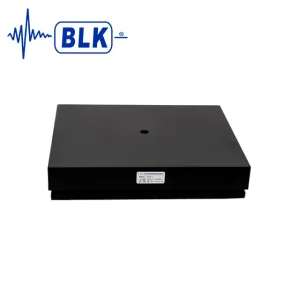
Custom BK-DSR Type Damped Rubber Mounts Factories, Manufacturer
Explore Specifications -

High-Quality CPB type Inertia Bases & Pump Supports Manufacturers, Manufacturer
Explore Specifications -
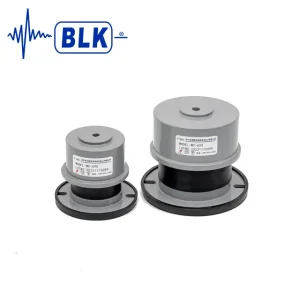
High-Quality MC Type Anti-vibration Spring Mounts Manufacturer, Price
Explore Specifications -
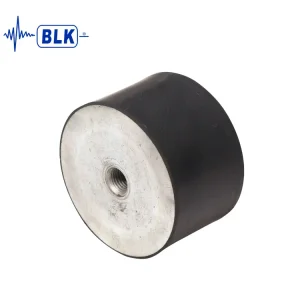
High-Quality BKDD Type Rubber Mounts Factories, Manufacturers
Explore Specifications -
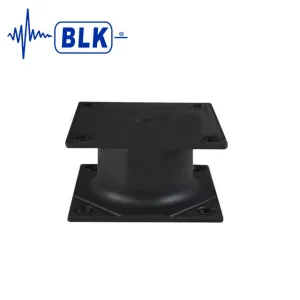
Custom BKSW Type Rubber Buffer Factory, Manufacturers
Explore Specifications -

High-Quality BKH Type Rubber Mounts Factory, Price
Explore Specifications -

High-Quality MB Type Anti-vibration Spring Mounts Factory, Manufacturer
Explore Specifications -

Custom BKSWA Type Multi-Layer Antivibration Dampers Factory, Price
Explore Specifications
Global Railway Vibration Isolation Landscape: The Physics of High-Axle & High-Speed Transit
Modern urban expansion and high-speed rail network densification have made structural acoustic mitigation a mandatory civil engineering criterion. As metros traverse sensitive dense urban cores—passing beneath hospitals, concert halls, historical monuments, and commercial hubs—wheel-rail interaction generates dynamic forces that transmit through the ballast, slab, tunnel lining, and surrounding geology as low-frequency ground-borne vibration.
Ground-Borne Noise (25 Hz – 125 Hz)
Wheel corrugation, rail roughness, and track stiffness discontinuities trigger secondary acoustic resonance within adjacent buildings. Unisolated transit tracks induce rumble noise up to 55 dBA indoors, failing EPA and ISO 14837 standards without resilient track bed mounts.
Dynamic Axle Fatigue & Ballast Degradation
Heavy-haul freight routes (25–35 ton axle loads) pulverize ballast under repetitive impact pulses, causing differential track settlement. Strategic integration of under-sleeper pads (USP) and under-ballast mats (UBM) distributes localized stress peaks by over 45%.
High-Speed Rail Viaduct Dynamic Flutter
At speeds exceeding 250–350 km/h, excitation frequencies align dangerously with bridge natural frequencies. Tuned mass dampers and floating slab track isolators decouple the superstructure, preserving track geometry tolerances within sub-millimeter thresholds.
Why Chinese Manufacturing Efficiency Delivers Unmatched Cost Performance
How Bellking leverages the world-class Yangtze River Delta supply chain cluster in Kunshan to deliver railway-grade vibration mounts at 30% to 50% lower procurement costs than European or North American competitors, without compromising on engineering rigor.
Complete Supply Chain Proximity
Our Kunshan manufacturing hub sits at the nexus of China’s premium raw elastomer, 60Si2Mn / 55SiCr alloy spring steel, and hot-dip Dacromet processing clusters. Raw materials arrive within 4 hours, eliminating inventory holding overhead and multi-tier logistics markups.
High-Capacity Automation
Equipped with multi-cavity vacuum rubber vulcanization presses, automatic electrostatic fluid-bed coating systems, and precision robotic welding centers. A streamlined annual capacity of 100,000 pieces slashes labor hours per unit while holding dimensional tolerances within ±0.2 mm.
In-House Tooling & 3-Day Turnaround
Where overseas brands quote 8–12 weeks for non-standard tooling, our dedicated mold-making division engineers bespoke injection molds and progressive stamping dies in as little as 3 working days, delivering rapid prototypes for urgent railway track maintenance windows.
Direct Factory-to-Site Economics
We bypass middlemen, export agencies, and western brand rebranding margins. EPC contractors and rail authorities work directly with our engineering team, achieving transparent FOB/CIF pricing that reflects true structural manufacturing economics.
Engineering Taxonomy: Railway Vibration Mount Architectures
Railway isolation mounts are divided into distinct structural groups depending on their placement in the track superstructure, tunnel invert, or rolling stock mechanical bogies.
| Mount System Category | Core Engineering Mechanism | Dynamic Natural Freq. | Target Insertion Loss | Standard Primary Application | Bellking Corresponding Series |
|---|---|---|---|---|---|
| Floating Slab Track (FST) Coil Mounts | Pre-stressed helical steel springs in shear casing with viscous fluid damping | 3.0 – 6.5 Hz | 18 – 28 dBV (above 30 Hz) | Subway tunnels passing sensitive acoustics (hospitals, studios) | MC / MB Series Heavy Duty Springs |
| Under-Sleeper Pads (USP) | Microcellular polyurethane or vulcanized compounded synthetic elastomer | 15 – 30 Hz | 8 – 15 dBV (high frequencies) | Ballasted high-speed track, transition zones, turnouts | BK-PM Polymer Damping Series |
| Direct-Fixation Track Fasteners | Elastomer vulcanized directly to steel top and bottom anchor base plates | 12 – 22 Hz | 10 – 16 dBV (structure sound) | Concrete viaducts, standard metro slab tracks, monorails | BK-DSR / BKDD Bonded Rubber Units |
| Under-Ballast Mats (UBM) | High-density recycled crumb rubber or cross-linked closed-cell elastomer mats | 14 – 25 Hz | 12 – 20 dBV (ground vibration) | Bridge deck protection, open tunnel ballast beds, over-line bridges | BKSWA Multi-Layer Damping Mats |
| Rolling Stock Auxiliary Mounts | Conical / cylindrical bonded rubber-metal shear/compression buffers | 6.0 – 12.0 Hz | 15 – 25 dBV (chassis rumble) | Traction motors, onboard HVAC compressors, brake compressors | BKH / BKSW / BKVV Rubber Buffers |
Localized Application Scenarios: Civil Transit & Rolling Stock
Tailored damping strategies engineered to resolve precise mechanical vibration excitation profiles across differing transit topographies.
Scenario A: Urban Subway Metro Lines Under Critical Heritage Zones
Challenge: Tunnels excavated within 15 meters of historical brick structures and national performing arts complexes face strict structural vibration limits ($v_{peak} \le 0.3\text{ mm/s}$).
Engineering Solution: Installation of pre-stressed Floating Slab Tracks (FST) resting on Bellking MC and BK-DSR spring-viscous damping systems. The system achieves a vertical natural resonance frequency of 4.5 Hz, yielding an insertion loss of 22 dBV at critical 31.5 Hz and 63 Hz octave bands, preserving structural integrity without operating speed restrictions.
Scenario B: High-Speed Viaduct Concrete Slab Noise Emission
Challenge: 300+ km/h passenger trains crossing long continuous viaducts transmit high-frequency rail roar into elevated concrete box girders, acting like massive acoustic loudspeakers in residential corridors.
Engineering Solution: Multi-stage elastomeric direct-fixation baseplates and polymer damping pads with a dynamic stiffening ratio $r_{dyn/stat} \le 1.35$. Wheel-rail contact high frequencies are filtered before excitation reaches bridge concrete webs, dropping radiated airborne noise by 7–10 dBA.
Scenario C: Freight Transit Bridge Transition Zones & Abutments
Challenge: The abrupt stiffness discontinuity between flexible embankment ballast and rigid concrete bridge decks causes sudden dynamic wheel impact loads, pulverizing ballast and displacing track geometry.
Engineering Solution: Graded Under-Sleeper Pads (USP) with progressively graduated stiffness ($0.10\text{ N/mm}^3$ to $0.25\text{ N/mm}^3$) deployed across 50 meters of transition track. This smooths dynamic wheel accelerations, cutting track maintenance frequency by 60%.
Scenario D: Traction Substation Transformers & Wayside Equipment
Challenge: High-voltage traction power substations located within passenger terminal complexes radiate annoying 100 Hz hum through building columns, failing nighttime commercial comfort limits.
Engineering Solution: Deployment of Bellking CPB type inertia base systems with paired BKDD / MB spring mounts. The mass-loaded base lowers the assembly center of gravity, trapping 98% of electrical hum within the equipment room.
The Future of Railway Vibration Isolation: 2026–2035 Industry Trends
As track operating speeds push past 400 km/h and transit authorities demand 40+ year maintenance-free warranties, vibration mitigation technology is transforming through smart materials and digital engineering.
1. Nano-Engineered Elastomer Blends
Replacing standard vulcanized natural rubber with functionalized graphene and carbon-nanotube compounded elastomers. These advanced polymers demonstrate near-zero dynamic hardening over 30 years and maintain dynamic resilience down to -45°C for Arctic high-speed lines.
2. Embedded IoT Dynamic Health Sensors
Modern spring and rubber mounts incorporate passive RFID and micro-MEMS acceleration sensors directly inside the casting. Track engineers obtain real-time dynamic stiffness telemetry under passing wheel sets, flagging localized track sag before catastrophic rail breaks occur.
3. Circular & Low-Carbon Elastomers
Global rail projects now mandate strict Environmental Product Declarations (EPD). Bellking leads the shift toward REACH-compliant vulcanization and devulcanized tire crumb composite sub-ballast mats that reduce lifecycle carbon footprint by over 38%.
Transparent Railway Vibration Mount Price Structure & Procurement Benchmarks
Understanding the real cost drivers behind RFP bids: material formulations, testing standards, corrosion treatments, and volumetric order scale.
| Mount Type / Material System | Typical Volume Tier | Est. Chinese Factory FOB ($ USD) | Western OEM Import Price ($ USD) | Direct Cost Savings Margin |
|---|---|---|---|---|
| Direct-Fixation Bonded Rubber Mount (EN 13913) | 1,000 – 5,000 Pcs | $18.00 – $34.00 / pc | $45.00 – $85.00 / pc | Save 55% – 60% |
| Heavy Coil Spring FST Isolator Casing (EN 13146) | 200 – 1,000 Pcs | $95.00 – $180.00 / pc | $240.00 – $450.00 / pc | Save 58% – 62% |
| Polymer Under-Sleeper Pad (USP) (DIN 45673-8) | 5,000+ Sleepers | $4.80 – $9.20 / sleeper | $12.00 – $22.00 / sleeper | Save 58% – 60% |
| Under-Ballast Mat (UBM) 20mm (DIN 45673-5) | 1,000+ m² | $18.50 – $32.00 / m² | $48.00 – $82.00 / m² | Save 60% – 64% |
| Traction Auxiliaries Conical Mount (ISO 10816) | 500 – 2,000 Pcs | $22.00 – $48.00 / pc | $55.00 – $110.00 / pc | Save 56% – 60% |
Primary RFP Cost Drivers
• Elastomer Grade: Natural rubber (NR) vs synthetic neoprene vs polyurethane directly sets durability curves.
• Surface Coating: Standard painting fails within 2 years in tunnel seepage. Bellking utilizes 900-hour salt spray Dacromet immersion at minimal cost delta.
• Static-to-Dynamic Testing: Verification testing rigs per batch add value and certification security to civil bids.
Total Cost of Ownership (TCO)
While purchasing unverified low-cost mounts may reduce upfront project CapEx by 5%, subsequent track realignments and elastomeric creep failures cost 10x more in track possession windows. Bellking designs for a verified 30+ year service life with static creep under 8%.
Packaging & Global Logistics
All rail mounts are packed in fumigated plywood maritime containers with moisture-barrier wrapping and anti-oxidation desiccant. Direct rail and port links from Shanghai/Taicang ensure seamless 20-30 day global container transit to Europe, the Middle East, Southeast Asia, and the Americas.
Engineering Verification, ISO 9001 Controls & Laboratory Testing
Every vibration mount manufactured in our 2,000 m² Kunshan production center undergoes rigorous multi-stage physical and mechanical qualification prior to dispatch.
Dynamic Stiffness Rig
Servohydraulic multi-axis test frames evaluate dynamic stiffness ($k_{dyn}$) across frequencies from 1 Hz to 100 Hz under simulated static railway pre-loads up to 200 kN, measuring loss factor and phase angle in compliance with EN 13146-9.
3-5 Million Cycle Fatigue
Fatigue endurance test rigs subject samples to continuous cyclic loading (up to 5 million cycles) to simulate 15+ years of daily axle load passes. Components must show zero internal delamination, micro-cracking, or permanent settling over 10%.
900h Salt Spray Chamber
Track-level and tunnel environments are notoriously humid and chemically aggressive. Our Dacromet immersion and powder-coated steel assemblies consistently pass 900-hour continuous salt spray chamber testing (ASTM B117) with zero red rust initiation.
Complete Batch Traceability
From raw natural rubber melt flow index and cure rheology to spring wire heat numbers, every single production batch is serialized. Comprehensive inspection certificates (EN 10204 3.1) and third-party laboratory test reports accompany every shipment.
Frequently Asked Questions: Railway Vibration Mount Engineering & Sourcing
Direct engineering responses to the most critical technical, commercial, and installation questions asked by transit procurement directors.
1. How does the dynamic stiffening ratio ($r_{dyn/stat}$) affect railway vibration isolation efficiency?
2. What international standards govern the manufacture and validation of your railway mounts?
3. Why are Bellking's prices significantly lower than European counterparts?
4. How do you prevent elastomer degradation from water ingress, salt, and tunnel ozone?
5. What is the typical design lifespan and static creep threshold of your mounts?
6. Can Bellking produce custom drop-in replacement mounts for legacy transit networks?
7. How do you address resonance amplification during train acceleration through the critical frequency?
8. What is the lead time for standard versus customized batch orders?
9. What information should our engineering team submit to receive a rapid calculation and price quotation?
10. Do you provide on-site technical installation support and verification testing?
Specialized Pneumatic, Hanger & Polymer Damping Mounts
Precision leveling mounts, multi-layer polymer pads, and high-deflection spring hangers completing the holistic acoustic decoupling of rail station facilities, testing labs, and traction equipment.
-

High-Quality BK-A Type Air Mounts Factories, Price
Explore Specifications -
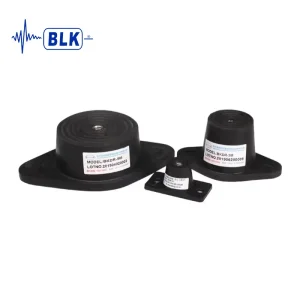
Custom BKDR Type Rubber Mounts Factories, Price
Explore Specifications -

High-Quality MA Type Anti-vibration Spring Mounts Factory, Factories
Explore Specifications -
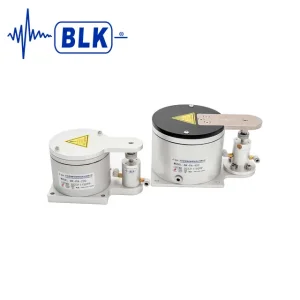
High-Quality BK-PA Type Precision Air Mounts Factories, Manufacturers
Explore Specifications -

Low Price BK-PM Type Polymer Damping Pad Factories, Manufacturers
Explore Specifications -

Custom Anti-vibration Spring Hangers Factories, Manufacturers
Explore Specifications -

Custom BK-AT Type Desktop Vibration Isolation Platform Manufacturers, Price
Explore Specifications -

Low Price BKVV Type Rubber Mounts Factories, Manufacturers
Explore Specifications
Accelerate Your Transit Project with Direct Factory Sourcing
Submit your track load specifications, allowable deflection envelopes, and acoustic insertion targets. Bellking’s application engineers provide complete calculation sheets, 3D CAD models, and formal quotation proposals within 24 hours.