
Primary Industrial & Seismic Isolator Portfolio

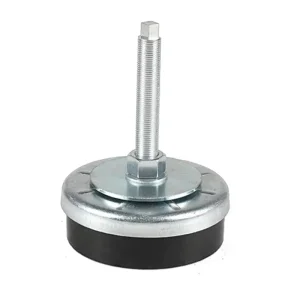



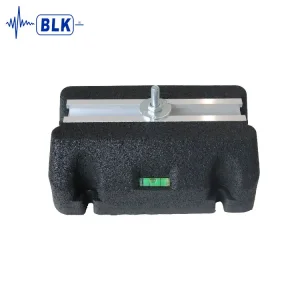
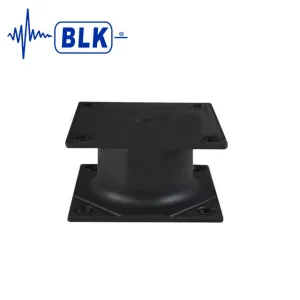

Executive Summary: The Modern Paradigm of Low Price Seismic Vibration Isolators
In modern industrial manufacturing, structural acoustics, and mission-critical building engineering, mitigating mechanical vibration and transient seismic energy is no longer merely an optional comfort consideration—it is a core operational security mandate. Industrial machinery, centrifugal chillers, high-pressure cooling towers, electrical transformers, and semiconductor fabrication tools generate structural vibrations that can lead to premature equipment fatigue, acoustic non-compliance, and catastrophic structural degradation during seismic events.
Historically, procurement officers faced a challenging trade-off between ultra-premium engineered seismic isolators and low-cost alternative hardware that lacked verifiable dynamic performance data. Today, advancing metallurgic formulations, precision robotic welding, automated spring coiling, and optimized elastomer compounding have disrupted this landscape. Modern B2B buyers can access high-efficiency, certified seismic vibration isolators directly from specialized OEM/ODM manufacturers at significantly lower price points without sacrificing structural integrity or compliance with international building codes.
SEO & Value Insight: Evaluating "Low Price" in seismic isolators requires analyzing Total Cost of Ownership (TCO). A lower upfront purchase price combined with verified 900-hour salt spray corrosion resistance, high fatigue life springs, and pre-calculated seismic restraint ratings yields up to 40% savings across a project’s operational lifecycle.
Technical Mechanics: Understanding Isolation & Seismic Restraint
Vibration isolation operates fundamentally on the principle of dynamic decoupling. When mechanical equipment operates at an excitation or disturbing frequency ($f_d$), structural forces are transmitted directly into the building substrate unless intercepted by a resilient medium with a lower natural frequency ($f_n$).
The system transmissibility ($T$) describes the ratio of transmitted force to input force and is defined mathematically by the standard single-degree-of-freedom equation:
Where $\zeta$ represents the damping ratio of the isolator material. To achieve true mechanical isolation, the ratio $f_d / f_n$ must exceed $\sqrt{2} \approx 1.414$. In optimal engineering design, a frequency ratio of $3.0$ or higher is targeted, achieving isolation efficiencies above 90% to 99%.
Seismic Vibration Restraint: Unlike standard anti-vibration mounts, Seismic Vibration Isolators incorporate multi-directional snubbers, heavy-duty housing enclosures, and high-tensile limit stops. During normal equipment operation, the spring or elastomeric core provides uninhibited dynamic isolation. However, during a seismic event (under peak ground acceleration, or PGA), the mechanical limit stops engage omnidirectionally to absorb lateral and uplift shear forces, preserving equipment anchoring and preventing line ruptures.
Engineering Material & Isolator Performance Comparison
| Isolator Type Category | Natural Frequency ($f_n$) | Seismic Restraint Rating | Damping Characteristics | Primary Industrial Applications |
|---|---|---|---|---|
| Spring Isolators (MB / MA / MC Series) | 3.0 Hz – 5.0 Hz | High (Cast Steel / All-Directional Housing) | Low-Medium ($\zeta \approx 0.01 - 0.05$) | Chillers, Large Pumps, Cooling Towers, Rooftop HVAC |
| Damped Spring Mounts (BK-DS Type) | 2.5 Hz – 4.5 Hz | Medium-High (Integrated Viscous Cushion) | High ($\zeta \approx 0.15 - 0.25$) | Variable-Speed Compressor Equipment, Diesel Generators |
| Pneumatic Air Mounts (BK-A Type) | 1.7 Hz – 2.5 Hz | Integrated Leveling Limiters | Adjustable Pneumatic Damping | Semiconductor Lithography, Metrology CMMs, Optical Tables |
| Elastomeric Rubber Mounts (BKP / BKDD) | 6.0 Hz – 12.0 Hz | Internal Shear Restraint Fasteners | Medium-High ($\zeta \approx 0.08 - 0.15$) | High-RPM Motors, Compressors, Electrical Cabinets |
| Inertia Base Systems (CPB Series) | 3.0 Hz – 4.0 Hz | Full Structural Frame Anchorage | Mass-Stabilized Damping Matrix | End-Suction Pumps, Heavy Reciprocating Machinery |
Global Enterprise Procurement Trends & Direct Factory Cost Factors
The global market for industrial seismic isolators has evolved due to international supply chain shifts and digitized B2B procurement. Procurement managers across North America, Europe, the Middle East, and Asia-Pacific are restructuring sourcing strategies to minimize distributor markups while securing verified engineering documentation.
1. Disintermediation & Cost Compression
Sourcing directly from OEM/OBM manufacturing facilities eliminates multi-tier distribution costs, reducing unit acquisition pricing by 25% to 45% on large project tenders.
2. Digital Sizing & Fast-Track Prototyping
Modern OEMs utilize automated CAD generation and FEA vibration simulation. B2B clients receive customized spring rate and seismic load calculations within 24 hours.
3. ISO Quality Audit Transparency
Global EPC contractors mandate raw material traceability, dynamic load test certification, and batch salt-spray test compliance to lower structural insurance premiums.
Macro Industry Solutions: Tailored Structural Isolator Deployment
Data Centers & Mission-Critical Electronics
In hyper-scale data centers, continuous micro-vibrations from diesel backup generators, chillers, and cooling pumps can cause hard disk drive (HDD) track misalignments and structural fatigue in high-density rack cabinets. Deploying MB and BK-DS Series Spring Isolators with restraint housings insulates critical data hardware while providing emergency seismic stability during ground motion events.
Semiconductor Fabs & Precision Metrology
Advanced semiconductor lithography, atomic force microscopy (AFM), and coordinate measuring machines (CMMs) require sub-Hertz floor vibration control. Utilizing BK-A Type Pneumatic Air Mounts lowers natural frequencies down to 1.7 Hz, effectively blocking ambient facility vibrations and protecting nanoscale manufacturing yield rates.
Commercial HVAC & Structural High-Rise Towers
Rooftop cooling towers, large centrifugal air handlers, and elevated fluid piping transmit low-frequency noise throughout commercial high-rise buildings. Implementing HV Type Spring Hangers and CPB Inertia Bases attenuates structure-borne noise, maintaining compliance with municipal acoustic regulations.
Heavy Industrial Processing & Power Generation
Heavy reciprocating compressors, stamping presses, and power transformers subject concrete floor pads to severe dynamic loads. Customized elastomeric buffers like BKSW and BKTS Rubber Pads absorb structural shocks up to 5G acceleration impact, extending equipment operating lifespans.
Localized Engineering Support & Structural Compliance Safeguards
Securing building code approval for non-structural building components requires adherence to localized seismic regulatory standards. Leading structural engineering firms demand full compliance documentation prior to system sign-off.
- Seismic Building Code Adherence: Components are designed in accordance with ASCE 7-22, International Building Code (IBC 2024), and Eurocode 8 (EN 1998) standards, verifying dynamic restraint under calculated spectral response accelerations ($S_{ds}$).
- Corrosion Protection Standards: Outdoor spring and rubber housing assemblies undergo Dacromet coating and electro-galvanization processes compliant with ISO 9227 salt spray testing requirements exceeding 900 hours.
- Elastomer Environmental Health: Rubber compounds conform to RoHS and REACH directives, preventing toxic off-gassing in indoor cleanroom environment installations.
Technical Roadmap: Next-Generation Vibration Isolation Innovations
IoT Predictive Health Monitoring
Embedding piezoelectric micro-sensors inside heavy-duty spring isolators to track real-time dynamic deflection, fatigue cycles, and floor response spectra via industrial IoT dashboards.
Magnetorheological (MR) Damping
Developing semi-active MR fluid dampeners that dynamically adjust viscosity within milliseconds during seismic shock triggers, restricting extreme displacement.
Eco-Formulated Elastomers
Transitioning rubber buffer production toward zero-carbon bio-based synthetic polymers offering enhanced thermal stability, ozone resistance, and circular recyclability.
Specialized & High-Capacity Isolation Systems







