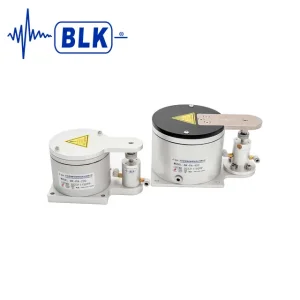
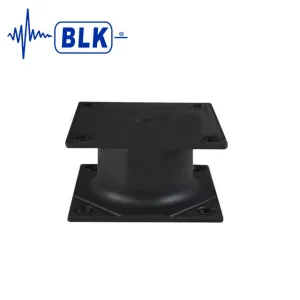
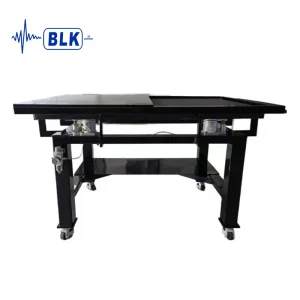
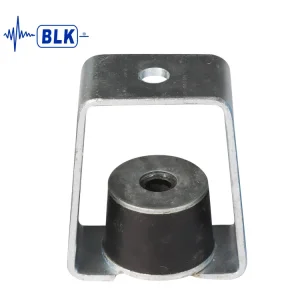
Primary Industrial Isolation Units (Series I)
Precision-engineered elastomeric, spring, and pneumatic mounts tested for high dynamic loads, corrosion resistance, and low natural frequencies.
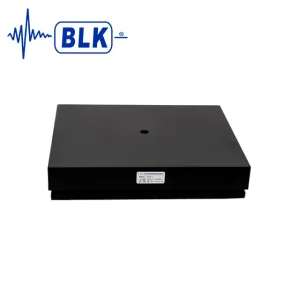

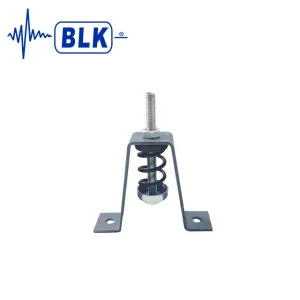

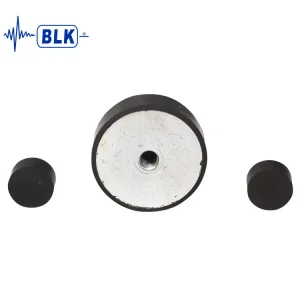
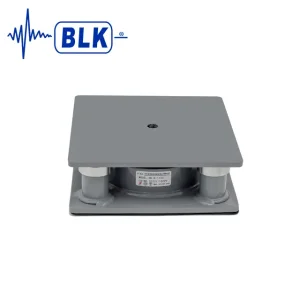

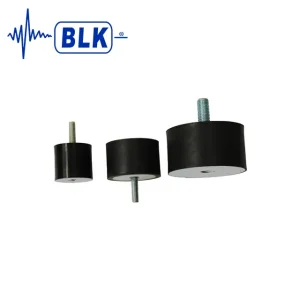
1. Executive Technical Summary & Physics of Spring Isolation
In modern industrial facility design, mechanical vibration control is no longer an afterthought—it is a critical requirement for operational longevity, regulatory noise compliance, and structural integrity. Heavy rotating machinery such as centrifugal chillers, industrial HVAC fans, diesel generators, and high-pressure pumping systems generate substantial low-frequency kinetic energy. Unmitigated, these dynamic forces transmit into building structures, manifesting as structure-borne acoustic disturbance, mechanical fatigue, component failure, and calibration drift in nearby sensitive instruments.
The deployment of open, housed, or restrained helical coil spring isolators represents the gold standard for controlling low-frequency vibratory force transmission. The fundamental physical mechanism relies on establishing a favorable ratio between the forcing frequency ($f_d$, generated by equipment RPM) and the natural frequency ($f_n$) of the elastic mounting system.
Natural Frequency ($f_n$) Tuning
Spring isolators provide large static deflections (25mm to 75mm+), driving natural frequencies down to 3.0 Hz–5.0 Hz. This low natural frequency is essential to isolate slow-speed equipment rotating below 1,200 RPM.
Transmissibility Optimization
Isolation efficacy begins when the frequency ratio $f_d / f_n > \sqrt{2} \approx 1.414$. For enterprise-grade installations targeting >95% isolation efficiency, engineering protocols mandate an operating ratio $f_d / f_n \ge 3.0$.
Viscous Damping Control
High-capacity spring assemblies incorporate internal elastomer snubbers or viscous damping channels to manage transient resonance during equipment spin-up and coast-down shutoff cycles.
2. Precision Installation Guidelines: Site Prep to Final Tuning
Even the highest quality spring mount will fail to deliver engineered vibration attenuation if installed improperly. "Acoustic bridging" or mechanical short-circuiting occurs when rigid conduits, unisolated piping, or binding anchor bolts allow dynamic forces to bypass the spring element.
| Installation Phase | Critical Engineering Checks | Common Installation Pitfalls | Performance Impact |
|---|---|---|---|
| 1. Pre-Installation | Verify concrete housekeeping pad compressive strength, structural flatness (±2mm), and exact load center of gravity. | Installing on uneven concrete, leading to eccentric spring loading. | Uneven spring deflection; premature coil binding or lateral instability. |
| 2. Mounting & Anchoring | Secure baseplates using expansion anchors; utilize rubber washer sleeves on hold-down bolts. | Rigid bolt contact with housing without neoprene isolation washers. | Direct structure-borne noise bypass (flanking transmission). |
| 3. Load Transfer & Leveling | Turn adjustment leveling bolts sequentially across all mounts until equipment is raised 6mm–12mm clear of temporary blocks. | Adjusting one corner completely before others, twisting equipment frame. | Shaft misalignment, seal failure, and internal bearing wear. |
| 4. Auxiliary Connections | Install flexible pipe connectors (twin-sphere rubber or stainless steel braided flex) and flexible electrical conduit. | Rigid steel pipe flanging directly connected to isolated machinery. | Destroys system isolation efficacy; transmits vibration downstream. |
Pro Tip: Avoiding Coil Solidifying (Coil Binding)
During final inspection, ensure that springs are operating within their specified working stroke. A minimum gap of 20% total deflection capability must remain between coils. If coils touch under operating weight, the spring has "gone solid," converting the mount into a rigid steel block and increasing vibration transmission to 100%.
3. Industrial Cost Breakdown: Factory Pricing vs. Total Cost of Ownership
B2B procurement teams evaluating "low price" spring isolators must look beyond initial Unit Capital Expenditure (CAPEX). True purchasing economy balances competitive factory-direct pricing against long-term operational resilience, anti-corrosion protection, and fatigue life.
Material Grade Selection
High-tensile Grade 60Si2Mn or 50CrVa spring steel accounts for 40-50% of raw production cost. Utilizing certified alloy steel prevents sagging and fatigue fractures under cyclic load.
Surface Finishing Coatings
Standard electro-galvanizing is low cost but fails quickly outdoors. Premium Dacromet (zinc-aluminum flake) coating adds minimal cost while surviving 900+ hours of continuous salt spray testing.
Scale of Automation
Chinese direct manufacturing leverages automated CNC coiling, robotic welding, and automated shot-peening, reducing labor overhead by up to 35% compared to European or Western producers.
4. Global Supply Chain & Kunshan Factory Ecosystem
The East China manufacturing cluster—specifically centered in Kunshan, Jiangsu—provides an unparalleled industrial ecosystem for vibration control equipment. Integrating localized raw steel mills, specialized elastomer compounders, and advanced surface-treatment hubs creates significant lead-time and pricing advantages for international EPC contractors and OEMs.
5. Industry Scenarios & Localized Deployment Protocols
Different operating environments demand distinct mechanical designs, housings, and elastomer dampeners. Below are four key deployment scenarios:
HVAC & Central Plant Rooftops
Roof-mounted chillers and cooling towers demand seismic-restrained spring isolators. Heavy wind shear and seismic forces require lateral limit stops to prevent equipment overturning during extreme weather events.
Semiconductor Metrology & Cleanrooms
Sub-micron lithography tools and coordinate measuring machines (CMM) cannot tolerate low-amplitude floor vibrations. Pneumatic air mounts and precision isolation platforms provide ultra-low natural frequencies down to 1.7 Hz.
Power Transformers & Electrical Substations
Dry-type and oil-filled transformers generate continuous 100 Hz–120 Hz magnetostrictive core hum. Specialized transformer anti-vibration mounts combine high static stiffness with targeted high-frequency acoustic attenuation.
6. Quality Assurance & Compliance Standards
Adherence to recognized international standards is mandatory for global project acceptance. Enterprise-grade isolation products undergo rigorous testing before shipment:
ISO 9001 & ISO 2017-1 Compliance
Manufacturing facilities operate under strict Quality Management Systems covering raw material chemical composition analysis, coil pitch uniformity, and load-vs-deflection spring rate verification.
ASHRAE Guidelines (HVAC Applications)
Spring deflection selection tables align with ASHRAE recommendations for equipment mounted on upper-floor structural slabs versus ground-slab installations, ensuring optimal acoustic isolation.
Environmental Compliance (RoHS / REACH)
Elastomeric inserts and damping pads utilize non-toxic synthetic nitrile (NBR) or neoprene compounds free from banned heavy metals and hazardous phthalates, ensuring safe cleanroom usage.
7. Future Trends in Industrial Shock & Vibration Control
The field of vibration mitigation is evolving rapidly alongside Industry 4.0 automation and smart building integration. key developments shaping the market include:
- Smart Sensor Integration (IoT): Embedded MEMS accelerometers within spring mounts to track real-time vibration amplitude changes, enabling predictive maintenance on rotating bearings before mechanical breakdown occurs.
- Active-Passive Hybrid Systems: Combining mechanical helical springs with electromagnetic actuators to cancel unpredictable transient impulse forces in high-speed manufacturing equipment.
- Advanced Polymer Elastomers: Development of self-healing, highly durable elastomeric compounds resistant to extreme chemical solvent exposure and temperatures from -40°C to +120°C.
8. Frequently Asked Engineering & Procurement Questions
Direct answers from application engineers to assist project managers, structural consultants, and purchasing leads.
How do I choose between spring, rubber, and pneumatic vibration isolators?
What technical data is required to calculate and size a spring isolator?
Why is "Low Price" from factory-direct suppliers superior to distributor markups?
What is the expected operating life of a steel spring isolator?
Can factory custom springs be produced for non-standard equipment bases?
How does an inertia base improve spring isolator performance?
Specialized Vibration & Damping Units (Series II)
Precision air mounts, heavy-duty buffers, polymer damping pads, and specialized rubber mounts for enterprise systems.