
Precision Vibration Isolation & Shock Absorption Series
Direct factory manufacturing featuring advanced elastomeric mounts, air springs, and heavy-duty structural dampers engineered for optimal frequency isolation.

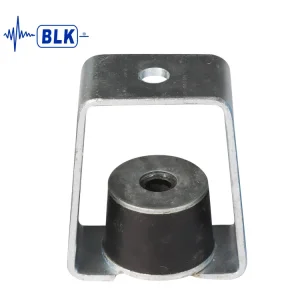

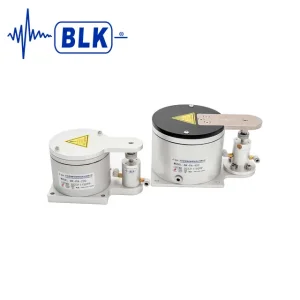
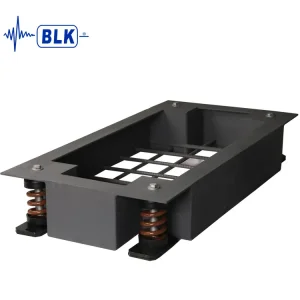
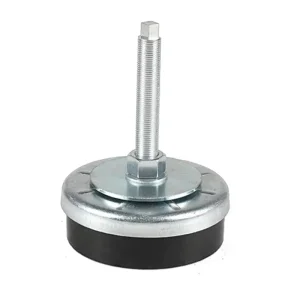
1. Global Market Landscape of Industrial Vibration Energy Absorption
Analyzing structural dynamics, mechanical excitation mitigation, and economic imperatives driving modern B2B procurement strategies.
In modern high-precision industrial manufacturing, mechanical infrastructure, and energy generation, vibration energy absorption has evolved from a secondary HVAC noise-control consideration into a central structural integrity requirement. Unmitigated mechanical vibration introduces harmonic resonance, mechanical fatigue, structural micro-fractures, and high-frequency noise pollution. These factors lead to premature tool wear, unscheduled plant downtime, and catastrophic equipment failures across semiconductor fabs, power distribution centers, high-rise building plants, and automotive manufacturing lines.
The global market for industrial anti-vibration mounts and vibration energy absorption technologies is experiencing rapid expansion. This growth is driven by three primary global catalysts:
- Sub-Nanometer Precision Requirements: Semiconductor photolithography tools, Coordinate Measuring Machines (CMMs), and laser interferometers demand environmental micro-vibration thresholds isolated down to velocity criteria (VC) levels (VC-D to VC-G), requiring ultra-low natural frequency isolation systems.
- Urban Density & Acoustic Regulations: Commercial HVAC systems, rooftop cooling towers, emergency diesel generators, and heavy centrifugal pumps installed in dense metropolitan centers must comply with stringent structural noise attenuation standards (such as DIN 4150 and ISO 2017).
- Asset Lifespan Optimization & TCO Reduction: Global plant operators are moving away from traditional rigid equipment mounting toward engineered dynamic isolation. Proper energy absorption reduces stress on internal bearings, dynamic seals, and welded frames, extending overall machinery lifespan by up to 300%.
2. Technical Advances in Kinetic Damping & Polymer Elastomers
Understanding viscoelastic energy absorption mechanisms, natural frequency matching, and structural dynamic modeling.
Viscoelastic Polymer Formulations
Modern elastomeric vibration mounts utilize synthetic rubber matrix compositions engineered with high internal molecular friction. When dynamic shear forces deform the elastomeric matrix, kinetic energy is rapidly dissipated into low-level thermal energy, damping peak transient shock forces.
Viscous Damped Spring Systems
For low-frequency applications (3–5 Hz natural frequency), open coil steel springs offer massive axial deflection. By incorporating specialized viscous damping chambers inside the spring column, amplitude amplification at critical resonance states is constrained, preventing excessive equipment rocking during start-up cycles.
Pneumatic Diaphragm Micro-Vibration Isolation
Achieving system natural frequencies as low as 1.7 Hz requires pneumatic air mount technology. Utilizing precision air chambers and automatic level-regulating valves, pneumatic isolators decouple sensitive inspection equipment from low-frequency floor vibrations caused by foot traffic and nearby heavy machinery.
Dynamic Transmissibility & Formula Sizing Methodology
In structural dynamics, isolation efficiency ($I_E$) is directly determined by the ratio between the equipment disturbing frequency ($f_d$, calculated from operating RPM) and the isolator system's natural frequency ($f_n$). Transmissibility ($T_R$) represents the proportion of dynamic force transmitted to the supporting floor structure:
| Isolator Technology | Natural Frequency ($f_n$) | Transmissibility Range ($T_R$) | Primary Energy Dissipation Mode | Target Dynamic Application |
|---|---|---|---|---|
| Pneumatic Air Mounts (BK-PA) | 1.7 Hz - 2.5 Hz | < 1% - 3% at 10 Hz | Air compression & orifice laminar flow | Metrology, SEM, Semiconductor Lithography |
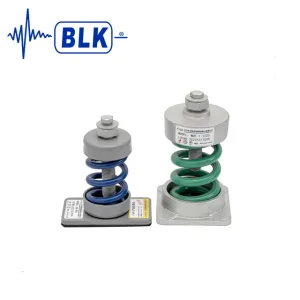
| Viscous Spring Mounts (MD / BK-DS) | 3.0 Hz - 5.0 Hz | 3% - 7% at 20 Hz | Coil deflection + Fluid shearing viscous friction | Chillers, Pumps, Generators, Cooling Towers |
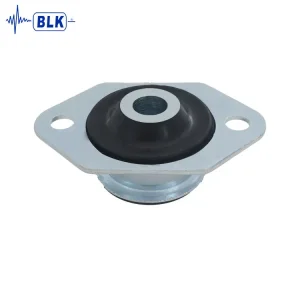
| Elastomeric Cone Mounts (BKCN / BKH) | 7.0 Hz - 12.0 Hz | 8% - 15% at 50 Hz | High-friction elastomeric molecular shear | Engines, Compressors, Mobile Machinery |
| Inertia Base Systems (CPB) | 3.0 Hz - 4.5 Hz (System) | < 2% at 30 Hz | Mass inertia coupling + Spring absorption | End-Suction & Split-Case Fluid Pumps |
3. Global Enterprise Sourcing & Procurement Optimization Matrix
Evaluating vendor capability, total cost of ownership (TCO), and engineering compliance for B2B procurement officers.
When global procurement teams evaluate Low Price Vibration Energy Absorption Factories & Manufacturers, finding the lowest unit quote must be balanced against technical risk. Selecting sub-standard rubber mounts or poorly tempered spring coils can result in catastrophic equipment misalignment, rubber dry-rot, dynamic shear failure, and severe noise complaints from property owners.
To establish a resilient supply chain, procurement leads should assess direct-factory OEMs against three strategic criteria:
1. Material Transparency & Metallurgy
High-performance spring mounts must use high-stress spring alloy steel subjected to shot-peening and stress-relieving heat treatments. Low-quality springs suffer from dynamic load sag over time, ruining equipment levelness. Synthetic rubber elements should utilize virgin EPDM or Nitrile compounds rated for oil resistance, ozone exposure, and minimal creep deformation under constant compression.
2. Surface Protection & Salt Spray Ratings
Industrial isolators are often deployed outdoors on rooftops, coastal marine facilities, or humid cooling tower sumps. Standard industrial paint coatings degrade quickly under exterior weathering. Leading manufacturers apply Dacromet zinc-flake coatings or heavy powder coating capable of surviving over 900 hours of continuous salt spray testing (ASTM B117) without red rust formation.
3. Rapid Customization & Engineering Turnaround
Off-the-shelf catalog products rarely fit non-standard mounting bolt patterns or unbalanced center-of-gravity machine setups. Direct factory partners should offer custom CAD/FEA dynamic simulation and produce 1:1 tailored prototypes within 3 to 5 working days, preventing project delivery delays.
4. China Factory 4.0: Supply Chain Resilience & Efficiency Advantages
How automated production, advanced testing, and integrated industrial clusters deliver competitive OEM pricing with world-class quality.
The term "Low Price" in modern industrial sourcing no longer implies cheap materials or compromised quality control. Instead, it reflects the efficiency of China's Industry 4.0 Manufacturing Ecosystem—exemplified by advanced manufacturing hubs like Kunshan, Jiangsu.
At Bellking Vibration Reduction Equipment Manufacturing (Kunshan) Co., Ltd. (operating from a 2,000 m² state-of-the-art facility since 2013), high cost-efficiency is achieved through comprehensive manufacturing integration and smart factory technology:
- Automated Robotic Welding & CNC Machining: Precision housing structures, inner cores, and thread plates are processed on automated CNC centers and robotic welding cells, ensuring tight tolerances and consistent dynamic shear strength across high-volume production runs.
- Automated Elastomer Vulcanization Lines: In-house rubber compound blending and automated multi-cavity compression vulcanization presses lower labor costs while eliminating internal voids or bonding defects between metal substrate plates and elastomeric matrices.
- End-to-End In-House Testing Infrastructure: By maintaining internal salt spray test chambers, computerized tension-compression load-deflection testers, laser dynamic balancing rigs, and vibration spectrum analyzers, products undergo 100% batch validation without expensive third-party lab overheads.
- Integrated Industrial Cluster Economies: Located within the Yangtze River Delta manufacturing cluster, raw material suppliers (high-tensile spring wire, synthetic rubber polymers, Dacromet surface coaters) are situated within a 30-minute logistics radius, dramatically lowering freight costs and enabling standard model shipments within 24 hours.
5. Application Scenarios & Field Engineering Implementations
Field-proven vibration energy absorption solutions deployed across critical global industries.
HVAC, Commercial Chillers & Cooling Towers
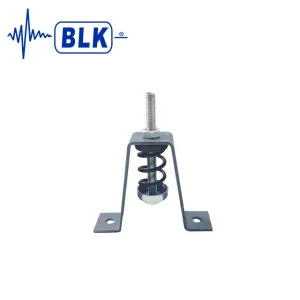
Large centrifugal chillers and rooftop cooling towers generate low-frequency dynamic forces (10–25 Hz) that easily travel through building columns as structure-borne noise. Deploying MD / BK-DS type damped spring isolators or suspended HV spring hangers decouples mechanical energy, attenuating structure-borne noise by up to 35 dB(A) in modern commercial towers.
Semiconductor Probing & Metrology Cleanrooms
In sub-micron semiconductor manufacturing, external floor vibrations corrupt delicate wafer probing and optical inspection. Installing BK-PA precision air mounts underneath granite optical tables achieves a 1.7 Hz natural frequency, neutralizing floor excitation and maintaining cleanroom tool positioning accuracy.
High-Voltage Power Transformers & Substations
Dry-type and oil-immersed transformers produce constant magnetostrictive hum at 100 Hz / 120 Hz harmonics. Specialized Bellking transformer anti-vibration mounts withstand heavy static loads while isolating core hum, preventing acoustic radiation into nearby residential developments.
Heavy Stamping Presses & Industrial Pumps
High-impact stamping presses generate massive transient shock forces, while high-flow fluid pumps experience start-up dynamic torque. Pairing heavy machinery with CPB concrete-filled inertia bases lowers the system center of gravity, stabilizes pipe connections, and absorbs dynamic energy.
6. Engineering Step-by-Step Selection & Calculation Protocol
A standardized engineering protocol to size and select vibration isolators accurately for any machine.
To avoid choosing isolators that are under-damped or over-stiff, follow Bellking’s 4-step engineering protocol:
-
Determine Equipment Disturbing Frequency ($f_d$):
Identify the lowest operating speed (RPM) of the machinery. Convert RPM to frequency in Hertz ($\text{Hz} = \frac{\text{RPM}}{60}$). For a pump running at 1,750 RPM, $f_d = \frac{1750}{60} = 29.17 \text{ Hz}$.
-
Calculate Target Natural Frequency ($f_n$):
To achieve an isolation efficiency above 90%, the ratio between disturbing frequency and natural frequency ($\frac{f_d}{f_n}$) should be greater than 3. Target $f_n \le \frac{29.17}{3} = 9.72 \text{ Hz}$. In this setup, choosing a standard 3–5 Hz spring mount yields over 95% energy absorption.
-
Calculate Support Point Load Distribution:
Determine total operating weight (including fluids, attached piping, and structural skid). Identify the Center of Gravity (CG). Calculate static load ($W_i$) at each support point. Always select mounts with a rated load capacity 20% to 30% higher than calculated static weight to accommodate dynamic starting surges.
-
Verify Environmental & Seismic Restraint Requirements:
Check for outdoor weather exposure (specify Dacromet coating), presence of oils/solvents (specify Nitrile or Neoprene polymers), and seismic/wind uplift restraint requirements for elevated rooftop installations.
7. Frequently Asked Questions by Procurement & Plant Engineers
Expert engineering answers to common technical queries surrounding industrial vibration control systems.
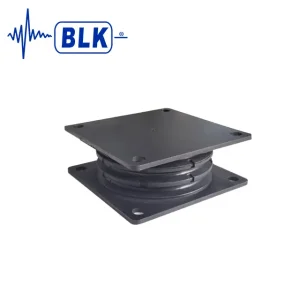
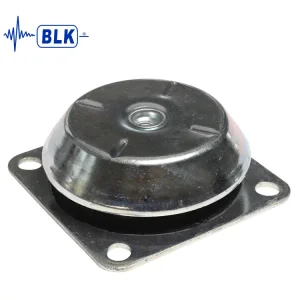
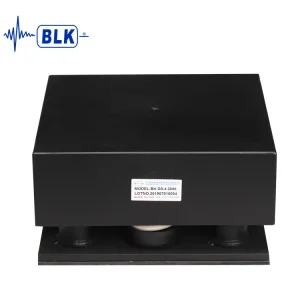
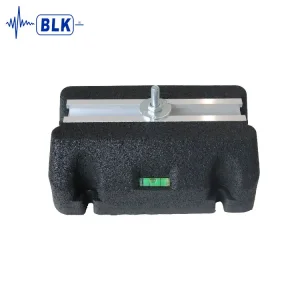
Specialized Buffers, Pads & Damped Spring Assemblies
Explore heavy-duty cone mounts, leveling feet, multi-layer vibration damping pads, and viscous damped spring solutions.


Optimize Your Machinery Dynamics with Bellking Engineering
Partner directly with a leading China 4.0 vibration reduction equipment manufacturer for factory-direct quotes, CAD dynamic simulations, and tailored isolation proposals within 24 hours.