Primary Industrial Isolation Systems
Engineered spring, air, and rubber mounts direct from specialized manufacturing facilities.
-
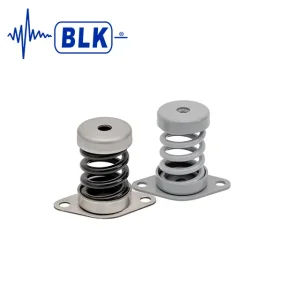
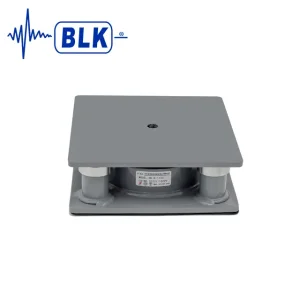
High-Quality ME Type Anti-vibration Spring Mounts Factory, Factories
-
-
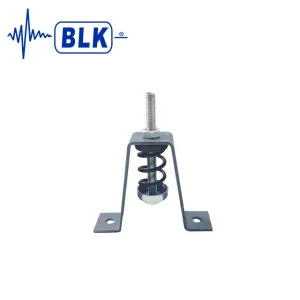
High-Quality HV Type Spring Hangers Manufacturers, Manufacturer
-
-

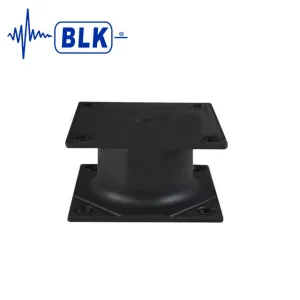
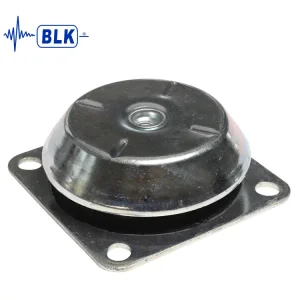
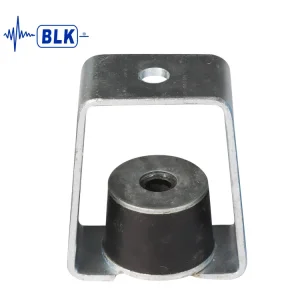
Low Price BKP Type Rubber Mounts Manufacturers, Manufacturer
-

Custom BKSWA Type Multi-Layer Antivibration Dampers Factory, Price
-

Low Price BK-PM Type Polymer Damping Pad Factories, Manufacturers
-
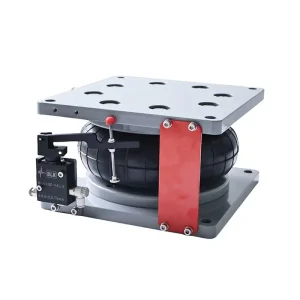
High-Quality BK-PF Type Precision Air Mounts Factories, Manufacturer
1. Global Market Landscape & Commercial Realities of Vibration Control
Analyzing industry shifts toward high-precision manufacturing, structural acoustic mitigation, and global supply chain re-alignment.
In modern industrial engineering, unwanted kinetic energy and dynamic dynamic mechanical movement represent a primary root cause of structural fatigue, premature equipment breakdown, measurement error, and acoustic non-compliance. The global market for vibration reduction mounts—spanning spring isolators, elastomeric rubber pads, pneumatic air mounts, and viscous-damped inertia bases—is experiencing unprecedented structural growth. Driven by the expansion of Industry 4.0 automated plants, sub-nanometer semiconductor fabrication facilities, large-scale HVAC retrofit projects, and stringent urban noise pollution standards (such as ISO 10816 and DIN 4150-3), industrial facilities can no longer treat vibration isolation as a secondary engineering consideration.
Historically, European and North American Original Equipment Manufacturers (OEMs) dominated the supply chain for high-performance damping hardware. However, market friction—caused by prolonged lead times, rigid minimum order quantities (MOQs), and premium markup structures—has led global procurement directors to rethink their supply chain architecture. Sourcing from a specialized, certified low price vibration reduction mount factory in established manufacturing clusters like Kunshan, China, has transformed from a purely cost-driven tactic into a core competitive advantage. Modern advanced factories in China now deliver low-cost structural components paired with aerospace-grade precision testing, complete metallurgy traceability, and rigorous ISO 9001 quality frameworks.
2. Mechanical Damping Physics & Isolation Engineering Fundamentals
Information Gain: Technical formulas, transmissibility matrices, and structural resonance math for engineering selection.
To evaluate a vibration isolation manufacturer effectively, engineering teams must evaluate the underlying physics governing transmissibility ($T$). Vibration isolation operates by establishing a structural system whose natural frequency ($f_n$) is substantially lower than the disturbing or forced frequency ($f_d$) emitted by rotating, reciprocating, or oscillating machinery.
System Natural Frequency & Transmissibility Formulas
The system natural frequency for a linear single-degree-of-freedom (SDOF) mount is determined by its static deflection ($\delta_s$) under load or its physical spring rate ($k$) relative to mass ($m$):
Where $g$ represents gravitational acceleration ($9.81 \text{ m/s}^2$). The fundamental isolation efficacy is expressed via the Transmissibility Ratio ($T$), incorporating the damping ratio ($\zeta$):
Here, $r = f_d / f_n$ represents the frequency ratio. Theoretical isolation begins only when $r > \sqrt{2} \approx 1.414$ ($T < 1$). In professional industrial engineering, target designs demand $r \ge 3$ to achieve vibration isolation efficiency higher than 88–95%.
Key Engineering Rule: Placing a stiff mount under high-speed machinery where $r < 1.414$ results in dynamic amplification (resonance), increasing forces transmitted to the sub-floor structure. Specialized China factories manufacture customized variable-pitch steel springs and hybrid polymer pads to guarantee exact static deflection under actual operating loads.
| Isolator Technology Class | Static Deflection Range | Natural Frequency ($f_n$) | Primary Mechanical Material | Optimal Damping Efficiency Zone |
|---|---|---|---|---|
| Pneumatic Air Mounts (BK-R / BK-PF) | Pneumatic Auto-Leveling | 1.7 Hz – 3.0 Hz | Reinforced Elastomeric Bellows | Sub-micron precision, CMMs, Lithography |
| Viscous Damped Spring Mounts (ME / MB) | 25 mm – 75 mm | 3.0 Hz – 5.0 Hz | High-Tensile Alloy Spring + Silicone Oil | Rooftop Chillers, Gensets, Heavy Pumps |
| Polymer & Rubber Mounts (BKP / BKH) | 3 mm – 12 mm | 8.0 Hz – 15.0 Hz | EPDM / Neoprene Polymer Matrix | High-speed Motors, Compressors (>1800 RPM) |
| Multi-Layer Composite Dampers (BKSWA) | 5 mm – 20 mm | 5.0 Hz – 10.0 Hz | Laminated Viscoelastic Steel Sandwich | Heavy Stamping Presses, Forging Hammers |
3. Demystifying Cost Economics: How China Factories Achieve Low Prices Without Quality Degradation
A transparent breakdown of industrial clusters, manufacturing automation, raw material integration, and economies of scale.
Vertical Supply Integration
Factories located in regions like Kunshan, Jiangsu enjoy immediate physical proximity to specialized steel wire draw mills, rubber vulcanization plants, and precision CNC machine shops. This reduces upstream logistics costs by up to 18%.
Automated CNC Coiling
Modern Chinese spring factories use multi-axis CNC cold coiling equipment, robotic welding arms, and continuous automatic powder coating lines. High throughput drastically lowers labor costs per completed unit.
In-House Dacromet Surface Coating
Rather than outsourcing surface treatment, top factories feature integrated Dacromet and electro-galvanizing tanks. Steel housings easily exceed 900-hour salt spray corrosion tests at minimal added cost.
Global procurement specialists frequently ask: "How can a low price vibration reduction mount factory offer unit costs 40% to 60% below Western manufacturers while adhering to identical performance parameters?" The answer lies in structural operational advantages rather than material compromise:
- Economies of Scale in Raw Metallurgy: Chinese vibration control manufacturers procure high-grade 60Si2Mn spring steel and natural/EPDM rubbers in multi-thousand-ton batches directly from state steel mills. This drastically cuts raw material acquisition costs compared to regional job shops in North America or Europe.
- Integrated Engineering & Tooling Production: Non-standard customer requests—such as custom mounting plate configurations, seismic snubbers, or specific dynamic stiffness values—are engineered using in-house toolmaking facilities. Tooling modification turnarounds drop from weeks to hours.
- Comprehensive Rigorous QC Infrastructure: Low cost does not imply lack of testing. Leading China factories utilize digital dynamic stiffness testers, laser dynamic displacement analyzers, rubber rheometers, and fatigue life testing rigs (5-million-cycle life validation) to back up every production batch with certified lab reports.
4. Global Sourcing & Procurement Framework for EPC Contractors & OEMs
Standardizing selection parameters to streamline cross-border supply chains and lower total cost of ownership (TCO).
For Engineering, Procurement, and Construction (EPC) management companies, HVAC system integrators, and industrial machine builders, selecting an overseas vibration reduction factory requires systematic evaluation. Beyond immediate piece-part pricing, buyers must mitigate risks related to field failure, logistics delays, and engineering misalignment.
Phase 1: Dynamic Load Sizing
Supply the factory with accurate static weights, weight distribution across support points, operational RPM, and center-of-gravity (CG) coordinates. Ensure the factory provides verified static deflection curves and natural frequency calculations within 24 hours.
Phase 2: Environment Evaluation
Specify operating conditions (chemical exposure, ambient temperature spikes, outdoor coastal salt-spray). Request Dacromet, hot-dip galvanizing, or 316 stainless steel housings for corrosive installations.
Phase 3: Seismic & Wind Restraint
For equipment installed on roofs or in earthquake-prone regions, specify all-directional constrained spring mounts tested to withstand 3–5 G shear forces to meet local building codes.
5. Field Application Scenarios & Tailored Engineering Implementations
Real-world technical deployment across high-tech, commercial, utility, and heavy manufacturing environments.
A. Semiconductor Fabs & Optical Metrology Cleanrooms
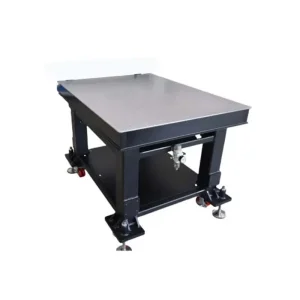
Sub-micron fabrication equipment (steppers, atomic force microscopes, scanning electron microscopes) cannot tolerate ambient micro-vibrations exceeding VC-D or VC-E criterion curves. In these environments, conventional spring mounts are inadequate due to higher internal resonances. Factory-direct Precision Air Mounts (such as the BK-PF and BK-DT series) feature low natural frequencies (down to 1.7 Hz) and automatic height-sensing leveling valves. These systems effectively decouple sensitive optical stages from floor vibrations caused by foot traffic, nearby highway traffic, and building mechanical systems.
B. Commercial HVAC Systems & Roof-Top Infrastructure
Large centrifugal chillers, cooling towers, and primary water pumps installed on building rooftops or suspended mechanical floors present complex acoustic challenges. Unmitigated low-frequency hums propagate through concrete slabs into tenant spaces below. Utilizing ME and MB Type Anti-vibration Spring Mounts alongside HV/HR Suspended Vibration Hangers creates a decoupled structural break. The inclusion of internal viscoelastic polymer damping elements suppresses spring resonance during motor startup and shutdown ramp-up cycles.
C. Electrical Power Transformers & Energy Substations
Power transformers emit continuous magnetostrictive core hums at fundamental line frequencies (100 Hz / 120 Hz) and harmonics. When mounted directly on concrete pads, these vibrations travel into urban surrounding structures. Specialized transformer anti-vibration mounts combine high-capacity steel springs with oil-resistant elastomers, mitigating ground-borne noise while resisting high operating temperatures and outdoor weather exposure over 15+ year operational lifespans.
D. Heavy Stamping, Forging & Industrial Presses
Industrial metalworking presses exert massive transient impact forces. Unmitigated impact energy causes structural foundation cracking, misalignment of adjacent CNC machines, and unsafe working environments. Custom BKSWA Type Multi-Layer Antivibration Dampers and concrete inertia bases absorb peak kinetic energy, converting high-amplitude shock pulses into controlled thermal energy without compromising machine leveling stability.
6. Future Trends: Smart Vibration Isolation & Sustainable Elastomers (2025–2030)
The next decade of mechanical damping: IoT monitoring, active-passive integration, and green materials.
The industrial vibration control industry is experiencing a technological evolution driven by industrial IoT connectivity and eco-conscious engineering policies:
- IoT-Enabled Smart Mounts: Modern advanced vibration reduction factories are integrating micro-electromechanical systems (MEMS) accelerometers and wireless piezoceramic sensors directly into spring and air mount top plates. Maintenance teams can continuously monitor real-time vibration spectral signatures, static deflection creep, and load changes via cloud dashboards, enabling true predictive maintenance before structural failure occurs.
- Active Magnetorheological & Passive Hybrid Systems: While traditional passive spring mounts offer excellent low-cost performance for constant-speed machinery, dynamic multi-speed variable frequency drives (VFDs) benefit from active/passive hybrid systems. These units dynamically adjust damping coefficients in milliseconds when crossing critical system resonance speeds.
- Eco-Compliant Elastomeric Polymers: European REACH and RoHS regulations have pushed rubber isolator factories to eliminate toxic plasticizers and PAH compounds. Modern low-cost factories are migrating toward 100% recyclable thermoplastic elastomers (TPE) and eco-friendly vulcanized synthetic blends that preserve high tensile strength and tear resistance across extreme ambient temperatures (-40°C to +120°C).
7. Technical Sourcing FAQ: User Intent & Engineering Queries
Direct answers to critical questions asked by procurement officers, acoustic consultants, and plant engineers.
Specialized & High-Precision Isolation Catalog
Advanced low-frequency platforms, polymer buffers, and rubber mounts for high-spec industrial projects.