
Matrix Multi-Core

Kenya Substation BK-MT Matrix Anti-vibration Mount
Engineered for high-tonnage oil-immersed transformers across Nairobi and Mombasa distribution networks.
Pre-engineered damping systems optimized for 50 Hz power transformer core harmonic attenuation and seismic stability across Kenyan sub-stations.
Engineered for high-tonnage oil-immersed transformers across Nairobi and Mombasa distribution networks.

Combines helical steel springs with built-in fluid damping for resonance mitigation during peak step-load transitions.

Ultra-low natural frequency air mounts for sensitive step-up transformer monitoring units and auxiliary cleanrooms.
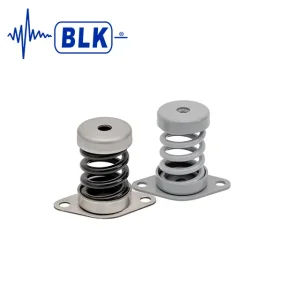
Rugged steel casing protecting resilient elements from Rift Valley volcanic dust and equatorial rain storms.
Understanding the dynamic dynamics of structural harmonics, magnetostrictive hum, and mechanical damping in East Africa's economic hub.
As the economic powerhouse of East Africa, Kenya is undergoing an unprecedented modernization of its electrical transmission and distribution infrastructure. Under the umbrella of Kenya Vision 2030, the Last Mile Connectivity Project (LMCP), and major grid reinforcements executed by the Kenya Electricity Transmission Company (KETRACO) and the Kenya Power and Lighting Company (KPLC), thousands of dry-type and oil-immersed distribution and transmission transformers are being commissioned. However, with urbanization accelerating in Nairobi, Mombasa, Kisumu, and Nakuru, electrical substations are increasingly sited adjacent to commercial plazas, multi-story data facilities, hospital hubs, and dense residential estates. This proximity has elevated structure-borne noise and low-frequency vibration into critical environmental compliance and asset-preservation priorities.
Transformer acoustic emission is not merely airborne noise; it is predominantly structure-borne vibration transmitted directly into concrete plinths and building foundations. The primary source is magnetostriction in the grain-oriented electrical steel (CRGO) core laminations. When energized at 50 Hz (the Kenyan grid frequency), the cyclic magnetic field causes the core steel to mechanically expand and contract at twice the operating frequency—yielding a fundamental vibrational excitation of 100 Hz, supplemented by secondary harmonics at 200 Hz, 300 Hz, and 400 Hz. Concurrently, electromagnetic Lorentz forces acting upon the primary and secondary copper or aluminum windings induce dynamic mechanical stresses proportional to the square of the load current.
Acoustic Formula in Field Engineering: When a rigid or improper installation exists, the vibration transmissibility factor $T_r$ approaches 1.0 or induces resonance ($f_d / f_n \approx 1$). A high-performance Bellking isolator with a natural frequency of 3–5 Hz ensures an excitation-to-natural frequency ratio exceeding $100 / 4 = 25$, reducing structural transmissibility to less than 1.5% and mitigating structural resonance across surrounding civil structures.
In many Kenyan legacy sites, contractors historically placed simple 10mm reclaimed rubber strips or cork sheets under the transformer skids. Under sustained continuous dead loads of 5 to 45 metric tons, standard rubber exhibits catastrophic compressive creep within 12 to 24 months, losing its elasticity and allowing full acoustic bridging. High-frequency humming quickly resonates through building floors, triggering tenant complaints, loosening internal bolted connections, fatiguing oil cooling pipework welds, and prematurely aging sensitive electronic protection relays.
In geothermal fields like Olkaria (Naivasha), transformers endure high ambient sulfur fumes and micro-seismic tremors. Mounts require specialized chemical-resistant fluoro-elastomers and locked restraint chassis.
Coastal logistics parks along the Indian Ocean face aggressive saline fog. Bellking’s Dacromet 900-hour and 316 stainless assemblies eliminate electrolytic degradation and rust bridging.
Commercial skyscrapers demand strict NEMA TR-1 acoustic compliance. Multi-stage matrix isolation blocks structural low-frequency reverberation through post-tensioned floor slabs.
A transparent breakdown of direct factory supply economics versus local Nairobi distributor markups for mechanical and electrical contractors.
Procuring vibration isolation hardware in Kenya historically occurred through third-party hardware traders along Nairobi's Kirinyaga Road or Industrial Area Enterprise Road, resulting in 40% to 75% markups over factory-gate pricing, often without accompanying load-deflection certification or engineering calculation sheets. As EPC contractors and electrical consultants increasingly adopt international standards (such as BS EN 60076 and ASHRAE 2021 HVAC & Power Applications), direct-from-manufacturer sourcing has become the gold standard for quality assurance and cost optimization.
| Isolator Series & Type | Typical Transformer Rating | Target Frequency (fn) | Factory Price (USD / Unit) | Estimated Landed Kenya (KES / Unit)* | Primary Kenyan Applications |
|---|---|---|---|---|---|
| BK-PM Heavy Polymer Pad | 100 kVA – 630 kVA Dry Type | 8 – 12 Hz | $28 – $55 | KES 4,200 – 8,250 | Light Commercial, Warehouses, Schools |
| BKM Industrial Molded Rubber | 500 kVA – 1,600 kVA | 6 – 9 Hz | $45 – $95 | KES 6,750 – 14,250 | Manufacturing Mills, Tea Factories (Kericho) |
| BK-DS Damped Helical Spring | 1,250 kVA – 4,000 kVA Oil/Dry | 3.2 – 4.8 Hz | $110 – $240 | KES 16,500 – 36,000 | Nairobi Data Centers, Hospital Power Wings |
| BK-MT Modular Matrix Damper | 5 MVA – 25 MVA Primary Substation | 2.8 – 3.8 Hz | $280 – $650 | KES 42,000 – 97,500 | KETRACO Substation Bays, KenGen Hydro Plants |
| ME Enclosed Seismic Restraint | 10 MVA – 60 MVA Step-Up Units | 3.0 – 4.5 Hz | $350 – $890 | KES 52,500 – 133,500 | Olkaria Geothermal, Turkana Wind Corridors |
*Note: Estimated landed costs incorporate average sea freight to Port of Mombasa, standard import declaration fees (IDF), Kenya Bureau of Standards (KEBS) Pre-Export Verification of Conformity (PVoC), and prevailing VAT. Prices are indicative for project planning and scale with bulk container procurement.
Engineering buyers evaluating tenders in East Africa must scrutinize several cost drivers that directly dictate service longevity and safety:
Send our application engineers your transformer operating weight, center of gravity, and base footprint for a customized sizing chart within 24 hours.
Real-world integration of engineered vibration mounts solving low-frequency acoustic transmission across critical infrastructure.
Challenge: Two 2,500 kVA dry-type indoor transformers located on the mezzanine floor induced severe 100 Hz hum into server hall floor tiles directly above, exceeding 48 dBA indoor limits.
Solution: Retrospective installation of BK-DS Damped Spring Mounts with 25mm rated static deflection and viscous polymer dampening.
Result: Acoustic transfer dropped by 24 dBA; structural vibration transmissibility fell below 2.2%, exceeding client SLA specifications.
Challenge: Heavy gantry crane switching transients and coastal salt-mist degraded standard rubber isolators on 33/11 kV transformers within 18 months.
Solution: Deployment of BK-MT Matrix Anti-vibration Mounts with Dacromet anti-corrosion coating and multi-directional elastomeric buffers.
Result: Zero corrosion after 4 years of continuous service; total harmonic isolation maintained at >96% efficiency.
Challenge: Constant low-level seismic vibrations coupled with high ambient hydrogen sulfide ($H_2S$) accelerated mechanical fatigue on step-up transformer bushings.
Solution: Custom-engineered ME Type Enclosed Spring Mounts engineered with acid-resistant coating and integrated lateral seismic snubbers.
Result: Protected auxiliary terminal assemblies from stress micro-cracks; prolonged transformer operational uptime without maintenance outages.
The vibration control sector is rapidly evolving from passive isolation to intelligent cyber-physical asset protection. For Kenya's expanding national grid and high-tech manufacturing parks, the roadmap over the coming decade focuses on three key technological convergences:
Expert answers to the most common engineering and procurement inquiries raised by MEP contractors and utility engineers in Kenya.
Explore our full product portfolio engineered for transformers, rotating equipment, piping networks, and precision electrical laboratories.

Designed for sensitive power quality metering, test laboratories, and metrology benches.

High-durability molded rubber mounts tailored for auxiliary substation motor pumps and dry-type skids.

Suspended vibration isolation preventing structural hum from suspended oil pipes and high-voltage busway conduits.

Multi-ribbed elastomeric pads optimized for cost-effective distribution transformer installations across rural Kenya.
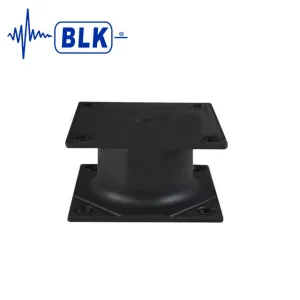
Progressive impact resistance for seismic bump protection and transformer transport rail limits.

Unenclosed high-deflection spring isolator featuring top leveling bolt and non-skid neoprene base pads.

Sandwich composite steel and high-loss elastomer layers targeting broad-spectrum harmonic damping.
Scalable cluster mount engineered for massive 30MVA+ transmission transformers and mobile substation trailers.
ISO 9001 certified manufacturing, third-party acoustic test reports, and factory-direct shipping to Nairobi and Mombasa.