
Featured Industrial Rubber Mounts Serving Panama Logistics & Canal Operations
Immediate dispatch capability for commercial HVAC, marine auxiliaries, and container handling machinery at Panama Pacifico, Colon, and Balboa terminals.

Low Price BKVV Type Rubber Mounts for Panama Heavy Machinery
Compact cylindrical design absorbing high-frequency shear and compression forces in industrial power plants and auxiliary generators.
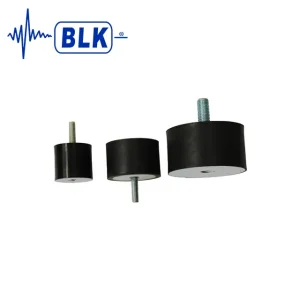
Custom BKVD Type Rubber Mounts for Marine & Port Infrastructure
Stud-to-socket mounting profile designed for direct bolt-down installation on vessel bulkheads, pumps, and conveyor drive units.

High-Quality BKDD Type Rubber Mounts for High-Rise HVAC Units
Internally threaded isolator isolating structure-borne acoustic noise in high-rise condominium air handling systems and water chillers.
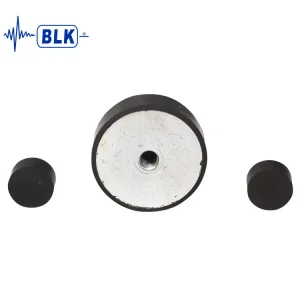
Custom BKDE Type Rubber Mounts for Panama Substations & Enclosures
Single-stud female base configuration ideal for stabilizing transformer switchgear and electronics against foundation micro-vibration.
Panama’s Dynamic Industrial Infrastructure: Vibration Isolation Challenges & Strategic Imperatives
An authoritative analysis on how the convergence of trans-isthmian shipping lanes, urban high-rise density, and tropical wet-hot climates creates severe mechanical resonance conditions requiring advanced elastomeric solutions.
The Panama Canal Logistics Nexus
Panama's core economic engine—anchored by the Panama Canal Authority (ACP), Pacific terminals (Balboa), and Atlantic terminals (Manzanillo, Cristobal, and Colon Free Trade Zone)—operates thousands of continuous-duty propulsion tugs, high-capacity lock dewatering pump stations, and ship-to-shore (STS) container gantry cranes. Constant low-frequency rotary excitation causes severe structural fatigue on supporting steelworks without elastomeric decouplers rated for cyclic dynamic stresses.
Panama City Super-Tall HVAC Density
Panama City boasts Central America’s densest concentration of commercial super-tall towers across Punta Pacifica, Costa del Este, and Obarrio. With outdoor ambient temperatures exceeding 32°C year-round and relative humidity averaging 85%–95%, multi-megawatt water chiller plants, cooling towers, and centrifugal air distribution systems run 24/7/365. Roof-mounted equipment transmits structure-borne resonant noise into luxury suites without custom anti-vibration damping isolators.
Mining, Energy & Water Utilities
From large-scale copper milling complexes in Donoso (Colon Province) to national hydroelectric plants and the Instituto de Acueductos y Alcantarillados Nacionales (IDAAN) water treatment complexes, harsh industrial operations experience violent transient shock loads and sustained harmonic oscillations. Equipment survival hinges on elastomeric mounts that do not delaminate under intense moisture, ultraviolet radiation, and mechanical shearing.
Engineering Rubber Formulations for Tropical Marine Longevity
Comparative elastomer behavior under ASTM D2000 specifications: Why conventional off-the-shelf mounts fail in Central America's hyper-saline, high-ozone tropical ambient.
Tropical Degradation Mechanics
Standard commercial rubber isolators often rely on uninhibited natural rubber (NR) compounded with generic clay fillers. In Panama's ambient (Pacific/Atlantic maritime salt mist, constant 30°C+ heat, continuous fungal spore exposure, and heavy UV exposure), non-stabilized polymers experience rapid ozone cracking, cross-link reversion, and hydrolytic debonding at the elastomer-metal vulcanization interface.
Bellking counteracts this via proprietary anti-ozonant microcrystalline wax systems, optimized sulfur-donor vulcanization cures, and Chemlok® chemical bonding agents that maintain sheer bond integrity up to 14 MPa even after 1,000+ hours of tropical exposure.
Marine Classification Standard Compliances
Equipment operating in the Panama Canal Corridor must comply with stringent maritime authority oversight and classification rules (including ABS, Lloyd’s Register, and DNV-GL equivalencies). Dynamic transmissibility testing requires isolating engine firing frequencies ($f_e = \frac{n \times \text{RPM}}{120}$ for 4-stroke units) down to natural frequencies below 8 Hz.
All Bellking marine-grade isolators feature 900-hour salt spray tested Dacromet or Hot-Dip Galvanized hardware, stainless steel 316 studs on request, and oil/fuel resistant outer nitrile or neoprene skins.
| Elastomer Compound | Hardness (Shore A) | Dynamic-to-Static Ratio ($K_d / K_s$) | Operating Temp Range | Marine Salt & Oil Resistance | Recommended Panama Application |
|---|---|---|---|---|---|
| High-Grade Natural Rubber (NR) | 40 - 75 ±5 | 1.15 - 1.35 (Low Creep) | -40°C to +75°C | Moderate / Low Oil Resistance | Indoor Chiller Plant Rooms, Precision Test Laboratories |
| Polychloroprene (Neoprene / CR) | 45 - 80 ±5 | 1.30 - 1.55 (Self-extinguishing) | -30°C to +100°C | Excellent Saline / Superior Ozone | Panama Canal Marine Tugboats, Gantry Crane Drives |
| Nitrile Butadiene Rubber (NBR) | 50 - 85 ±5 | 1.40 - 1.65 (High Damping) | -25°C to +110°C | Maximum Petroleum / Fuel Resistance | Diesel Generator Fuel Skids, Hydraulic Power Units |
| Ethylene Propylene (EPDM) | 40 - 75 ±5 | 1.25 - 1.45 (Weather-proof) | -45°C to +130°C | Extreme UV, Ozone & Steam Resistance | Rooftop Cooling Towers, Coastal Substations |
| Viscoelastic High-Damping Matrix | 35 - 65 ±5 | 1.80 - 2.40 (High Energy Loss) | -10°C to +70°C | High Chemical & Tropical Aging Durability | Seismic Buffer Pads, Structural Expansion Joints |
Kunshan Precision Factory Direct to Panama Ports & Free Zones
Bridging Tier-1 manufacturing scale in Kunshan, China with immediate containerized and airfreight logistics directly into Panama City (PTY), Colon Free Zone, and Puerto Balboa.
100,000+ Annual Output
Fully automated robotic mold injection, vacuum compression vulcanization presses, and continuous CNC metal insert machining ensures uniform durometer and void-free elastomeric bonds.
24-Hour Dispatch
Standard ISO-dimensioned rubber bobbin mounts, sandwich bumpers, and flanged shear mounts ship within 24 hours. Air cargo arriving at Tocumen International Airport (PTY) in as little as 4–6 business days.
37 Proprietary Patents
Certified as a National High-Tech Enterprise, our R&D center holds 16 national invention patents covering non-linear progressive stiffness geometries and multi-layered composite damping cores.
ISO 9001 QA & Tracing
Every batch includes full material test reports (MTR), Shore A durometer verifications, tensile strain at break records, and dynamic deflection curves to satisfy international EPC auditing.
Panama Deployment Scenarios: Precision Engineering from Sea to Super-Structure
Field-engineered application methodologies designed to resolve harmonic vibration, acoustic pollution, and mechanical shock loads across Panama’s specialized sectors.
1. Panama Canal Tugboat Fleet Auxiliaries
Problem: Azimuth stern drive (ASD) tugs guiding Neopanamax container ships operate with heavy-duty auxiliary Cummins and Caterpillar diesel gensets. Engine-excited low frequencies cause structural resonance through ship hulls, fatiguing fuel line brazing and violating crew noise comfort ceilings.
Bellking Sizing Solution: High-deflection BK-DSR and BKVD marine mounts with shear-compression loaded polychloroprene inserts. Provides an isolation efficiency exceeding 94% at 1,800 RPM while resisting continuous exposure to bilge fuels and salt-laden intake air.
2. Punta Pacifica Super-Tall Chiller Retrofit
Problem: A 65-story residential tower in Punta Pacifica suffered recurring 30 Hz structure-borne droning in penthouse suites directly beneath roof-mounted screw chillers and cooling towers, exacerbated by tropical thermal expansion.
Bellking Sizing Solution: Double-deflection composite rubber damping pads combined with BKSWA multi-layer sandwich isolators. Effectively separated equipment resonance from concrete slab modal frequencies, reducing structure-borne noise by 19 dBA across all tenant zones.
3. IDAAN Municipal Pumping Station Reliability
Problem: Potable water intake pumping facilities at Lake Gatun experience severe dynamic water hammer and pump motor vibration, leading to recurring bearing raceway spalling and pipeline flanged joint leaks.
Bellking Sizing Solution: Custom high-durometer (70 Shore A) BKH and BKVE base isolators bolted beneath heavy cast-iron inertia bases. Dampened start-up shock transients by 78%, extending pump mechanical seal lifespans past 36 consecutive months.
Full Industrial Elastomeric Isolator Catalog Serving Panama
Engineered for direct installation on transformers, vibrating screens, centrifugal compressors, and suspended marine ventilation systems. All units custom-molded to your equipment specs.
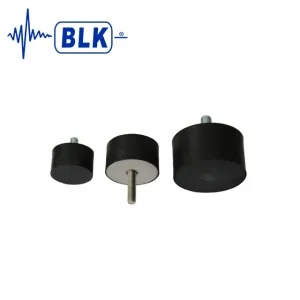
High-Quality BKVE Type Rubber Mounts for Marine Air Handlers
Conical rubber geometry delivering balanced horizontal stability and vertical compliance for marine blowers and engine room ventilation.

High-Quality BKH Type Rubber Mounts for Heavy Diesel Gensets
Heavy-duty captive mount supporting prime-power diesel generators against sudden base displacement and high-amplitude low-frequency roll.
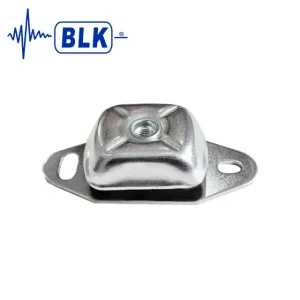
Custom BKM Type Rubber Mounts for Rotating Pumps & Motors
Engineered for smooth machine tool setups, chemical metering pumps, and packaging assembly conveyors operating across Colon logistics centers.
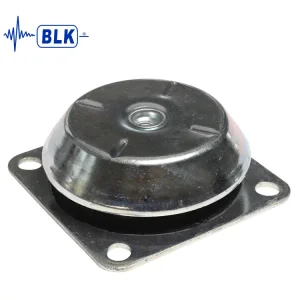
High-Quality BKHQ Type Rubber Mounts with Interlocking Snubbers
Integral steel housing restricts excess movement during wind shear and seismic events while maintaining complete acoustical decoupling.

Low Price BKP Type Rubber Mounts for Compact Precision Units
Energy-dissipating elastomeric bumpers cushioning end-of-stroke impact on overhead cranes and automated container sorting machinery.

Custom BKDR Type Rubber Mounts for Extreme Shear Loads
Designed for equipment subjected to simultaneous thrust and vertical loads, including marine shaft bearings and industrial centrifuge bowls.

Custom BK-DSR Type Damped Rubber Mounts for Substations
Specialized compound attenuates low-frequency core magnetostriction hum in high-voltage dry transformers, avoiding structural resonance.
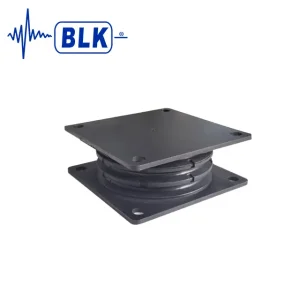
Custom BKSWA Type Multi-Layer Antivibration Dampers for Presses
Multi-tier laminated isolation dampers with integrated leveling screws engineered for stamping presses, injection molders, and heavy shears.
Technological Horizons: Smart Elastomers, IoT Telemetry & Sustainable Compounds
How Bellking R&D is solving the next generation of dynamic structural control challenges for Panama’s smart port automation and sustainable infrastructure.
Nano-Graphene Elastomeric Blends
To mitigate continuous cyclic heating during high-speed rail and crane traversing, Bellking integrates functionalized nano-graphene platelets into synthetic polychloroprene matrices. This raises internal thermal conductivity by 220%, swiftly dissipating hysteretic internal friction and preventing heat-induced reversion in Panama’s blistering climate.
Embedded Micro-Strain & IoT Telemetry
Preparing Panama’s automated container terminals for Industry 4.0, our next-generation prototypes feature embedded wireless piezo-resistive sensor filaments. Maintenance teams can continuously monitor real-time static deflection, load redistribution, and dynamic strain via cloud dashboards before mechanical failure can occur.
Bio-Based Renewable Elastomers
Aligning with global decarbonization initiatives and green building standards (LEED v4 certifications widely pursued across Panama City commercial redevelopments), our R&D team is developing bio-monomer synthetic rubbers derived from sustainable feedstocks that match petroleum-based vulcanizates in durability and tensile resilience.
Frequently Asked Questions by Panama Engineering & Procurement Teams
Clear, mathematically grounded engineering guidance regarding selection, environmental validation, customs delivery, and warranty assurances.
What are the key technical criteria for selecting rubber vibration isolators in Panama's climate?
Panama's high relative humidity (often exceeding 90%) and coastal marine salt fog require three fundamental engineering parameters:
- Elastomer Polymer Choice: Avoid unprotected natural rubber outdoors. Specify Polychloroprene (Neoprene) or EPDM compounded with anti-ozonant micro-waxes per ASTM D2000 specifications to prevent environmental embrittlement.
- Corrosion Protection: Metal fasteners and flanges must be coated with Dacromet passing a minimum 900-hour ASTM B117 salt spray test or fabricated from Grade 316 Stainless Steel.
- Disturbing Frequency Ratio: The system disturbing frequency ($f_d$) divided by the isolator’s natural frequency ($f_n$) must satisfy $\frac{f_d}{f_n} \ge 2.8$ to achieve >90% vibration isolation efficiency in rotating machinery.
Can Bellking provide 1:1 replacement mounts for obsolete European or American port equipment?
Yes. Our Kunshan engineering center routinely performs reverse-engineering of obsolete or expensive OEM vibration mounts. If you provide an equipment nameplate, a 2D engineering drawing, or a worn physical sample shipped to our testing laboratory, our engineers can analyze the shore hardness, dynamic spring rate, and thread pitch. We produce identical form-fit-function replacement batches with tailored tooling completed in as fast as 3 to 5 business days.
What is the expected operating lifespan of rubber vibration isolators in Panama?
Under continuous industrial load within rated deflection boundaries, Bellking engineered rubber isolators provide an operating service life of 8 to 12 years in indoor or sheltered HVAC plant rooms. For outdoor marine deck or gantry crane applications subject to direct tropical UV and salt water mist, a lifespan of 5 to 8 years is standard before scheduled maintenance replacement, outperforming market standard unbonded mounts by more than 100%.
How fast can orders be delivered to Panama City or the Colon Free Zone?
For urgent repair projects (such as out-of-service canal tugboats or critical hospital chiller breakdowns), in-stock standard models dispatch within 24 hours via DHL or FedEx Express airfreight, arriving at Tocumen International Airport (PTY) in approximately 4 to 6 business days. For bulk project orders, containerized ocean shipping from Ningbo/Shanghai to the ports of Balboa or Manzanillo takes approximately 22 to 28 days transit time.
What documentation and compliance certificates are included with commercial orders?
Every commercial order arrives with full international compliance paperwork: Certificate of Origin, ISO 9001 Factory Quality Inspection Reports, ASTM D2000 Material Batch Test Records, 900-hour Salt Spray Test Certification, Static/Dynamic Load-Deflection Curve Sheets, and a comprehensive 1-Year Comprehensive Replacement Warranty.
How do Bellking rubber mounts prevent structural resonance during seismic or wind load shocks?
Unlike pure metal coil springs that can resonate uncontrollably near their natural frequencies without fluid dampers, Bellking high-damping elastomers possess an internal loss factor ($\eta \approx 0.15 - 0.40$). This internal hysteresis dissipates kinetic mechanical energy into minute thermal energy during sudden lateral building sway, high coastal wind gusts, or localized seismic activity across Panama's subduction zones.
Need Customized Vibration Isolators for a Panama Project?
Send your equipment weight, operating RPM, center of gravity, and installation drawing. Our vibration control engineers will calculate your natural frequencies and deliver an engineered isolation plan within 24 hours.