
Primary Heavy-Duty Suspension & Anti-Vibration Systems
Engineered to mitigate dynamic structure-borne acoustic waves, pipe hammer, and seismic acceleration across commercial towers and mineral extraction complexes.
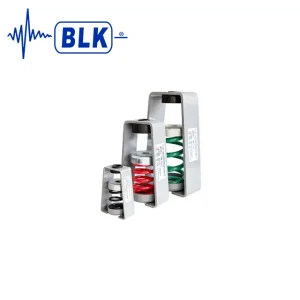
Peru Mining Slurry & Industrial Custom Spring Hangers
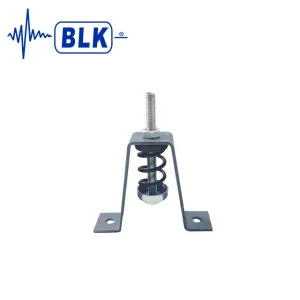
HV Type Suspended Spring Hangers for Lima MEP Projects
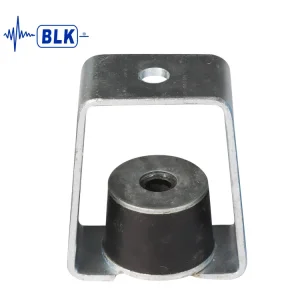
HR Type Molded Rubber Hangers for Pisco & Chimbote Plants
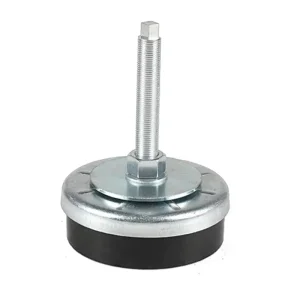
BKAL Type Precision Leveling Feet for Agro-Processing Peru
Vibration Isolation Engineering in Peru: Dynamics, Challenges, and Industrial Demands
The Republic of Peru represents one of Latin America's most dynamic and demanding industrial landscapes. Stretching from the Pacific coastline across the towering Andean Cordillera to the Amazonian basin, the country requires mechanical and electrical engineering solutions built to withstand extreme climatic variations, intense seismic activities, and harsh operating conditions. As Peru's infrastructure modernizes—spurred by landmark developments such as the Megaport of Chancay, extensive urban real estate expansion in metropolitan Lima, and multi-billion-dollar mineral extraction operations across Arequipa, Moquegua, and Cajamarca—the role of custom vibration isolation hangers has transformed from a standard MEP specification to a vital operational imperative.
Seismic Zone 4 Strict Compliance
Situated within the Pacific Ring of Fire, Peru enforces Norma Técnica E.030 (Diseño Sismorresistente). Suspended mechanical installations must incorporate vibration hangers equipped with integrated seismic snubbers and multi-directional restraint limits to prevent catastrophic shear collapse during peak ground accelerations.
High-Altitude Andean Mining
Copper, gold, and polymetallic extraction operations located between 3,500 and 5,000 meters above sea level (MASL)—including Las Bambas, Cerro Verde, and Toromocho—operate massive slurry lines, flotation blowers, and dewatering pumps subject to extreme thermal cycling and high-viscosity hydro-abrasion vibration.
Chancay Port & Coastal Corrosion
The expansion of maritime terminals and coastal agro-industrial packing plants in Callao, Pisco, and Chancay introduces severe atmospheric marine salinity. Vibration hangers deployed in these open or semi-enclosed structures require C5-M marine-grade protective finishes, such as high-velocity Dacromet or 316 stainless steel housings.
In municipal and institutional construction across Lima (especially financial centers such as San Isidro and Miraflores), acoustic attenuation has become a strict metric under international building certifications like LEED v4.1 and local environmental sound standards (Decreto Supremo N° 085-2003-PCM). Rooftop chillers, fan coil networks, suspended axial fans, and heavy-duty condenser water piping running overhead generate regenerative low-frequency rumble (sub-50 Hz) that rapidly propagates through structural concrete frames. Conventional rigid threaded rods transmit this acoustic energy throughout tenant floors, causing severe acoustic discomfort and progressive structural fatigue. Engineered vibration isolation hangers featuring hybrid steel springs coupled in series with elastomeric cups eliminate up to 98% of this structural transmission.
Global Vibration Control Standards: ASHRAE, ISO 10816, and Structural Mechanics
The engineering of anti-vibration hangers requires a rigorous mathematical understanding of transmissibility, harmonic motion, and dynamic stiffness. Global engineering consortia, notably ASHRAE (American Society of Heating, Refrigerating and Air-Conditioning Engineers) through Chapter 48 of the HVAC Applications Handbook, set definitive parameters regarding static deflection and natural frequency ratios for resilient pipe supports.
The Fundamental Isolation Physics
The natural frequency ($f_n$) of an elastomeric or steel spring hanger is governed directly by its static deflection ($\delta_{st}$), defined by the relation:
f_n = (1 / 2π) × √(g / δ_{st}) ≈ 5.0 / √(δ_{st} [cm])
Isolation efficiency is quantified via the Transmissibility ($T$) equation, factoring in the excitation or disturbing frequency of the mechanical asset ($f_d$) and the damping ratio (ζ):
T = √[ (1 + (2ζr)^2) / ((1 - r^2)^2 + (2ζr)^2) ] where r = f_d / f_n
Critical engineering deductions dictate that vibration isolation only commences when the frequency ratio ($r$) exceeds √2 (≈ 1.414). When $r < 1.414$, the hanger actually amplifies structural vibrations—a catastrophic failure scenario often observed when unqualified fabricators supply undersized springs. For maximum performance in Peruvian high-spec applications, our factory engineers target an $r \ge 3.0$, yielding theoretical isolation efficiencies upwards of 95% to 99%.
Comparative Performance Matrix: Dynamic Selection Matrix
| Hanger Configuration | Core Damping Media | Deflection Range (δ) | Natural Frequency (f_n) | Target Peruvian Application | Seismic Restraint Rating |
|---|---|---|---|---|---|
| HV Type Series | Helical Spring + Neoprene Cup | 25 mm – 50 mm | 2.2 – 3.2 Hz | Lima High-Rise Commercial AHU & Condenser Loops | ANSI/ASHRAE 171 Restrained |
| HR Type Series | Molded High-Grade Nitrile/EPDM | 6 mm – 12 mm | 6.5 – 9.0 Hz | High-speed Fans, Coastal Canning Piping (Callao) | Non-Seismic / Shear Captive |
| Custom Heavy Mining | Multi-Spring Parallel Array | 50 mm – 75 mm | 1.8 – 2.5 Hz | Slurry Transport, Toromocho Ball Mill Feed Lines | Peruvian E.030 Catastrophic-Proof |
| BK-DS Cushioned | Oil-Tempered Spring + Damping Gel | 35 mm – 50 mm | 2.0 – 3.0 Hz | Arequipa Substation Acoustic Bus Ducts | Integrated Triaxial Snubber |
| Trapeze Multi-Point | Modular Dual-Spring Cages | 25 mm – 38 mm | 2.8 – 3.5 Hz | Chancay Port Terminal Warehouse Fire Sprinklers | UL/FM Approved Restraints |
Direct China Factory Integration: Precision Production for Peruvian EPC Contractors
Procuring vibration isolation hardware through multi-tiered intermediaries or traditional North American/European brands frequently saddles Peruvian engineering procurement contractors (EPCs) with exorbitant markups (often 40% to 70% above base factory costs) and protracted 16-to-24-week delivery lead times. Our specialized vibration reduction manufacturing base in Kunshan, Jiangsu Province, transforms this paradigm through direct engineering integration, cutting-edge metallurgical automation, and agile custom fabrication.
Automated Spring Metallurgy
Utilizing high-tensile 60Si2Mn and 55CrSi spring steels, our CNC high-speed coiling machines apply precision hot-coiling and shot-peening treatments to relieve microscopic surface stress. Every batch undergoes 100% pre-compression to solid height, eliminating in-service permanent sag.
Rapid 1:1 Customization
Our dedicated engineering department converts technical drawings into dynamic CAD/FEA models within 24 hours. Whether modifying bracket throat dimensions, adding secondary containment eyes, or integrating special rod diameters (M10 to M36), prototypes are completed in 3 working days.
900h+ Salt-Spray Corrosion Protection
To withstand Peru's coastal Pacific fog (garúa) and acidic mine air, all steel hanger brackets and coiled elements receive non-electrolytic Dacromet or hot-dip galvanization finishes, exceeding 900 hours of neutral salt spray testing under ASTM B117 standards without red rust.
Direct Chancay & Callao Transpacific Supply Chain Route
The operational commissioning of the Chancay Multimodal Megaport creates an unprecedented logistics corridor between China and Peru. Direct maritime express routes reduce container transit times from Shanghai and Ningbo ports to Peru down to approximately 23–28 days, cutting 10 to 15 days off historic transit periods that involved complex transshipments through Central or North America. For urgent engineering projects, standard isolators ship within 24 hours from our Kunshan facility, backed by factory mill test certificates (MTC EN 10204 3.1) and dynamic stiffness load curves.
Localized Applications: Field-Engineered Scenarios Across Peru
Vibration isolation requires precise contextual tuning. The operational parameters for an air handling unit suspended in a high-rise office complex in San Isidro differ radically from high-capacity slurry pipes hanging inside an Andean flotation plant. Here are real-world application models engineered for Peru's exact terrain and operational profiles:
1. Seismic MEP Suspensions in Lima High-Rise Commercial Corridors
In modern commercial developments throughout Lima, including multi-story corporate headquarters and private clinics, overhead chilled water supply and return lines (often 150mm to 350mm diameter) run across parking garages and plenum spaces directly beneath office floors. During system startup or sudden valve closures, hydraulic shock loads cause severe dynamic pipe whip. Conventional rigid hangers snap or shear ceiling anchor studs. Our HV-Type Spring Hangers, featuring heavy-gauge welded steel frames with 30-degree total rod angular swing clearance and high-deflection neoprene sound-break inserts, eliminate acoustic transmission while preventing structural anchoring failure under seismic ground tremors.
2. Andean Mining Flotation & Concentrate Slurry Transport
In mining operations such as Quellaveco (Moquegua) and Antamina (Ancash), high-density ore pulp is pumped at high velocities through suspended steel pipe runs. The turbulent flow and intermittent cavitation generate high-amplitude, low-frequency oscillations. By installing custom multi-spring hangers engineered with viscous damping fluid inserts and high lateral stability factors ($K_x / K_y > 1.0$), horizontal pipe movement is effectively mitigated without transmitting cyclic stress into the supporting structural steel trusses.
3. Coastal Agro-Export Packing & Fishmeal Cold Chains (Ica, Chimbote, Paita)
Peru's massive agricultural and marine export processing facilities operate ammonia ($NH_3$) and glycol refrigeration networks 24/7. Overhead reciprocating compressors, evaporative condensers, and air-blast chillers generate high-frequency micro-vibrations that loosen threaded pipe joints and accelerate refrigerant leakage risks. Our HR-Type Molded Rubber Hangers and BKAL Adjustable Leveling Mounts isolate high-frequency acoustic harmonics, insulate electrical stray currents, and offer complete immunity to marine atmospheric corrosion.
Emerging Industry Trends: The Evolution of Intelligent Vibration Isolation
The global vibration attenuation industry is undergoing rapid technological transformation, moving from static mechanical hardware to responsive, multi-functional building protection nodes:
IoT & MEMS Vibration Monitoring
Next-generation spring hangers integrate miniaturized, self-powered wireless triaxial MEMS accelerometers. These micro-sensors continuously log real-time vibration amplitude, detecting abnormal bearing wear or harmonic resonance spikes in connected machinery before structural cracks occur.
Modular Trapeze Prefabrication
Driven by rapid modular construction in modern mega-projects, contractors avoid individual hanger installations by adopting engineered trapeze racks. Pre-engineered cross-beams with pre-sized, color-coded spring isolators arrive on-site fully assembled, cutting installation labor costs by up to 60%.
Multi-Stage Polyurethane Hybrid Damping
Replacing traditional vulcanized rubbers, modern micro-cellular polyurethane elastomers offer ultra-low dynamic-to-static stiffness ratios ($K_d / K_s \approx 1.15$), maintaining exceptional damping elasticity across wide temperature swings (-40°C to +80°C) without embrittlement.
Engineering Procurement Guide: Step-by-Step Sizing & Compliance Specification
To avoid dangerous installation failures or resonant magnification, international procurement teams and consulting MEP engineers must adhere to a standardized selection methodology prior to issuing request-for-quotations (RFQs):
- Step 1: Calculate Actual Operating Suspended Weight: Sum the bare weight of the piping or ductwork, the maximum fluid fill capacity (e.g., water, oil, slurry), thermal insulation layers, valves, and inline fittings across each hanger support span.
-
Step 2: Identify Lowest Disturbing Frequency ($f_d$): Determine the lowest rotational speed (RPM) of attached pumps, fans, or compressors:
f_d = RPM / 60. For a pump operating at 1,450 RPM, the disturbing frequency is 24.16 Hz. - Step 3: Define Required Static Deflection ($\delta_{st}$): Apply ASHRAE 48 recommendations based on building floor sensitivity. For critical floors, select a spring with a static deflection that yields $f_n \le 1/3 \times f_d$. If $f_d = 24.16\text{ Hz}$, $f_n \le 8.05\text{ Hz}$ (δ ≥ 4 mm). For roof-mounted chillers above offices, target $\delta_{st} \ge 25\text{ mm}$ ($f_n \approx 3.1\text{ Hz}$) to achieve >97% isolation efficiency.
- Step 4: Factor in 50% Additional Travel Capacity: Ensure the selected spring can deflect an extra 50% beyond its initial working load to solid height without structural yielding or coil binding.
- Step 5: Review Rod Angular Clearance: In seismic zones or thermal expansion runs, confirm the hanger bracket eye permits a minimum misalignment of ±15 degrees without steel-on-steel rod contact.
Frequently Asked Questions: Technical Engineering & Global Procurement
Detailed technical answers addressing seismic compliance, metallurgy, installation pitfalls, and international logistics for project engineers and procurement managers.
How do Bellking vibration hangers comply with Peru's Seismic Code (Norma Técnica E.030)?
Why is a combination of steel springs and neoprene elements necessary in a single hanger?
What surface treatment is recommended for hangers installed in coastal Peruvian facilities?
How do you prevent "acoustic short-circuiting" during installation?
What documentation and quality certifications accompany international export shipments?
What are typical production and delivery lead times to Peruvian ports?
Precision Platforms, Industrial Mounts & Specialized Isolators
Complete vibration control solutions covering heavy industrial foundations, laboratory metrology tables, and floor-anchored machinery throughout Peru.
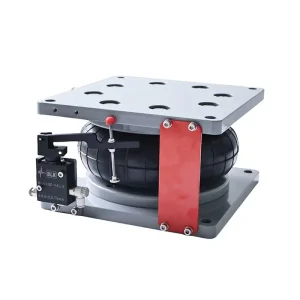
BK-PF Precision Pneumatic Mounts (Metrology Labs)
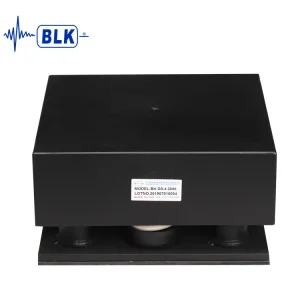
BK-DS Heavy Damped Floor Mounts for Pumps
HV Heavy-Load Pipe Spring Hangers for Infrastructure
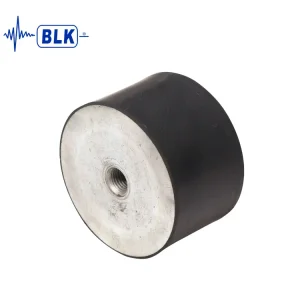
BKDD High-Deflection Rubber Machinery Mounts
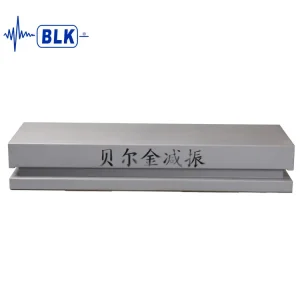
BK-MT Modular Matrix Anti-Vibration Mounts
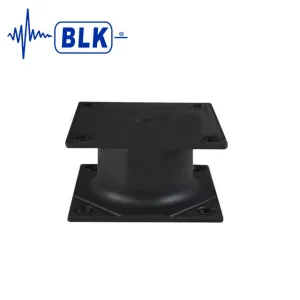
BKSW Heavy-Impact Elastomeric Bumpers & Buffers
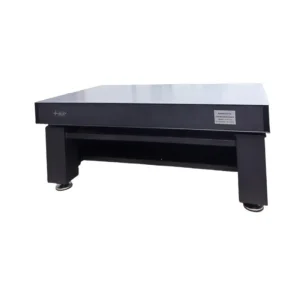
BK-RT High-Damping Platform for Heavy Equipment
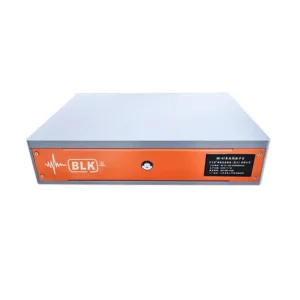
BK-AT Desktop Optical Isolation Table for Testing
Request an Engineered Vibration Isolation Proposal for Peru
Send your pipe schedules, mechanical schedules, equipment RPM, and seismic zone parameters to our application engineering team. We deliver custom 2D/3D CAD models, dynamic deflection calculations, and factory-direct FOB/CIF pricing within 24 hours.
Send Inquiry Now — Get 24-Hour Engineering Support