
Featured Inertia Bases & Anti-Vibration Systems
Engineered for immediate integration in high-demand Central American HVAC, cleanroom, and fluid-handling mechanical rooms.
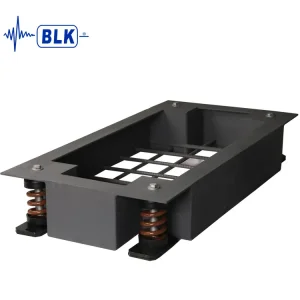
High-Quality CPB type Inertia Bases & Pump Supports for Costa Rica Facilities
View Product Details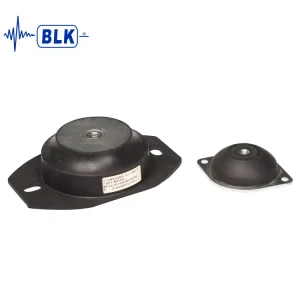
Low Price BKP Type Industrial Rubber Mounts Costa Rica Standard
View Product Details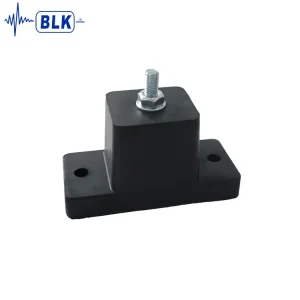
Low Price BKTS Type High-Damping Rubber Isolation Pad Factory
View Product Details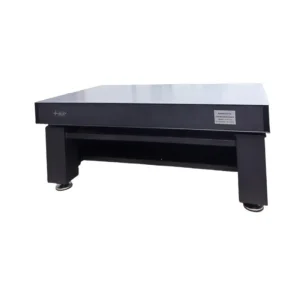
High-Quality BK-RT Type Damped Inertia Platform for Cleanrooms
View Product DetailsCosta Rica Industrial Context & Vibration Mitigation Challenges
Navigating high seismic activity, tropical atmospheric corrosion, and rapid Free Trade Zone expansion.
The industrial landscape of Costa Rica is undergoing a rapid, structural transformation. Driven by the expansion of top-tier life sciences, semiconductor assembly, precision medical device manufacturing (such as hubs within Coyol Free Zone in Alajuela and Evolution Free Zone in Grecia), and world-class luxury eco-hospitality complexes in Guanacaste and the Central Valley, the demand for high-reliability building services has reached unprecedented heights.
Within modern industrial plant rooms, HVAC water circulation, and fire protection systems, mechanical pumps constitute the primary source of kinetic disturbance. Without adequate dynamic mass and isolation, rotating pump equipment generates structure-borne low-frequency noise (typically 10 Hz to 60 Hz) and high-energy torsional oscillations that migrate across reinforced concrete floor slabs.
Furthermore, mechanical engineers in Costa Rica must confront two strict environmental challenges:
- Seismic Constraints (Código Sísmico de Costa Rica - CSCR-2010): Costa Rica sits on the subduction zone of the Cocos and Caribbean plates. Base-mounted equipment must incorporate heavy concrete dynamic mass combined with multidirectional seismic snubbers rated for horizontal acceleration forces exceeding 0.4g–0.6g.
- Tropical Climatic Degradation: Operating conditions in San José, Limón, and Puntarenas expose structural base frames to sustained 80–95% relative humidity and coastal salt-mist. Standard unprimed channel iron corrodes rapidly, inducing uneven structural settling and severe shaft misalignment.
Dynamic Resonance & The Role of Concrete Mass
An inertia base is fundamentally a dynamic mechanical barrier. By casting high-density concrete (minimum 2,400 kg/m³) into an engineered perimeter structural channel (ASTM A36 or structural steel), the system achieves three decisive mechanical objectives:
- Center of Gravity Lowering: Drops the combined center of mass closer to the elastic support plane, reducing rocking moments caused by end-suction and split-case pipe thrusts.
- Inertial Mass Ratio Optimization: Providing a mass multiplier of 1.5× to 3.0× the operating pump weight dampens transient start-up resonance and surging amplitude.
- Stiff Mechanical Alignment Platform: Prevents long-term flexure between the pump casing and the electric driver motor, guarding against mechanical seal blowout and early bearing raceway failure.
Inertia Bases & Pump Supports: Price in the Costa Rica Market
Comprehensive pricing matrix comparing landed Chinese factory direct vs. local Central American fabrication.
Procurement teams and mechanical consultants in Costa Rica frequently face a dilemma: sourcing uncertified, locally welded frame fabrications from machine shops in Cartago or San José, versus importing pre-engineered, factory-tested inertia base assemblies directly from specialized manufacturers like Bellking. While local fabricators offer short transit distances, their assemblies often lack finite element stress analysis (FEA), hot-dip galvanized structural profiles, integrated cantilever spring brackets, and ASHRAE-certified deflection calibrations. This absence often leads to field failure and premature replacement.
| Equipment Type / Base Configuration | Typical Pump Power / Weight Range | Factory Direct Price (USD FOB) | Estimated Landed Price Costa Rica (CIF Caldera / Limón) | Standard Lead Time (Engineered) |
|---|---|---|---|---|
| CPB Light Modular Frame (Unfilled channel with rebar brackets) | 5 HP - 20 HP / 250 - 600 kg | $280 – $480 | $420 – $680 | 3 – 5 Days Ex-Factory |
| CPB Standard Heavy Inertia Base (Integral seismic bracketry, ASTM A36) | 25 HP - 75 HP / 700 - 1,800 kg | $520 – $980 | $750 – $1,350 | 5 – 7 Days Ex-Factory |
| High-Capacity Double Suction Pump Base (Reinforced cross-ribbing) | 100 HP - 250 HP / 2,000 - 4,500 kg | $1,100 – $2,300 | $1,650 – $3,100 | 7 – 10 Days Ex-Factory |
| BK-RT Precision Dynamic Damped Platform (For cleanrooms & optical tools) | Specialized Metrology / 500 - 2,500 kg | $1,800 – $4,500 | $2,400 – $5,600 | 10 – 14 Days Ex-Factory |
| Seismic Snubber & Spring Package (4–6 multi-directional spring mounts) | Per Base Isolation Unit (25mm / 50mm defl.) | $160 – $450 / set | $240 – $620 / set | In-Stock / 24-hr Shipment |
Steel Thickness & Rebar Matrix
Uncertified local builders often substitute structural perimeter channels with thin folded sheet steel (3mm). Bellking utilizes heavy structural steel channels ranging from 120mm to 250mm depth with pre-welded two-way ASTM reinforcement bars, guaranteeing zero twisting during concrete cure.
Anti-Corrosion Surface Treatments
Costa Rica’s warm maritime air rapidly oxidizes conventional alkyd primers. Bellking offers advanced Dacromet treatment, standard hot-dip galvanization (HDG), and marine-grade epoxy coatings that withstand over 900 hours of continuous salt spray without pitting or delamination.
Total Cost of Ownership (TCO)
Deploying a precision inertia base increases initial capital expenditure by roughly 8% relative to the total pump package. However, by reducing operating vibration velocities below 1.8 mm/s RMS (ISO 10816-3 Grade A), mechanical seal lifespans double, eliminating catastrophic flooding and production halts.
Localized Application Scenarios Across Costa Rica
Engineered solutions deployed across life sciences cleanrooms, luxury resorts, and high-head water distribution.
Life Sciences Cleanrooms (Alajuela / Heredia)
Facilities producing catheter implants, microfluidic chips, and drug delivery systems cannot tolerate structure-borne micro-vibrations. Chilled water primary and secondary pumps located on upper floors or adjacent utility penthouses utilize CPB concrete inertia bases supported by MA-type enclosed spring mounts. This combination attenuates high-frequency harmonics, isolating sensitive cleanroom laser lithography tools from fluid pulsation.
Luxury Hospitality & Eco-Resorts (Guanacaste & Escazú)
In 5-star eco-resorts on the Papagayo Peninsula, guest acoustic comfort demands indoor noise criteria below NC-25. HVAC booster pumps, cooling tower supply lines, and domestic water pumps placed directly beneath residential villas or luxury suites leverage BK-DS damped spring isolators with high-mass inertia frames. This completely eliminates structure-borne low-frequency humming through solid concrete structures.
Municipal Water Infrastructure (AyA / Limón Ports)
Costa Rica’s rugged topography requires municipal aqueduct pumping stations (AyA) and port wastewater terminals to operate high-pressure split-case pumps. The dynamic hydraulic thrust during initial valve opening induces high structural displacement. Bellking’s rigid welded T-shaped and L-shaped inertia frames maintain precise alignment under high dynamic surges while absorbing seismic vibrations.
Technical Roadmap & Next-Generation Vibration Control
Transitioning from passive inertia steel frames to active telemetric vibration-monitoring platforms.
The Dynamic Evolution: 2026–2030
Vibration mitigation is no longer merely about pouring concrete into structural channels. Modern engineering requires proactive dynamic management across the entire building lifecycle. Bellking is driving three major technological evolutions:
1. Finite Element Analysis (FEA) Customization: Rather than relying on static weight heuristics, all Bellking inertia bases undergo FEA modal simulation. This ensures the structural frame's natural bending frequency remains at least 20% higher than the disturbing rotational speed (RPM) of the pump, preventing internal frame resonance.
2. Smart Telemetry Integration: Emerging industrial standards in Costa Rica's automated free-trade complexes require continuous asset health tracking. Bellking is integrating tri-axial piezoelectric accelerometers directly into the perimeter mounting pockets. These sensors transmit real-time vibration amplitude and temperature metrics over Modbus / BACnet to building management systems (BMS), alerting operators to bearing wear or cavitation before failure occurs.
3. Advanced Modular Bolt-Together Base Assemblies: To reduce international air and containerized ocean freight costs into San José via Caldera/Limón, Bellking has developed high-tensile modular inertia bases. Precision CNC-punched side channels assemble on site with grade 8.8 structural bolts, eliminating hot-work permits inside operational plants and cutting shipping volume by up to 60%.
Dynamic Mass Design Formula
To calculate the natural frequency ($f_n$) of an inertia base mounted on isolated steel springs:
Where:
- k_total: Combined spring constant of all isolators (N/m)
- M_total: Mass of pump + motor + concrete base + fluid entrapped (kg)
To ensure high isolation efficiency (>90%), the disturbing operational frequency ($f_d$) of standard 1,750 RPM pumps (29.2 Hz) or 3,500 RPM pumps (58.3 Hz) must achieve a frequency ratio ($f_d / f_n$) greater than 3.0. Bellking sizes its inertia systems to produce an $f_n$ between 3.2 Hz and 4.5 Hz, keeping transmissibility to the surrounding building structure well below 5%.
Frequently Asked Questions: Costa Rica Industrial Projects
In-depth technical answers for consulting engineers, MEP contractors, and plant facilities managers.
Why is concrete required inside an inertia base rather than mounting directly to steel springs?
How do Bellking inertia bases comply with the Costa Rican Seismic Code (CSCR-2010)?
What concrete compressive strength and curing specifications are recommended?
What is the typical shipping lead time and customs process for Costa Rica?
Can Bellking manufacture custom non-standard bases for existing equipment retrofits?
How does tropical humidity affect the isolator springs, and how is corrosion prevented?
Industrial Mounts, Spring Isolators & Vibration Damping Pads
Field-proven components to isolate electrical transformers, heavy chillers, and precision industrial machinery.

High-Quality BKH Type Rubber Mounts for Factory Plant Installations
View Product Details
Low Price BK-PM Type Polymer Structural Damping Pad Series
View Product Details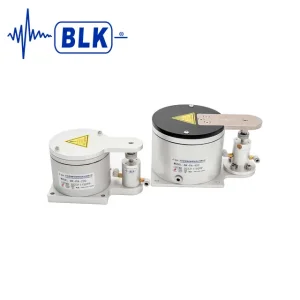
High-Quality BK-PA Type Precision Air Mounts for Cleanroom Metrology
View Product Details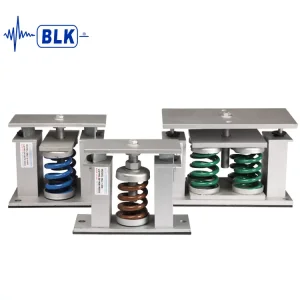
High-Quality MA Type Anti-Vibration Heavy Spring Mounts
View Product Details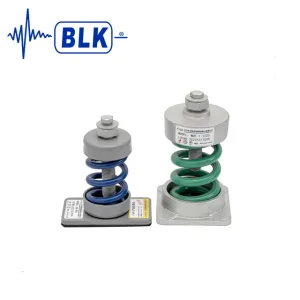
High-Quality MD Type Enclosed Anti-Vibration Spring Mounts
View Product Details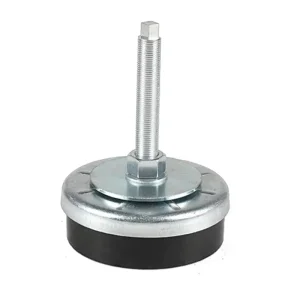
Low Price BKAL Type Height-Adjustment Machinery Rubber Feet
View Product Details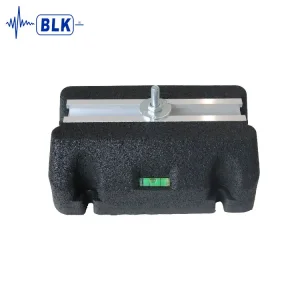
High-Quality BKDJ Type Ribbed Machinery Anti-Vibration Rubber Pad
View Product Details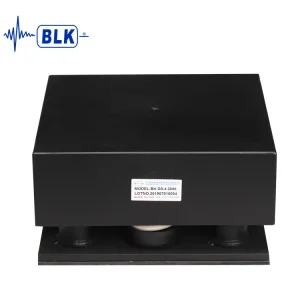
Low Price BK-DS Type Viscous Damped Spring Mounts Factory Direct
View Product DetailsRequest an Engineered Vibration Isolation Proposal
Connect directly with Bellking's senior dynamic application engineers. Receive custom sizing calculations, finite element simulations, and factory-direct pricing for Costa Rica within 24 hours.
Send Inquiry Now