
High-Performance Rubber Mounts for Berlin Projects
Immediate ex-factory delivery for HVAC equipment, industrial compressors, and precision test rigs operating across the Berlin-Brandenburg metropolitan corridor.

Berlin-Spec BKVV Type Industrial Rubber Mounts
Elastomer: High-grade Shore 40-70A NR/NBR
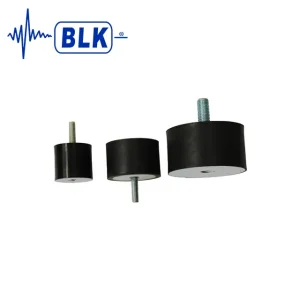
Berlin HVAC Custom BKVD Type Rubber Dampers
Damping Ratio: 0.08–0.15 for pump sets
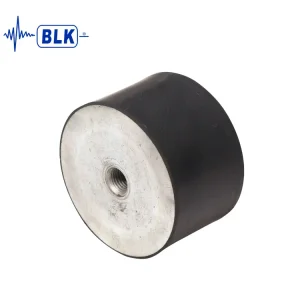
High-Quality BKDD Type Female-Female Dampers
Application: Electrical enclosures & blowers
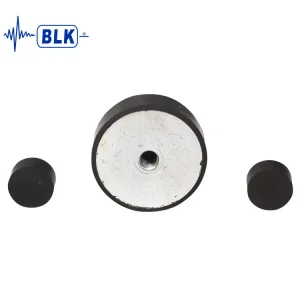
Custom BKDE Type Single Stud Rubber Mounts
Deflection: Linear progressive shear/comp
Berlin’s Industrial Ecosystem & Structural Decoupling Requirements
Navigating the acoustical and vibrational challenges of urban high-density industrial manufacturing, cleanroom facilities, and large-scale district energy retrofits.
The Federal State of Berlin, alongside the wider Berlin-Brandenburg metropolitan region, is undergoing an unprecedented structural transition. While historically recognized as a center for electrical engineering and specialized manufacturing, modern Berlin has evolved into Europe’s focal hub for clean-technology clusters, high-tech photonics, biomedical labs in Adlershof, and urban data infrastructure. This rapid expansion within dense urban zoning introduces severe structural dynamics challenges that classical industrial installations rarely encounter.
German municipal environmental guidelines, specifically governed by the Bundes-Immissionsschutzgesetz (BImSchG) and enforced through TA Lärm (Technische Anleitung zum Schutz gegen Lärm), place the strictest noise and vibration threshold limits in the European Union on plant operators. In mixed-use zones throughout districts such as Mitte, Spandau, Friedrichshain-Kreuzberg, and Tempelhof, mechanical equipment operating on building rooftops or subterranean basements must strictly control structure-borne sound transmission.
Low price does not mean compromising on regulatory adherence. Berlin contractors and original equipment manufacturers (OEMs) demand vibration isolation solutions that eliminate the high overhead and multi-tier distributor markups common in the domestic European market, while matching the rigorous mechanical elastomeric performance dictated by DIN 4150 (Structural Vibration) and DIN EN ISO 9001:2015 controlled production.
The Berlin Acoustic & Vibration Challenge
Urban density means that industrial chillers, heat pumps, backup generators, and CNC tooling centers often share party walls or foundations with commercial workspaces or residential apartments. Without mathematically sized rubber vibration isolators, low-frequency structure-borne vibration propagates across reinforced concrete structures, converting into disruptive airborne audible hums (20 Hz to 250 Hz) that trigger non-compliance fines and mandatory plant shutdowns under Berlin emission regulations.
Elastomeric Isolation Dynamics: Mathematical Formulation
Understanding how dynamic stiffness, damping loss factors, and excitation frequencies dictate proper isolator selection for German mechanical plants.
Frequency Ratio Optimization
Isolation efficiency commences only when the excitation frequency of the machinery ($f_d$) exceeds $\sqrt{2} \times f_n$ (natural frequency of the rubber mount). For industrial installations across Berlin, Bellking engineers calculate for a target frequency ratio of:
r = f_d / f_n ≥ 2.8 to 4.0
This design margin guarantees an isolation rate exceeding 88% to 95%, completely preventing resonance amplification under continuous variable frequency drive (VFD) operations.
Dynamic-to-Static Ratio ($K_d / K_s$)
Unlike steel coil springs, rubber possesses internal polymeric friction that creates dynamic stiffening. Bellking selects high-purity natural rubber (NR) and chloroprene (CR) compounds engineered with low dynamic stiffening ratios:
1.2 ≤ K_d / K_s ≤ 1.45
This maintains soft compliance under high-frequency operational shock while sustaining robust static stability against machine startup rocking and hydraulic transient loads.
Loss Factor & Hysteresis
Elastomeric mounts provide inherent structural damping without external fluid dampers. With an engineered loss factor of:
\eta \approx 0.10 \text{ to } 0.22
Our mounts absorb kinetic vibrational energy directly at startup and shutdown passages through resonance. This protects delicate components like heat exchanger copper joints and variable refrigerant flow (VRF) compressor manifolds from low-cycle metal fatigue.
Engineering Sizing Table: Rubber Vibration Isolators in Typical Berlin Applications
| Machine Classification | Typical Operating RPM | Excitation Freq ($f_d$) | Target Isolator Natural Freq ($f_n$) | Static Deflection Range | Isolation Efficiency Target |
|---|---|---|---|---|---|
| Hydraulic Centrifugal Pumps (District Heating) | 1,450 – 2,900 RPM | 24.2 – 48.3 Hz | 6.0 – 9.0 Hz | 3.5 – 7.0 mm | 92.0% – 96.5% |
| Commercial HVAC Rooftop Condensers & Chillers | 950 – 1,750 RPM | 15.8 – 29.2 Hz | 5.0 – 7.5 Hz | 4.5 – 9.5 mm | 89.0% – 94.0% |
| Rotary Screw & Reciprocating Air Compressors | 1,800 – 3,600 RPM | 30.0 – 60.0 Hz | 7.0 – 10.0 Hz | 2.5 – 5.0 mm | 94.0% – 98.2% |
| Adlershof Metrology Tables & Optical Stages | Ambient Floor Shock | 5.0 – 50.0 Hz | 3.5 – 5.5 Hz (Air/Hybrid) | 8.0 – 16.0 mm | 96.0% – 99.0% |
| Industrial Exhaust Blowers & Ventilation AHUs | 720 – 1,440 RPM | 12.0 – 24.0 Hz | 4.5 – 6.5 Hz | 6.0 – 12.0 mm | 87.5% – 93.0% |
Disintermediation: Achieving "Low Price" Without Sacrificing Reliability
Why Berlin engineering contractors, MEP firms, and equipment manufacturers are shifting to direct Chinese OEM manufacturing partnerships.
Breaking the Multi-Tier Distributor Markup
Traditionally, a mechanical contractor in Berlin purchasing anti-vibration mountings procures through a multi-tier distribution network: primary European brand holder, regional German wholesaler, and local supply house. Each layer imposes handling margins, marketing markups, and stocking premiums, ultimately resulting in an end-user purchase price 200% to 350% above original manufacturing costs.
Bellking eliminates every middleman layer. By shipping directly from our state-of-the-art 2,000 m² ISO 9001 certified manufacturing plant in Kunshan directly to Berlin logistics hubs or job sites, our German commercial clients capture factory-floor pricing while enjoying custom non-standard dimensional tailoring impossible through domestic shelf stockists.
Total Cost of Ownership (TCO) & Preventative Reliability
In vibration isolation, the purchase price represents less than 5% of the total system risk profile. A failed rubber mount causes shaft misalignment, bearing seizure, cracked refrigerant copper piping, and unscheduled plant downtime. Bellking integrates:
- Automated Vulcanization Bonding: Proprietary primer and bonding agents prevent elastomer-to-steel delamination under extreme shear forces up to 5G shock loads.
- Dacromet Anti-Corrosion Surface Finishing: Steel studs and baseplates withstand 900-hour neutral salt spray tests, ideal for damp basement utility rooms and corrosive outdoor Berlin winter salts.
- Anti-Ozone & Anti-Aging Formulations: High-grade EPDM and chloroprene blends resist thermal oxidation and atmospheric ozone degradation up to 15+ years.
German Regulatory & Environmental Compliance
Every vibration isolator batch dispatched to the European Union and Germany strictly satisfies relevant directives:
Engineering Solutions Across Berlin’s Flagship Sectors
Field-proven elastomeric decoupling protocols implemented across civil, industrial, and tech environments.
Berlin Wärmewende (District Heating Pumps)
As municipal utilities like Berliner Energie und Wärme AG upgrade district heating networks, massive hydraulic circulation pumps and heat exchangers generate continuous 50 Hz line hums. Bellking BKVD and BKH heavy-load mounts provide high shear elasticity, interrupting acoustic energy paths into floor slabs and adjacent residential housing blocks.
S-Bahn & U-Bahn Transit-Adjacent Buildings
In urban redevelopment zones near major BVG rail arteries (e.g., Alexanderplatz, Ostkreuz, Hauptbahnhof), ground-borne rail rumbling generates secondary structure-borne noise. Multi-layer elastomeric pad systems and damped BK-DSR mounts provide dual-frequency attenuation to safeguard building acoustical performance under DIN 4109.
Adlershof Photonics & Cleanroom Facilities
Berlin’s Technology Park in Adlershof houses laser laboratories, microelectronics inspection, and scanning electron microscopy (SEM). High-frequency compressor and HVAC vibrations destroy measurement precision. Bellking high-damping elastomer isolators decouple micro-vibrations across the sub-micron scale.
Comprehensive Anti-Vibration Mounts for Berlin Engineering
Explore our heavy-duty, marine-grade, shear-compression, and multi-layer elastomeric mounts engineered for diverse mechanical configurations.

BKVE Type Conical Industrial Rubber Mounts
Feature: Multi-axial progressive damping

BKH Type Marine & Heavy Machinery Mounts
Application: Diesel gensets & heavy chillers
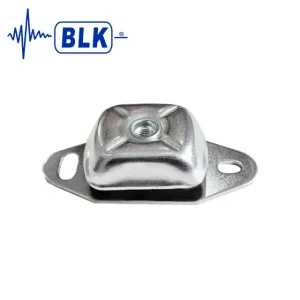
BKM Series Marine-Grade Flanged Isolators
Durability: Resistant to oil, lubricants & fuels
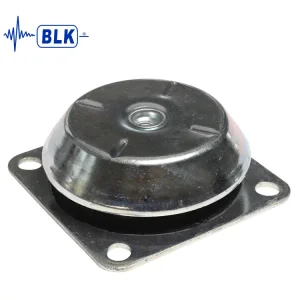
BKHQ Type Captive Seismic Rubber Isolators
Load: Extreme vertical & lateral stability

BKP Type Low-Profile Machinery Feet Mounts
Application: Lathes, saws, packaging plants
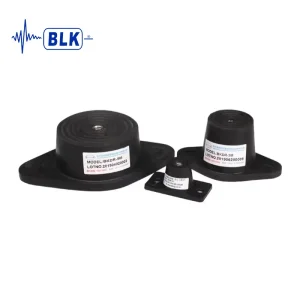
BKDR Type Ring Rubber Shear Dampers
Use: Suspended motors & drive mechanisms
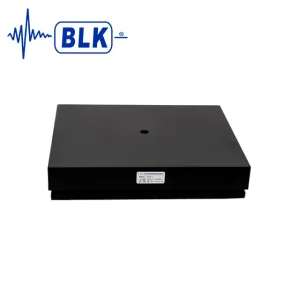
BK-DSR Type High-Damping Structural Mounts
Performance: Resists severe impact excitation

BKSWA Multi-Layer Elastomeric Steel Dampers
Load: Ultra-high tonnage foundation isolation
Next-Generation Elastomer Dynamics for European Industry
Driving innovations in smart predictive damping, sustainable circular materials, and advanced computational FEA modeling.
IoT-Enabled Smart Sensing Mounts
Bellking’s R&D team is developing embedded micro-piezoelectric sensors within the elastomeric matrix. These smart mounts monitor real-time dynamic deflection, cumulative vibration cycles, and internal thermal buildup, transmitting diagnostic telemetry straight to Berlin facility building management systems (BMS) for predictive maintenance.
Eco-Polymers & Circular Formulations
Aligned with the European Green Deal and German circular economy standards (Kreislaufwirtschaftsgesetz), we are formulating bio-based carbon-neutral elastomers and devulcanized reclaimed high-grade polymers that maintain strict tensile strength and low permanent set characteristics without petrochemical dependence.
Hyperelastic Non-Linear FEA Modeling
Using advanced Mooney-Rivlin and Ogden material models, Bellking provides Berlin OEM design engineers with bespoke finite element analysis (FEA). We simulate multiaxial shear, compressive strain, and high-harmonic resonance prior to mold production, reducing tooling prototyping lead times to as fast as 3 business days.
Frequently Answered Questions for Berlin Engineers
In-depth responses covering dynamic frequency selection, German building codes, batch customization, and shipping logistics.
Why should a Berlin MEP or industrial buyer choose rubber mounts over spring isolators?
How do Bellking rubber isolators satisfy German DIN 4150 and TA Lärm regulations?
What specific parameters are required to calculate and quote an isolator solution?
How can Chinese factory-direct pricing remain competitive when factoring European freight and duties?
Can Bellking manufacture custom durometers, metric thread configurations, and special polymers?
What is the anticipated operating lifespan and creep rate of Bellking rubber isolators?
Are Bellking products compliant with EU chemical safety (REACH & RoHS)?
How do you handle post-sale engineering support, warranties, and emergency replacements?
Connect Directly with Our Vibration Engineering Factory
Eliminate costly distributor markups. Receive custom vibration sizing calculations, dynamic deflection plots, and ex-factory quotation pricing for your Berlin facility or OEM manufacturing line within 24 hours.