
High-Demand Rubber Vibration Mounts for Riyadh HVAC & Industrial Plants
Pre-engineered, high-damping elastomeric vibration isolators for immediate project deployment across the Kingdom.


Industrial Dynamics & Vibration Engineering Requirements in Riyadh
Navigating dynamic loading, thermal degradation, and mechanical reliability across Saudi Arabia’s mega-infrastructure transformation under Saudi Vision 2030.
Riyadh’s Hyper-Expansion & Industrial Surge
The Riyadh metropolitan zone is witnessing historic capital deployment under Saudi Vision 2030. Major undertakings such as The New Murabba (Mukaab), King Salman International Airport, the ongoing optimization of the Riyadh Metro network, and the massive expansion of MODON Industrial Cities 1, 2, and 3 have established unprecedented demand for commercial HVAC, emergency diesel power generation, water distribution pumping facilities, and precision industrial machinery.
In high-density commercial nodes like the King Abdullah Financial District (KAFD), acoustic control and structure-borne vibration mitigation are legally mandated by the Saudi Building Code (SBC). Rooftop chiller plants, cooling towers, and variable refrigerant flow (VRF) condensing units generate intense low-to-medium frequency harmonic vibrations. Without elastomeric isolators of verified dynamic stiffness ($K_d$), mechanical energy transmits into post-tensioned concrete slabs, causing structural fatigue and severe tenant disturbance.
Environmental Stressors: The Riyadh Climate Reality
Specifying elastomeric isolators for Riyadh demands rigorous attention to environmental stressors not encountered in temperate zones. Riyadh’s climate is characterized by an ultra-arid desert profile where ambient summer temperatures frequently surpass 48°C, with unshaded rooftop equipment pads reaching surface temperatures upwards of 70°C.
- Ozone & UV Photodegradation: High ultraviolet radiation indices cause rapid cross-linking polymer chain breakage in inferior commercial natural rubbers, resulting in surface micro-crazing, hardening, and brittle fatigue failure.
- Silica Sand Particulate Ingress: Fine airborne sand particles from seasonal Shamal dust storms act as an abrasive medium on dynamic elastomer flexures, accelerating abrasive wear at the bonding interfaces.
- Severe Diurnal Thermal Fluctuations: Daily temperature swings exceeding 25°C between desert night and midday create alternating cyclical expansion and contraction stresses at vulcanized metal-to-rubber bond seams.
Elastomer Compound Selection Guide for Arid Desert Environments
Optimizing dynamic-to-static stiffness ratio ($K_d / K_s$), mechanical loss factor ($\eta$), and Shore A durometer for high-ambient operations.
The Mechanics of Vibration Isolation
The primary governing equation for vibration transmissibility ($T$) across any resilient elastomeric support is defined by the frequency ratio $r = f_d / f_n$, where $f_d$ is the forcing operating frequency (e.g., motor RPM / 60) and $f_n$ is the natural frequency of the mounted assembly:
To avoid the catastrophic mechanical resonance amplification zone ($r = 1.0$), the system must operate where $r ≥ 3.0$, yielding theoretical isolation efficiencies greater than 88%. However, unlike steel helical springs which offer negligible internal damping (ζ ≈ 0.005), rubber vibration isolators provide an inherent material damping ratio (ζ ≈ 0.05 to 0.15). This prevents uncontrolled excessive sway amplitudes during equipment run-up and coast-down through the resonance band.
For installations in Riyadh, maintaining predictable static deflection (δst) over 10 to 15 years requires rubber formulations that exhibit exceptional resistance to permanent compression set under continuous thermodynamic loading.
Polymer Synthesis & Chemical Resistance
Selecting the wrong elastomer for a mechanical room in Riyadh results in rapid rubber embrittlement within 18 to 24 months. Bellking tailors compound formulations based on environmental exposure:
- Neoprene (Chloroprene / CR): The premier standard for HVAC and industrial mounts. Offers superior balance of oil mist resistance, flame retardance, and ozone stability with a continuous service threshold up to +100°C.
- EPDM (Ethylene Propylene Diene Monomer): Specifically deployed for unshaded rooftop chiller condenser pads. Unmatched resistance to UV photodegradation, desert ozone, and temperatures up to +130°C, though unsuitable for hydrocarbon fuel contact.
- Nitrile (NBR): Engineered for hydraulic pump skids, fuel transfer pumps, and transmission dynos in industrial facilities where diesel, lubricant, and hydraulic oil contamination is constant.
| Elastomer Polymer | Hardness (Durometer) | Thermal Range (°C) | Ozone / UV Endurance | Oil / Fuel Resistance | Saudi Project Suitability |
|---|---|---|---|---|---|
| High-Grade Neoprene (CR) | 40 – 70 Shore A | -35°C to +105°C | Excellent | High | Standard HVAC / Indoor & Shaded Outdoor |
| Desert-Grade EPDM | 45 – 75 Shore A | -40°C to +135°C | Outstanding | Fair / Poor | Rooftop Chillers & Outdoor Condensers |
| Hydrogenated Nitrile (HNBR) | 50 – 80 Shore A | -25°C to +140°C | Very Good | Maximum | Diesel Generators & Petrochemical Skids |
| Natural Rubber Blend (NR) | 35 – 65 Shore A | -45°C to +75°C | Moderate | Low | Indoor Climate-Controlled Switchgear |
Critical Installation Scenarios Across Riyadh’s Built Environment
Real-world integration of elastomeric dampers across residential, commercial, and industrial facilities in Saudi Arabia.
District Cooling & Central Energy Plants
Riyadh's vast central chiller plants and district cooling schemes require multi-stage attenuation. While primary centrifugal chillers utilize spring-isolated inertia bases, all interconnecting secondary chilled water circulation pumps, plate heat exchangers, and pipe risers demand elastomeric double-deflection isolators to eliminate fluid pulsation hum and high-frequency structural bridging.
Emergency Standby Power & Genset Enclosures
Data centers, medical facilities, and commercial towers across Riyadh enforce strict blackout protection. Heavy diesel generator sets generate violent torsional low-frequency rocking. Bellking’s heavy-shear rubber dampers absorb engine torque reaction during high-amperage switching transients, protecting the sub-base fuel tank integrity and surrounding foundation structures.
Precision Metrology & Data Center Infrastructure
Cloud hubs in Riyadh require vibration isolation down to VC-A and VC-C criteria. Server racks and precision air handling units (CRAHs) demand compact elastomeric footings that decouple hard floor slabs from fan harmonics, preventing hard-drive head flutter and read-write latency degradation across Tier III and IV facilities.
Rooftop Package AC Units & Exhaust Fans
Commercial shopping malls and residential complexes in the northern corridors of Riyadh rely heavily on rooftop package air handlers. Our UV-stabilized BKVD and BKVV mounts prevent motor rotation frequencies (1450 – 2900 RPM) from causing drumming resonance through lightweight composite roof decking and ceiling acoustic grids.
MODON Heavy Industrial Machine Tooling
In Riyadh's 2nd Industrial City, stamping presses, hydraulic shears, and plastic extrusion machinery create intense ground-borne impulse shocks. Custom multi-layer damping blocks attenuate peak acceleration forces by up to 80%, extending hydraulic seal life and maintaining tooling alignment accuracy.
Suspended Ductwork & Piping Isolation
High-velocity air discharge systems and chilled water distribution lines in commercial high-rises experience turbulent flow shudder. Elastomeric hanging elements absorb transverse and longitudinal vibrations, ensuring compliance with strict NC-30 acoustic ratings in hospitality and luxury residential suites.
Rubber Vibration Isolators Price in Riyadh: Cost Drivers & Direct Sourcing
Transparent cost breakdown: evaluating local distributor markups, logistics tariffs, raw material grading, and factory-direct procurement savings.
Key Factors Influencing Price in the Riyadh Market
When MEP contractors and procurement leads source rubber vibration mounts in Riyadh, unit prices can vary wildly from $3.50 (SAR 13.00) for standard bobbin mounts up to $120.00 (SAR 450.00) for heavy-load multi-directional seismic elastomeric supports. Understanding the underlying manufacturing levers enables significant project savings:
- Polymer Purity vs. Recycled Fillers: Budget commercial mounts rely heavily on reclaimed crumb rubber and excessive carbon black fillers, reducing polymer raw material costs by 40%. However, this drastically impairs elastic recovery, leading to rapid creep and permanent sagging under Riyadh’s heat. Bellking uses 100% virgin polymer bases.
- Metal Insert Surface Treatment: Standard electro-galvanized studs corrode within months when exposed to atmospheric humidity and condensate runoff. Superior Dacromet coatings and 900-hour salt-spray tested finishes add modest upfront cost but eliminate costly premature component replacements.
- Vulcanization Bonding Agents: Chemical bonding between steel plates and rubber must exceed the ultimate shear strength of the rubber itself (ASTM D429 Method B). Premium Chemlok silane-based adhesive systems prevent de-lamination under dynamic shear loads.
The Economic Advantage of Direct Factory Supply
Traditional Riyadh supply chains involve multiple intermediary layers: overseas factory → export agent → regional GCC distributor → Riyadh stockist → MEP subcontractor. Each layer adds a 15% to 30% margin, resulting in cumulative markups exceeding 60% alongside lengthy delivery delays.
By partnering directly with Bellking's Kunshan manufacturing hub, general contractors and infrastructure developers access direct factory-gate pricing. For containerized shipments or air-freight emergency allocations, direct procurement slashes project procurement spend while securing manufacturer-backed 1:1 engineering design validation.
Fast Fact: Project-Level Cost Efficiency
On a typical Riyadh commercial mixed-use project with 1,200+ isolated mechanical assets, transitioning from local third-party stockists to direct factory consignment sourcing delivers verified bottom-line savings of SAR 75,000 to SAR 160,000 while ensuring full batch traceability.
| Mount Type & Rating | Typical Rated Load (kg) | Riyadh Distributor Avg. (SAR) | Bellking Factory FOB ($ USD) | Landed DDP Riyadh Est. (SAR) | Projected Margin Savings |
|---|---|---|---|---|---|
| Cylindrical Bobbin (BKVV / BKVD) | 15 – 120 kg | SAR 32 – 58 | $2.80 – $4.60 | SAR 13.50 – 22.00 | 55% – 62% Savings |
| Double Female Heavy (BKDD) | 100 – 450 kg | SAR 75 – 130 | $6.50 – $11.80 | SAR 31.00 – 56.50 | 52% – 58% Savings |
| Flat Base Marine/Seismic (BKM) | 350 – 1,200 kg | SAR 220 – 380 | $19.50 – $34.00 | SAR 92.00 – 162.00 | 54% – 57% Savings |
| Multi-Layer Damped Assembly (BKSWA) | 800 – 3,500 kg | SAR 550 – 920 | $55.00 – $98.00 | SAR 260.00 – 465.00 | 48% – 53% Savings |
* Indicative reference prices based on Q1/Q2 2026 containerload procurement. Exact prices subject to raw elastomer indices, steel plating specifications, and shipment mode.
Chinese Manufacturing Hub: Precision, Scale & Supply Chain Resilience
Leveraging high-throughput automated vulcanization, precision CNC steel fabrication, and rapid logistical access to the Kingdom.
Vertical Integration at the Kunshan Manufacturing Base
Situated in China's foremost industrial manufacturing cluster (Kunshan, Jiangsu), Bellking operates a modern 2,000 m² production ecosystem engineered specifically for dynamic vibration isolation components. Unlike assemblers who outsource critical processes, our production workflow is fully vertically integrated:
- In-House Elastomer Compounding & Banbury Mixing: Precise chemical dosing of antiozonants, virgin polymers, sulfur cross-linkers, and plasticizers ensures batch-to-batch durometer tolerance within ±3 Shore A.
- Automated Hydraulic Vacuum Vulcanization: Multi-cavity heated presses with automatic degassing prevent internal void defects and bubbles that cause early dynamic fatigue under cyclical shear.
- Precision CNC Machining & Plating: Automated CNC lathes machine high-tensile steel studs and mounting plates with high-integrity zinc-nickel and Dacromet coatings passing 900+ hours of continuous salt-spray testing.
Logistical Agility: From Factory Floor to Riyadh Site
Project execution schedules in Saudi Arabia cannot afford logistical bottlenecks. Bellking maintains a robust supply framework specifically geared toward GCC project milestones:
- Rapid Standard SKU Dispatch: With an annual capacity exceeding 100,000 units, standard BKVV, BKVD, and BKH models are stocked in volume for dispatch within 24 to 48 hours of order confirmation.
- Direct Multimodal Freight Routes: Regular maritime sailings from Shanghai / Ningbo ports to King Abdulaziz Port (Dammam) with bonded rail transfer directly to the Riyadh Dry Port (RDP), with transit times averaging 18 to 22 days.
- Express Air-Consignment for Critical Path Milestones: Air-cargo expedited delivery to King Khalid International Airport (RUH) in Riyadh within 5 to 7 days for emergency replacement or urgent inspection handovers.
Saudi Standards, SABER Certification & Localized Compliance Support
Eliminating customs clearance delays through comprehensive SABER platform registration, SASO conformance, and ISO 9001 certified batch testing.
Navigating the SABER Platform & SASO Regulations
Importing mechanical components into the Kingdom of Saudi Arabia requires strict adherence to the Saudi Product Safety Program (SALEEM) managed through the digital SABER system. Non-compliant shipments lacking authorized conformity certificates face costly delays or rejection at Saudi customs entry points.
Bellking supplies complete compliance dossiers with every export shipment:
- Product Certificate of Conformity (PCoC): Issued via authorized SASO Notified Bodies, verifying that isolator materials, flammability thresholds, and mechanical load limits conform to applicable Saudi technical standards.
- Shipment Certificate of Conformity (SCoC): Generated directly through SABER for rapid border processing at Riyadh Dry Port, Dammam, or Jeddah.
- Civil Defense Compliant Formulations: Formulated in compliance with building fire safety protocols, offering self-extinguishing ratings under standard flammability test procedures.
Full Submittal Packages for Riyadh Consultants & MEP Leads
Securing consultant approval from major project engineering authorities (such as Dar Al-Handasah, Khatib & Alami, WSP, or AECOM) requires exhaustive submittal documentation. We equip contractors with comprehensive technical packages:
Technical Roadmap: Smart Telemetry, Nanocomposites & Sustainability
Pioneering the next generation of predictive structural vibration control for autonomous buildings and smart industrial grids.
IoT-Integrated Vibration Telemetry
In development for mission-critical facilities like the New Murabba and hyperscale cloud server plants: elastomeric vibration mounts embedded with low-power micro-piezoelectric sensors. These stream real-time dynamic displacement, transmissibility drift, and thermal stress directly to facility Building Management Systems (BMS), alerting engineers to pump bearing wear weeks prior to catastrophic failure.
Graphene-Reinforced Elastomer Blends
By integrating functionalized graphene nanoplatelets into chloroprene matrices, our polymer research team has achieved a 28% increase in dynamic fatigue life alongside significantly enhanced thermal conductivity. This allows mounts operating under heavy continuous cyclical compression to dissipate internal hysteretic heat rapidly, preventing core polymer softening.
Saudi Green Initiative & Circular Polymers
Aligned with the Kingdom’s sustainability mandates, Bellking is pioneering ultrasonic devulcanization recovery. This allows high-specification cured elastomeric trim to be re-engineered into secondary vibration damping pads without loss of tensile strength, reducing project embodied carbon footprint by over 22%.
Frequently Asked Questions by Riyadh Procurement & Engineering Teams
Detailed technical answers addressing static deflection, environmental resilience, SABER customs protocols, and vibration sizing parameters.
How do I determine whether to use rubber vibration isolators or helical steel springs for Riyadh HVAC equipment?
How does the extreme summer heat in Riyadh affect the functional service life of elastomeric mounts?
What specific technical data is required to size a custom vibration isolation package for a Riyadh facility?
Can Bellking provide SABER registration and SASO Certificate of Conformity for Saudi Customs clearance?
Why is dynamic stiffness (Kd) different from static stiffness (Ks) in rubber mounts?
What are the logistics lead times and shipment options from China to job sites in Riyadh?
Industrial Anti-Vibration Mounts for Specialised Riyadh Project Applications
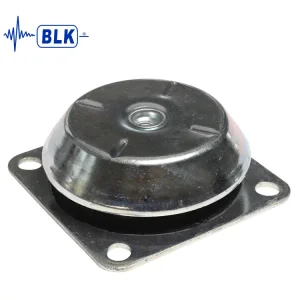
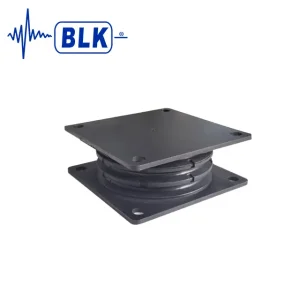
Explore our complete range of flanged, damped, multi-layer, and marine-rated rubber dampers engineered for extreme industrial duty.




Partner With China's Leading Vibration Control Manufacturer for Your Riyadh Projects
Get custom sizing schedules, static deflection calculations, and factory-direct volume pricing within 24 hours. Full SABER, SASO, and ISO 9001 compliance documentation included with every submittal.