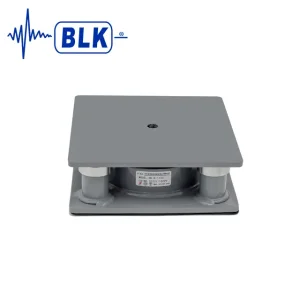
Primary Modular Isolators

Featured Industrial Anti-Vibration Mounts for Belgian Infrastructure

Precision-machined open and enclosed spring isolators designed for chillers, HVAC fans, high-pressure pumps, and industrial compressors deployed across Flemish and Walloon industrial parks.

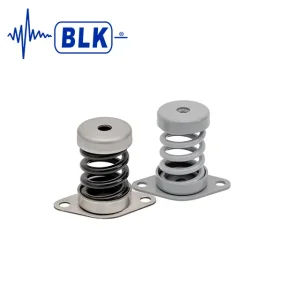
3.0 - 4.5 Hz High-Quality MA Type Anti-vibration Spring Mounts Factory serving Belgium

MA Type Anti-Vibration Mount for Belgian HVAC Plants

Engineered for high deflection requirements with top leveling bolts, ideal for rooftop refrigeration chillers in commercial Antwerp and Brussels developments.

Up to 98% Efficiency Dacromet C5-M Coating
View MA Mount Specs & RFQ

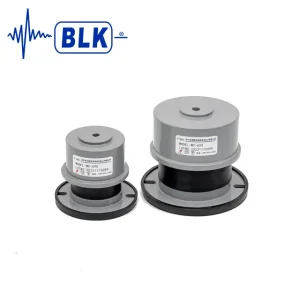
Heavy Deflection High-Quality MB Type Anti-vibration Spring Mounts Manufacturer serving Belgium

MB Type Enclosed Spring Isolator for Belgian Chemical Plants

Cast iron and forged steel enclosed housing that limits lateral excursion and protects coil springs against corrosive maritime atmospheres along the Scheldt corridor.

Lateral Snubbing 15+ Year Service Life
View MB Mount Specs & RFQ
Multi-Directional High-Quality MC Type Anti-vibration Spring Mounts Manufacturer Price

MC Type High-Load Spring Damper for Ghent Port Machinery

Multi-spring matrix configuration handling operational loads from 500 kg to over 12,000 kg per isolator, designed for heavy centrifugal compressors and diesel gen-sets.

High-Capacity Matrix EN 10204 3.1 Certified
View MC Mount Specs & RFQ
Compact Profile High-Quality MD Type Anti-vibration Spring Mounts Factory Manufacturer

MD Type Seismic Restrained Isolator for Belgian Logistics Hubs

Engineered with integral vertical and horizontal limit stops to withstand wind-load shear and dynamic startup shocks in distribution hubs in Liège and Flanders.

Eurocode 8 Ready Integral Limit Stops
View MD Mount Specs & RFQ
Geographical & Industrial Context

Belgium’s Industrial Dynamics & The Critical Demand for Dynamic Vibration Decoupling

As the logistical and industrial turnstile of Western Europe, the Kingdom of Belgium features some of the highest concentrations of precision manufacturing, chemical synthesis, and urban infrastructure on the continent. From the immense chemical complex stretching along the Port of Antwerp-Bruges to the biotech corridors of Wallonia and the high-density metropolitan architecture of Brussels, structure-borne vibration presents severe threats to operational efficiency, structural longevity, and legal environmental compliance.

Port of Antwerp-Bruges Petrochemical Hub

Representing Europe's largest integrated chemical cluster, plants in Antwerp, Zwijndrecht, and Doel operate heavy multi-stage reciprocating compressors, centrifugal pumps, and cracking turbines. Uncontrolled harmonic vibrations transmit through reinforced concrete slabs into adjacent pipe racks, inducing metal fatigue and premature flange seal failure. Heavy-duty spring isolators with high damping are essential to mitigate low-frequency harmonics (10 Hz to 50 Hz).

Biopharma & Metrology in Wallonia & Flanders

With world-renowned biotech clusters centered in Ghent, Leuven, and Gosselies (BioPark Charleroi), ultra-sensitive cleanroom production environments cannot tolerate ambient micro-vibrations generated by rooftop Air Handling Units (AHUs) or refrigeration pumps. Nanometer-scale optical platforms, chromatography units, and automated vial-filling machinery demand sub-3 Hz natural frequency pneumatic and damped spring mounts.

Brussels Mixed-Use & Data Center Infrastructure

Brussels hosts complex institutional headquarters, corporate data centers, and multi-story commercial facilities situated above subterranean transit networks (STIB/MIVB). Emergency diesel gensets and massive rooftop cooling towers must be completely decoupled to eliminate structure-borne regenerative humming into high-value office suites and nearby residential sectors.

Belgian & EU Regulatory Engineering

Strict Regional Acoustic Mandates & Eurocode Dynamic Safeguards

Navigating the tri-regional regulatory environment of Flanders, Wallonia, and Brussels Capital requires rigorous acoustic decoupling certified against European standards.

VLAREM II (Flemish Environmental Regulations)

Under Title II of the Flemish General Environmental Code (VLAREM II), industrial installations are held to strict decibel limits categorized by day, evening, and night thresholds at property boundaries. Infrasound and low-frequency noise (below 100 Hz)—the primary acoustic outputs of large mechanical pumps and cooling fans—are aggressively audited by Flemish environmental inspectorates. Our spring isolators provide up to 99% transmissibility reduction, preventing mechanical rumble from exciting building floor plates into secondary acoustic radiators.

  • Zero mechanical ground transmission exceeding local baseline limits (+0 dB(A) criteria).
  • Elimination of pure tone penalties under Belgian acoustic audit standards.
  • Documented third-party vibration transmissibility test protocols.

Eurocode 3, Eurocode 8 & C5-M Marine Protection

Mechanical systems installed outdoors in coastal Flanders (Zeebrugge, Ostend) or exposed to high-salinity industrial microclimates face rapid corrosion. Our spring assemblies feature 900-hour Dacromet salt-spray protection conforming to ISO 12944 C4/C5-M atmospheric corrosivity standards. Furthermore, where non-structural mechanical components must resist dynamic horizontal wind shear or seismic acceleration per Eurocode 8 (NBN EN 1998-1), our restrained spring isolators incorporate heavy ductile iron snubbers capable of absorbing 3G to 5G acceleration.

  • Full conformity with EU Machinery Directive 2006/42/EC.
  • REACH and RoHS certified elastomeric damping elements.
  • EN 10204 Type 3.1 mill test certificates supplied for spring alloys.
Direct-From-Source Advantages

Why Belgian EPCs & Global OEMs Procure Directly From Our Kunshan Factory

Eliminating European trading layers unlocks substantial capital efficiency, rapid custom prototyping, and uncompromised quality assurance backed by 37 vibration patents.

30% - 50% CapEx Optimization

Procuring from Belgian regional distributors often incurs heavy stockholding margins. By dealing directly with our 2,000 m² automated manufacturing facility, engineering contractors secure tier-one factory pricing while gaining direct access to technical application sizing.

Rapid 1:1 Custom Engineering

Standard European catalog mounts rarely accommodate unconventional footprint centers of gravity. Our engineering team calculates exact center-of-gravity offsets and outputs complete customized 2D/3D CAD and BIM submittals within 24 hours, manufacturing bespoke units in 3 days.

Precision Dynamic Verification

Every production batch undergoes dynamic tension-compression hysteresis testing, spectral damping analysis, and optical spring pitch verification. You receive comprehensive QA documentation confirming static deflection, natural frequency, and metallurgical composition.

100k+
Annual Unit Output
37
Patents (16 Inventions)
900h
Salt Spray Resistance
<24h
Technical Sizing Turnaround
Technical Specification Guide

Engineering Sizing: Dynamic Decoupling Mathematics & Transmissibility

Selecting the optimal spring vibration isolator requires rigorous calculation of equipment excitation frequency against the mount’s natural frequency to avoid the destructive resonance zone.

The Fundamental Frequency Ratio Criterion

Vibration isolation only occurs when the disturbing frequency ($f_d$) of the operating machinery is at least $\sqrt{2}$ times greater than the natural frequency ($f_n$) of the spring isolator ($f_d / f_n > 1.414$). For high-efficiency isolation exceeding 95%, mechanical engineering standards dictate an operational frequency ratio ($f_d / f_n$) equal to or exceeding 3.0.

Transmissibility (T) = √[ (1 + (2ζ·r)²) / ((1 - r²)² + (2ζ·r)²) ]

Where r = fd / fn (Frequency Ratio), ζ = Damping Ratio (typically 0.01 - 0.05 for pure steel springs, up to 0.15 - 0.25 with viscous damping).

Static deflection ($\delta_{st}$) is directly linked to the natural frequency of the spring: $f_n \approx 5 / \sqrt{\delta_{st}}$ (where deflection is in centimeters). To achieve a 3.0 Hz natural frequency for a slow-speed Belgian cooling tower fan (450 RPM = 7.5 Hz), a minimum static deflection of 28 mm is required.

Quick Technical Check: Equipment RPM vs Mount Type

  • Reciprocating Gensets (< 750 RPM): High-Deflection Spring (50mm / 2.2 Hz)
  • Centrifugal Chillers (900 - 1500 RPM): Standard Spring Mount (25mm / 3.2 Hz)
  • Rotary Screw Compressors (1800+ RPM): Viscous Damped Spring (BK-DS / MC)
  • Suspended Ducts & Chilled Piping: Dual Spring/Elastomer Hanger
  • Metrology & Semiconductor Cleanrooms: Pneumatic Air Mount (From 1.7 Hz)
Isolator Architecture Natural Frequency ($f_n$) Rated Load Deflection Isolation Efficiency Primary Belgian Field Use-Case Corrosion System
Open Spring Mounts (MA / ME) 2.8 – 4.2 Hz 25 mm / 50 mm 95% – 99% Rooftop Air Handling Units, Cooling Towers, Dry Coolers 900h Dacromet / Hot-Dip Galv
Viscous Damped Springs (BK-DS) 3.0 – 5.0 Hz 20 mm – 40 mm 94% – 98% Variable Speed Drives (VFD) Passing Through Resonance Epoxy Powder + Dacromet Core
Seismic Restrained Mounts (MD / MB) 3.5 – 5.5 Hz 25 mm / 38 mm 92% – 97% High-Wind Coastal Chiller Plants (Zeebrugge / Ostend) Heavy Cast Steel + C5-M Coating
Pneumatic Air Mounts (BK-R) 1.7 – 2.5 Hz Air Leveling Adjust 99%+ Leuven/Ghent Nanotech, CMM Inspection Tables Anodized Aluminum / Chrome
Multi-Layer Composite (BKSWA) 6.0 – 12.0 Hz 8 mm – 15 mm 88% – 94% Transformer Humming & High-Frequency Substation Decoupling Weather-Resistant Elastomer Plate
Industry 4.0 & Sustainable Engineering

How our manufacturing breakthroughs address modern building design, variable frequency equipment, and stringent corporate ESG carbon metrics in Western Europe.

Non-Linear Stiffness & VFD Control

Modern HVAC and water pumping systems utilize Variable Frequency Drives (VFDs) that continuously shift rotational speeds. Fixed linear springs risk encountering resonance at startup or throttled operation. Our progressive pitch spring designs introduce non-linear stiffness curves, preventing sustained resonance lock-in and eliminating high-amplitude rocking motion.

Hermetic Viscous Damping Integration

Where high starting torque or turbulent fluid hammer causes transient displacement (such as large wastewater pumps in Liège or Antwerp), our BK-DS series utilizes hermetically sealed fluid cavities. High-viscosity silicone fluid absorbs kinetic energy during startup without sacrificing pure low-frequency decoupling during steady-state operation.

Full Recyclability & Circularity (ESG)

Aligning with European Green Deal goals, our isolator housings and spring elements are engineered for 100% mechanical disassembly and metallurgical recycling at end-of-life. We formulate elastomer friction pads free from chlorinated paraffins or harmful plasticizers, fully registered under EU REACH protocols.

Full Engineered Range

Expanded Anti-Vibration Systems Available for Delivery to Belgium

Comprehensive portfolio of damped mounts, pneumatic platforms, molded elastomer pads, and multi-layer structural dampers with standard models shipping within 24 hours.

2.5 - 3.8 Hz High-Quality ME Type Anti-vibration Spring Mounts Factory serving Belgium

ME Type Heavy-Deflection Spring Mount for Belgian Power Stations

Designed for low-RPM equipment where extra static deflection is needed to suppress severe low-frequency building resonance in industrial plants.

50mm Rated Deflection Up to 99% Decoupling
View ME Mount Specs & RFQ
Viscous Damping Low Price BK-DS Type Damped Spring Mounts Factory Manufacturers

BK-DS Viscous Damped Spring Mount for VFD Pumps

Combines precision coil springs with an integrated silicone oil dashpot damper, eliminating severe transient vibration during equipment acceleration/deceleration.

Damping Ratio 0.15 Anti-Rocking Control
View BK-DS Mount Specs & RFQ
Matrix Array High-Quality MC Type Anti-vibration Spring Mounts Manufacturer Price

MC Multi-Spring Isolator for Large Belgian Concrete Inertia Bases

Heavy cluster configuration capable of supporting monolithic concrete inertia bases under high-pressure water circulating pumps and industrial chillers.

Multi-Coil Matrix High Lateral Stability
View MC Mount Specs & RFQ
Elastomeric Hybrid Custom BK-DSR Type Damped Rubber Mounts Factories Manufacturer

BK-DSR Damped Rubber Mount for Belgian Rooftop HVAC Compressors

Hybrid internal spring encapsulated within high-grade oil-resistant neoprene, isolating both high-frequency sound transmission and mechanical vibrations.

Structure-Borne Noise Oil & UV Resistant
View BK-DSR Mount Specs & RFQ
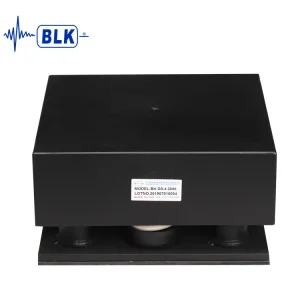
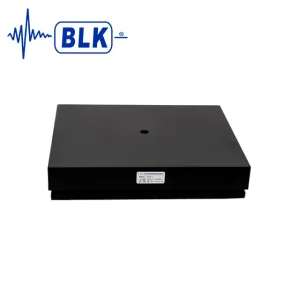
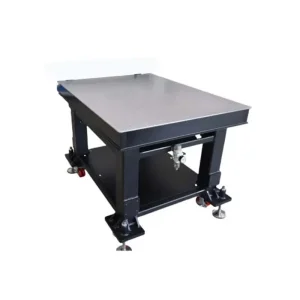
< 2.0 Hz Metrology BK-DT Type Low-Frequency Optical Vibration Isolation Platform

BK-DT Precision Optical Isolation Platform for Belgian Cleanrooms

Ultra-low natural frequency isolation platform designed for cleanrooms in Leuven and Ghent hosting electron microscopes and high-precision laser stages.

Sub-Micron Stability Granite/Honeycomb Core
View BK-DT Platform Specs & RFQ
1.7 Hz Pneumatic High-Quality BK-R Type Air Mounts Factories Manufacturer

BK-R Precision Pneumatic Air Mount for Semiconductor Inspection

Self-leveling pressurized elastomer pneumatic bellows delivering exceptional horizontal and vertical vibration isolation down to 1.7 Hz excitation.

Auto-Leveling Valve Cleanroom Class 100
View BK-R Air Mount Specs & RFQ
Elastomeric Damping High-Quality BKDJ Type Rubber Pad Manufacturers

BKDJ High-Density Elastomeric Rubber Damping Pad

Engineered waffled elastomer pads designed to decouple electrical switchgear, transformers, and industrial stamping presses from plant foundations.

Resistant to Greases High Dynamic Shear
View BKDJ Pad Specs & RFQ
Multi-Layer Damper Custom BKSWA Type Multi-Layer Antivibration Dampers Factory Price

BKSWA Multi-Layer Structural Damper for Belgian Substations

Alternating layers of high-tensile steel plates and specialized synthetic rubber engineered to silence low-frequency humming emitted by high-voltage transformers.

100 Hz Transformer Hum High Compressive Modulus
View BKSWA Damper Specs & RFQ
Field Engineering Case Studies

Localized Application Scenarios Across the Belgian Industrial Landscape

Field-proven engineering isolation strategies solving complex acoustic and dynamic transmission challenges across Belgium’s primary commercial and industrial centers.

Case 1: Rooftop Screw Chillers in Central Brussels Commercial Complex

Challenge: Twin 450 kW water-cooled screw chillers mounted on an 8th-floor rooftop slab induced 32 Hz structure-borne vibrational harmonics directly into the executive suites below. Brussels regional noise regulations mandated a 5 dB(A) nocturnal reduction.

Solution: Installation of 8 custom-sized MD Type Seismic Restrained Spring Mounts with 35 mm static deflection and auxiliary elastomeric base pads. The resulting natural frequency of 2.7 Hz achieved a 96.8% isolation efficiency, entirely mitigating structure-borne regenerated acoustics.

Case 2: Slurry & Process Pumps in Port of Antwerp Chemical Complex

Challenge: Reciprocating process pumps handling volatile petrochemical slurries caused severe cyclic pipe strain and intermittent flange leakage due to continuous floor vibration in a C5-M marine exposure zone.

Solution: Concrete-filled steel inertia bases supported by MC Multi-Spring Isolators treated with 900-hour Dacromet coating. The combined inertia base and spring network increased effective system mass, suppressed startup rocking by 74%, and fully stabilized connecting pipeline flanges.

Case 3: Bioreactor Decoupling in Wallonia’s Gosselies Biotech Hub

Challenge: High-precision cell cultivation vessels experienced micro-vibrational interference originating from floor-mounted centrifugal air compressors across the service hallway.

Solution: Insertion of BK-DS Viscous Damped Spring Mounts under the compressors alongside BK-DT Platforms beneath critical laboratory analytical balances, attenuating ambient spectral vibrations across the critical 5 Hz – 100 Hz bandwidth.

Case 4: Backup Diesel Generator Sets for Flemish Brabant Data Centers

Challenge: 2.5 MVA emergency power generation modules produced low-frequency shuddering during weekly load tests, threatening high-density server rack stability and neighboring residential zones.

Solution: Heavy-duty ME Type 50mm Deflection Isolators engineered with 4G seismic limit stops, preventing excessive lateral translation during cold engine start while ensuring total decoupling from the building foundation.

Technical Clarifications

Engineering & Procurement FAQ for Belgian Operations

Expert technical insights directly addressing questions posed by European mechanical consultants, HVAC contractors, and acoustic compliance auditors.

How do spring vibration isolators prevent non-compliance under Belgian VLAREM II noise regulations?
Belgian VLAREM II environmental regulations establish strict ambient noise standards at residential boundary lines, with stringent penalties for low-frequency tonal noise (infrasound between 20 Hz and 100 Hz). Rigidly mounted mechanical equipment converts mechanical imbalance into dynamic forces that transmit into the building structure, turning walls, slabs, and ceilings into acoustic sounding boards. By placing calibrated spring isolators with natural frequencies tuned well below equipment excitation (typically 2.5 Hz to 4.5 Hz), up to 99% of dynamic forces are decoupled, reducing structure-borne noise transmission below legal regulatory thresholds.
What metallurgical protection ensures long service life in North Sea coastal climates like Zeebrugge or Ostend?
Industrial equipment installed in coastal Flanders encounters high chloride levels, humidity, and chemical vapor exposure (ISO 12944 C4 to C5-M marine corrosivity). Standard electro-galvanized springs corrode prematurely, causing spring coil fatigue failure within 24 to 36 months. Bellking isolators utilize a proprietary non-electrolytic zinc flake coating (Dacromet) that withstands 900+ hours of continuous neutral salt spray testing (ASTM B117), combined with optional hot-dip galvanized steel frames and electrophoretic coil coatings that ensure an operational lifespan exceeding 15 years in Belgian marine and petrochemical environments.
How does viscous fluid damping benefit variable-speed drive (VFD) equipment in Belgium?
Standard pure steel springs provide minimal internal damping (damping ratio ζ ≈ 0.005–0.01). When machinery driven by a VFD accelerates from rest to operating RPM, it passes through the system's natural resonance frequency ($f_d = f_n$). Undamped springs experience severe resonance magnification, generating violent rocking motions and potential mechanical fatigue on connecting pipe couplings. Our BK-DS series integrates a hermetically sealed viscous fluid damper providing a damping ratio of 0.15 to 0.20, which safely suppresses resonance excursions at startup while maintaining exceptional isolation efficiency at full operating speed.
What engineering data is required from a Belgian client to calculate an accurate vibration isolation plan?
To output a complete engineering submittal within 24 hours, our application engineers require: (1) Total operational weight of the machinery (including fluid operating weights for chillers/pumps), (2) Exact physical center of gravity or individual corner load weights, (3) Equipment rotational or excitation speed (RPM or Hz), (4) Available mounting point layout, (5) Site environmental conditions (indoor, coastal rooftop, chemical exposure), and (6) Any dynamic wind load or seismic restraint requirements conforming to Eurocode 8.
Can Bellking supply customized 1:1 replacement isolators for obsolete European brands?
Yes. Many plant maintenance engineers in Wallonia and Flanders face expensive dilemmas when existing European isolators sag or corrode, and the original manufacturer is either defunct or charges exorbitant retrofit fees. Bellking provides direct drop-in replacements. Send us the interface dimensions, bolt spacing, target load capacity, and height constraints; our CNC engineering line can fabricate and ship exact dimensional equivalents with upgraded damping characteristics in as fast as 3 working days.
What logistics lead times and customs documentation apply when importing to the Port of Antwerp?
Standard models (such as MA, MB, MC series) ship directly from our warehouse within 24 hours of purchase order validation. Ocean freight from Shanghai or Ningbo directly to the Port of Antwerp typically takes 28 to 34 days. For urgent plant retrofits or project milestones, expedited air cargo options directly to Brussels Airport (BRU) or Liège Airport (LGG) deliver within 5 to 7 business days. All shipments include complete commercial documentation, packing lists, CE declarations, Certificate of Origin, and EN 10204 Type 3.1 Material Test Reports for seamless Belgian customs clearance.
What is the difference between open spring mounts and restrained spring mounts for rooftop HVAC?
Open spring mounts (such as our MA and ME types) feature exposed coils providing pure vertical deflection, ideal for equipment housed inside mechanical plant rooms where wind forces do not exist. On high-elevation Belgian rooftops, severe North Sea gusts can create immense aerodynamic uplift and lateral shear forces. Restrained spring mounts (such as our MD and MB types) incorporate robust structural housings with vertical and horizontal limit stops that constrain equipment movement within safe mechanical clearances, preventing spring dislodgement or piping failure during severe windstorms.
Rapid Engineering Response

Request a Sized Vibration Isolation Proposal for Your Belgian Project

Submit your mechanical equipment specifications, operating frequencies, and dimensional parameters. Our senior application engineers will return a full vibration isolation proposal complete with natural frequency calculations, static deflection metrics, and direct factory pricing within 24 hours.

Send Inquiry Now Browse Complete Technical Catalog