

Custom Anti-vibration Spring Hangers
High-deflection pre-stressed steel spring assembly providing 25mm to 50mm static deflection. Tailored for heavy mechanical risers in Dublin enterprise builds.
Pre-compressed helical springs and high-damping elastomeric hangers designed to attenuate dynamic structural transmission across critical pipework and ducting runs.
High-deflection pre-stressed steel spring assembly providing 25mm to 50mm static deflection. Tailored for heavy mechanical risers in Dublin enterprise builds.
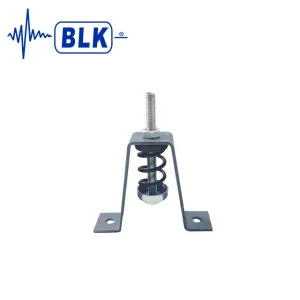
Dual-isolation spring hanger with integrated rubber acoustic cup. Mitigates high-frequency audible noise and low-frequency mechanical thrust in suspended AHUs.

Molded high-grade synthetic neoprene rubber hangers for exhaust fans, high-velocity duct branches, and acoustic ceilings compliant with BS EN ISO standards.

Dual-shear rubber vibration damping units for mechanical pumps, suspended acoustic cassettes, and secondary plant isolation in Cork life sciences complexes.
Navigating structural dynamics, acoustic compliance, and hyper-critical uptime across Dublin, Cork, Leixlip, and Galway engineering epicenters.
The Republic of Ireland has firmly established itself as the technological and pharmaceutical gateway of Europe. As home to over 25 of the world's top life sciences enterprises and the premier European hyperscale data center hub (commanding well over 1,000 MW of connected IT load primarily clustered around South Dublin, Grange Castle, Clonee, and North County Dublin), the country maintains exceptionally stringent mechanical engineering specifications. In these mission-critical facilities, the continuous operation of large-scale mechanical, electrical, and plumbing (MEP) systems is non-negotiable. However, high-capacity chilled water circuits, continuous running primary air handling units (AHUs), variable refrigerant flow (VRF) condensing circuits, and emergency diesel generation exhaust runs introduce persistent, low-frequency cyclic excitation into concrete floor slabs and lightweight steel superstructures.
Uncontrolled structural vibration carries catastrophic failure modes: in data halls, micro-vibrations transmitted through floor-ceiling assemblies to server racks can trigger hard disk drive (HDD) read/write head off-track errors, accelerated fan bearing wear, and premature optic fiber link degradation. In the biotechnology corridor of Ringaskiddy, Little Island, and Carrigtwohill in County Cork, mechanical vibration exceeding 0.5 mm/s RMS directly threatens high-sensitivity automated pipetting, crystallization kinetics, centrifuge calibration, and sterile barrier integrity. Consequently, mechanical engineering consultancies and Tier-1 MEP contractors (including Mercury Engineering, Dornan Engineering, Winthrop Technologies, and Jones Engineering) enforce exhaustive acoustic schedules mandating dynamic vibration isolation hangers compliant with CIBSE Guide B4, ASHRAE Chapter 49, and Irish Environmental Protection Agency (EPA) noise criteria.
From Profile Park to Grange Castle, suspended cooling pipework operating at fluctuating flow rates requires 50mm deflection spring hangers to prevent 10–60 Hz vibrational transmission to white space enclosures.
Cleanroom ceiling matrices and Water for Injection (WFI) loop piping demand dual elastomeric-spring hangers with zero metal-to-metal acoustic flanking to guarantee isolation efficiencies >97%.
Urban revitalization in Dublin Docklands demands compliance with BS 8233:2014 and Part E of the Irish Building Regulations, necessitating isolated penthouse plant rooms and suspended acoustic gym ceiling arrays.
The core physics governing vibration hanger selection for single-degree-of-freedom (SDOF) mechanical suspended systems.
Selecting an anti-vibration spring or rubber hanger is not simply a matter of supporting static deadweight; it requires precise dynamic tuning to ensure the natural frequency of the suspended isolation system ($f_n$) is decoupled from the disturbing frequency of the rotating equipment ($f_d$). When fluid pumps, fans, or compressors rotate at speed $N$ (RPM), their fundamental excitation frequency is given by $f_d = N / 60$. If a primary chilled-water booster pump operates at 1,450 RPM, the primary disturbing excitation occurs at 24.17 Hz, with potential blade-pass excitation occurring at integer multiples.
The mathematical efficacy of an isolation hanger is defined by the transmissibility ratio $T$, which expresses the proportion of dynamic force transmitted to the building frame:
Where:
• r is the frequency tuning ratio ($r = f_d / f_n$). Dynamic isolation only begins when $r > \sqrt{2} \approx 1.414$. For engineered high-specification buildings, target $r \ge 3.0$ to achieve isolation efficiency >90%.
• ζ is the damping ratio of the isolating medium (ζ ≈ 0.005 for steel springs, ζ ≈ 0.05 to 0.10 for high-grade synthetic elastomers).
• δst is the static deflection in millimeters, determining the natural frequency: fn ≈ 5 / √δst (Hz).
To assist structural and MEP engineers across Ireland in specifying the correct hanger type, the following matrix correlates equipment rotational velocity, required static deflection, and resultant transmission loss based on CIBSE Guide B4 recommendations:
| Equipment RPM ($f_d$) | Dominant Freq (Hz) | Target Isolation (%) | Required $f_n$ (Hz) | Minimum Static Deflection ($\delta_{st}$) | Recommended Bellking Hanger Series |
|---|---|---|---|---|---|
| 3,000 RPM (2-Pole Motors) | 50.0 Hz | 95% – 98% | ≤ 8.0 Hz | 8 mm – 12 mm | HR Type Rubber Hanger / BKDR Mounts |
| 1,500 RPM (4-Pole Pumps/Fans) | 25.0 Hz | 92% – 96% | ≤ 5.0 Hz | 20 mm – 25 mm | HV Type Spring Hangers (Standard Deflection) |
| 1,000 RPM (6-Pole Fans/Blowers) | 16.6 Hz | 90% – 94% | ≤ 3.5 Hz | 35 mm – 40 mm | Custom Anti-vibration Spring Hangers (35mm Series) |
| 750 RPM (Low-Speed Chillers/AHUs) | 12.5 Hz | 88% – 92% | ≤ 2.5 Hz | 45 mm – 50 mm | Custom Anti-vibration Spring Hangers (50mm Series) |
| Variable Speed Drives (300–1800 RPM) | 5.0 – 30.0 Hz | Dynamic Decoupled | ≤ 2.2 Hz | 50 mm + Viscous Damping | Pre-Compressed Spring Hangers with Elastomeric Pad |
Bridging global supply chains directly to Dublin Port, Cork Harbour, and Shannon Free Zone with certified quality assurance.
Procurement teams for major construction projects in Ireland frequently encounter extended lead times, rigid stock constraints, and exorbitant markups from regional European re-sellers and intermediaries. Bellking's 2,000 m² specialized manufacturing base in Kunshan, China directly solves these logistical and commercial bottlenecks by delivering factory-direct, custom-engineered vibration isolation hardware built to international standards at substantial economies of scale.
Ireland's coastal atmospheric conditions accelerate the oxidation of standard zinc-plated brackets. Bellking applies heavy-duty Dacromet and hot-dip galvanizing, withstanding 900+ hours in neutral salt-spray chambers (ASTM B117) to provide 15+ years of maintenance-free service.
Every infrastructure project presents unique drop-rod diameters, dynamic loading schedules, and seismic clearance limits. Our R&D engineering unit executes FEA-backed bespoke calculations and delivers CAD/BIM drawing approval submittals in under 24 hours.
We supply full EN 10204 3.1 material test certificates, load-deflection test curves, rubber compound rheometer cure records, and factory acceptance test (FAT) documentation, facilitating friction-free approval by client acoustic consultants.
Engineered to satisfy the stringent requirements of Irish EPA industrial licensing, CIBSE design guides, and Building Regulations Part E.
Any commercial, institutional, or industrial development across Ireland must comply with a stringent network of environmental and acoustic mandates. The Irish Environmental Protection Agency (EPA), under its Guidance Note for Noise: Licence Applications, Surveys and Assessments in Relation to Scheduled Activities (NG4), imposes strict day/evening/night boundary noise limits (typically 55 dB $L_{Ar,T}$ daytime, 50 dB $L_{Ar,T}$ evening, and 45 dB $L_{Aeq,T}$ night) with zero tolerance for clearly audible tonal or impulsive characteristics. Because building structures behave as acoustic amplifiers when excited by mechanical vibrations, low-frequency hums from un-isolated suspended pipes or exhaust ducts can generate severe low-frequency tonal penalties under NG4 audits.
Field-proven procedures for Irish site installation teams to eliminate acoustic flanking and ensure full spring engagement.
Incorrect installation of isolation hangers is the primary root cause of site acoustic failure in newly commissioned facilities. Even the highest-grade spring hanger is rendered completely ineffective if the hanger rod contacts the hanger box bracket (short-circuiting the spring) or if the spring is driven to solid height due to miscalculated pipe water weight during hydro-testing.
Calculate dynamic weight distribution accurately: include deadweight of pipe/duct, fluid contents (e.g., chilled water, glycol mixtures, steam condensate), insulation cladding, and dynamic hydrodynamic thrust forces at 90-degree elbows.
Ensure the upper and lower hanger drop rods do not misalign by more than ±5 degrees during thermal expansion. Bellking's oversized flared lower eye-cups allow up to 30 degrees of angular swing without bridging acoustic transmission.
Utilize Bellking pre-compressed spring hangers equipped with locking pins. This maintains constant ceiling elevation during dry installation and hydro-testing; pins are removed only when the system is fully charged, avoiding sudden slab deflection.
Transparent technical answers regarding lead times, logistics to Ireland, compliance standards, and dynamic sizing parameters.
Precision-engineered floor isolators, pump inertia bases, and pneumatic platforms supporting the Irish industrial supply chain.

Rigid concrete-filled structural steel inertia frames designed to lower center of gravity and stabilize high-pressure chiller pumps in Dublin facilities.

Ultra-low frequency pneumatic mounts reaching 1.7 Hz resonance with automatic level control for coordinate measuring machines (CMM) and lithography tools.

Housed multi-spring floor mounts offering 25mm to 50mm static deflection, designed for large rooftop air-cooled chillers and industrial diesel engines.

Flanged industrial elastomeric dampers engineered for rotating compressors, motors, electrical transformers, and small ventilation fans.

Heavy-load cylindrical rubber vibration isolators engineered for dynamic shear-compression damping under aggressive duty cycles.

Open-spring mounts with built-in vertical height leveling adjustment bolts, suitable for indoor HVAC chillers and air compressor bases.

Internal high-damping composite rubber isolators built to suppress resonance amplification during rapid machine start-up and shutdown transience.
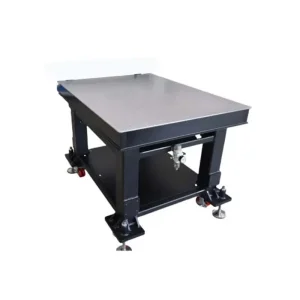
Granite-topped optical vibration isolation platform for electron microscopes, laser interferometers, and photonics research at Trinity College & Tyndall Institute.
Partner directly with Bellking Vibration Reduction Equipment Manufacturing. Our engineering team calculates exact hanger loads, static deflection schedules, and delivers full acoustic submittal packages within 24 hours.