
Industrial Vibration Isolation & Damping Systems (Group A)
Precision-engineered elastomeric pads, air mounts, and spring isolators manufactured for heavy rotary and reciprocating machinery.

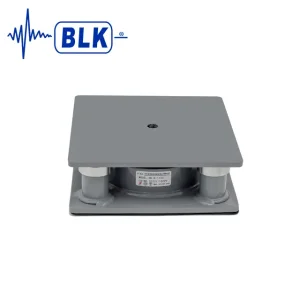






Engineering Foundations: Mechanical Energy Dissipation in Air Compressors
Industrial compressed air systems represent the foundational kinetic heartbeat of modern manufacturing environments, serving sectors from heavy automotive assembly to ultra-sterile pharmaceutical cleanrooms. However, rotary screw, centrifugal, and reciprocating piston air compressors are intrinsically subject to cyclic dynamic unbalance, gas pulsation forces, rotational eccentricities, and structural resonance. Left unmitigated, these dynamic force vectors transfer directly into factory floors, structural beams, connected piping manifolds, and delicate ambient instrumentation.
An custom air compressor vibration pad operates not merely as a mechanical cushion, but as a engineered visco-elastic dampening interface designed to transform harmful kinetic vibration energy into dissipated low-grade thermal energy. The primary metric governing pad efficacy is transmissibility ($T$), defined as the ratio of the force transmitted to the building foundation versus the force generated by the compressor motor and air end assemblies.
For isolation to occur, the disturbing frequency of the compressor ($f_d$) must be significantly higher than the natural frequency of the vibration isolation mounting ($f_n$). Isolation begins only when $\lambda = f_d / f_n > \sqrt{2} \approx 1.414$. To achieve an engineering isolation efficiency exceeds 90% to 98%, leading elastomeric pad factories design systems targeting a frequency ratio of $\lambda \ge 3.0$ to $5.0$.
Choosing an off-the-shelf, non-engineered rubber sheet frequently causes catastrophic unintended consequences. If the natural frequency of a low-grade rubber mat matches the operational RPM of the compressor air-end, the system enters a state of mechanical resonance. Under resonance conditions, transmitted forces are magnified up to 500%, resulting in anchor bolt shear failures, localized concrete floor cracking, premature bearing fatigue, elevated acoustic sound pressures breaching OSHA thresholds, and micro-cracking in air discharge pipe welds.
Global Technology Shifts in Compressor Isolation
How modern industrial demands are revolutionizing the design, material formulations, and integration of specialized dynamic damping pads.
Multi-Layer Composite Elastomers
Transitioning from single-homogenous natural rubber sheets to engineered multi-density vulcanized matrices combining Nitrile (NBR), EPDM, and specialized cork-polymer layers to target broad spectrum multi-frequency harmonic vibrations.
Variable Frequency Drive (VFD) Adaptability
Modern screw compressors utilize VFDs to match air demand, causing motor RPM to fluctuate across a wide frequency band (15 Hz to 90 Hz). Next-gen pads must maintain a linear dynamic stiffness profile across variable loading rates without settling or stiffening.
Embedded Condition Monitoring
Integration of piezoelectric micro-sensors into industrial dampeners to track real-time creep, degradation, temperature spikes, and dynamic displacement, feeding operational analytics directly into plant SCADA networks.
Environmentally Resilient Formulations
Enhanced resistance to synthetic compressor lubricants (PAO, PAG, and Ester oils) alongside extreme thermal stability (-40°C to +120°C), eliminating polymer degradation, hardening, and oil-induced swelling.
Global Procurement Dynamics & Commercial Application Landscapes
The global demand for custom air compressor vibration isolation mounts is expanding synchronously with modern industrialization, urban building acoustic mandates, and precision manufacturing needs. Commercial procurement managers and engineering consulting firms evaluate pad manufacturers based not only on unit cost, but on technical compliance with global acoustic standards such as ISO 3744, ISO 10816 vibration severity standards, and local environmental noise regulations.
1. Precision Semiconductor Fabrication & Micro-Electronics Cleanrooms
In sub-nanometer semiconductor wafer fabrication facilities, background ambient floor vibration must be kept within strict Vibration Criterion (VC-E to VC-G) curves. Heavy oil-free screw air compressors installed in sub-fab areas generate low-frequency ground waves that can ruin photolithography alignment. Precision air compressor vibration isolation pads combined with inertia base platforms isolate over 98% of high-frequency energy, preserving chip yields.
2. Medical Gas Systems & Hospital Infrastructure
Hospitals rely on continuous-duty medical air compressors operating 24/7. Installed in roof basements or plant rooms directly beneath operating theaters and intensive care units (ICUs), structure-borne sound transmission can disrupt medical care and fail hospital acoustic audits. Custom anti-vibration pads utilize multi-layer durometer grading to silence low-frequency hums.
3. Offshore Oil Platforms & Harsh Marine Environments
Air compressors on offshore oil platforms operate under heavy salt-spray exposures, high humidity, and mechanical movement from sea swell. Custom pads manufactured for marine offshore applications incorporate high-grade 316 stainless steel casing plates with salt-spray resistant vulcanized EPDM elastomers passing strict 900+ hour salt spray testing specifications.
| Compressor Type | Primary Operating Frequency | Dominant Vibration Axis | Recommended Pad Material / Mount Architecture | Target Isolation Efficiency |
|---|---|---|---|---|
| Reciprocating Piston (1-30 HP) | 10 - 30 Hz (600-1800 RPM) | Vertical & Horizontal Rocking | High-Deflection Heavy-Duty Ribbed Rubber / Steel Composite Pads | 88% - 94% |
| Rotary Screw (VFD) (20-250 HP) | 15 - 90 Hz (900-5400 RPM) | High-Frequency Rotary Unbalance | Cross-Grid Nitrile Polymer Dampers with Interlocking Friction Plates | 95% - 99% |
| Centrifugal Turbo Compressor | 100 - 500+ Hz (High Speed) | Micro-Amplitude High-Frequency Wave | Precision Pneumatic Air Mounts / Polymer Damping Base Pads | 98% - 99.5% |
| Rooftop Air Handler Compressors | 20 - 60 Hz | Vertical Shear & Acoustic Hum | Multi-Layer Spring & Rubber Combined Anti-Vibration Isolators | 92% - 97% |
China Factory 4.0: Supply Chain Resilience & Customization Depth
Leveraging advanced polymer chemistry, automated compression molding, and strict ISO 9001 quality infrastructure in Kunshan to serve global OEMs.
The global manufacturing ecosystem for anti-vibration equipment has undergone a structural shift toward specialized, high-precision industrial clusters. Centers such as Kunshan, China, host advanced material laboratories, tooling workshops, and automated vulcanization lines capable of delivering 1:1 OEM custom pad geometry within minimal lead times.
By leveraging Finite Element Analysis (FEA) computer simulations prior to mold opening, Chinese advanced manufacturing facilities accurately predict internal shear strain, stress concentrations, and static load settlement profiles under compressor dead-weight. This eliminates costly trial-and-error prototyping, guaranteeing that the delivered custom air compressor vibration pads deliver exact durometer performance and expected fatigue life exceeding 15 years under harsh plant conditions.
Material Science & Polymer Elastomeric Physics
The mechanical performance of a custom vibration pad is governed by the physical chemistry of its polymer chain matrix. Rubber dampening pads rely on both elastic storage modulus ($G'$) and viscous loss modulus ($G''$). The ratio of these two parameters defines the loss factor ($\tan \delta = G'' / G'$), which indicates the internal damping ability of the pad during dynamic cyclical compression.
Elastomer Selection Comparison Matrix
- Nitrile Butadiene Rubber (NBR): Offers exceptional resistance to petroleum-based oils, synthetic compressor lubricants, and mineral greases. Features a high mechanical tensile strength (15-20 MPa) with moderate temperature stability (-20°C to +100°C). Ideal for direct mounting beneath air-end motor frames where lubricant drips occur.
- Ethylene Propylene Diene Monomer (EPDM): Possesses superior resistance to atmospheric ozone, UV radiation, outdoor weathering, and elevated temperatures (up to +130°C). Excellent for outdoor rooftop air compressor installations and HVAC chillers.
- Neoprene (Chloroprene): Strikes a balance between mechanical durability, moderate oil resistance, and flame retardancy. Maintains consistent dynamic stiffness across broad temperature scales.
- High-Damping Polyurethane Polymers: Engineered for extreme load-bearing applications (up to 10 N/mm²). Highly resistant to compression set settlement over decades of service life.
Surface Geometries & Cross-Ribbed Pattern Mechanics
A solid flat slab of rubber exhibits poor vibration isolation characteristics because elastomeric materials are virtually incompressible in volume; they must deform laterally to deflect under load. This parameter is governed by the Shape Factor ($S$), calculated as the ratio of the load-bearing area to the total lateral perimeter area free to bulge.
To optimize the shape factor, professional anti-vibration pad manufacturers mold precise cross-ribbed, waffle, or suction-pocket grid patterns onto both the top and bottom surface faces of the pad:
Cross-Ribbed Suction Pattern
Alternating high-and-low perpendicular ribs allow non-restricted lateral elastomer bulge under compression, lowering static stiffening while providing high friction suction grip against concrete floors without requiring floor bolts.
Waffle-Cell Cavity Design
Trapped air pockets within waffle cavities act as secondary pneumatic cushions. Upon compression, the air pocket provides non-linear stiffness resistance, damping violent start-up transient spikes from heavy motors.
Steel-Interleaved Sandwich Construction
Alternating layers of rubber and heavy gauge structural steel plates bonded via high-pressure vulcanization prevent lateral bulge under multi-ton compressor loads while dampening high-frequency waves.
Precision Vibration Isolators & Mounts (Group B)
Engineered rubber feet, damped spring mounts, polymer pads, and pneumatic isolators for specialized OEM industrial machinery.








Engineering Selection & Load Calculation Methodology
Correct sizing of air compressor anti-vibration pads requires a step-by-step mathematical evaluation of static loads, dynamic forces, center-of-gravity shifts, and structural stiffness factors.
Step 1: Calculate Total Operational Static Weight ($W_{total}$)
Determine the total operating weight of the equipment, which includes the compressor frame, electric motor, air-end, lubricating oil capacity, and connected internal piping assemblies:
W_{total} = W_{compressor} + W_{motor} + W_{oil} + W_{skid}
Step 2: Determine Individual Load Point Distribution ($P_i$)
Compressor units rarely possess a perfectly symmetrical center of gravity (CG). The air-end side housing heavy cast-iron rotors typically bears 60% to 70% of total mass. Calculate the static weight supported at each mounting foot ($N$ total feet):
P_i = W_{total} \times \left( \frac{L - d_i}{L} \right)
Step 3: Select Shore A Durometer & Pad Surface Area
Rubber durometer hardness dictates the maximum allowable unit load pressure ($q_{max}$) to prevent hyper-elastic strain and long-term creep settlement:
- 45 to 50 Shore A (Soft): Optimal for light loads ($0.15 \text{ N/mm}^2 - 0.35 \text{ N/mm}^2$). Provides maximum static deflection ($\delta_{st}$) for low-frequency isolation.
- 60 to 65 Shore A (Medium): Standard industrial grade for mid-sized screw compressors ($0.35 \text{ N/mm}^2 - 0.80 \text{ N/mm}^2$). Balanced fatigue life and load capacity.
- 70 to 80 Shore A (Hard): High-density compound for heavy reciprocating units ($0.80 \text{ N/mm}^2 - 2.50 \text{ N/mm}^2$). Minimizes machine rocking motion during startup.
Step 4: Verify Static Deflection ($\delta_{st}$) and System Natural Frequency ($f_n$)
Calculate static deflection based on the elastomeric spring rate ($K_s$). The system natural frequency ($f_n$ in Hz) is calculated using the fundamental equation:
f_n = \frac{1}{2\pi} \sqrt{\frac{g}{\delta_{st}}} \approx \frac{5}{\sqrt{\delta_{st} \text{ (in cm)}}}
Ensure that the calculated natural frequency satisfies the isolation requirement against the lowest disturbing RPM of the air compressor.
Frequently Asked Questions for Sourcing Engineers
Clear, authoritative engineering answers covering installation, durability, load customization, and sourcing from China factories.
Partner with a Precision Vibration Control Manufacturer
Engineered dynamic pads, customized elastomeric compounds, and ISO 9001 quality control designed to safeguard your heavy compressed air infrastructure.