
Precision Automotive & Industrial Vibration Control Products
Explore our certified damper architectures engineered for extreme dynamic stability, superior fatigue life, and high acoustic attenuation.
Advanced Automotive NVH Mitigation & Damper Kinematics
Understanding the physics of torsional vibration, viscoelastic material hysteresis, and structural resonance isolation in modern automotive architecture.
Modern automotive powertrains, chassis, and e-drives operate under severe dynamic stress profiles. Noise, Vibration, and Harshness (NVH) mitigation is no longer merely a passenger comfort metric; it directly dictates structural fatigue life, power transfer efficiency, and compliance with stringent international drive-by noise regulations. As an established Custom Automotive Vibration Damper Factory, Bellking leverages decades of elastomeric material formulation, finite element analysis (FEA), and high-frequency testing to solve complex dynamic resonance challenges.
Vibration dampers function by absorbing dynamic torque fluctuations and dissipating kinetic energy through fluid shear, hysteresis loss, or elastomeric deformation. The governing dynamic transmissibility equation highlights the fundamental relationship between forcing frequency ($f$), natural frequency ($f_n$), and damping ratio ($\zeta$):
To achieve an isolation efficiency exceeding 95%, the frequency ratio $r$ must exceed $\sqrt{2}$. However, transient conditions during engine startup, rapid acceleration, or sudden torque cut-offs push systems through resonance ($r = 1$). A professionally manufactured automotive vibration damper must maintain precise dynamic stiffness ($K^*$) and loss factor ($\tan\delta$) across operating temperature envelopes ranging from -40°C to +150°C.
Torsional Vibration Dampers (TVD)
Engineered for Internal Combustion Engines (ICE) and hybrid powertrains, TVDs utilize tuned inertia rings bonded to high-durability EPDM or Silicone elastomers to counteract crankshaft twisting modes and safeguard timing systems.
EV High-RPM E-Motor Mounts
Electric vehicles introduce ultra-high frequency micro-vibrations (up to 5,000 Hz) caused by pulse-width modulation (PWM) inverters and stator tooth-passing order forces. Our low-transmissibility polymer mounts eliminate cabin noise cabin hum.
Multi-Layer Elastomer-Metal Mounts
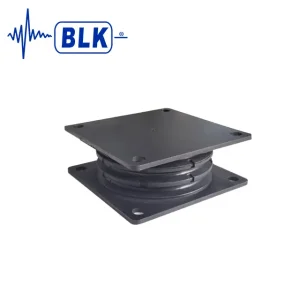
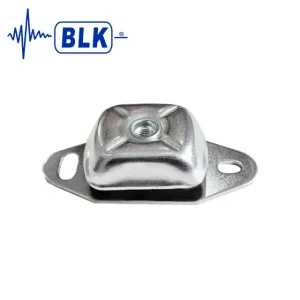
Combining high-strength cold-rolled steel inserts with precision-vulcanized rubber compounds, these multi-layer dampers withstand extreme multi-axis shear and compressive loads while isolating chassis feedback.
Automotive Dampers: Localized Engineering & Application Scenarios
Tailored NVH solutions mapped across critical sub-systems in passenger cars, commercial vehicles, and heavy-duty electric trucks.
| Automotive Application Module | Primary NVH Excitation Source | Isolation Target & Frequency Range | Recommended Damper Technology |
|---|---|---|---|
| Crankshaft & Accessory Belt Drive | 1st-6th order ICE torsional harmonic resonance | 10 Hz – 400 Hz torsional twist suppression | Rubber Tuned Mass Damper / Viscous TVD |
| EV Drive Unit & Reduction Gearbox | Inverter switching frequencies & gear mesh whine | 500 Hz – 4,500 Hz high-frequency structure-borne noise | Polymer Damping Pads / Precision Hydraulic Mounts |
| Chassis Subframe & Suspension Bushings | Road surface impact, tire cavity resonance | 1 Hz – 50 Hz macro displacement isolation | BKDD High-Damping Rubber Mounts / Hydraulic Bushings |
| HVAC Compressor & Cooling Module | Unbalanced rotor displacement forces | 25 Hz – 150 Hz continuous vibration | ME/MB Series Anti-Vibration Spring & Rubber Mounts |
| Exhaust System & Turbocharger Hangers | Thermal expansion displacement & engine pulses | High-temperature multi-axis shear load isolation | HR Type High-Temp Silicone Elastomer Hangers |
| Battery Pack & Underbody Shielding | Frame twisting, road shock, impact shock peaks | Shock attenuation (up to 5G peak impact loads) | BKSWA Multi-Layer Structural Damping Isolation Plates |
China Supply Chain Dominance: Precision Manufacturing in Kunshan
Combining raw material cost control, localized rubber synthesis, and rapid automated tooling to deliver global competitiveness without compromising quality.
Vertical Integration & Precision Tooling Hub
Situated in Kunshan, Jiangsu Province—the heart of China's high-tech manufacturing cluster—Bellking's 2,000 m² automated facility operates integrated rubber mixing, CNC mold machining, robotic vulcanization, and real-time spectrum analysis under one roof.
By bypassing tier-2 intermediaries, we secure custom synthetic rubbers (NR, EPDM, NBR, Fluororubber, Silicone) at direct mill pricing while utilizing automated transfer molding presses to achieve sub-millimeter dimensional tolerances.
- In-house tooling design cuts initial mold costs by up to 50% vs. Western facilities.
- Agile production scheduling supports both high-volume OEM runs and low-volume aftermarket batches.
- Direct rail and sea logistics from Shanghai Port ensure efficient worldwide delivery.
Supply Chain Transparency & Lead Time SLA
We eliminate global procurement friction through clear SLAs and end-to-end digital tracking.
Global Automotive Enterprise Procurement Standards
Meeting Tier-1 OEM audit criteria through rigorous quality management, regulatory compliance, and total cost of ownership optimization.
ISO 9001 & IATF 16949 Alignment
Our production protocols mirror IATF 16949 core tools—including APQP, FMEA, MSA, and SPC—ensuring full traceability from raw elastomer batches to finished component serial numbers.
PPAP Level 3 Documentation
Global automotive buyers receive complete Production Part Approval Process (PPAP Level 3) packages, including material test certifications, dimensional layout reports, and gauge R&R studies.
REACH, RoHS & IMDS Compliance
All rubber formulations are strictly compliant with EU REACH and RoHS environmental directives. Heavy metals, SVHCs, and toxic plasticizers are excluded, with full data logged into the International Material Data System (IMDS).
Corrosion Protection for Harsh Undercarriage Environments
Automotive vibration dampers located near wheels, underbodies, or engine bays endure constant exposure to road salt, mud, moisture, and high thermal cycling. Bellking metallic housings undergo advanced Dacromet / Geomet zinc-flake coating.
Verified through standard ASTM B117 neutral salt spray testing, our coatings exceed 900 hours without red rust formation, vastly outperforming traditional zinc electroplating (which typically fails at 120-240 hours). This ensures structural integrity over a 15+ year vehicle service lifecycle.
Future Trends in Automotive Vibration Control & Smart Dampers
How electrification, autonomous driving, and sustainable manufacturing are transforming NVH engineering requirements worldwide.
1. Shift to Active & Adaptive Damping
Passive rubber mounts are increasingly complemented by active electromagnetic and magnetorheological (MR) dampers. These systems read real-time road and motor sensors to instantly alter dynamic stiffness ($K^*$) within milliseconds, optimizing both ride handling and interior quietness.
2. Lightweight Composite Metamaterials
To maximize EV driving range, OEMs demand weight reduction. We are pioneering high-strength structural polyamide (GF-PA66) inserts to replace heavy cast-iron damper housings, shaving up to 40% weight while maintaining load capacity.
3. Sustainable & Bio-Based Elastomers
Aligning with global decarbonization goals, Bellking is actively testing devulcanized recycled rubber blends and bio-based silica fillers. These eco-friendly compounds reduce the manufacturing carbon footprint while preserving tear strength and dynamic hysteresis performance.
Frequently Asked Questions by OEM Procurement & NVH Engineers
Direct answers regarding damper customization, material selection, testing standards, and global logistics.
How do I determine whether my application requires a rubber or spring-type damper?
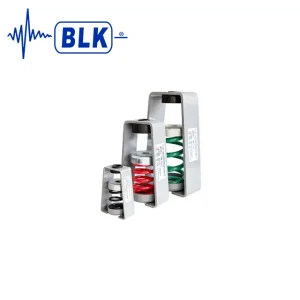
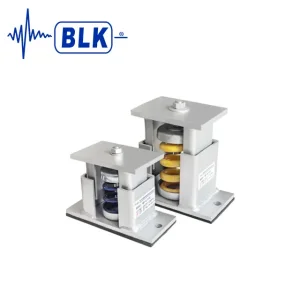
Selection depends primarily on the disturbing frequency ($f$) and operating environment. Rubber vibration mounts provide excellent high-frequency isolation (>15 Hz), structural damping, and compact multi-axis support—ideal for engine mounts, small compressors, and EV drive units. Spring isolators offer significantly lower natural frequencies (3 Hz – 5 Hz) and high deflection capacity, making them suitable for heavy stationary equipment, large HVAC chillers, and severe low-frequency disturbance applications.
What technical parameters are required to request a custom automotive damper quote?
To provide an accurate engineering assessment and quote within 24 hours, please supply: (1) Total static load per mounting point, (2) Location of Center of Gravity (CG), (3) Excitation frequency range (RPM or Hz), (4) Space envelope constraints, (5) Operating ambient temperature range, and (6) Any environmental exposure requirements (e.g., oil, ozone, salt spray hours).
Can Bellking handle custom OEM rubber compound formulations?
Yes. Our chemical R&D team formulates custom elastomeric recipes based on Natural Rubber (NR), EPDM, Nitrile (NBR), Fluororubber (FKM), and High-Tear Silicone. We can fine-tune Shore A durometer hardness (ranging from 30 to 80 Shore A) and loss factor ($\tan\delta$) to achieve specific dynamic-to-static stiffness ratios required by your NVH specifications.
What testing and quality inspection documentation accompanies exported shipments?
Every shipment is backed by factory inspection certificates (COA). Upon request, we provide full PPAP Level 3 packages, material dynamic stiffness curves, dynamic fatigue test reports (up to 5 million cycles), tensile/shear failure tests, and 900-hour salt spray certification reports.
How does Bellking ensure long-term rubber-to-metal bonding integrity?
Rubber-to-metal delamination is a primary failure mode in cheap dampers. We utilize a multi-stage chemical surface preparation process: grit-blasting metallic inserts, applying specialized primer/bonding agents (such as Chemlok), and maintaining precise heat and pressure controls during transfer molding. Shear strength testing routinely verifies that the elastomeric material tearing occurs before bond failure.
What is your typical MOQ and lead time for standard vs. custom orders?
Standard catalog products have no minimum order quantity (MOQ) and ship within 24 hours. Custom OEM prototypes require an initial tooling lead time of 3-5 days. For mass production, standard MOQs start at 100 units depending on part complexity, with typical production cycles completed within 14 to 21 days.
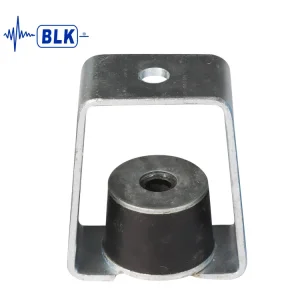
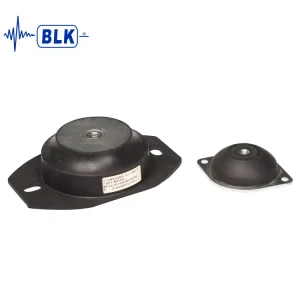
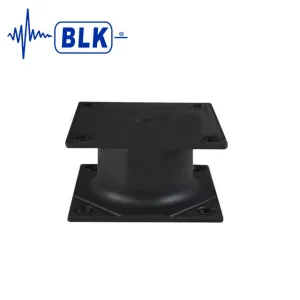
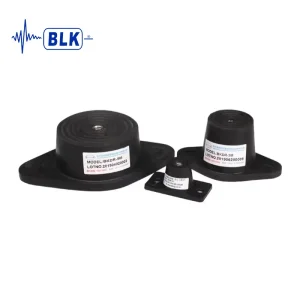
Expanded Industrial & Automotive Isolation Systems
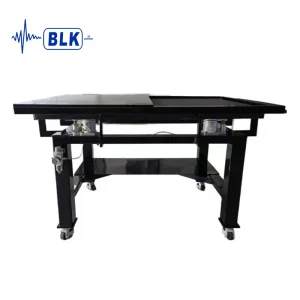
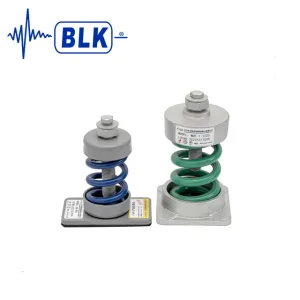
Explore our secondary lineup of rubber hangers, polymer pads, buffer mounts, and specialized vibration isolation platforms.


Request Your Custom Vibration Control Proposal Within 24 Hours
Direct factory pricing, custom FEA dynamic simulation, and full IATF 16949 / PPAP compliance support. Send your STEP models and load data directly to our application engineering team.